







Why Does Lightly Roasted Coffee Drain So Slowly?
A pour-over that finishes dripping well past 2 minutes 10 seconds usually points to three things: too many fines in the grind, pouring technique that disturbs the bed, and the density of lightly roasted beans. Water temperature, grind size, dose, and ratio can be dialled in, but time is the symptom that tells you the flow rate is off.
A common reference setup uses 15 grams of coffee at a 1:15 ratio, a grind with 70-80% passing a No. 20 sieve, and three pours, with the last pour stopped around 1 minute 30 to 40 seconds. Finishing near 2 minutes plus or minus 10 seconds keeps extraction stable; pulling the dripper early to beat a stalled flow risks an uneven, underextracted cup.
In pour-over coffee, extraction time is often the most difficult variable to control. Many coffee enthusiasts have encountered situations at home where hot water refuses to drain and the time gets dragged out. To avoid over-extraction, some people remove the dripper early, but does this really work? Starting from the brewing framework commonly used at Front Street, this article sorts out several main causes of slow flow and water retention, including too many fines, improper pouring technique, and the characteristics of light-roasted beans, and offers corresponding solutions to help you improve your brewing performance without changing equipment.
Compared with parameters that can be precisely controlled, such as water temperature, grind size, coffee dose, and brew ratio, time seems more random and more passive. For many people just getting into pour-over, it is a factor that is not easy to manage, yet it is precisely an important basis for judging whether the flow rate is normal.
Regarding time-related issues, quite a few friends have reported to Front Street that when brewing coffee at home, the total time is often forced to drag on because the water drains too slowly. To remedy this, they have no choice but to remove the dripper early, hoping to avoid severe over-extraction. So what exactly causes this situation? And how should this kind of problem be handled?
Brewing Time
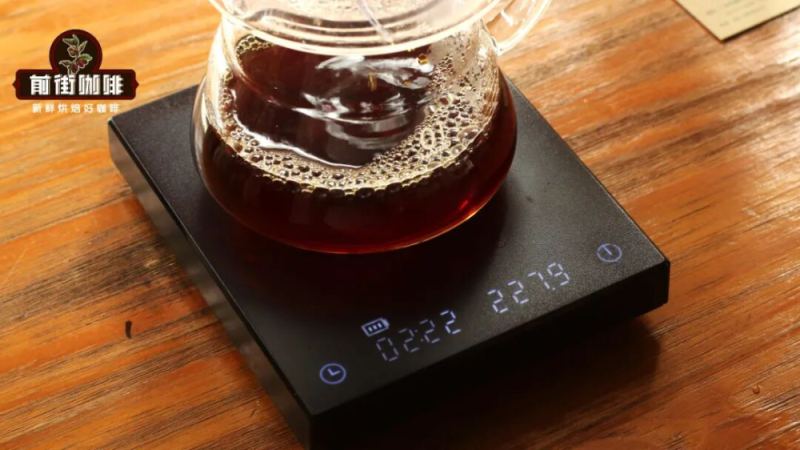
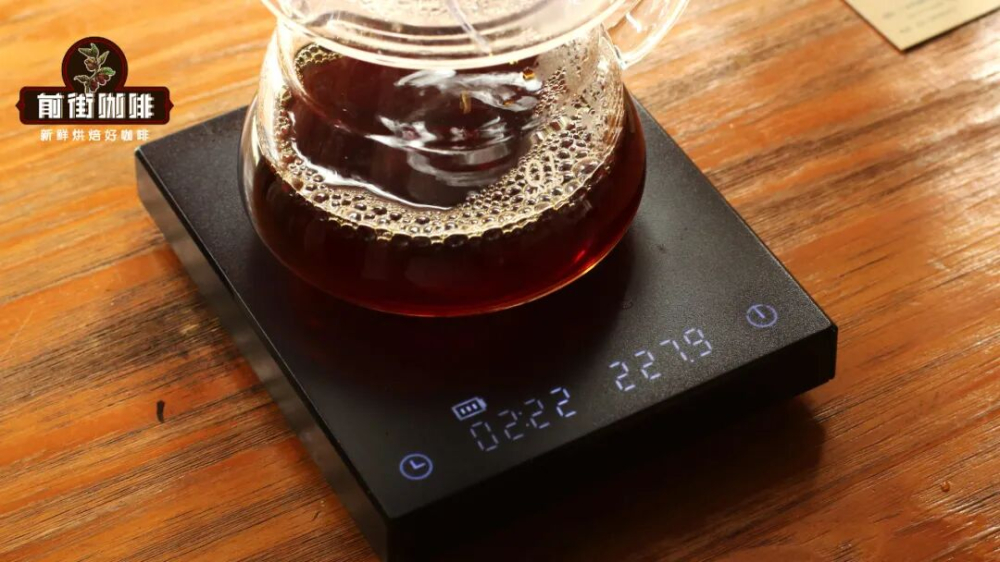
Front Street usually recommends that when brewing coffee, the point at which you stop pouring is best between 1 minute 30 seconds and 1 minute 40 seconds, while the time when the coffee liquid finishes dripping should be controlled to around 2 minutes plus or minus 10 seconds. In other words, shorter than this range means the flow is too fast and underextraction is likely; longer than this range means the flow is too slow and over-extraction may result.
This is not the only standard, but a reasonable match derived from the brewing parameters commonly used at Front Street (15 grams of coffee, 1:15 brew ratio, grind size with a 70–80% pass-through rate on a No. 20 sieve, three-stage pouring). During these roughly two minutes, the coffee grounds and hot water can fully and evenly contact each other, and the extraction state can remain within a relatively stable range.
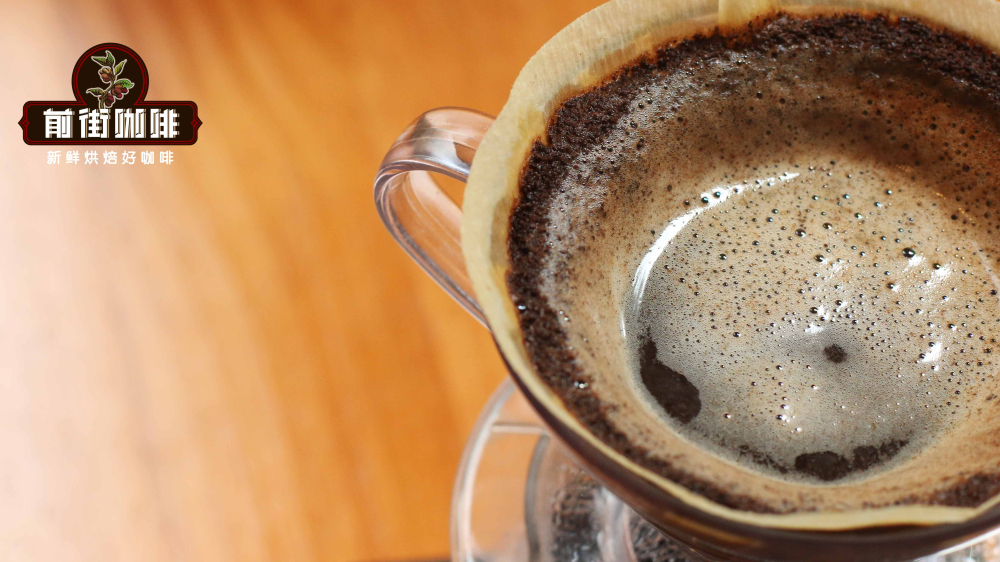
If you observe carefully, you will find that when the brewing time exceeds 2 minutes 10 seconds, the hot water still does not flow down, while the foam on top is very thin, with only a few scattered small white bubbles, or even exposing the edge of the dripper. This indicates that the hot water has been blocked by most of the coffee grounds, and by the time it slowly enters the server, it has most likely already brought out too many soluble substances from the coffee. These large molecules released in the final stage mostly present bitterness, muddiness, and astringency, so the brewed coffee naturally does not taste good. Therefore, we need to identify the causes of water retention:
1. Too Many Fines
It can be said that most cases of slow drainage are related to the coarseness of the coffee grounds. If the particles are too fine, water cannot flow smoothly into the server; moreover, fine grinding often comes with more ultra-fines, and the greater the resistance the water encounters, the slower the flow rate. Using Front Street stores as a reference, the pour-over grind size is about as coarse as granulated sugar, corresponding to a 70–82% pass-through rate on a No. 20 sieve, 9.5–11 on an EK43s electric grinder, and 22–26 on a C40 hand grinder.
But you should know that no matter whether a grinder is expensive or cheap, the particles it produces will inevitably contain ultra-fines. This is unavoidable.
A good grinder can not only cut beans into relatively uniform particles, but also reduce the production of ultra-fines, allowing for fuller extraction. A grinder with poorer grinding quality, however, will first squeeze the coffee beans until they crack, and then cut them into particles. This process first leads to low uniformity of the coffee grounds, and second produces more ultra-fines, so it easily results in a situation where “there are too many fines and the coarse particles are too coarse.”
If there is severe water retention in the later stage of extraction (often exceeding 2 minutes 20 seconds), and after brewing the coffee bed is muddy while coarse particles are still clearly visible, and at the same time the coffee’s aroma is very weak and the bitterness is very strong, then it is very likely caused by the grinder’s quality being inadequate.
2. Technique
Many friends, like Front Street, also like to pour in circles. The difference is that these friends are used to continuously pouring in large circles after blooming, wanting to wash out all the foam. This technique can make the water level rise gradually, but in the later stage, the water poured in large circles instead tends to thin the coffee bed wall, causing more particles to slide toward the bottom, thereby hindering the hot water from flowing down and entering a state of immersion extraction.
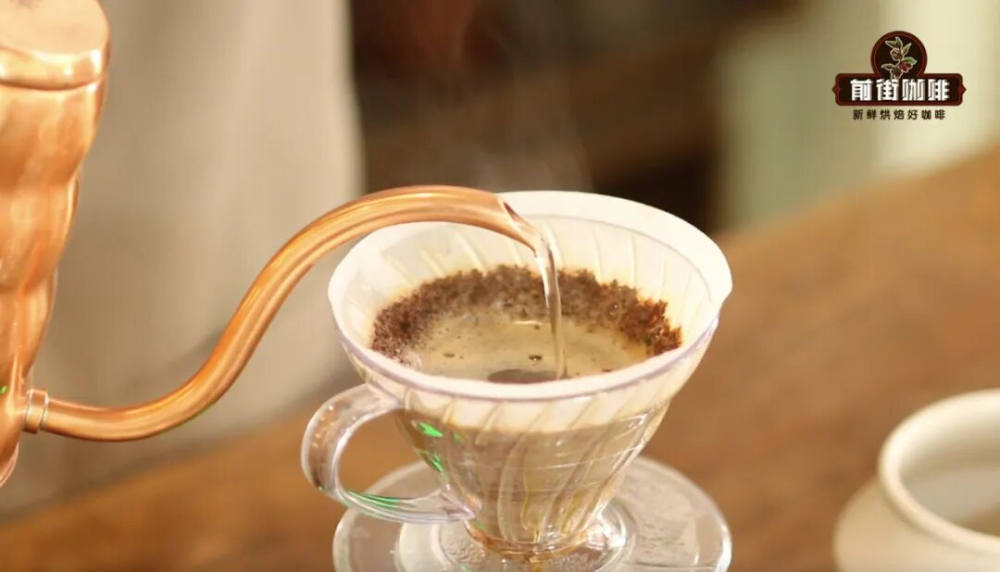
Another situation is that the stirring force after blooming is insufficient, failing to raise the coffee bed. In the later stage, fine particles accumulate and sink at the cone tip, and the coffee liquid can only drip down along the dripper by gravity.
3. Light-Roasted Coffee
Everyone should have this experience: water retention in the final stage often appears when brewing fruit-acidity beans, such as the floral and rich Front Street. Washed Gedeb, the berry-flavored Front Street. Natural Hachira, and the Front Street. Panama Geisha with bergamot and honey-like sweet acidity. These single-origin coffees occasionally have this kind of problem during pour-over extraction.
This is because they are relatively lightly roasted and come from high altitudes, so the internal structure of the beans is compact and their water absorption is weaker; in addition, the high density of the beans also produces more fine particles. When we pour in circles, the water drives the coffee grounds into motion, and along the direction of stirring, the smaller fine particles become lodged in the filter paper first, forming a blockage and accumulation.
Solutions
For the first situation, we can first adjust the grind 1–2 steps coarser and observe whether the flow rate and taste improve. If the flow becomes faster but the taste is a bit weak, you can raise the water temperature by 1–2 degrees or slightly reduce the brew ratio to balance it. If it is still clogged after coarsening, Front Street recommends buying a sieve to remove some of the ultra-fine particles, or simply switching to a grinder with better grinding quality.
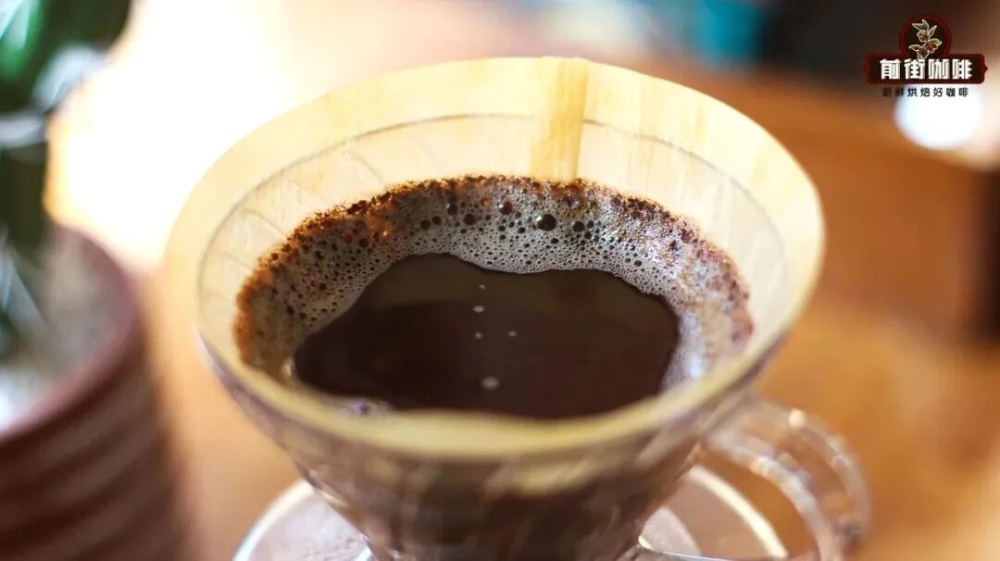
Without changing equipment or sifting the grounds, Front Street suggests that friends troubled by flow rate might as well switch to a different dripper or filter paper, using their permeability to increase the overall filtration speed of the coffee. As for choosing filter paper, you can refer to this Front Street article, “The Differences Between Filter Papers Are Bigger Than You Think!”, and for drippers, you can look back at the share from a few days ago, “Beginners Teaching Themselves Pour-Over: Choosing a Dripper Like This Is Sure to Be Right!”
For friends whose coffee often drains slowly, Front Street recommends using the coffee-bed-piling pouring method. After blooming, first pour in small circles starting from the center. As the coffee foam rises and makes the original coffee burger bloom, push the coffee grounds to the edge to form a coffee bed wall at two-thirds the height of the dripper. This way the entire bed will be relatively thin and drainage will be smoother. For the final stage, use a small stream and still keep the range in small circles, which allows the coffee and water to contact more evenly while preventing the coffee grounds along the edge of the dripper from being washed down.
The above content is compiled by CoffeeHunters, a coffee news website.


