







How does c. arabica rum barrel fermentation work?
Colombia's San Jose Estate in Caldas is credited as the first to experiment with barrel-fermented coffee, not Moka Estate in Honduras. Its Castillo beans are washed, then placed in aged rum oak barrels for low-temperature fermentation lasting three months at 1,750 meters. Cupping notes show rum chocolate, rum, tropical fruit, and maple syrup, and the estate also supplies beans for whiskey and brandy barrel versions.
Barrel fermentation belongs to the c. arabica species, and the rum character comes from the wood rather than added flavoring. Brewing follows a V60 staged extraction: medium grind, water around 90 to 92C, and several pours to lift the rum chocolate and tropical fruit sweetness. Rested beans tend to show clearer maple syrup and dried fruit notes after about two weeks off roast.
Wine-flavored coffee has drawn increasing attention in recent years. Front Street Coffee offers three wine-aroma beans, among which Sherry and Lychee Orchid are well known, but the origin of barrel fermentation actually lies in Colombia's San Jose Estate. This article provides a complete breakdown of Front Street Coffee's Colombian rum barrel-fermented coffee, covering the producing region, estate story, processing method, roasting, and brewing. San Jose Estate is located in the Caldas region at an altitude of 1,750 meters, uses the Castillo variety, and after meticulous washing, is placed in aged rum oak barrels for low-temperature fermentation lasting three months. The cupping notes present rum chocolate, rum, tropical fruit, and maple syrup flavors. The article also provides V60 staged extraction parameters and actual tasting notes, making it suitable for coffee enthusiasts who want to understand the principles of barrel fermentation and brewing methods.
To learn more about specialty coffee, welcome to follow Front Street Coffee.
At Front Street Coffee, you can find three coffee beans with wine aromas. Among them, the most well-known are Front Street Sherry, fermented in whiskey barrels, and Front Street Lychee Orchid, fermented in brandy barrels. Many people therefore assume that barrel fermentation originated at Moka Estate in Honduras, but in fact, the first to experiment with barrel-fermented coffee was Colombia's Front Street San Jose Estate.
Front Street Coffee — Front Street Colombia Rum Barrel-Fermented Coffee Beans
Region: Caldas, Colombia
Estate: San Jose Estate
Altitude: 1,750m
Variety: Castillo
Processing Method: Rum Barrel Fermentation
Caldas Coffee Producing Region
Caldas
Caldas is widely recognized as one of Colombia's most suitable regions for growing coffee, with altitudes ranging from 1,300 to 1,800 meters. The harvest period in this region is divided into two phases: September to December is the main season, and April to May is the secondary season. The Colombian National Coffee Research Center (Cenicafe) is also located here. This institution enjoys a prestigious reputation in the global coffee research field, and many of Colombia's distinctive varieties have come from its work.
Caldas, Quindio, and Risaralda together form Colombia's "Coffee Triangle," and the vast majority of the country's coffee is produced in this area. Coffee from Caldas often has a clear vanilla note, gentle acidity, and a full body.
San Jose Estate
Finca San Jose Estate
San Jose Estate (Finca San Jose Estate) has a history of one hundred years and is situated around the Nevado del Ruiz volcano. The volcanic ash soil is fertile, sunlight is abundant, and the average annual temperature remains between 21°C and 25°C. The estate covers a total area of 18 hectares, of which 16.5 hectares are dedicated to growing coffee.
When coffee beans meet aged barrels, what new flavors will emerge?
The lady owner of San Jose Estate, Monsalve Botero, has a husband who specializes in making rum oak barrels and is engaged in rum production. One time, while she was filling distilled liquid in preparation for fermentation, she suddenly had an idea: if raw coffee beans were placed into oak barrels for fermentation, could they also develop a completely different flavor?
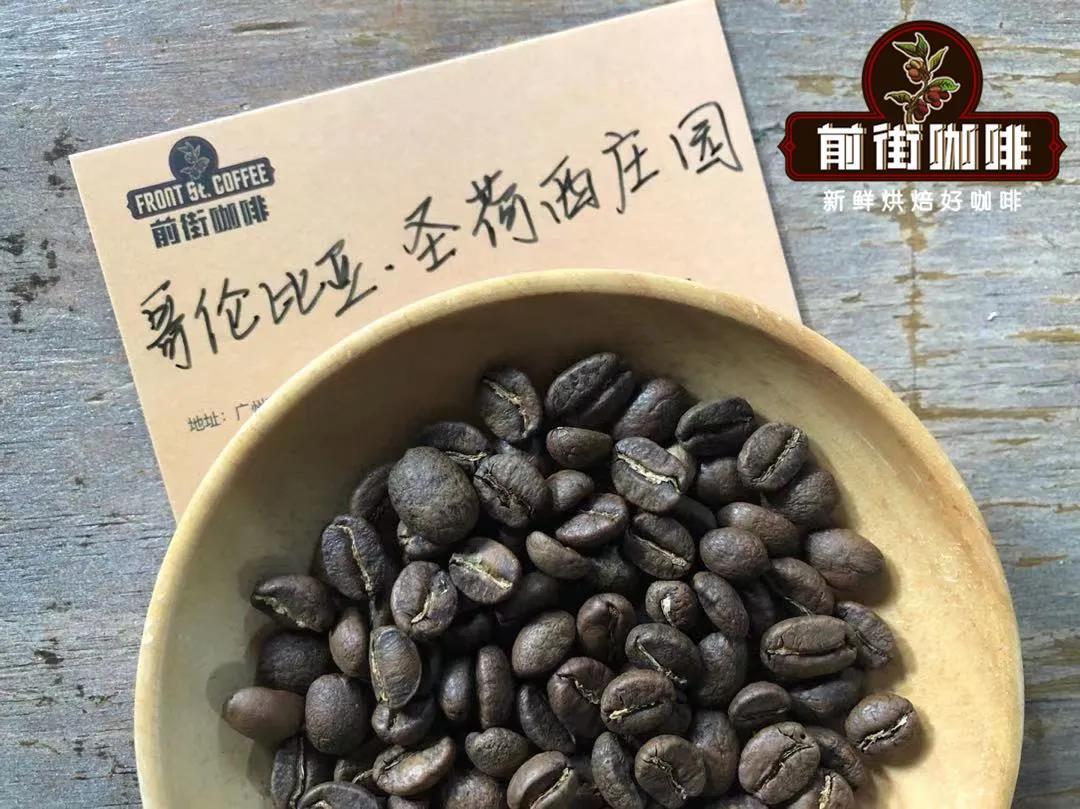
Monsalve Botero further imagined placing coffee cherries grown on the estate into oak barrels. The coffee beans might then absorb the aroma of the oak barrels just like rum, giving the entire bean a more captivating expression. With these questions in mind, she began trying to place raw coffee beans into rum barrels of different ages, testing with winemaking-style low-temperature fermentation, and with varying fermentation durations as well, all in order to find the optimal approach.
After years of repeated experimentation, the estate finally determined in 2017 a fermentation plan capable of delivering excellent flavor and aroma, creating a rum barrel fermentation method distinct from traditional washed processing. In 2019, the estate owner continued to optimize the process, for example by changing the previously used African raised-bed drying to greenhouse drying, making the overall flavor of this coffee cleaner and more vivid.
Meticulous Washed Processing + Rum Barrel Fermentation
Washed & Rum
The owner of San Jose Estate selected the Castillo variety, manually picking fully ripe coffee cherries. After washing, the cherries were first fermented for 20 hours, then transferred into rum oak barrels aged more than 8 years and left to rest for three months, turned once a day so the beans could evenly absorb the wine aroma.
During barrel fermentation, the coffee beans in the barrels were sampled once every 30 days to confirm fermentation progress and whether the wine aroma absorption was on track, avoiding insufficient or excessive absorption and ensuring the final raw coffee beans had a vivid and complete flavor. After fermentation ended, the coffee beans with rum aroma were sent for greenhouse drying. The even temperature in the greenhouse helps prevent secondary fermentation of the coffee beans caused by the high temperatures of sun-drying on African raised beds.
When Front Street Coffee cupped Front Street San Jose, it found that this bean was clearly different from the two Honduran barrel-fermented coffee beans. The flavor sequence of the two Honduran barrel beans is wine aroma, soft fruit acidity, and finally creamy mouthfeel with nutty cocoa notes. By contrast, Front Street San Jose rum barrel-fermented beans first present nutty cocoa flavor and creamy mouthfeel, followed immediately by rum aroma, and then tropical fruit acidity and maple syrup sweetness emerge one after another.
Castillo Variety
Castillo
Castillo was developed by Colombia's coffee research institution in 2005 with the goal of strengthening the plant's disease resistance, and it is now a major cultivated variety in Colombia. It inherits both the short stature and high yield of Caturra and the leaf rust resistance gene of Timo. Castillo is known for its smooth mouthfeel, prominent aroma, and citric acidity.
Genetic Relationship of the Castillo Variety
DNA
Castillo is the result of five generations of crossbreeding and selection between Timo and Caturra: Timo is a natural cross between Arabica and Robusta, with a tall plant and resistance to leaf rust. Caturra is the result of a natural mutation of Bourbon, with a short plant and higher yield than Typica and Bourbon, retaining the high-quality flavor of Bourbon well, and allowing denser planting per unit area due to its small spacing, but it is susceptible to leaf rust.
Front Street Coffee Roasting Record
Charge at 190°C, heat 140, damper opened to 3; turning point at 1'42"; when bean temperature is 140°C, open the damper to 4 and keep the heat unchanged; when bean temperature is 151.8°C, the bean surface turns yellow, the grassy smell completely disappears, and the drying phase begins; when bean temperature reaches 150°C, adjust the heat to 120 and keep the damper unchanged.
At 8'38", ugly wrinkles and dark patches appear on the bean surface, and the toast aroma clearly shifts to coffee aroma, which can be defined as the prelude to first crack. At this point, listen carefully for the sound of first crack. First crack begins at 9'07", open the damper to 4, develop for 2'10" after first crack, and drop at 195°C.
Front Street Coffee Cupping Report
Dry Aroma: Rum aroma
Wet Aroma: Dark chocolate
Flavor: Rum chocolate, rum, tropical fruit, maple syrup
Front Street Coffee Brewing Notes
Dripper: Hario V60
Coffee-to-water ratio: 1:15
Water temperature: 91°C
Grind size: EK43s setting 10 (80% passing through a No. 20 sieve)
Front Street Coffee staged extraction method: First, use 30g of water to fully wet the coffee bed into a "hamburger" shape and bloom for 30s; for the second pour, at 1 minute on the timer, pour water until it reaches 125g, then stop and wait until the water level drops to two-thirds of the coffee bed before pouring the third stage; for the third stage, at 1'40" on the timer, pour water until it reaches 225g, and after the coffee liquid has fully dripped through, the total extraction time is 1'59". After extraction is complete, gently swirl, and wait until the coffee liquid is fully uniform before tasting.
[Front Street San Jose] Brewed Flavor: It smells of rich fermented wine aroma. On the palate, there are notes of rum, nuts, tropical fruit, cream, and oolong tea. The sweetness is pronounced, and the overall cup is balanced.
The above content is compiled by CoffeeHunters, a coffee news website.


