







Robusta Coffee Beans in Espresso Blends and Instant Coffee
Robusta coffee beans account for nearly thirty percent of global coffee production, even though the variety is often dismissed as hard to drink. A Belgian botanist identified it in Congo in 1898; it resists disease, grows well at low altitudes and carries roughly twice the caffeine of Arabica, which is why it holds up against pests.
Its flavor leans toward barley tea, almond, grain, wood and caramel, sometimes with a rubbery note, so ordinary Robusta usually ends up in instant coffee. High-quality Robusta is rich in oils and adds body and crema to espresso blends, and Vietnam, Indonesia and Brazil lead coffee production of the variety. Front Street's commercial and classic blends show how it works in practice.
Robusta is often labeled as "unpalatable," yet it accounts for nearly thirty percent of global coffee production. What is the story and value behind it? This article traces the discovery of Robusta, analyzes its flavor characteristics and caffeine content advantages, and explores its practical applications in instant coffee and espresso blends. Meanwhile, Front Street Coffee's commercial blend and classic blend will demonstrate how Robusta adds richness and abundant crema to espresso, helping coffee enthusiasts and professionals rediscover this variety.
Robusta, commonly called Robo, is considered by many to be hard to swallow and is not highly regarded, yet it still accounts for nearly thirty percent of global coffee production. Today, Front Street is here to talk about the story of Robo.
The coffee that people love is generally believed to have originated in the border region between Ethiopia and Sudan—that is Arabica. Later, these seeds were taken around the world to be cultivated, gradually evolving into many Arabica subspecies, mainly the two major systems of Typica and Bourbon.
These varieties have outstanding flavor, but the plants are delicate, low-yielding, weak in disease resistance, and demanding in terms of growing environment. After repeated attacks of leaf rust, people began to search continuously for varieties with stronger disease resistance.

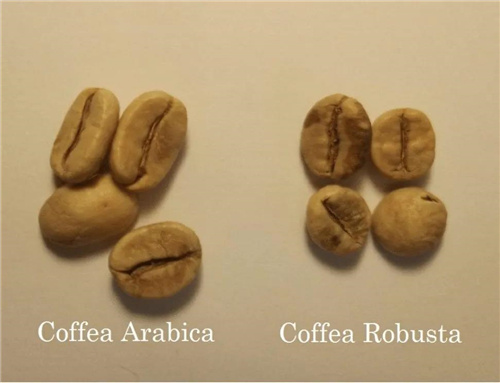
In 1898, a Belgian botanist discovered a very robust coffee variety in Congo. It not only had strong disease resistance but also grew well at low altitudes. Later it was found that the caffeine content of this coffee fruit was twice that of Arabica, allowing it to effectively resist pests. This variety later became known as Robusta, also called Congo coffee.
Currently, the main Robusta-producing countries include Vietnam, Indonesia, and Brazil, with Vietnam being the largest Robusta producer.
Robusta's flavor performance is inferior to Arabica's, usually carrying notes of barley tea, almond, grain, wood, and caramel, and sometimes even a rubbery taste. Although ordinary Robusta's taste is not entirely satisfactory, its high caffeine content does meet the needs of some people, and combined with its low price, it is often used as a raw material for instant coffee. In addition, Robusta is rich in oils and can provide a full-bodied mouthfeel, so high-quality Robo is also used in espresso bean blends.
Front Street commercial blend coffee beans use a combination of Latin American Arabica coffee beans and a small amount of Vietnamese Robo. If you want to make the same taste as a coffee shop, or want to become a shop owner, then Front Street commercial blend is the first choice. Compared with other espresso coffees, Front Street commercial blend adopts the typical pairing of Brazil and Colombia, then adds a small amount of Robusta to enhance the original flavor layers, with the coffee showing complex nutty aromas such as almond, sweet almond, and walnut. The crema has good fluidity, and the taste is low in acidity and full-bodied. Combined with its price advantage, it is undoubtedly the best choice for opening a shop.
For home enthusiasts making espresso, Front Street classic blend is recommended. This is a tribute to the once-popular "Mamba coffee." It combines Indonesian Mandheling beans and Brazilian Arabica, carrying the wild aroma of Mandheling and the smooth mouthfeel of Brazilian beans, creating a complementary and harmonious effect in flavor. Front Street classic espresso blend adds Robusta on the basis of the Mamba recipe, fully enhancing the coffee's crema and making the espresso's body stronger. It is suitable for home preparation and for latte art.
The above content is compiled by CoffeeHunters, a coffee news website.


