







Why Does a Homemade Latte Taste Weak?
A bland homemade latte usually comes down to four things: espresso with too few aromatic compounds, stale beans, milk that does not pair well, and a poor extraction ratio. A latte is espresso plus milk, typically at a ratio of 1:5 to 1:8, and when the espresso part is weak the milk simply covers it up.
Start with fresh beans and a full extraction. One reference point is 20 grams of coffee powder yielding 38 grams of liquid in 25 seconds, then paired with 240 grams of steamed fresh milk at about 1:6. When the shot itself is thin, a latte is bitter or flat no matter how carefully the milk is steamed.
Many people think a latte is simply a combination of espresso and milk, but once they actually try making one, they discover that their homemade latte often lacks the richness and aroma coffee should have, tasting more like coffee-flavored milk. Where exactly does the problem lie? This article analyzes four dimensions: the aromatic compounds in espresso, the freshness of coffee beans, the quality and pairing of milk, and the extraction ratio, helping home baristas pinpoint the issue and make a rich latte that rivals coffee shops. The article also includes several espresso blend recommendations from the Front Street brand along with specific extraction parameters for readers to reference and practice.
The essence of making a latte is simply pouring milk into espresso, yet this seemingly simple operation leaves many home baristas deeply puzzled—with the same ingredients and a similar process, why is it that a latte from a coffee shop always achieves a full-bodied mouthfeel and a long-lasting finish, while the one made at home seems like just a bit of coffee mixed into milk?
Nowadays, the number of coffee shops on street corners keeps rising, but not many people are truly willing to accept strong bitterness. The core reason latte wins widespread favor is its higher proportion of milk and relatively reduced bitterness, making the coffee overall more approachable.
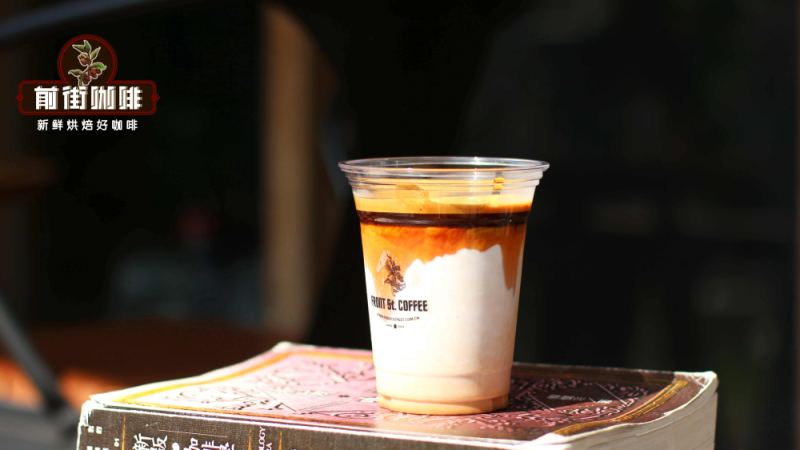
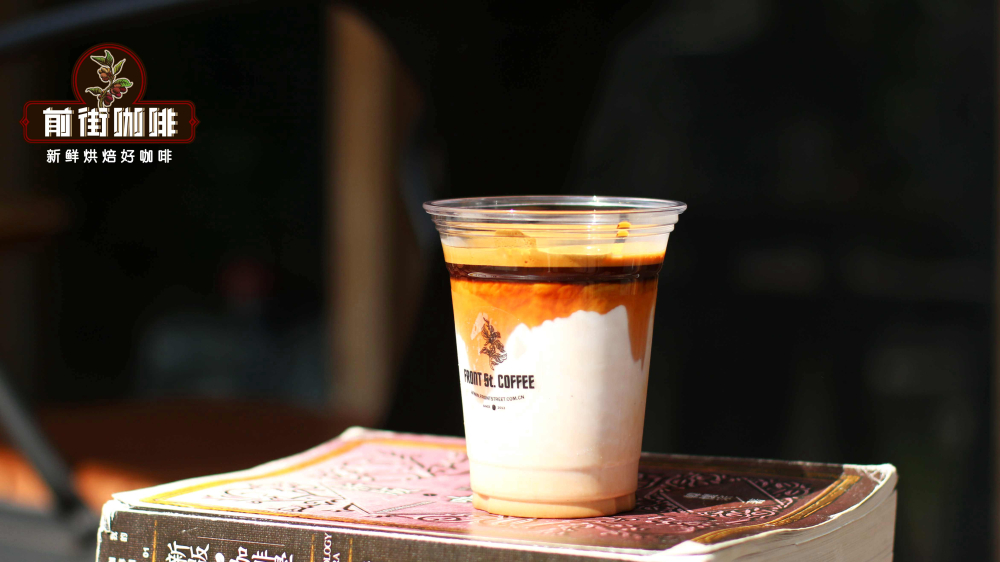
In broad definition, a latte consists of only two parts: espresso and milk, and it is generally recommended to use a blend paired with refrigerated fresh milk. There is no fixed ratio standard; in most cases it falls within the range of 1:5 to 1:8. Front Street daily prefers using Front Street Dark Cocoa Blend, extracting 38 grams of coffee liquid from 20 grams of coffee powder within 25 seconds, then pouring 240 grams of steamed hot fresh milk at a 1:6 ratio.
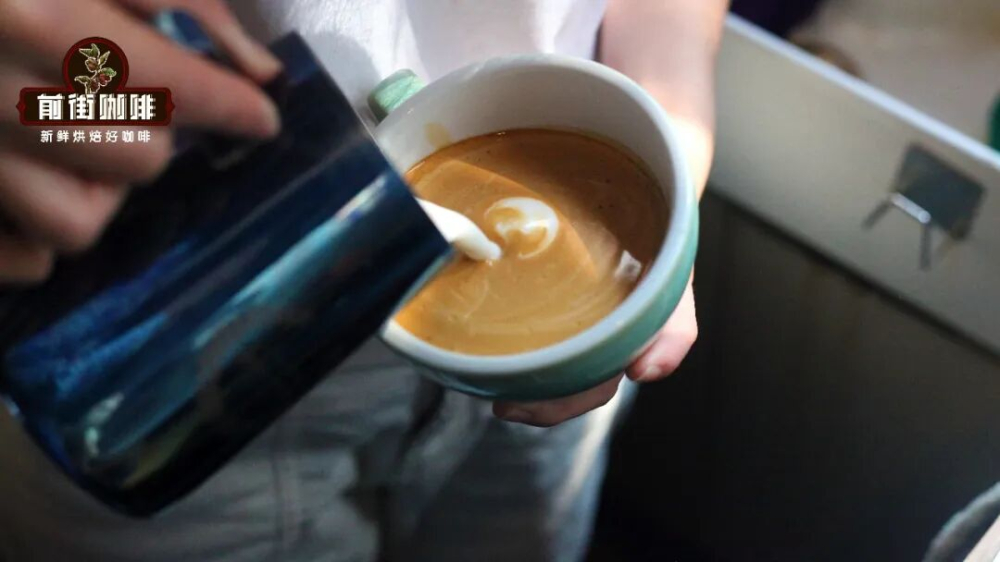
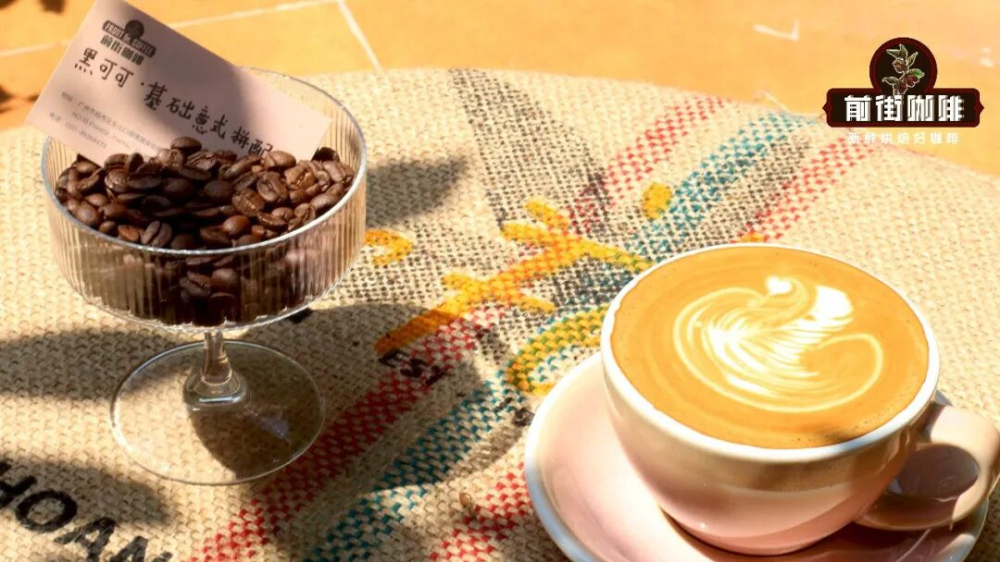
With a latte made from Front Street Dark Cocoa Blend, you can clearly perceive the rich aroma of roasted nuts and maltose. The addition of a large amount of milk softens the originally intense and stimulating coffee flavor, while bringing a hint of sweetness, and the overall taste remains sufficiently thick while being balanced.
Now that the production process is clear, the answer to the problem can only be found in the following key areas:
1. Insufficient aromatic compounds in the espresso
First, remember one guideline: a qualified espresso should have crema with a mirror-like sheen, a thickness maintained between 3 and 5 millimeters, and an aroma that carries the characteristics of the coffee beans themselves. Such an espresso, whether used for an Americano or a latte, will not have its flavor easily diluted away.
Light-roasted coffee beans, after extraction, have prominent acidity and thinner crema; once a large amount of milk is added, it is very easy to lose the presence of coffee and turn into a drink that is both weak and sour. If you want to enhance the richness of espresso, you need to increase the abundance of crema and strengthen caramelized aromas. Medium-dark roasted espresso beans, because they are released a little later, contain fewer acidic substances and more oils, and their body is also more ideal, with flavors leaning toward caramel, toasted bread, and cocoa aromas. Front Street Classic Blend and Front Street Commercial Blend both belong to this category of multipurpose espresso beans suitable for cafés, home, and office scenarios, and are worth considering.
Besides choosing the right coffee bean variety, freshness cannot be ignored either. A bag of roasted espresso beans is in an active gas-releasing stage during the first 4 days, so it needs a resting period of 4 to 7 days. After resting, it enters a best-tasting window of about 40 to 50 days; once it exceeds 60 days, both crema and aroma show a cliff-like decline. Therefore, to make a delicious latte, be sure the coffee beans used are fresh enough.
2. Improper choice of milk
In an excellent latte, coffee beans and milk are two protagonists of equal importance. If you want to recreate the rich, full-bodied latte from a coffee shop, whole fresh milk should be the first choice, because it contains richer fat, protein, and lactose, and its milky aroma is thicker; only when combined with coffee can it achieve an effect where one plus one is greater than two.
If the milk quality is not ideal, with a thin milky flavor or even a fishy smell, then no matter how excellent the coffee beans are, the final result will be noticeably compromised. (Regarding the selection of specific milk brands, Front Street previously did an episode called "Milk Review!" so we will not repeat it here. If you have encountered other high-quality milk worth recommending, welcome to share and discuss in the comments.)
3. Coffee and milk are not harmonious enough
Many people know that the reason coffee and milk become a classic combination is that together they produce an excellent flavor. When a latte fails to meet expectations, it may also be because these two ingredients themselves are not a good match.
Front Street once encountered a customer who paired Geisha SOE with milk-flavor-doubled Ice Bock, and the resulting latte had its coffee aroma almost completely overpowered by the milk, leaving only a bit of fruit acidity; the two parted ways the moment they entered the mouth. This case shows that when milks with different characteristics are combined with different coffee beans, the impact on the final taste of the latte is quite significant. This also explains why many coffee shops, when launching new beans, buy large quantities of milk from different brands and test repeatedly until they find the most satisfying pairing.
For example, some milks are naturally sweeter, and when combined with medium-dark roasted coffee beans that have nutty flavors, such as Front Street PWN Golden Mandheling paired with Bright Fresh Pasture, they can simultaneously highlight the latte's body, oily aroma, and fresh sweetness. Some milks have a particularly prominent milky aroma and pair extremely well with darker-roasted espresso blends, such as Front Street Dark Cocoa Base Blend paired with Yuexianhuo; the texture is smooth when pouring latte art, and the lingering aroma of the whole latte in the mouth is also more lasting.
4. No suitable extraction ratio has been found
For a latte, the espresso extraction ratio is especially important, because it not only determines the concentration of the final product, but also profoundly affects the presentation of coffee flavor.
When Front Street extracts espresso, it uses by default a 1:2 coffee-to-liquid ratio formula, with extraction time controlled between 25 and 30 seconds, and the flow rate of the coffee liquid kept stable throughout. Although many friends also follow the 1:2 coffee-to-liquid ratio, the latte they make still tastes thin and may even bring out some unpleasant acidity. This situation is usually because the coffee extraction yield is insufficient, and a large amount of flavor substances in the puck has not yet dissolved out. The solution is to adjust the grind finer and appropriately extend the extraction time, thereby obtaining an espresso with sufficient body and aroma, laying a solid foundation for making a delicious latte.
The above content is compiled by CoffeeHunters, a coffee news website.


