







Can Yunnan Arabica beans work in lattes and cappuccinos?
Yunnan coffee has grown in reputation over the past decade, and Starbucks sources beans from the region for some of its blends. The arabica variety grown there often carries nutty, chocolate, and mild citrus notes. That profile matters when you consider how the beans will be used. A coffee that tastes good as a pour-over may behave differently once milk and foam enter the picture, so the roast level and processing method deserve attention before you commit a bag to espresso duty.
For lattes and cappuccinos, Yunnan arabica can perform well when roasted medium to medium-dark. The sweetness and body hold up against steamed milk, and the acidity stays gentle enough not to clash with foam. Very light roasts tend to get lost under milk, while overly dark roasts turn bitter. A middle path keeps the cup balanced. Pull a slightly longer shot than usual, then steam milk to a glossy microfoam so the texture stays smooth.
Yunnan coffee has emerged in the specialty coffee field in recent years. Starbucks has continuously launched multiple Yunnan reserve coffee beans, including the Puer Baoshan blend and the Qingkai Farm reserve beans, demonstrating strong recognition of the Yunnan growing region. Front Street Coffee also has its own Arabica plantation in Baoshan, Yunnan. This article will focus on the flavor characteristics of Starbucks' two Yunnan coffee beans, while also outlining the growing regions, cultivation history, main varieties, and processing methods of Yunnan coffee, and introducing Front Street Coffee's Yunnan Typica and Yunnan small-bean coffee, helping coffee enthusiasts gain a comprehensive understanding of the current state and charm of Yunnan coffee.
For more specialty coffee knowledge, please follow our WeChat official account: Front Street Coffee
As the specialty coffee market continues to heat up, Yunnan coffee has gradually come into the view of more consumers. Take Starbucks as an example: in recent years it has continuously launched Yunnan reserve coffee beans, and since 2017 it has kept releasing products from the Yunnan growing region. The latest Puer Baoshan blend and Qingkai Farm reserve beans both come from Yunnan, which fully demonstrates the quality and potential of Yunnan coffee. Front Street Coffee also has a dedicated Arabica coffee plantation in Baoshan, Yunnan. Below, Front Street Coffee will introduce the flavor characteristics of these two Starbucks Yunnan coffee beans, as well as the current development status of the Yunnan coffee market.
Starbucks Phoenix Dancing in Auspicious Clouds Coffee Beans
According to Front Street Coffee, Starbucks has been using high-quality Chinese Arabica coffee beans to launch its "Phoenix Dancing in Auspicious Clouds" series for ten years. From the first single-origin Yunnan coffee beans launched in 2017 to the two new Yunnan reserve coffee beans on the market this year, Starbucks has been fulfilling its promise to "bring Yunnan coffee to the world," using its industry influence to endorse Yunnan coffee. This also precisely shows that the quality of Yunnan coffee beans is indeed worth attention.
As Starbucks' representative product in the specialty coffee field, Starbucks Reserve has extremely high requirements for flavor, and the Reserve brand has always been a key focus for Starbucks. Therefore, Starbucks launching Yunnan Reserve single-origin coffee beans not only reflects its confidence in Yunnan coffee beans, but also reflects the results of Starbucks' continued investment in Yunnan, and further highlights the key role it has played in the growth of the Yunnan coffee market.
Qingkai Farm Reserve Coffee Beans
Qingkai Farm Reserve coffee beans come from Qingkai Farm in Puer, Yunnan, and use a dryer processing method, which minimizes the risk of mold caused by the overlap between the coffee harvest season and the rainy season, making the quality of the sun-dried coffee beans more stable.
Flavor description: A smooth, chocolate-like mouthfeel gently brings out herbal spice flavors of sage and thyme.
Puer Baoshan Blend Coffee Beans
Starbucks China's first Yunnan Reserve blended coffee beans — the Puer Baoshan blend — are made from a blend of coffee beans from Baoshan Zuoyuan Coffee and the Jinshan Coffee Cooperative in Menglian County, Puer, whose origins are nearly a thousand kilometers apart. Both use the washed processing method. This is also the first time Starbucks China has used a "light elegant roast profile" to lightly roast Reserve coffee beans in the local market.
Flavor description: After the two coffee beans are blended, the flavors become more integrated. Within the lively bell pepper flavor bursts a fruity sweet-and-sour note, and the syrup-like mouthfeel leaves an endless aftertaste.
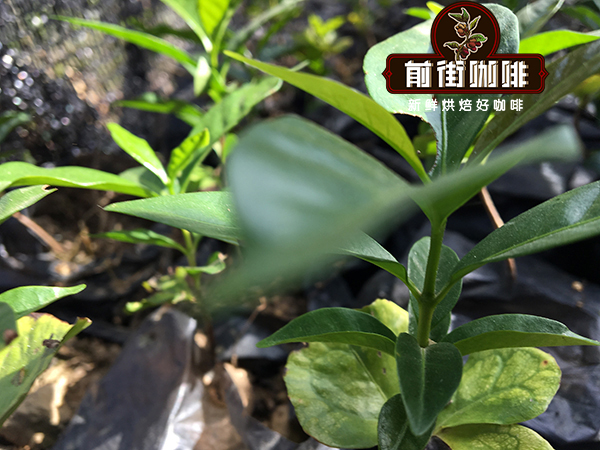
The above is the basic information and characteristics of these two Starbucks Yunnan coffee beans compiled by Front Street Coffee. In the text above, Front Street Coffee also mentioned that Yunnan coffee has enormous potential, so Front Street established a coffee tree plantation in Baoshan, Yunnan, specifically for growing Typica coffee beans. Next, Front Street Coffee will explain just what charm this land of Yunnan has.
Characteristics of Yunnan Coffee Bean Production Regions
Yunnan is located in southwestern China, with the Tropic of Cancer running across its southern part. It has a mountainous plateau terrain, and the mid-altitude areas between 1,000 and 3,500 meters above sea level account for about 90% of the province's land area. Yunnan's climate belongs to the subtropical plateau monsoon type, with large diurnal temperature differences and abundant rainfall. As Front Street Coffee mentioned in previous articles, coffee growing requires a high-altitude environment, and both temperature and rainfall must be suitable in order to grow high-quality coffee cherries. Yunnan happens to meet these conditions, so the quality of coffee fruit produced in Yunnan is generally not poor.
For this reason, the vast majority of coffee on the Chinese market today comes from Yunnan. Yunnan accounts for 98% of the national coffee market, and it can be said to basically represent China's coffee-growing industry.
Yunnan Coffee Bean Growing Regions
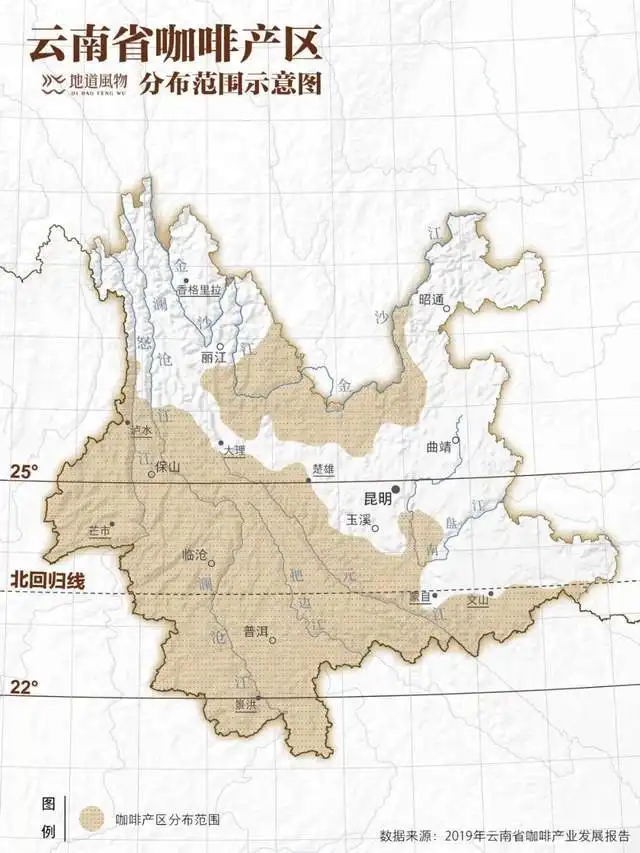
Yunnan small-bean coffee growing regions are mainly distributed in the south and west, among which Puer, Baoshan, Dehong, and Lincang are relatively well known. The Yunnan coffee beans grown on Front Street Coffee's estate come from Baoshan, Yunnan. Front Street Coffee believes that the coffee beans produced here have a flavor that is rich but not bitter, fragrant but not harsh, and are full of regional character. Next, Front Street will briefly introduce the characteristics of these Yunnan coffee growing regions.
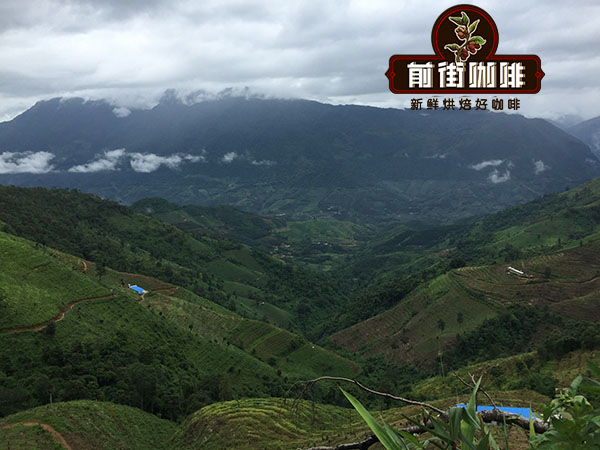
Dehong: Known as the "Home of Chinese Coffee." The coffee-growing altitude in Dehong Prefecture is all above 1,000 meters, with 30,000 mu planted on mountain land above 1,600 meters. In addition, coffee cultivation in Dehong Prefecture mainly uses organic fertilizer and organic pesticides, so the coffee produced is of relatively high quality, making it one of the world's rare high-quality coffee-producing areas. Baoshan: Coffee cultivation in Baoshan began in the mid-1950s, and the first coffee seedling was introduced from Southeast Asia by the late patriotic overseas Chinese Mr. Liang Jinshan. In recent years, with the expansion of international trade, the small-bean coffee of Lujiangba has become widely renowned. Merchants from Europe, America, and Arab countries, especially those from Britain, the United States, Egypt, Hong Kong, and Macau, all regard it as a premium coffee, and demand exceeds supply. In December 2010, after review by China's General Administration of Quality Supervision, Inspection and Quarantine, it was decided to implement national geographical indication product protection for "Baoshan small-bean coffee."
Lincang: Its unique geographical location and climatic conditions have made Lincang the focus of many coffee enterprises, and high-quality coffee seedling bases of 200 mu and 100 mu were established in Mengding Town of Gengma Autonomous County and Lincang Xingfu Farm respectively, with coffee cultivation carried out in Gengma, Zhenkang, Yunxian, Cangyuan, Yongde, and other places. Puer: Tea hometown Puer has a history of coffee cultivation spanning 150 years. In the early 1990s, Puer began to cultivate coffee as an advantageous pillar industry for adjusting the industrial structure and helping farmers increase income.
Yunnan Coffee Cultivation History
Although Yunnan coffee has not appeared on the specialty coffee market for a long time and can be called a rising star, according to Front Street Coffee, Yunnan's history of coffee cultivation is actually very long and can mainly be divided into four stages:
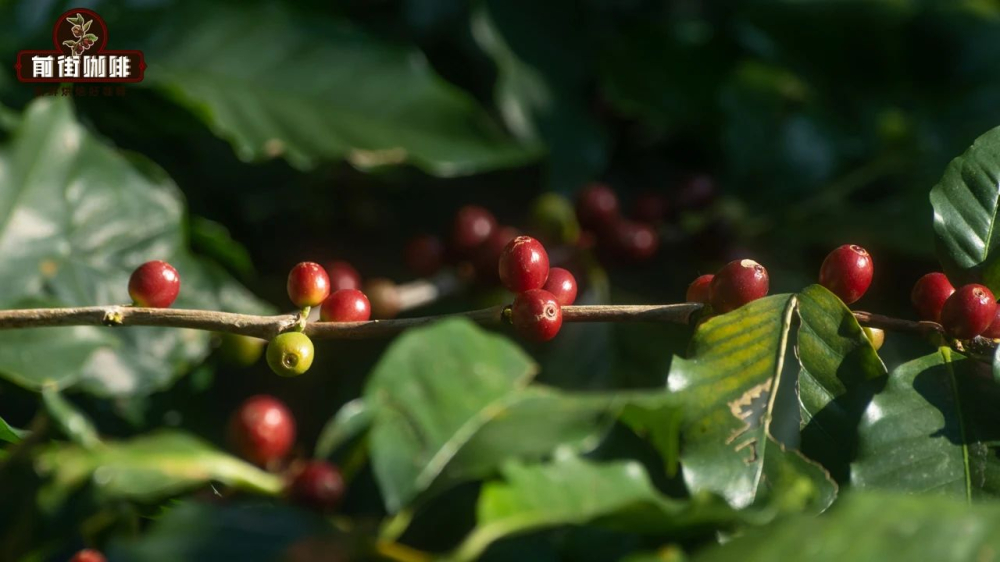
First stage: In the 1880s, the Qing government was forced to sign a treaty with France ending the Sino-French War and opened Mengzi (Mengzi County, Honghe Prefecture) as a treaty port. In 1889, Mengzi Customs opened, marking the beginning of mutual exchange between the southwestern frontier and the outside world. Suddenly foreign merchants gathered, and foreign firms followed one after another.
Second stage: In 1902, a French missionary with the Chinese name Tian Deneng brought coffee from Vietnam to plant in a mountain village called Zhukula in Binchuan County, Dali, Yunnan Province. To this day, descendants of that batch of coffee still survive.
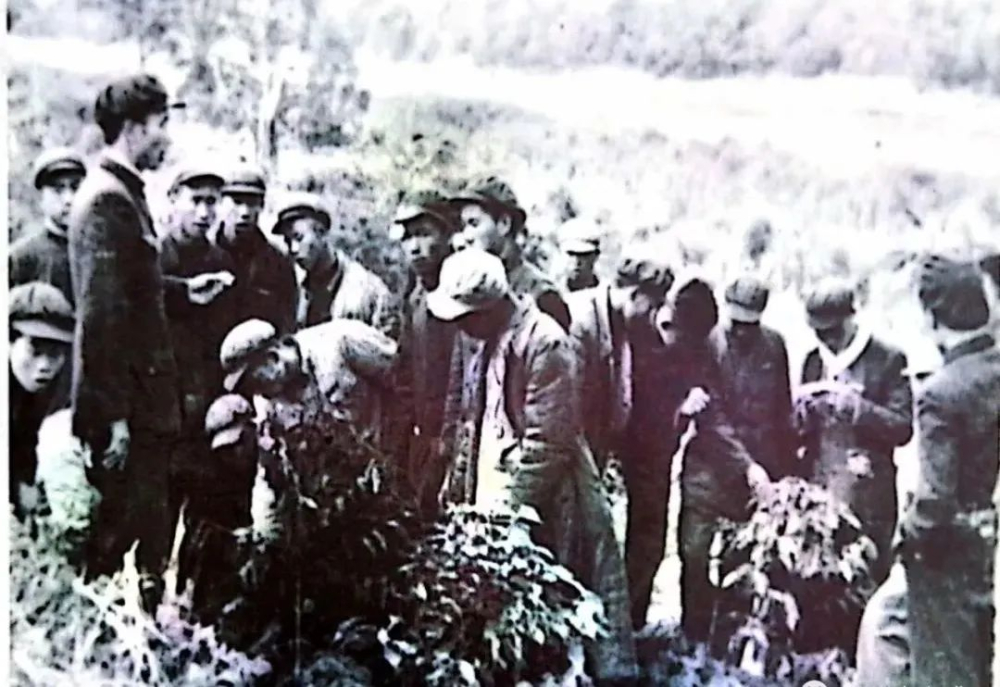
Third stage: In 1952, experts from the Yunnan Academy of Agricultural Sciences distributed 80 kg of coffee seeds to farmers in Lujiangba, Baoshan. Several years later, they guided large-scale planting, which is how the swaying coffee trees along the Yunnan-Burma Road came to be. Due to the huge demand for supply to the Soviet Union, Yunnan's coffee cultivation experienced a rapid development.
Fourth stage: In 1988, Nestlé established a joint venture in China and began supporting the development of the local coffee industry in Yunnan through methods such as launching coffee planting projects, and Yunnan coffee rose again. Starting in 1992, Nestlé established a coffee agriculture department specifically to guide and research the improvement and cultivation of Yunnan coffee, and purchased coffee according to U.S. spot market prices. Up to now, not only have coffee giants such as Nestlé, Maxwell, Kraft, and Starbucks all engaged in coffee business in Yunnan, but local coffee enterprises have also gradually grown stronger.
It was precisely through these four stages that Yunnan began systematic research on coffee cultivation. Today, coffee farmers in the Yunnan growing region mainly grow small-bean coffee, so Yunnan coffee is also called Yunnan small-bean coffee. Next, Front Street Coffee will explain the coffee varieties currently grown in Yunnan.
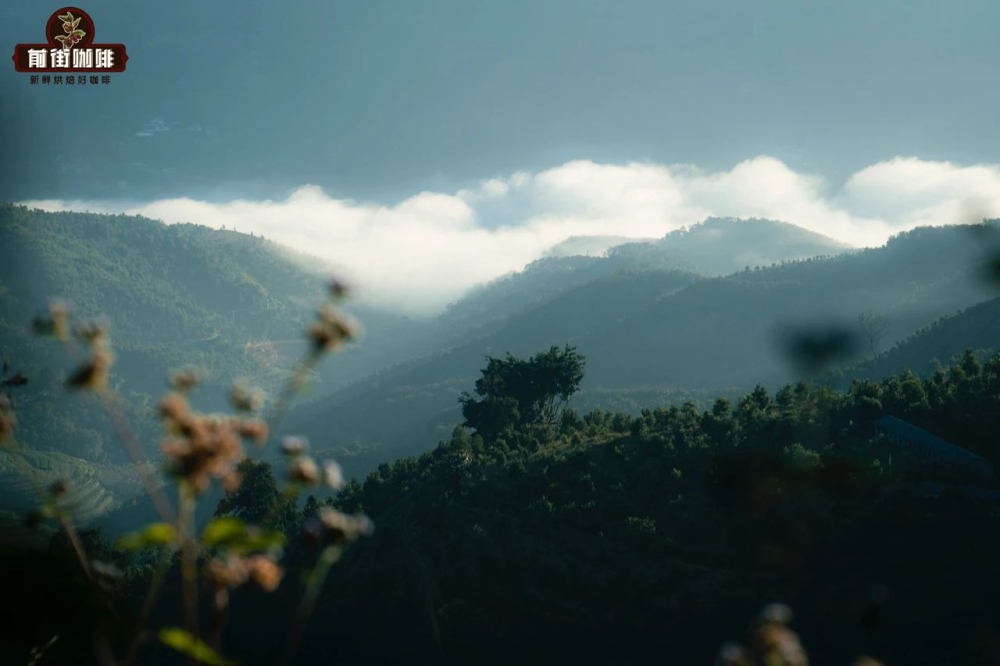
Yunnan Coffee Bean Varieties
The most widely grown coffee bean in Yunnan today is Catimor, though a small amount of Typica and Bourbon is still grown in the Baoshan area. Although in broad terms they all belong to the Arabica species, these varieties are still very different in essence.
Typica
Typica is the oldest native Arabica variety on the coffee market today, and almost all coffee bean varieties currently belonging to Arabica are derived from Typica. Typica has an elegant flavor, but it is physically weak, has low disease resistance, and is susceptible to leaf rust. Therefore, its coffee bean yield is low and cannot meet economic benefits. In recent years, Typica in Central and South America has gradually been replaced by Caturra and Catuai. As a result, Typica is seen less and less. Although Typica has an elegant flavor, it is not as widespread as Bourbon.
The coffee trees mainly grown on Front Street Coffee's estate in Yunnan are of the Typica variety, because Typica coffee has its uniquely quiet and clean flavor, as well as balanced characteristics and a high degree of clarity in the cup. So although Typica coffee trees are not easy to grow, as the oldest native Arabica variety, its flavor quality should naturally not be underestimated. Front Street Coffee wants the Yunnan coffee that coffee lovers taste to present the best flavor, so it mainly grows Typica coffee trees.
Bourbon
It is a secondary variety produced by a mutation of Typica, and together with Typica it is one of the oldest surviving coffee varieties. Its green fruit turns bright red when ripe. Compared with Typica, Bourbon has broader leaves and denser growth. Although its yield is higher than Typica, its harvest period is also two years, so it is still considered a low-yield variety. Yet it has a high-quality mouthfeel, with an acidity resembling red wine and a sweet aftertaste.
Catimor Coffee Variety
Catimor is a combination of the Arabica species and the Robusta species. Robusta has good resistance to leaf rust and rich oils, with high yield and easy cultivation. Therefore, after crossing with the Arabica variety Typica, Catimor has 25% Robusta genes. It improves resistance to leaf rust, retains rich oils, and at the same time has some of the rich taste of the original Typica variety.
Catimor coffee beans are currently the most widely grown coffee variety in Yunnan, China. Although many coffee enthusiasts still cannot accept Catimor coffee beans at present, believing their flavor to be poor, their potential is indeed enormous. Take Indonesia's PWN Golden Mandheling as an example: in the latest 2020 batch of Golden Mandheling, the coffee bean variety used is also Catimor, which is enough to prove that Catimor coffee beans have endless potential.
Yunnan Coffee Processing Methods
According to Front Street Coffee, many processing methods have been used for Yunnan coffee beans up to now, but the Yunnan coffee beans produced by Front Street Coffee currently all use the washed processing method, because the washed method best brings out the most original flavor of a coffee bean and can also make the flavor cleaner and brighter while reducing off-flavors. Therefore, Front Street Coffee uses the washed processing method for its coffee beans, with the aim of allowing coffee lovers who come to Front Street Coffee's shop to drink the most authentic and original Yunnan coffee bean flavor.
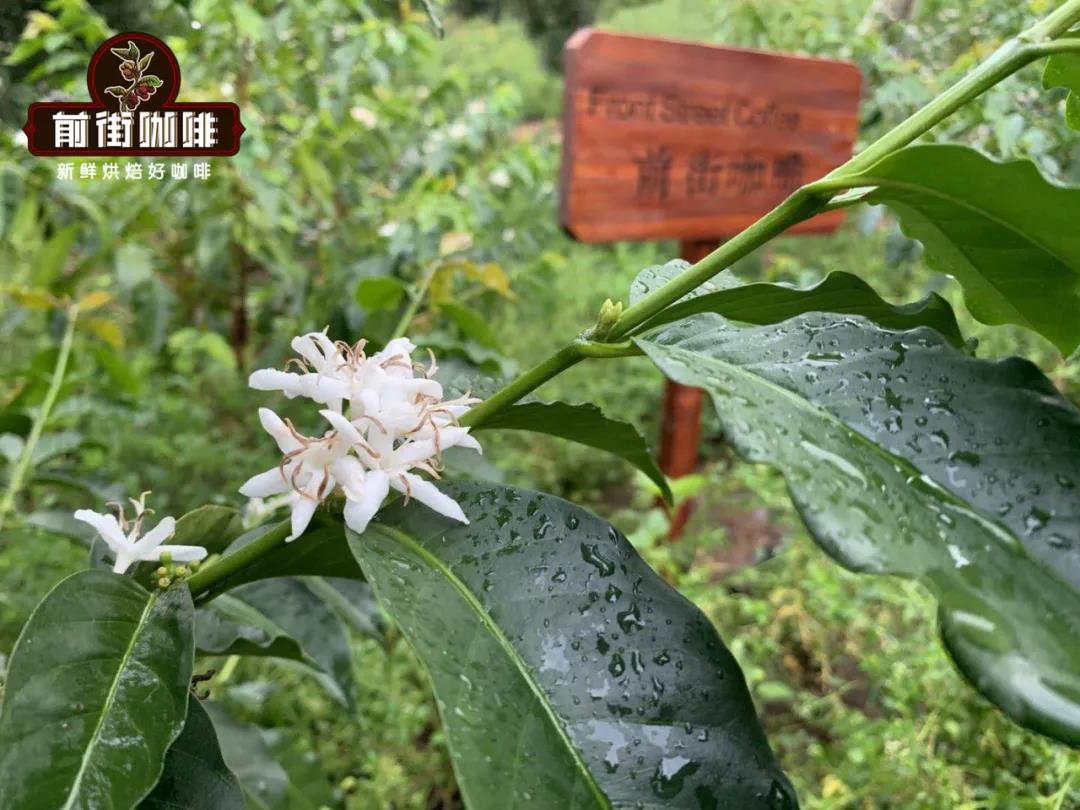
Above, Front Street Coffee introduced the growing conditions, varieties, and processing methods of Yunnan coffee to coffee lovers, because the flavor performance of a single-origin coffee bean depends precisely on its growing environment—that is, the growing region—as well as the coffee variety and processing method. These are all decisive factors affecting coffee flavor performance. Therefore, before launching each new coffee bean, Front Street Coffee learns about the story of the bean's growing region and the three basic factors shaping its flavor, briefly summarizes this content on the packaging, and writes an article so that coffee lovers can understand it in depth. This is also one of the pleasures of tasting single-origin coffee. Next, Front Street Coffee will share two single-origin coffee beans produced by Front Street's Yunnan coffee estate.
Front Street Coffee: Front Street 2013 Typica Coffee Beans
Country: China Region: Baoshan, Yunnan Altitude: 1450-1550m Variety: Typica Processing method: Washed Flavor: Citrus, nuts, plum, melon and fruit aromas, brown sugar, black tea note
Front Street Coffee: Yunnan Small-Bean Coffee Beans Country: China
Region: Baoshan, Yunnan Altitude: 1200m Variety: Catimor Processing method: Washed Flavor: Herbal, nutty aroma, chocolate, caramel
The above is the information compiled by Front Street Coffee regarding the regional flavor characteristics of Yunnan coffee beans. We hope it can help coffee lovers better understand Yunnan coffee so that in the future they can choose coffee beans suited to their own taste.
The above content is compiled by CoffeeHunters, a coffee news website.


