








What Is Australian White Coffee and How Does It Differ?
An Australian white coffee and a flat white are both espresso drinks built on milk, but the flat white's defining feature is a thin layer of microfoam rather than the thicker, airier foam of a cappuccino. Because no single authority fixes the recipe, cup size, foam thickness, and whether latte art appears vary noticeably from one café to the next.
That variation traces back to a long dispute over the flat white's birthplace. New Zealander Fraser McInnes said he created it at Cafe Bodega in Wellington after steaming cappuccino milk too thin. Similar drinks were served as early as 1984. The latte vs flat white australia debate reflects these competing claims.
Both are milk coffees, but what exactly is the difference between a Flat White and a latte or cappuccino? Many coffee enthusiasts notice when visiting cafés that flat whites from different shops vary noticeably in cup size, foam thickness, and even whether latte art is present. Behind this lies the diverse definitions of the flat white itself. This article starts from the latte art phenomenon, sorts out the controversy between New Zealand and Australia over the origin of the flat white, analyzes how the flat white's thin foam—its core characteristic—affects mouthfeel and latte art difficulty, and explains the practical reasons why coffee shops choose not to pour latte art, helping readers understand the logic behind this coffee's presentation more comprehensively.
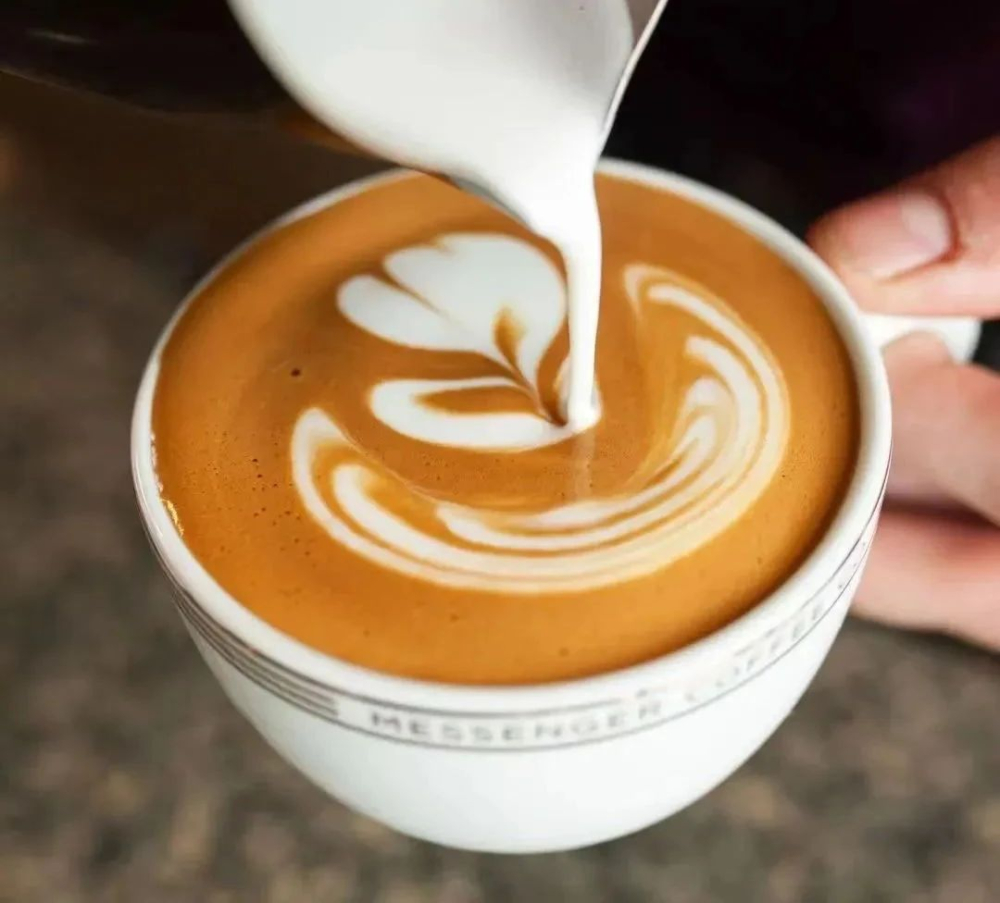
Latte art patterns add a great deal to the visual presentation of milk coffee, so most cafés typically make latte art a standard feature when preparing larger hot milk coffees. However, "most" does not mean "all." Friends who frequently visit cafés have probably experienced this: some cafés serve a flat white with no latte art pattern on the surface.
In the image below, the cup on the right with just a small white dot on an otherwise minimalist surface is a flat white without latte art. For years, the idea that "milk coffee must have latte art" has been deeply ingrained, so many customers drinking coffee at Front Street locations often discuss the topic of "why some coffee shops don't do latte art on their flat whites."
In fact, it's not just latte art—coffee shops also differ in the cup size and preparation method for flat whites. Ultimately, this is because every coffee shop and every barista has a different understanding of what a flat white is. The main reason for this situation is that the "definition" of the flat white itself is quite diverse.
As is well known, two countries have long competed over the title of the flat white's birthplace—New Zealand and Australia—both insisting they are the birthplace of the flat white. New Zealander Fraser McInnes claims that the flat white was accidentally created while he was working at a café called Cafe Bodega in Wellington. He accidentally steamed the milk for a cappuccino too thin, and so gave it that name. (Although in fact a rich milk coffee with thin foam had already been served as early as 1984, due to limited information dissemination at the time, his story was still written into some coffee origin textbooks.)
Australian barista Alan Preston disagreed, stating that the flat white was developed at his Moors Espresso Bar in Sydney and was already on the menu as early as 1985. When making a flat white, they use the same cup size as a latte, with the main difference being that the flat white's foam is thinner.
To this day, the dispute over the flat white's origin remains unresolved, which has led to each shop having different standards for flat white production compared to other coffees, with a very wide range of variation—including whether to pour latte art. But that's not the only reason.

From the above, we can understand that although flat white standards differ between countries, whether from New Zealand or Australia, the flat whites they each developed share one common characteristic—extremely thin foam. This is also the most important marker that distinguishes a flat white from a latte or cappuccino.
Front Street has previously shared that foams of different thicknesses give coffee different textures, because changes in thickness affect how much coffee liquid we take in with each sip, and the tactile sensation changes accordingly (for details, please refer to previous Front Street articles—no need to elaborate here). Because the flat white "carries" very thin foam, even a small sip easily reaches the coffee liquid hidden beneath the foam. This makes the coffee's mouthfeel velvety, silky, and delicate.
However, thin foam creates a problem in practice—it's not easy to pour latte art. Foam thickness not only changes the coffee's texture but also affects the difficulty of latte art, because the thickness of the foam determines the flowability during pouring. The thicker the foam, the lower the flowability; the thinner the foam, the higher the flowability.
Foam that is too thick or too thin is unsuitable for latte art. The former has too low flowability, making it impossible to create overly complex, refined patterns; the latter has too high flowability, greatly testing the barista's latte art skills. When latte art proficiency is not high enough, excessive flowability easily causes patterns to shift or deform during the "drawing" process. Therefore, the latte is the most suitable milk coffee for making latte art, because its foam thickness is moderate—it can draw delicate, complex patterns while not being too flowy, making it easy to control.
(Thin foam easily produces "sawtooth" patterns)

A flat white's foam thickness is only 0.3cm–0.5cm. With such thin foam, as Front Street says, it's very easy to mess up when making patterns. So some coffee shops, to reduce the risk of failure, simply choose not to pour latte art on flat whites.
Of course, this reason accounts for only a tiny proportion, since latte art isn't difficult—a few days of repeated practice is enough to draw exquisite patterns with extremely thin foam. Many coffee shops don't pour latte art on flat whites more to shorten service time, or to focus the consumer's attention on the coffee itself. When the attention-diverting latte art pattern is removed, consumers can better focus on the coffee's taste.
Overall, whether a coffee shop pours latte art on its flat white depends on multiple factors, directly related to the shop's positioning and the barista's understanding. But whether or not latte art is poured, the ultimate goal is to give consumers a better experience. So as long as the coffee tastes good, whether there's latte art doesn't really matter—after all, the presence or absence of latte art doesn't affect whether a cup of coffee tastes good. Unless you're ordering coffee specifically for photos and social media—then be sure to communicate with the barista before ordering, to avoid the flat white turning out differently from what you expected.
The above content is compiled by CoffeeHunters, a coffee news website.


