








How Do Beginners Learn to Describe Coffee Accurately?
Building coffee sensory skills starts with drinking widely, not with paying for certification. Beginners can learn to describe coffee by accumulating everyday tasting experience, separating basic tastes such as sweet, sour, salty and bitter from aroma notes, and only then working on flavor vocabulary. Professional courses like Q-Grader and SCA Sensory Skills help people who already have some background organize what they know and correct biased sensory judgments.
For zero-foundation drinkers, the tuition of such courses often does not match what they can realistically absorb, so it makes sense to observe and learn first. The practical route is to expand a personal flavor memory bank by trying many foods, especially fruits, and by tasting coffee repeatedly. The adjectives to describe coffee that professionals use come from remembered everyday tastes, not from memorized lists.
Specialty coffee has developed into a complete knowledge system spanning from cultivation and processing to roasting and brewing, and tasting is an indispensable part of it. When faced with professional courses such as Q-Grader and SCA Sensory Skills, how should beginners choose? This article offers actionable training advice from three angles—drinking more to accumulate experience, identifying tastes before discussing flavors, and understanding how flavors are composed—to help coffee lovers gradually build their own flavor memory bank through everyday drinking, and describe a cup of coffee's taste and aroma as accurately as professionals do.

As specialty coffee continues to evolve, from green bean cultivation and post-processing, to roasting curves and extraction methods, and then to cupping and tasting, every stage has built up a fairly rigorous knowledge framework.
Improvements in green bean quality and advances in roasting and brewing techniques ultimately serve to elevate the drinking experience. Therefore, mastering tasting methods should rightly become an important subject in coffee learning. There are already quite a few professional courses available on the market, such as the Q-Grader (Coffee Quality Grader) certification aimed at industry professionals, and the SCA Coffee Sensory Skills course suitable for enthusiasts.
For those who already have some coffee knowledge, such courses can help organize existing understanding and correct biases in sensory judgment. But for complete beginners with zero foundation, the high tuition fees often don't correspond proportionally to what they can truly absorb. So Front Street does not recommend that beginners rush to sign up purely out of enthusiasm; it's better to observe and learn first, starting with easily accessible basic knowledge, and make a decision later.
Of course, the prosperity of specialty coffee has also attracted a large number of enthusiasts wanting to get started, many of whom are eager to learn flavor tasting, hoping to describe a dozen flavors in one sip like professionals. Regarding where beginners should start learning to taste, Front Street has put together a few suggestions that interested friends can try following.
-Drink more!
If you ask a barista, "Why are you so sensitive to coffee flavors?" the answer you'll most likely get is "Drink a lot, and you'll naturally be able to taste them."
This actually makes a lot of sense. All memory of coffee flavors and tastes is formed through repeated tasting and continuous accumulation. Unless you're born with a "golden palate" or an extraordinary memory that lets you remember everything after one taste, you still have to rely on drinking coffee regularly to remember the characteristics of each bean.
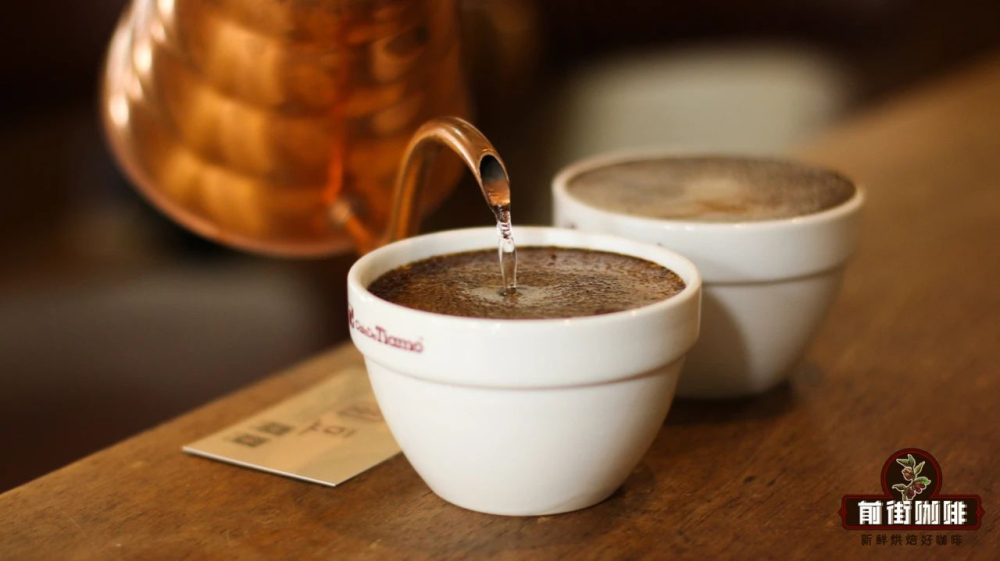
Even if you've taken a professional coffee tasting course, you'll still need to keep drinking to expand your flavor library afterward, otherwise what you get for the high tuition might just be a certificate.
-Set flavors aside first, judge the taste
If you force yourself to name several flavors right from the start no matter what, that's asking too much and rushing things. Coffee tasting is a process that requires long-term accumulation; there's no crash course. If you're a beginner starting from zero and wanting to learn to describe flavors, Front Street suggests you first forget about flavor descriptions and start with the most basic thing—drinking coffee and expressing how you feel.
Coffee sensory perception itself is highly subjective, depending both on personal taste preferences and on sensitivity to various tastes. Coffee tasting, however, seeks objectivity within subjectivity—that is, judging whether a cup of coffee is good shouldn't be based on personal preference but on objective description: whatever taste you perceive, describe it truthfully.
Identifying the taste of a cup of coffee is actually the simplest part, because there are only five basic tastes—sour, sweet, bitter, salty, and umami—and coffee typically only exhibits sour, sweet, and bitter. Front Street gives an example: when we drink a washed Yirgacheffe, the first sip brings an obvious sourness, and at that point we need to judge: is this sourness a sharp, stinging acidity, or a fruity acidity interwoven with sweetness, a gentle subtle sourness, or an acetic acidity with a fermented quality.
Another example: when drinking a Brazilian coffee bean, we can clearly detect bitterness, but we need to judge whether this bitterness is a pleasant one or a strong, stinging one, whether it's an extremely unpleasant burnt bitterness or a bitterness that gives way to sweetness, or perhaps a bitterness that brings out a hint of sweetness with a faint chocolate note.
Use this comparative approach to try different types of coffee and rank them. For example, if coffees A, B, and C all have sourness, and ranked by acidity it's A>B>C, then look at the acidity quality: A's sourness is rather stinging and sharp, making one uncomfortable; B is also sour but pleasant and easy to drink; C has a wonderful sweet-and-sour quality, sweet within the sour, like drinking a complex fruit juice.
Start by memorizing coffee tastes this way, and develop the habit of instinctively tasting whenever you drink coffee.

-Understanding flavor
What we call coffee flavor is composed of both taste and aroma. And coffee's aroma is the source of many flavors. The reason we use other real objects to describe coffee flavors is partly because we can taste flavors in coffee similar to other foods (fruits), and partly because it lets people who haven't tried that coffee build a taste image. Therefore, the flavor descriptors used are all common, everyday foods.
Front Street gives an example to help everyone understand: if a barista introduces this bean as having a strawberry flavor, breaking it down means—in terms of taste, its sweetness and acidity are similar to the sweet-and-sour quality of strawberries and similar berries; in terms of aroma, one can perceive the aromatic characteristics of strawberries.
For example, in coffee flavor descriptions, rose, jasmine, vanilla, mango, roasted sweet potato, and honey (water) are all expressed through aroma. So besides drinking and tasting more coffee, also pay attention to savoring the aromatic characteristics of foods around you in daily life. Only by storing these flavors in your brain's flavor library can you immediately recognize what flavor it is the next time you smell a similar aroma in coffee.
The above content is compiled by CoffeeHunters, a coffee news website.


