








What Is a Dirty Coffee and Why Does Contrast Matter?
A Dirty coffee is an iced milk drink topped with a shot of hot espresso that is left unstirred, so the dark coffee sinks slowly and stains the white milk. The layers are only part of it: temperature and flavor contrast between the hot, intense espresso and the cold, sweet milk define the drink.
Café versions tend to taste stronger because the espresso leads. Using a darker roast keeps bitterness in front and acid in check, while cold whole milk stays sweet. Pouring the espresso gently over the milk surface preserves the separation, and the drink is taken without stirring to keep each layer distinct.
In summer, what could be more enticing than a Dirty? With its striking layers and intense contrast, this milk coffee has quickly won the hearts of many latte lovers. Yet many people who try making it at home feel it lacks the punch of the café version. In fact, the soul of a Dirty lies in contrast—from temperature to flavor, the espresso and milk need to form an extreme contrast. This article, drawing on the practical experience of Front Street Coffee, breaks down in detail how to choose coffee beans and milk, as well as the key techniques for making it, so you can easily create a Dirty with lasting layers and an impressive taste.

To learn more about specialty coffee, welcome to follow: Front Street Coffee (Frontsteet Coffee)
When it comes to the most suitable milk coffee for summer, Dirty definitely takes the crown! If we had to find a second option, Front Street can only say we haven't thought of one yet.
Compared with iced latte, the contrast of Dirty hits you more directly. With one sip, wildly different sensations collide in your mouth—it's truly wonderful. That's why, ever since Dirty became popular, many latte lovers have switched to it. Of course, Front Street isn't dismissing the iced latte; each has its own merits. And making a Dirty isn't actually complicated—just like its distinct layers suggest, all you need is to float the espresso on top of the milk.
However, many friends who try it at home feel it lacks the punch of the café version. The reason is simple—they didn't grasp the essence of Dirty when making it.
What is the soul of Dirty?
Contrast is the soul of Dirty. It's not just about the visual layers; the temperature and flavor of the milk and coffee also need to form a sharp contrast. So a successful Dirty must not only separate the milk and coffee into layers but also create a huge gap in temperature and taste. Next, Front Street will share how to make a delicious Dirty coffee.
Dirty coffee's requirements for espresso
It's fair to say the contrast of a Dirty is mainly led by the espresso. Because when we taste a Dirty, the first thing we encounter is the espresso, then the milk, so the flavor of the espresso is crucial.
The key to determining espresso flavor lies in the coffee beans. The lighter the roast, the more acidic the coffee; the darker the roast, the more bitter. The main flavor of milk can be summed up in one word—"sweet." Therefore, the core flavor of the beans we choose should ideally be the opposite of sweet, which is "bitter."
Front Street recommends using medium-dark roasted coffee beans. This way, the extracted espresso won't have obvious acidity or be overly bitter. The恰到好处的 bitterness is enough to create a strong contrast with the milk, while not being so bitter that it makes you frown when tasting the espresso.
Dirty coffee's requirements for milk
Milk is one of only two ingredients in a Dirty, so the choice of milk is equally crucial. To form a sharp contrast with the coffee, the milk needs to go to the other "extreme."
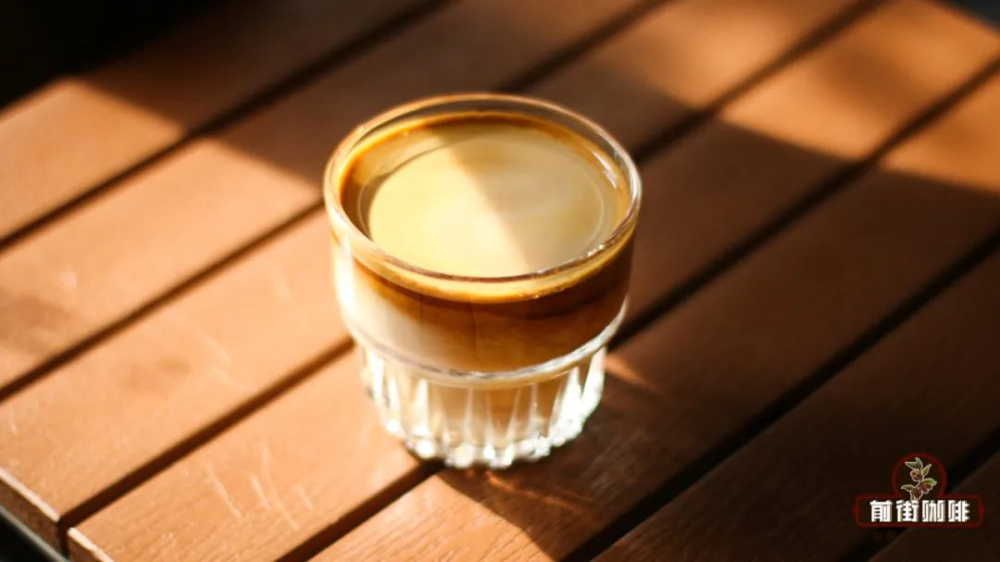
Espresso is bitter, so milk must be sweet! The content of substances in milk determines its richness. The higher the protein, fat, lactose, and other components, the sweeter and more delicious the milk tastes, and the higher its density, which better maintains the layering effect with the espresso. Therefore, when choosing milk, the richer the milk, the stronger the contrast in the Dirty—in other words, the better the Dirty performs.
Of course, going too extreme is not recommended. When the substance content in milk is too high, a cheese-like salty taste appears. Combined with a rich espresso, the overall flavor becomes too heavy and feels burdensome to drink.
Next is temperature. Temperature difference is a very important source of contrast in Dirty coffee. This is easy to solve—espresso is hot, so milk must be ice-cold! Refrigerated milk fully meets the requirement, so no extra effort is needed here. But maintaining the milk's temperature requires attention!
Besides density difference, temperature is also a key factor in determining how long the layers last. If we don't want the Dirty to lose its layering too soon, the choice of cup is crucial.
When the cup is at room temperature, the colder milk will continuously absorb heat from the cup until its own temperature approaches that of the cup. In other words, a room-temperature cup accelerates the milk warming up. So it's best to chill the cup before making a Dirty, so the Dirty can maintain its contrast for a long time.
Notes during preparation
Once the materials are ready, it's time to combine them! By "combine," it just means extracting the espresso onto the milk, but this also requires careful technique.
If the impact force of the espresso extraction is too high, the coffee liquid will shoot directly into the milk, causing them to blend and turning it into an iced latte. Therefore, to avoid this, we need to bring the espresso closer to the milk surface, reducing the impact force, so a distinct layering effect forms!
Pushing the milk surface right up to the espresso spout, or using a spoon held against the milk surface to eliminate the espresso's impact—these are all feasible methods. Which one to use is up to you~
The above content is compiled by CoffeeHunters, a coffee news website.


