







How Does Siphon Coffee Brewing Actually Work?
Siphon brewing uses vapor pressure to move water from the lower chamber into the upper one, where it meets the coffee grounds. A working recipe is 18 grams of coffee to a 1:10 coffee-to-water ratio with water at about 88°C; after a short contact time the heat is removed and the liquid returns below.
The lower chamber is rounded so heat spreads evenly, while the upper chamber seals against it with a rubber ring. Alcohol lamps, gas burners and halogen heaters all work as heat sources, and the filter material affects clarity in the cup. Medium roasts with round body tend to perform well in this method.
With its unique appearance resembling chemical apparatus, the siphon brewer carries a retro and mysterious style among many coffee tools. For coffee professionals, the focus always remains on its operation method and the final flavor performance. This article will start with the structure and extraction principle of the siphon brewer, explain in detail the choice of heat source and filter material, and then use 18 grams of coffee powder, a 1:10 coffee-to-water ratio, and a water temperature of 88°C as parameters to demonstrate the complete brewing process of siphon coffee step by step, along with recommendations for coffee beans suitable for siphon brewers, including several classic single-origin coffees on the Front Street Coffee bean list, helping coffee enthusiasts stably produce a cup of siphon coffee with rich aroma and round mouthfeel at home.
For more specialty coffee knowledge, please follow: Front Street Coffee ( Frontsteet Coffee )
In many people's perception, the scene of brewing coffee with a siphon brewer always carries a somewhat laboratory-like sense of rigor, and its frequent appearance in nostalgic film and television scenes adds even more mystery. As practitioners in the coffee industry, what Front Street cares about most is still how to operate this tool and what flavor characteristics the coffee it brews has.
Structure, Extraction and Principle of the Siphon Brewer
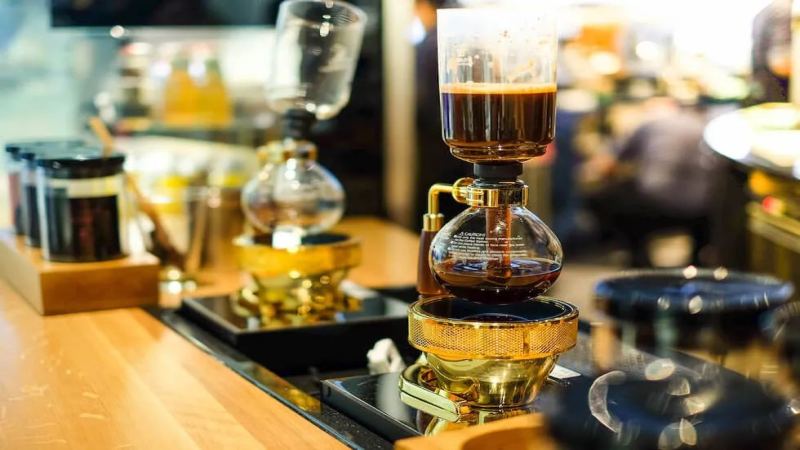
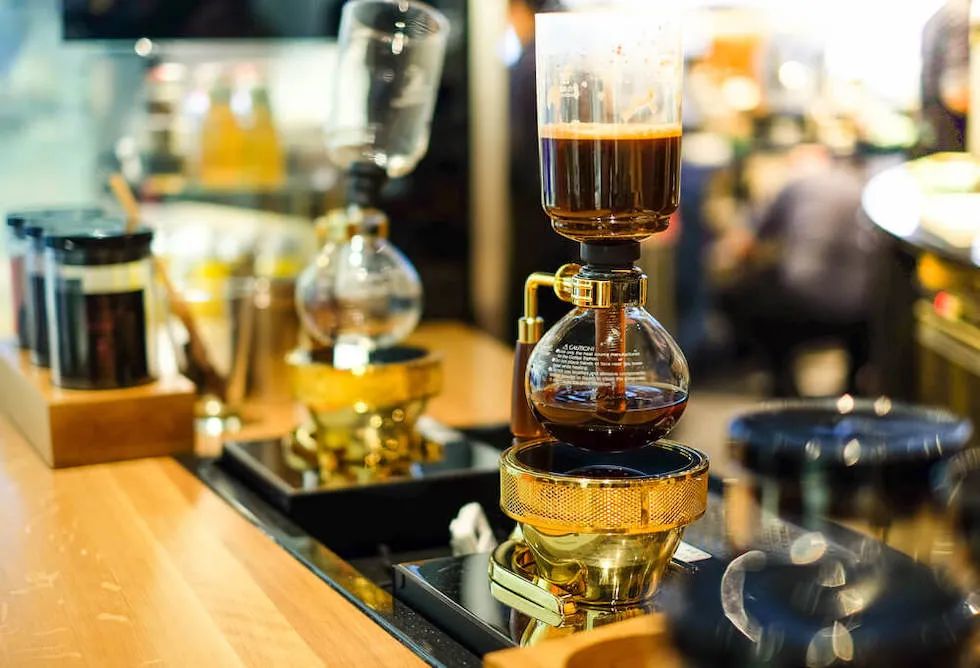
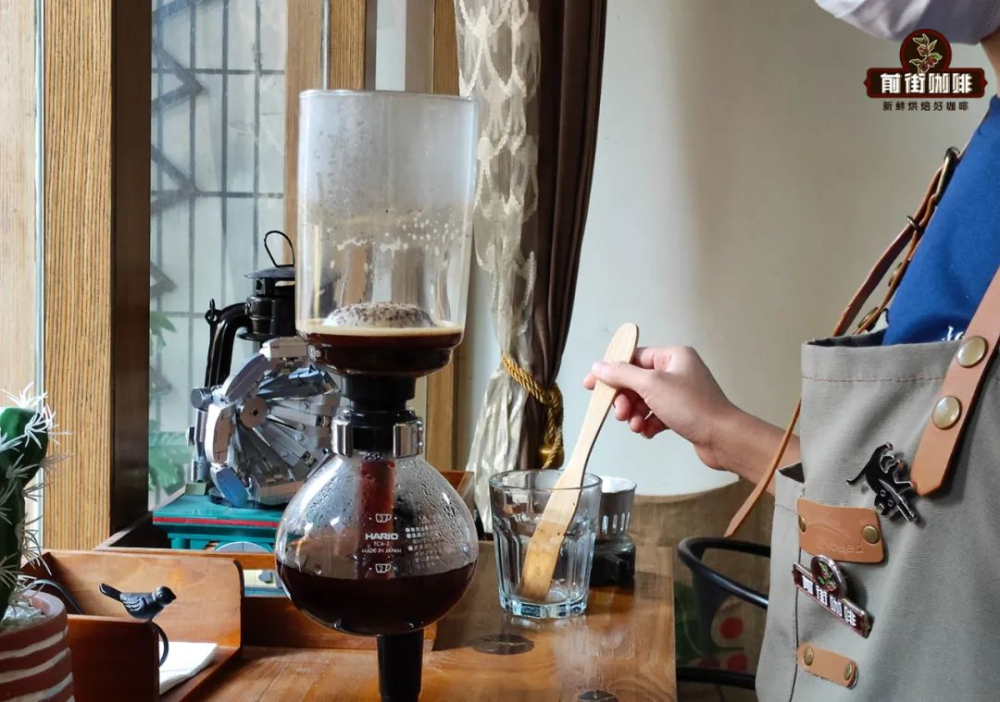
Overall, the siphon brewer consists of upper and lower chambers plus a stand, with the stand connected to the lower chamber and serving the functions of fixation and support. The lower chamber is basically spherical, and this shape helps heat distribute evenly during heating. The upper chamber is cylindrical, and after narrowing at the bottom, a slender tube extends downward, with a rubber ring installed at the narrowed opening. When the upper chamber is placed on the lower chamber, the rubber ring creates a seal. At this point, when the lower chamber is heated, the rising water temperature produces steam, creating pressure inside the lower chamber and pushing water up into the upper chamber. The upper chamber is exactly where the coffee grounds come into contact with the water. Once the heat source is removed, the coffee liquid falls back into the lower chamber, and the extraction of siphon coffee is completed.
Heating methods mainly include alcohol lamps, gas burners, and halogen lamps. Front Street uses an alcohol lamp. The medium for intercepting coffee grounds is divided into cloth filters and circular paper filters. Cloth is a traditional filter material, and its advantage lies in its ability to retain coffee oils, while its drawback is that both use and cleaning are relatively troublesome. Paper filters are a newer choice, with a more thorough filtering effect, blocking even fine substances including oils. If you are only drinking it yourself and do not brew coffee frequently, Front Street recommends using cloth so that you can experience the taste of siphon coffee more fully. There is a bead attached to the filter net. Its function is to prevent sudden boiling when the upper chamber is inserted into the lower chamber, and at the same time, the small bubbles around the bead can also be used to judge the water temperature. In addition to the siphon brewer set and heating equipment, making siphon coffee also requires a stirring spoon and a wet cloth.
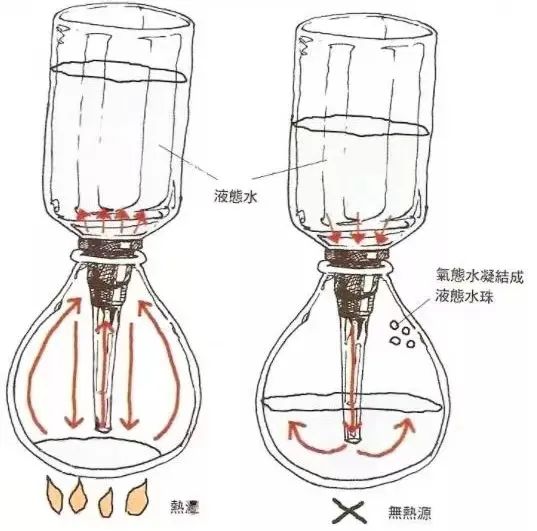
The extraction of the siphon brewer relies on pressure difference. First, heat the water in the lower chamber to boiling, then insert the upper chamber. The lower chamber is therefore in a high-pressure state, and the pressure difference between the upper and lower chambers pushes the hot water upward to mix with and extract the coffee grounds in the upper chamber. After extraction ends, remove the heat source from the lower chamber. The pressure difference between the upper and lower chambers suddenly decreases, and the siphon effect causes the coffee liquid to flow back into the lower chamber. If you want to speed up the return flow, you can wipe the lower chamber with a wet cloth to further reduce the pressure difference, and the coffee liquid will return faster.
How to Use a Siphon Brewer
To brew a delicious cup of siphon coffee, brewing details still need attention. Here Front Street uses its own roasted Front Street Brazil Queen's Estate coffee beans to demonstrate the specific operation.
Water temperature: 88°C
Grind size: 90% passing through a No. 20 sieve
Coffee dose: 18 grams
Coffee-to-water ratio: 1:10
1. Pour 180 ml of warm water into the lower chamber, and wipe the outside of the chamber dry with a dry cloth (to prevent the chamber from cracking during heating). Light the alcohol lamp and place it under the lower chamber to heat.
2. Take out the upper chamber, secure the filter cloth, hang the fixing hook onto the wall of the glass tube at the bottom of the upper chamber, and insert it diagonally into the lower chamber.
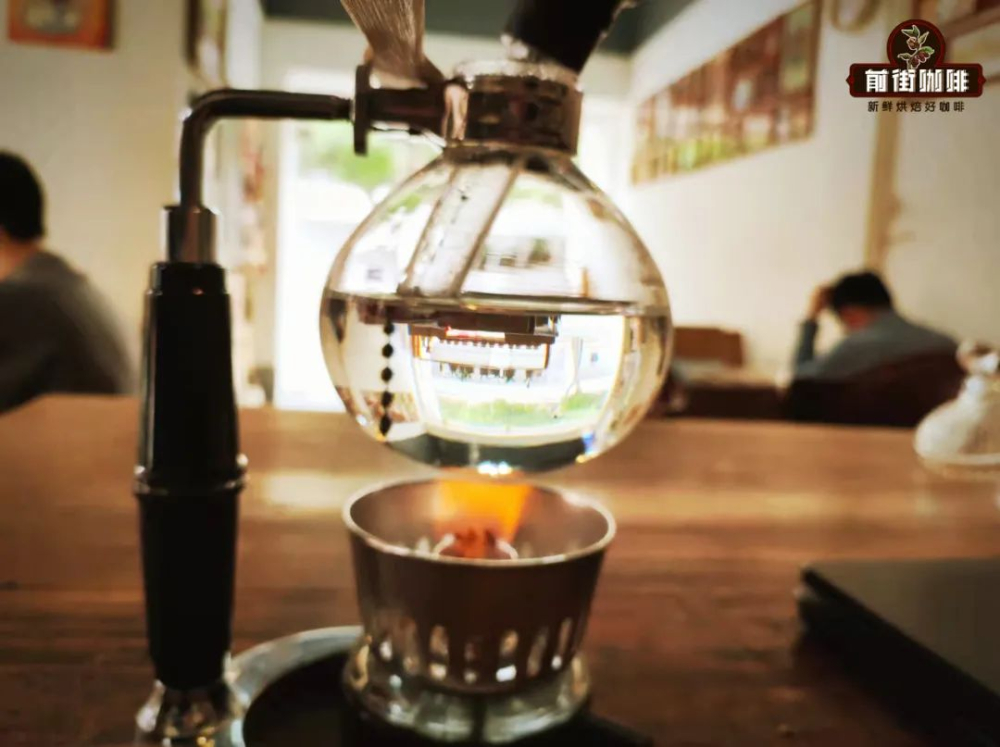
3. Pay attention to the state of the lower chamber. Once continuous small bubbles appear, straighten the upper chamber and insert it vertically into the lower chamber so that the upper and lower chambers connect tightly.
4. After the water in the lower chamber rises into the upper chamber, pour in the ground coffee, and use a stirring rod to stir clockwise from the outer ring toward the center for 10 seconds to ensure that all coffee grounds are saturated by the water.
5. Then start timing. After 40 seconds, stir the coffee liquid clockwise again with the stirring rod for 5 seconds; then quickly remove the alcohol lamp and extinguish the heat source, and the coffee liquid begins to flow back from the upper chamber to the lower chamber; during the return flow, you can wipe the lower chamber with a wet cloth to speed it up. The total extraction time is about 1 minute and 10 seconds.
6. Finally, gently remove the upper chamber, pour the coffee liquid from the lower chamber into a cup and enjoy. The siphon coffee brewed this way has a very rich aroma. Although it is not as transparent and clean as pour-over, the oils floating on the surface bring a lot of body.
What coffee beans are suitable for a siphon brewer?
In the past, people placed more emphasis on rich and full-bodied flavor and mouthfeel. When using a siphon brewer, most chose medium-dark roasted coffee beans, and the extracted coffee had both a rich aroma and a round, balanced mouthfeel. If you also prefer this style, popular items on the Front Street bean list such as Front Street Jamaica Blue Mountain Coffee, Front Street Golden Mandheling Coffee, Front Street Brazil Queen's Estate Coffee, and Front Street Papua New Guinea Paradise Bird Coffee are all very suitable for making with a siphon brewer.
Nowadays people are pursuing more refined coffee flavors, and the choices on the market are becoming increasingly abundant. In addition to the above few, more than fifty single-origin coffee beans on the Front Street bean list can all be used to make siphon coffee. Here Front Street selects a few classic flavor-oriented coffee beans to recommend to everyone, and you can choose according to your own taste preferences.
Front Street Sun-Dried Red Cherry Coffee Beans with the Refreshing Sweetness and Acidity of Tropical Fruit
This Front Street Sun-Dried Yirgacheffe Coffee on the Front Street bean list was originally used for pour-over drip brewing. Coffee cherries at just the right maturity retain their complete pulp and are dried in the sun, and the inner core absorbs a large amount of sugar from the pulp, so the coffee shows very high sweetness and a strong fruity aroma. When Front Street extracts Front Street Sun-Dried Red Cherry by pour-over in daily use, you can taste obvious ripe fruit sweetness and acidity, reminiscent of red berries, with a fermented tea note in the finish. When extracted with a siphon brewer, the black coffee presents a ripe fruit mouthfeel, pleasant sweetness and acidity, and almost no bitterness can be detected. It feels just like a cup of fruit tea after tasting.
Front Street Costa Rica Mozart Coffee Beans with Rich Fermented Fruit Aroma
Raisin honey processing is a method that retains 100% of the coffee's pectin and uses zero water. Ripe, plump fruit retains the pectin layer before drying for sealed fermentation, maximizing the sweetness of the coffee beans. This Front Street Costa Rica Mozart Coffee recommended by Front Street presents rich rose aroma, raisin, and white wine with high sweetness when pour-over brewed. The coffee brewed with a siphon brewer presents full tropical fruit sweetness and acidity, with a round mouthfeel and pleasant sweetness and acidity.
The above content is compiled by CoffeeHunters, a coffee news website.


