








How Do Pour-Over Coffee Pouring Methods Affect Extraction?
Pour-over pouring technique matters less than the brewing parameters behind it. Circular pouring agitates the coffee bed more, which can create turbulence and uneven extraction, while center-point pouring keeps the water in one spot and reduces agitation. Both approaches change how water moves through the grounds, so the pour affects channeling and evenness rather than replacing correct dose, grind, and water volume.
Beginners should start with slow, steady, straight pours before copying circular motions. The same logic applies when learning how to use drip coffee machine settings: parameters such as grind size, water temperature, and ratio carry more weight than hand movements. Circling direction and pouring height mainly adjust agitation intensity, so controlling them prevents over-extraction on one side of the bed and under-extraction on the other.
The pouring technique for pour-over coffee has always been one of the topics newbies care about most. Many friends who have just encountered Front Street Coffee often ask: why isn't the coffee I brew tasty enough? Actually, understanding and applying the right brewing parameters is more crucial than obsessing over pouring technique. This article compares circular pouring and center-point pouring, analyzing changes in the coffee bed, the causes of turbulence, and the effect of agitation intensity on extraction, while also answering common questions about pouring height and circling direction. This set of pouring key points that Front Street Coffee has compiled for beginners starts with slow, steady, and straight, helping you avoid channeling and brew an even, delicious pour-over coffee.
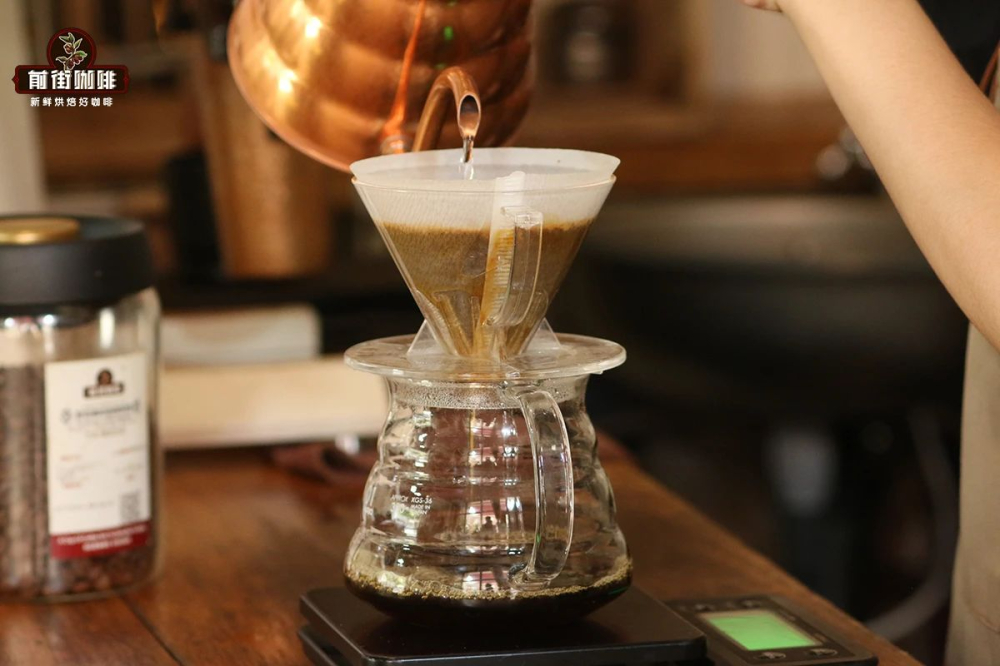
The issue of pouring water for pour-over coffee has been discussed over and over many times, but there are still quite a few friends who have just started and follow Front Street Coffee who ask: "Why is my coffee never tasty no matter how I brew it?" "Is pour-over coffee especially difficult?" Pour-over coffee is still a relatively niche field right now, so to help new friends keep up, some basic content still needs to be covered again.
For those just starting to learn coffee brewing, Front Street Coffee has always believed that understanding and applying the correct brewing parameters is more important than blindly imitating pouring motions. Front Street Coffee also often talks about parameters. There are many kinds of parameters for brewing good coffee, but for beginners, a highly compatible parameter set is the most practical. So you will notice that the brewing plans Front Street Coffee recommends for most coffee beans are almost the same (except for certain beans). This is not because Front Street Coffee is being lazy or perfunctory, but because a method with good compatibility and simple operation is what suits widespread adoption. Front Street Coffee has also made a dedicated brewing technique sharing series.
Anyway, let's get to the point.
First, the vast majority of cafes use circular pouring when brewing coffee, though some also use center-point pouring. Below, Front Street Coffee will demonstrate center pouring and circular agitation to see what changes happen to the coffee bed.
As you can see, if you use center circling, it is very easy to create turbulence. If the stream has even a slight angle, the direction of water flow within the coffee bed becomes difficult to control, just like in the video, where after the stream hits the bottom of the coffee, it flows back in the direction of pouring. This makes it very easy to form channels, and the water all flows away along those channels. If you observe the coffee wall after center pouring, it will appear thin on one side and thick on the other. But circular agitation pouring does not have this problem; the coffee wall stays even in thickness.

From this comparison, we can see that agitation pouring, on the one hand, is less likely to cause turbulence, and on the other hand, can also make extraction more even.
In fact, "stirring" is something we see everywhere in daily life. When dissolving instant powder granules, we use a spoon to stir so the granules fully dissolve into the water. Stirring during pour-over pouring is based on a similar idea: letting the water stream act as a stirring tool, continuously "churning" the coffee bed and prompting the coffee grounds to release more flavor substances.
So then the question arises: is stronger agitation always better? The answer, of course, is no. We only want the tasty substances in coffee, and we do not want bitterness or off-flavors. When the agitation is too strong, even after you stop pouring, the water surface will continue rotating in the direction of stirring, like a drum washing machine (the faster it spins, the more easily the water is flung out), and the coffee is also prone to developing unpleasant flavors.
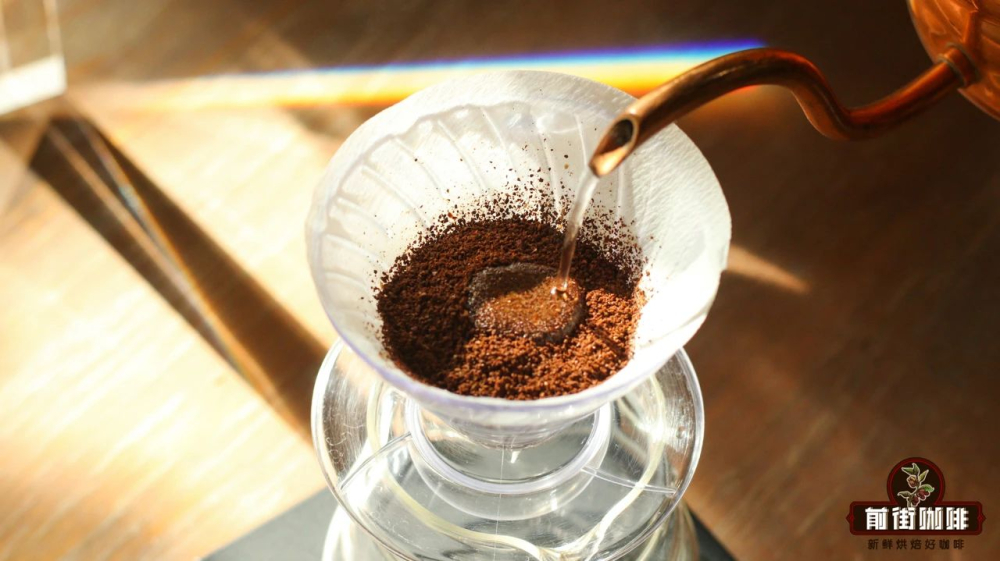
In addition, there is one more thing to pay attention to in pour-over brewing: try not to pour onto the filter paper. Once you break through the coffee wall, it is easy to form channels, leading to incomplete extraction. Front Street Coffee suggests that friends just learning pour-over should start by practicing three points when pouring in circles: slow circling, steady stream, and straight stream.
Regarding pouring, there are two more common questions: what should the pouring height be? Should you pour clockwise or counterclockwise?
There are no standard answers to these two questions. Some people like to pour close to the liquid surface, while others like to raise the stream high. The difference lies in the temperature change: with high pouring, the stream easily loses heat (at a height of 8 centimeters, there is about a 0.7 to 1 degree error). But Front Street Coffee also does not recommend pouring right against the liquid surface, because many kettles release water at a certain angle, and only when raised to 2 to 3 centimeters will the stream be vertical. Pouring close to the liquid surface easily creates turbulence or breaks through the coffee wall.
As for whether to pour clockwise or counterclockwise, Front Street Coffee's answer is: either is fine, as long as you keep circling in the same direction from beginning to end. Of course, there are also online discussions about the difference between the spiral direction of the ribs in a V60 dripper and clockwise/counterclockwise pouring. Front Street Coffee thinks this is actually a nice topic for after-dinner chat.
The above content is compiled by CoffeeHunters, a coffee news website.


