







How Arabica Bean Coffee Forms Differ in Flavor and Health
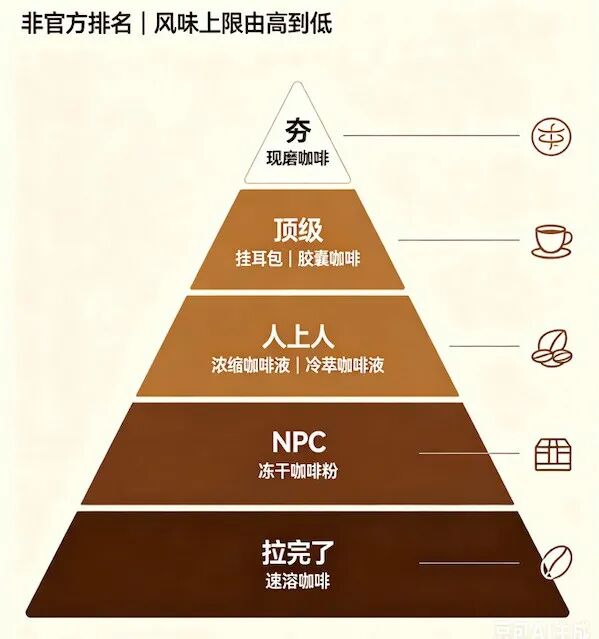
Processing method, not price, decides flavor and health in coffee. Freshly ground coffee sits at the top because whole beans are ground and brewed on the spot, keeping aroma and layers intact with no added ingredients. Drip bags and capsules follow for convenience, cold brew concentrate sits in the middle, and freeze-dried and traditional instant coffee rank lowest.
An arabica bean used fresh gives the fullest cup, and pour-over, espresso, French press, moka pot, siphon and AeroPress all fall under freshly ground coffee. Instant products lose volatile aroma during extraction and drying, so the flavor flattens even when the caffeine content stays comparable.
Coffee products are dazzlingly diverse, and behind the price differences, the processing method is what truly determines flavor and health. Front Street Coffee ranks mainstream coffees on the market into five tiers based on overall taste and flavor: freshly ground coffee takes first place thanks to its complete raw materials and fresh extraction, drip bags and capsules follow closely for their convenience, cold brew concentrated coffee liquid sits in the middle, and freeze-dried coffee powder and traditional instant coffee rank lower. This article will break down each type of product's production principles, flavor performance, and health considerations one by one, interspersing Front Street Coffee's daily drinking beans and espresso blend recommendations, to help coffee lovers understand the ranking logic from "solid" all the way to "completely done."
Today coffee comes in endlessly emerging forms, and beyond price, the processing method is the core factor determining the final taste and health risks.
If Front Street Coffee were to make an informal "from solid to trash" ranking of the main coffee categories on the market based on overall taste and flavor, freshly ground coffee would undoubtedly sit firmly in the top "solid" seat; drip bags and capsule coffee rank in the second tier as "top-tier"; cold brew concentrated coffee liquid occupies the middle position of "above average"; freeze-dried coffee powder and instant coffee fall to the bottom, classified as "NPC" and "completely done" respectively. Why this order? Front Street Coffee explains it all in one go in this article.
First Tier: Freshly Ground Coffee
Freshly ground coffee means coffee beans are freshly ground and brewed on the spot. It uses complete coffee raw materials for extraction, so the coffee grounds need to be filtered out. Because it is ground and brewed fresh with no additional ingredients, the aroma is preserved to the greatest extent, the taste layers are the richest, and it better matches our expectations for a healthy beverage.
Freshly ground coffee comes in many forms, and the flavor choices are extremely broad. Pour-over, espresso, French press, moka pot, siphon, AeroPress, as well as cold brew, ice drip, and other common methods all fall within the scope of freshly ground coffee.
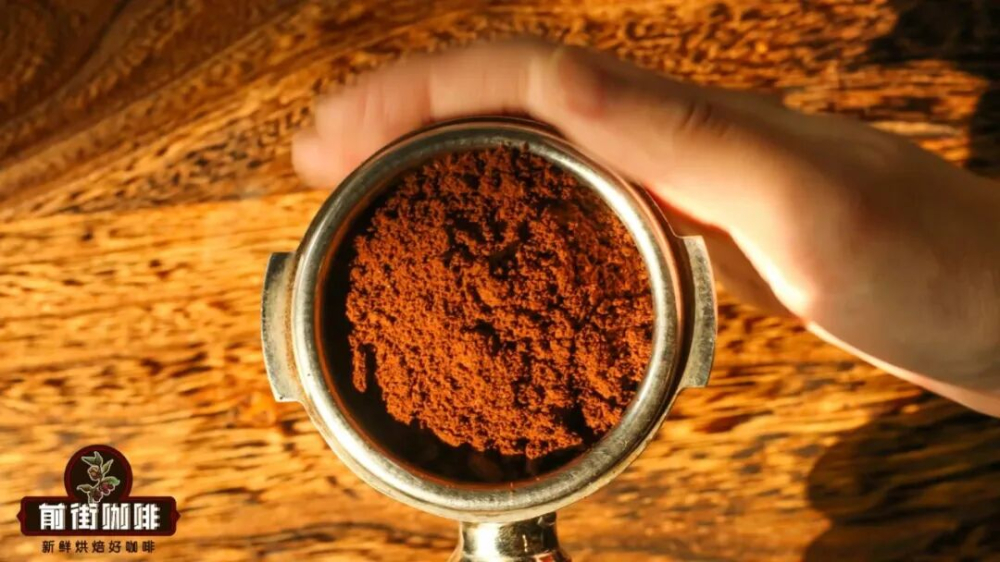
As a concept closely tied to specialty coffee, freshly ground coffee is often the first choice for flavor seekers, and is also most recommended for beginners just starting out, because it better helps everyone build up sensory tasting and foundational knowledge.
If you want to learn pour-over, you might try highly recognizable daily drinking beans such as Front Street Indonesia Mandheling, Front Street Yirgacheffe, Front Street Colombia Huila, and Front Street Brazil Cerrado—only freshly ground and freshly brewed can you experience the purest flavor; if making espresso, espresso-specific beans such as Front Street Dark Cocoa Base Blend, Front Street Classic Blend, and Front Street Strawberry Candy Espresso Blend are recommended—only freshly ground and freshly extracted can give the espresso that essence-like crema and rich, full-bodied taste.
Second Tier: Drip Bags and Capsule Coffee
If the goal of the first tier is pursuing flavor, then this group is more about providing convenience. Drip bags and capsule coffee pre-grind the beans into powder, then brew with the help of filtering tools. The convenient design lets us drink a freshly brewed, delicious, refreshing beverage more quickly and with less effort.
Their extraction principle is actually the same as pour-over and espresso in freshly ground coffee, all using an additive-free processing mode, so the coffee retains its original taste and nutrition, and there is plenty of room for choice. The difference is that because the powder is pre-ground, some complex techniques and parameters are eliminated. As long as there is hot water, a cup, or a capsule machine, we can achieve coffee freedom anywhere—though the downside is that the aroma dissipates faster over time.
Third Tier: Espresso Liquid / Cold Brew Coffee Liquid
Espresso liquid and cold brew coffee liquid are obtained through high-pressure extraction and low-temperature immersion (filtration) respectively to produce concentrated coffee liquid, with the entire process requiring operation in a sterile, purified workshop, followed by freshness-locking filling or sealed bag packaging. Because it is a pre-made coffee liquid with no other substances added, the shelf life is relatively short, and the taste is closer to the original flavor of coffee.
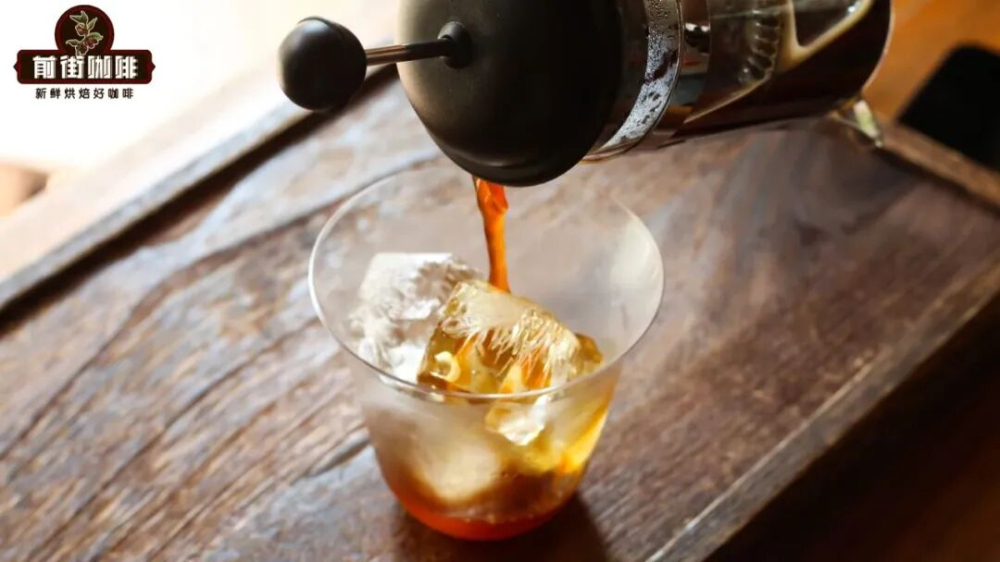
It should be noted that some cold brew coffee liquids on the market may have added sugar, preservatives, and other ingredients. They may be cheaper, but they affect health, so be sure to distinguish carefully when purchasing.
Fourth Tier: Freeze-Dried Coffee Powder
Distinguished by production process, freeze-dried coffee is actually a type of instant coffee, but compared with traditional instant coffee, freeze-drying has lower production efficiency and higher costs, so the selling price is also a bit more expensive.
The full name of freeze-dried is "freeze drying," and the principle is ice crystal sublimation. Coffee is first dissolved into a concentrate of about 65% concentration, then condensed at -5°C, turning into a paste, which is then transferred to a freezing chamber at -40~-50°C. Once the coffee concentrate solidifies into hard blocks, it is crushed into small particles of 2~3mm. Finally, these particles are sent into a vacuum drying chamber for heating and drying, and they transform into freeze-dried coffee.
Because the entire process takes place in a low-temperature environment, some of the coffee's aromatic substances can be preserved, so some coffee brands use better Arabica beans instead of Robusta to create flavor-oriented freeze-dried coffee. Of course, complex processes and expensive materials also bring increasing costs.
Fifth Tier: Instant Coffee
To produce traditional instant coffee, roasted coffee beans are first ground into powder to dissolve out their substances, then the coffee liquid is sprayed through nozzles into countless small droplets into a high-temperature drying chamber, where the water evaporates, leaving behind the instant coffee powder that solidifies into a powdery solid.
Because it is processed at high temperatures, the vast majority of the coffee's flavor completely disappears, leaving only a bitter coffee taste, so instant coffee is usually made mainly from lower-quality Robusta beans, then heavily supplemented with non-dairy creamer and sugar to dilute the bitterness, turning it into "2-in-1," "3-in-1," and other products. This is why instant coffee has become synonymous with "low-end coffee"—because these early instant coffees were not healthy.
The above content is compiled by CoffeeHunters, a coffee news website.


