








Iced Americano How Much Water and Ice Should Go In?
There is no fixed ice amount for iced coffee, because the right ratio depends on the brew method, the bean, and personal taste. The coffee must be brewed strong and full-flavored before ice goes in, since melting ice will dilute it. Espresso, pour-over, and cold brew each call for their own adjustment.
Ice has three jobs: chill the coffee fast, slow aroma loss, and keep the drink cold longer. Larger cubes melt more slowly, and ice frozen twice holds its shape better than fresh ice. When weighing iced americano how much water to add, home brewers can also compare iced americano or hot americano which is better for their own routine and taste.
As temperatures climb, iced coffee becomes a daily choice for many, but the key to a great-tasting iced coffee lies in the precise control of the amount of ice used. Ice in coffee not only cools it down but also locks in aroma and slows the warming process, making the refreshing chill last longer. However, different extraction methods and roast levels of coffee beans have vastly different ice requirements. This article starts from the role and quality requirements of ice, combines specific scenarios of espresso, pour-over coffee, and cold brew/ice drip, and provides a detailed analysis of the logic for adjusting ice ratios. Using beans such as Front Street Classic Blend, Granada Geisha SOE, and Fruit Ding Ding as examples, it offers practical home ice solutions to help you easily make a cup of iced coffee with just the right strength, flavor, and chill.

Adding ice to coffee is an unavoidable topic in spring and summer, and "how much ice to add" is a question many home brewers ponder repeatedly.
Although online tutorials for various iced coffees are already very detailed—just gather the materials and you can easily make them at home—in Front Street Coffee's view, to achieve the ideal taste, the final ice amount still needs to be flexibly adjusted based on the specific method, coffee bean variety, and personal taste preferences.
Ice plays three main roles in coffee: first, it rapidly cools hot coffee; second, it slows the loss of aroma; third, it inhibits the warming of iced coffee, making the chill last longer. For this reason, before adding ice, we must ensure the coffee itself has sufficient strength and full flavor; at the same time, besides paying attention to the amount of ice, the quality of the ice itself cannot be overlooked.
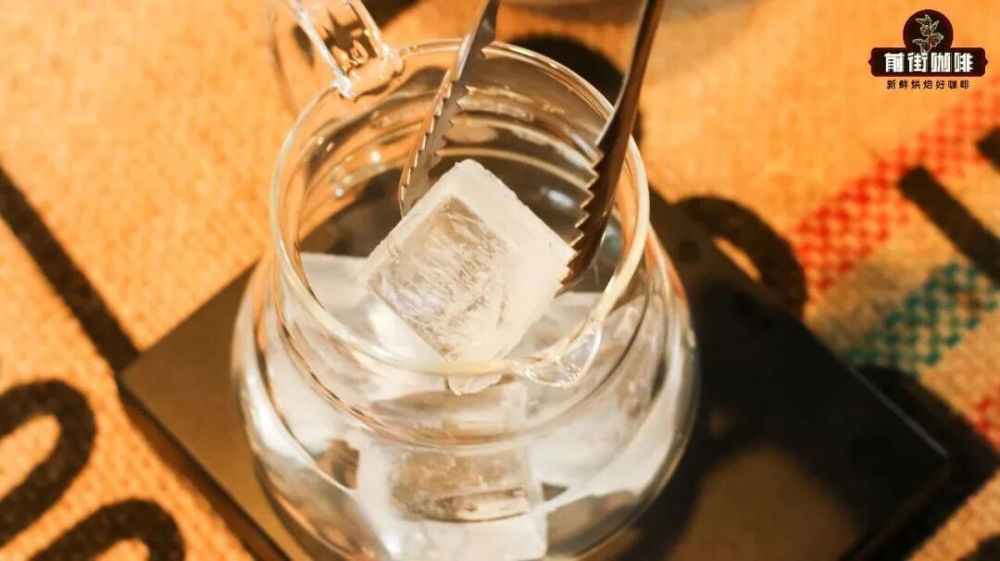
Common household ice molds are usually spherical or square, and freezing in a refrigerator is static, resulting in solid ice. Given the same shape, the larger the ice cube, the slower it melts. Additionally, ice that has been frozen twice becomes harder, and when added to coffee, it provides better cooling performance than freshly unmolded ice.
If you often make iced coffee at home, Front Street Coffee suggests choosing large-sized ice trays, or simply using independent large spherical molds, so the ice freezes more solidly. If you only have small ice cubes on hand, take the time to remove the ice in advance, place it in a clean, airtight container, and return it to the freezer to increase the hardness of the ice.
Next, we will determine the corresponding ice amount based on specific scenarios.
Adding Ice to Espresso
The flavor of an espresso-based drink is mainly determined by the espresso, its strength depends on the amount of water or milk added, and the ice's job is to cool it down. Since these drinks are usually served in larger cups and may be consumed over a longer period, they need to stay cold for longer, so not only should plenty of ice be added, but it should also melt slowly.
Considering that espresso beans of different roast levels bring vastly different flavor profiles, to prevent the coffee's aroma from being diluted, we'd best prepare two ice strategies:
When medium-dark roasted espresso beans take the stage, such as the popular Front Street. Front Street Classic Blend among home users, the espresso extracted has rich crema, emitting roasted hazelnut, butter, dark chocolate, and maple syrup intertwined roasted sweet aromas, with high body and a solid mouthfeel. When making iced Americano or iced latte with these beans, you can appropriately increase the ice ratio.
Front Street. Front Street Classic Blend Iced Americano: Extract 40g of espresso from 20g of coffee powder, control the time to 25–30 seconds, then add 120ml of drinking water and 100g of ice. The ice weight is 2.5 times the espresso; choose ice cubes that are as large and hard as possible.
Front Street. Front Street Classic Blend Iced Latte: Extract 40g of espresso from 20g of coffee powder, time 25–30 seconds, add 150ml of chilled fresh milk and 80g of ice. The ice weight is 2 times the espresso.
Another case is medium-roasted fruity espresso beans, such as the recently launched Front Street. Granada Geisha SOE. Since its espresso crema is relatively thin, with low body and mild bitterness, and flavors dominated by honey, lemon, nectarine, and blueberry, whether made into iced Americano or iced latte, the goal is to highlight its refreshing and bright character. Therefore, the amounts of ice, water, and milk should be reduced to enhance the presence of the coffee itself.
Front Street. Granada Geisha SOE Iced Americano: Extract 40g of espresso from 20g of coffee powder, time 30–35 seconds, add 100ml of drinking water and 80g of ice. The ice is 2 times the espresso.
Front Street. Granada Geisha SOE Iced Latte: Extract 40g of espresso from 20g of coffee powder, time 30–35 seconds, add 120ml of chilled fresh milk and 60g of ice. The ice is 1.5 times the espresso.
Adding Ice to Pour-Over Coffee
Unlike iced espresso drinks, iced pour-over uses ice to rapidly cool the hot coffee liquid in a short time while diluting it to a suitable concentration. Compared to hot pour-over, iced pour-over introduces ice as a core variable. To achieve a coffee that is simultaneously strong, flavorful, and icy without other physical tools, the amounts of hot water and ice must be well coordinated. The ice-adding approach also falls into two categories:
When brewing medium-light roasted beans with floral and fruity notes as the highlight, such as Front Street. Fruit Ding Ding and Front Street. Little Tomato, since we need to extract as much of the mid-palate sweetness as possible for a fuller flavor, we can slightly lower the ice ratio. For a single serving of 15g Front Street. Fruit Ding Ding, for example, use a total water volume of 170ml, brew for 2 minutes, then add 60g of ice. The ice weight is 4 times the coffee powder.
For darker roasted beans like Front Street. Queen's Estate and Front Street. Huilan, it's recommended to focus extraction on the caramelized flavors of the front end and avoid the bitterness of the tail end. This can be achieved by reducing the water volume and increasing the ice amount. Use 15g of coffee powder with 150ml of hot water and 75g of ice. The ice weight is 5 times the coffee powder.
Adding Ice to Cold Brew and Ice Drip Coffee
Coffee liquid obtained from low-temperature extraction is already cold and doesn't need additional cooling, but for the best drinking experience, you can add a small amount of ice when drinking to maintain the chilled effect.
For example, when Front Street Coffee prepares a 180–200ml cup of ice drip or cold brew, it adds 30g of large ice cubes. This makes the coffee liquid about 6 times the weight of the ice.
The above content is compiled by CoffeeHunters, a coffee news website.


