







Which Country Produces Most Coffee and Why?
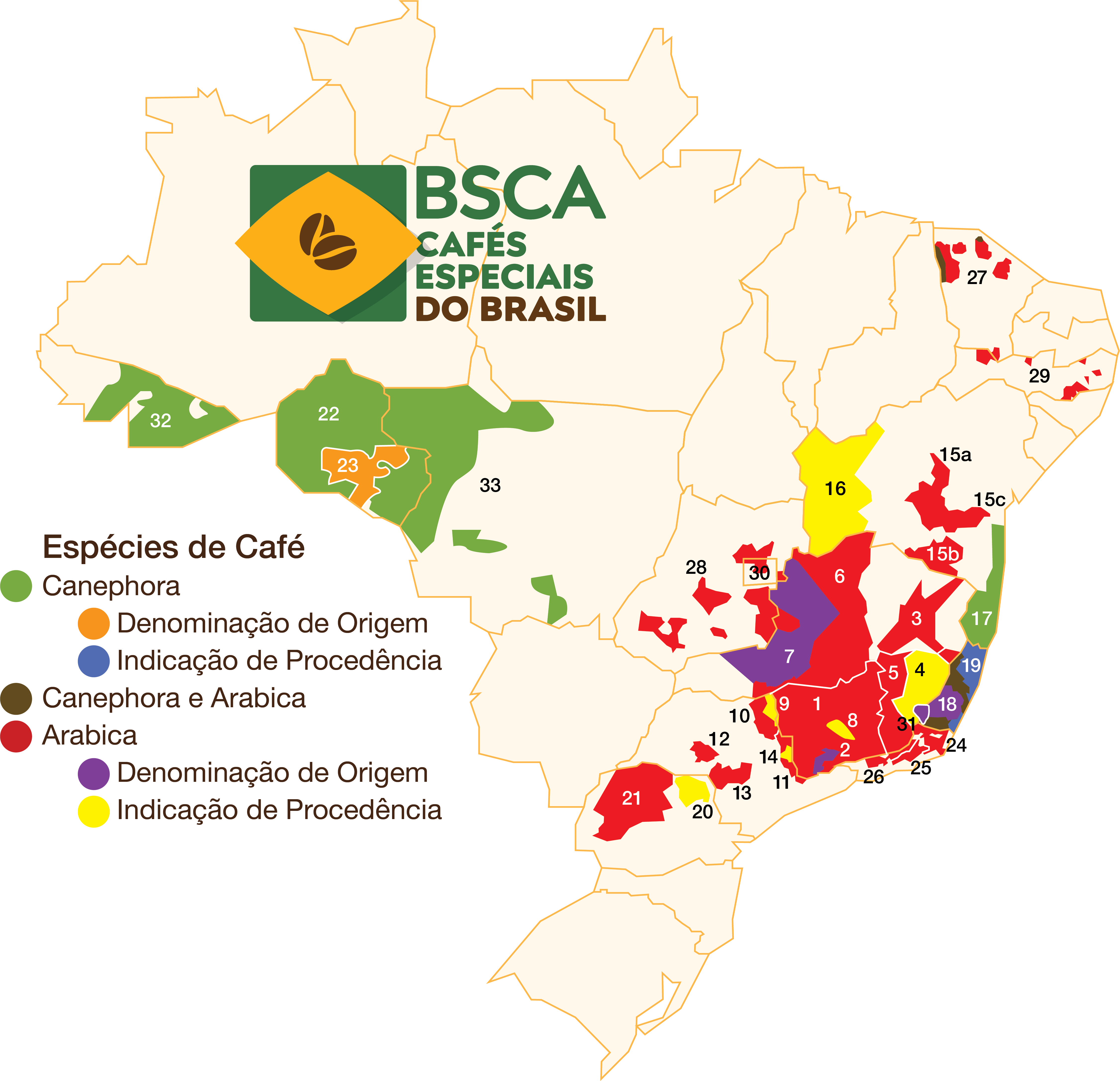
Brazil holds the top spot in global coffee production, supplying both large-volume commercial beans and specialty coffee driven by the COE system. Its output is tied to a highly mechanized production model, which keeps flavor stable but fairly one-dimensional. Two Brazilian beans illustrate the classic regional styles: Cerrado Red Bourbon from Sul de Minas and Queen Estate Yellow Bourbon from Mogiana.
Brazil also uses its own NY grading system, which assesses defect rate, screen size, and cup quality. That framework helped move Brazilian coffee from a reputation for inferior beans toward quality standardization. Processing matters too: pulped natural and fine natural methods appear across the country's lots, and the typical cup shows nut, chocolate, cream, peanut, and caramel notes.
Brazil firmly holds the top spot in global coffee production, offering both large-volume commercial beans and COE specialty beans. Front Street Coffee currently carries only two Brazilian beans—Cerrado Red Bourbon and Queen Estate Yellow Bourbon—representing the classic styles of the Sul de Minas and Mogiana regions respectively. This article approaches from the angles of region, variety, and processing method to explain in detail the differences between pulped natural and fine natural processes, and systematically outlines Brazil's unique NY grading system, covering three dimensions: defect rate, screen size, and cup quality. It helps enthusiasts understand Brazil's journey from being synonymous with "inferior beans" to quality standardization, and also includes Front Street's brewing parameters and flavor descriptions.
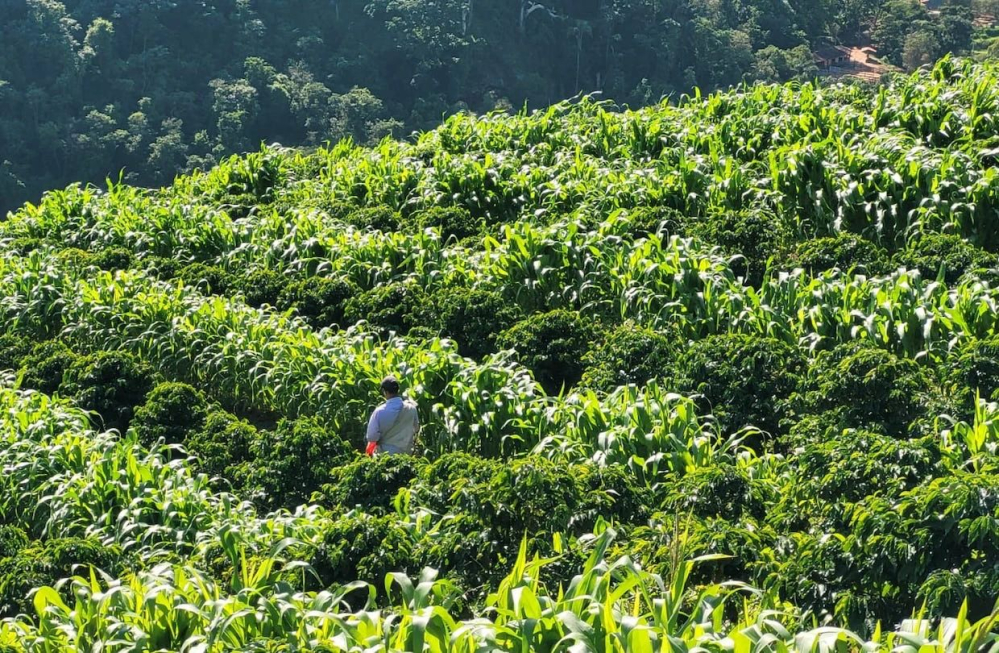
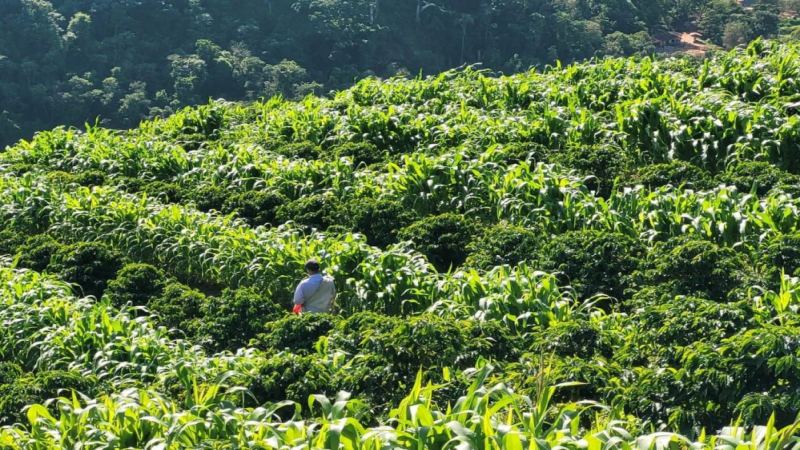
When it comes to which country produces the most coffee, Brazil undoubtedly takes the crown.
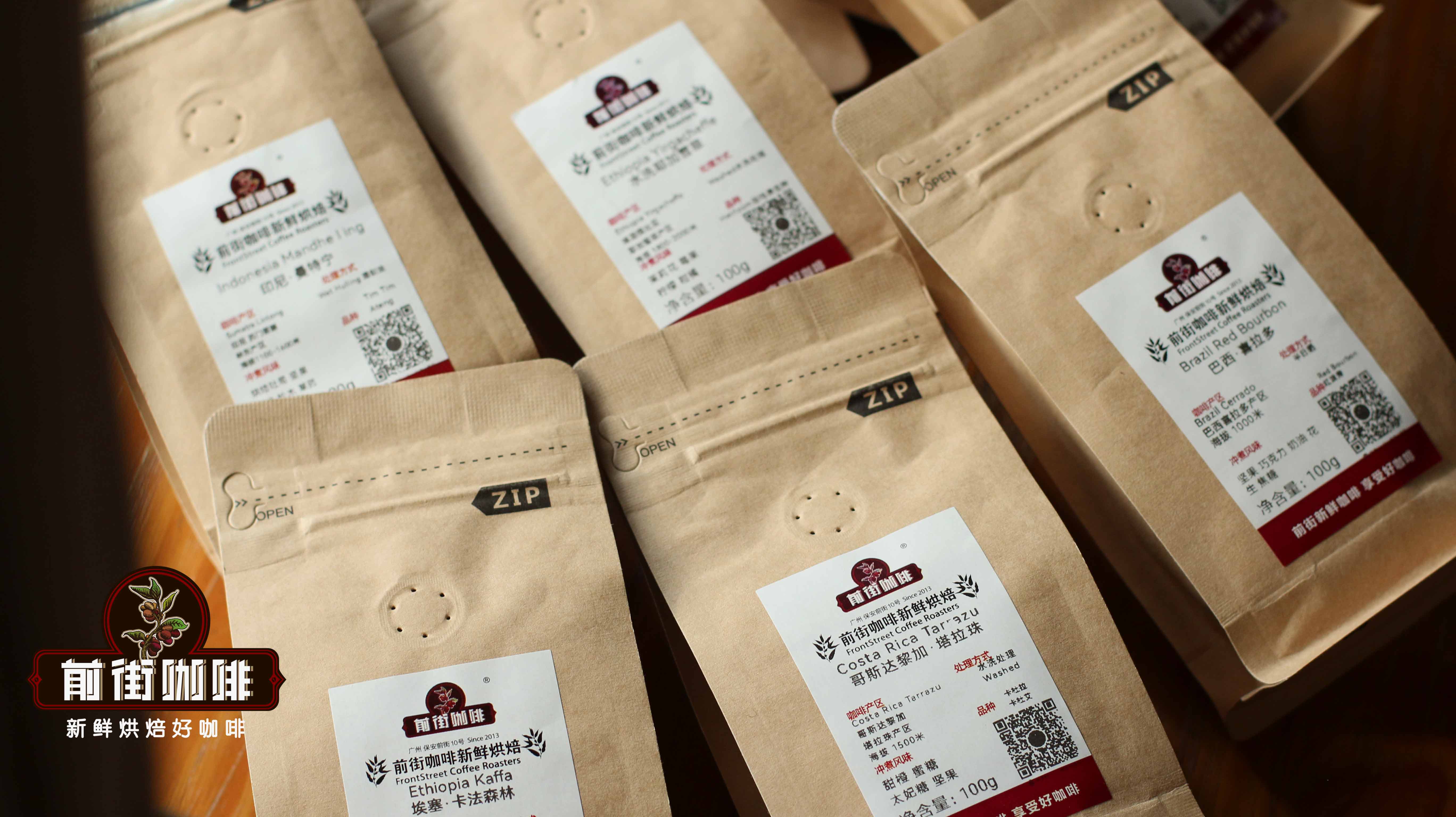
With its rich nutty flavor and affordable price, Brazilian coffee has long become a daily staple for many. When customers ask for a coffee that isn't sour, Front Street typically recommends Brazil Cerrado first. If you're interested in purchasing, you can place an order on Front Street's Tmall flagship store or Front Street's Taobao store.
As the world's number one producer, Brazil has both commercial bulk coffee graded by commodity standards and specialty coffee driven by the COE system. Despite its astonishing output, Front Street currently offers only two "seats" for Brazilian beans both online and offline. Why is that? A careful look at Front Street Coffee's bean list reveals that each coffee possesses a certain uniqueness. Front Street hopes to treat its physical stores as experiential spaces, prioritizing presenting consumers with as diverse a range of regional flavors as possible, so the selection is basically centered on coffees that represent the classic flavors of their regions. Brazilian coffee, meanwhile, has a stable but relatively one-dimensional flavor profile, which is inextricably linked to its highly mechanized production model.
Let's now get to know Front Street Coffee's two Brazilian beans. First up is Front Street's Brazilian daily staple!
Brazil Cerrado
Country: Brazil Region: Sul de Minas Altitude: 1000m Variety: Red Bourbon Processing: Pulped Natural Flavor: Nut, chocolate, cream, peanut, caramel
This bean comes from the state of Minas Gerais, whose representative regions include Cerrado and Sul de Minas, both at relatively high altitudes. Cerrado is located in western Minas Gerais, a flat plateau at altitudes between 750 and 1200 meters. Sul de Minas is a hilly area at 700 to 1200 meters. Since 1999, among the estates that have won the Cup of Excellence auction in Brazil, Sul de Minas has had the largest number. It was precisely because Front Street recognized Sul de Minas's ability to produce high-quality coffee beans that it chose this region for its daily staple bean.
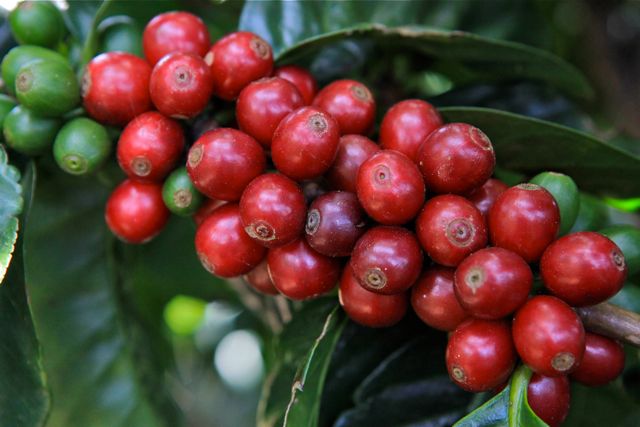
Flavor is closely tied to variety. Red Bourbon is what is commonly called the Bourbon variety; its fruit turns wine-red when ripe, and the beans are relatively round. Bourbon planted at high altitudes tends to have better aroma and bright acidity, with a wine-like quality on the palate. However, fermented aromas don't depend solely on variety—the special pulped natural processing method is also a source of flavor.
Before 1990, Brazilian coffee was almost uniformly processed with crude natural methods, which easily imparted a rotten-wood or earthy taste to the beans—the fruit had to be sun-dried for two to three weeks, and if rain caused moisture to return, mold would easily develop. To escape this passive situation of depending on the weather, in 1990 Brazil developed the Pulped Natural method, taking advantage of the country's relatively dry climate to shorten the processing cycle.
The pulped natural method removes the skin and pulp of the coffee cherry, making it possible to control the fermentation degree of the mucilage-covered beans after pulping. Traditional natural processing dries the fruit with skin and pulp intact, making it impossible to observe mucilage fermentation. Pulped natural sits between natural and washed, but skips the washed method's "tank fermentation, clean-water rinsing" steps and places the beans directly in the sun to dry. The methods may seem similar, but without the fermentation step, the flavor is entirely different. When removing skin and pulp, fully ripe pulp separates easily, while the skin of underripe green fruit is harder to process, so a second sorting can be done to filter out unripe fruit and unify ripeness. Compared with natural processing, Front Street believes that coffee beans selected and processed this way have higher cleanliness and uniformity of ripeness, and a more balanced taste.
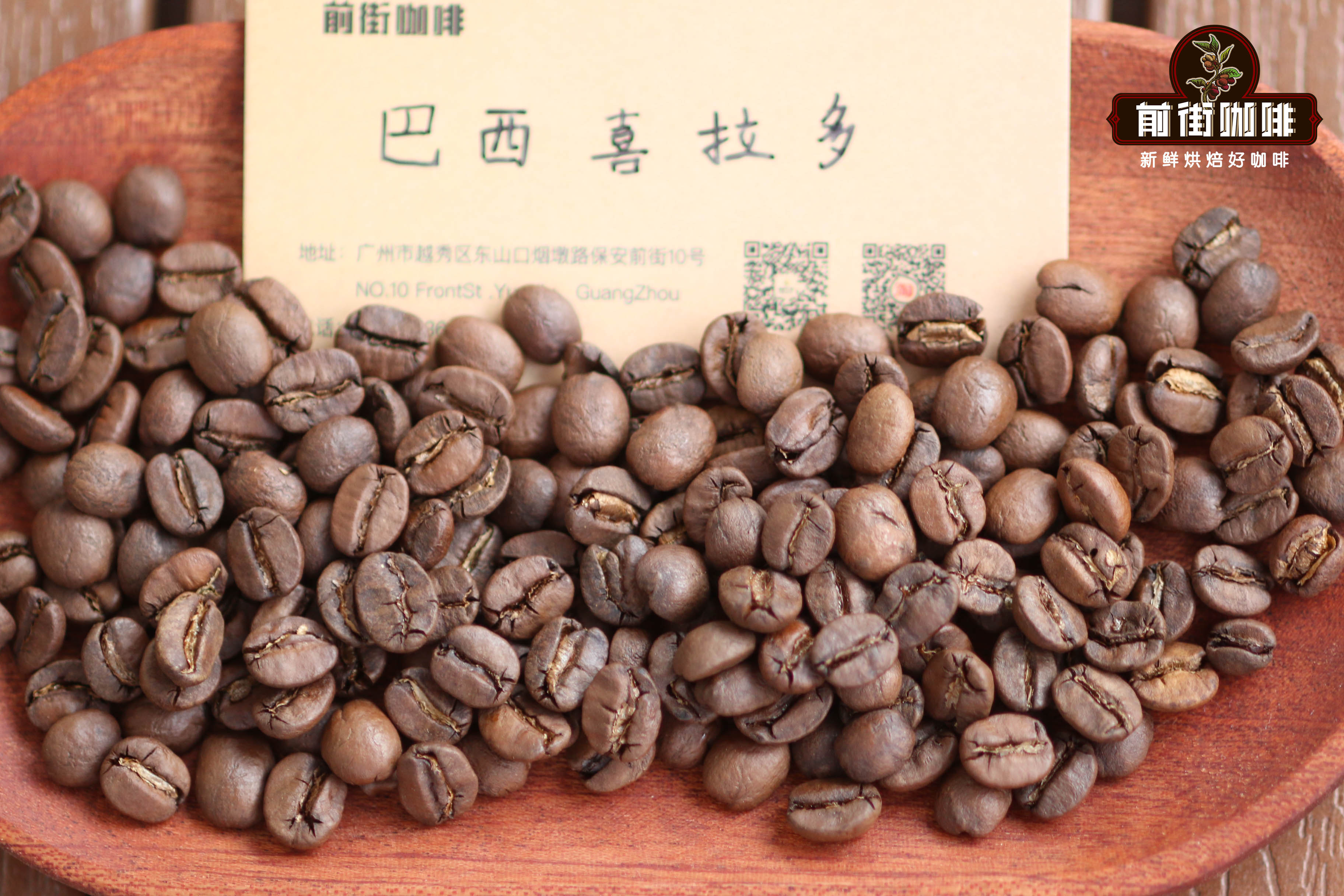
The promotion of pulped natural doesn't mean all Brazilian regions adopt it. The lower-humidity Cerrado still relies mainly on natural processing, with pulped natural playing a secondary role. However, the Cerrado Red Bourbon that Front Street Coffee sourced is processed using the pulped natural method, with the aim of shortening drying time while avoiding external contamination of the coffee fruit.
Front Street also has another Brazilian bean, namely the Queen Estate on the bean list. This coffee comes from Brazil's Mogiana region, which is adjacent to southern Minas. The coffee trees are planted among shrubs, grasses, and other vegetation. Many growing families are distributed here; some continue the traditional large-farm model, while others adopt small-scale modern operations. The blending of modern technology with mountain coffee-growing culture has produced the highest-quality green beans. Through cupping, Front Street found that coffee beans from this region carry a sugarcane-like clean sweetness. Let's look at this bean's green coffee information:
Brazil Queen Estate Region: Brazil Mogiana Region Estate: Queen Estate Altitude: 1400-1950m Variety: Yellow Bourbon Processing: Natural
Unlike Brazil's large-scale harvesting and processing, Queen Estate uses fine natural processing, solving the quality decline caused by Brazil's large-scale centralized processing.
Front Street deliberately chose Yellow Bourbon, different from Cerrado. This variety's fruit, when ripe, is not the red of ordinary coffee cherries but yellow. It was first discovered in Brazil in 1930 and is currently grown mainly in Brazil. It is generally believed to be a mutation resulting from a cross between a red-fruited Bourbon and a yellow-fruited Typica variant called "Amerelo de Botocatu" (discovered in São Paulo state in 1871). Due to low yield and poor resistance to wind and rain, Yellow Bourbon has not been widely planted. But when grown at high altitudes, its flavor performance is excellent, and in recent years it has become fairly common.
When Front Street received Brazilian green beans, it noticed an interesting phenomenon: the burlap sacks of Brazilian coffee are printed with information like this—Brazil NY.2 SC – 17/18 FC. Upon learning about it, this turned out to be Brazil's unique three-part grading method, which no other country uses. The reason is that the producing areas are too large and the bean output too great; in order to blend coffee flavors specifically for export, these beans are often mixed together, and quality inevitably varies, requiring "cupping" to grade. This way, consumers can roughly judge coffee quality just by looking at the green bean information.
Brazilian coffee grading is quite complex, generally requiring consideration from three aspects: defect rate, screen size, and cup quality.
1. Grading by defect rate
Brazilian coffee uses a "deduction" evaluation, grading by the number of defective beans contained in every 300 grams of primary beans, divided into seven levels from No.2 to No.8. A deduction below 4 can be classified as No.2. Zero defective beans would of course qualify as No.1, but such cases are extremely rare and cannot sustain stable supply, so Brazil sets No.2 as the highest grade rather than No.1.
2. Grading by screen size
Screen size: sieving with screens based on 1/64 inch, with screen sizes typically between 14 and 20. It should be noted that screen size corresponds to the short side of the coffee bean, i.e., its "width." The largest screen size for Brazilian coffee beans is 19, but output is limited, so 17/18 is the highest grade.
3. Cup quality
fine cup | fine | good cup | fair cup | poor cup | bad cup | FC (Fine Cup) and GC (Good Cup) are relatively common. Many companies or platforms also add processing method (natural/washed/honey) and estate information.
You should know that Brazilian coffee was once synonymous with "inferior coffee," with farmers pursuing yield while neglecting quality, even mixing in soybeans, small stones, and other debris. Because Brazilian coffee is named after its export ports, the largest port, Rio (Rio de Janeiro), also once became "notorious" coffee. The emergence of COE was precisely to change the quality of Brazilian coffee, and the NY grading method also standardized Brazil's coffee quality standards. Only after that was Brazilian coffee removed from the "inferior bean" label.
So how does today's Brazilian coffee flavor present itself? Next, let's follow Front Street to explore the mysteries of brewing!
Front Street Coffee brewing recommendation: Dripper: KONO Dose: 15g Water temperature: 90℃ Grind size: medium grind, 70% passing a No. 20 standard sieve Water-to-coffee ratio: 1:15
Front Street uses staged extraction. The blooming water amount is twice the coffee grounds, i.e., 30 grams of water for a 30-second bloom. Pour in a small stream in circles until 125 grams, then pause. When the water level drops and is about to expose the coffee bed, continue pouring until 225 grams and stop. The total extraction time is 2 minutes.
Brazil Cerrado flavor: high sweetness, clean, smooth, low acidity, with flavors of peanut, almond, nut, and chocolate.
Brazil Queen Estate flavor: balanced mouthfeel, with an almond-cocoa main note highlighting sugarcane sweetness—a coffee with good body and abundant sweetness.
The above content is compiled by CoffeeHunters, a coffee news website.


