







Does ice water change cold brew coffee flavor?
Replacing room-temperature water with ice water still extracts cold brew, but the result differs. In a side-by-side test, the ice water batch yielded less liquid yet showed clear grape, pineapple, and orange sweetness with almost no bitterness, while the room-temperature batch stayed closer to the usual profile.
The comparison used 20g of Colombia beans ground to granulated sugar coarseness and a 1:12 coffee-to-water ratio, sealed and refrigerated. Lower water temperature slows extraction, so fewer bitter compounds come out, but total yield drops. Adding types of sugar for coffee afterward is optional, since the ice water version already reads sweet.
Cold brew coffee is usually made by soaking coffee grounds in room-temperature water and then refrigerating it to extract, but if you replace the water with ice water, will the final product taste better or worse? Front Street made two batches of cold brew using room-temperature water and ice water respectively, comparing everything from grind size and coffee-to-water ratio to the actual flavor. The result was that the ice water cold brew produced less liquid, yet presented a clear sweetness like grapes, pineapple, and oranges, with almost no bitterness. This article fully records the parameters and steps of both methods, and explains how temperature affects extraction efficiency and the release of flavor compounds, helping you find a cold brew solution that suits you.
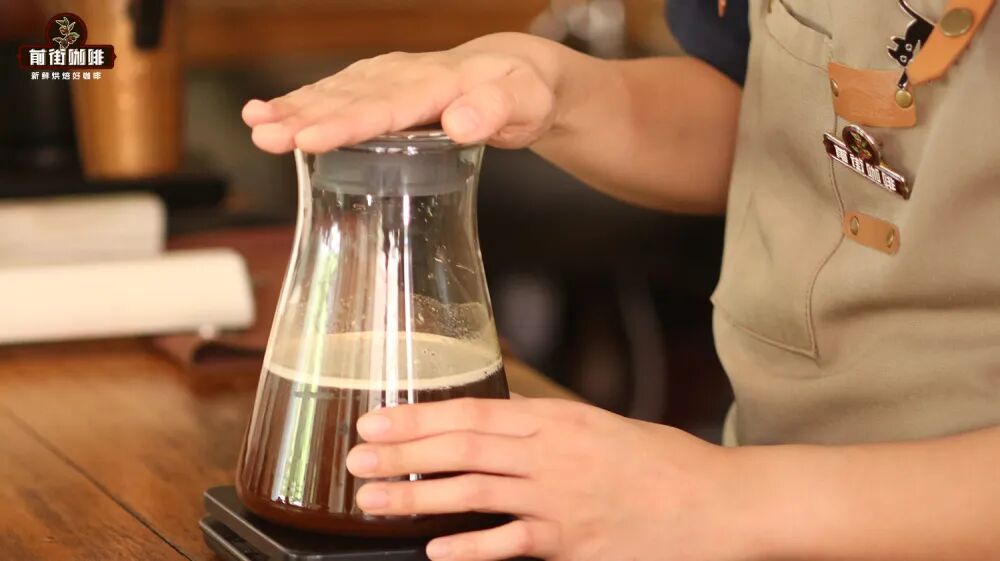
The name cold brew itself explains its core logic—using low-temperature cold water to extract coffee flavor. The most common daily operation is to soak coffee grounds in room-temperature water or cooled boiled water, then put it in the refrigerator to extract slowly, and after the flavor compounds are fully released, filter out the grounds to obtain a clean coffee liquid.
However, the water that can be used for cold brew is not limited to room-temperature water. Mixing ice cubes with room-temperature water and using ice water to soak coffee grounds can also complete the extraction. So, when this ice water version of cold brew is compared side by side with the conventional method, will the taste be compromised?
Methods for the two types of cold brew
In this comparative test, Front Street prepared two groups of coffee, corresponding to room-temperature water and ice water as the two extraction media, keeping the other parameters that could be fixed as consistent as possible, and then recording the differences in performance one by one.
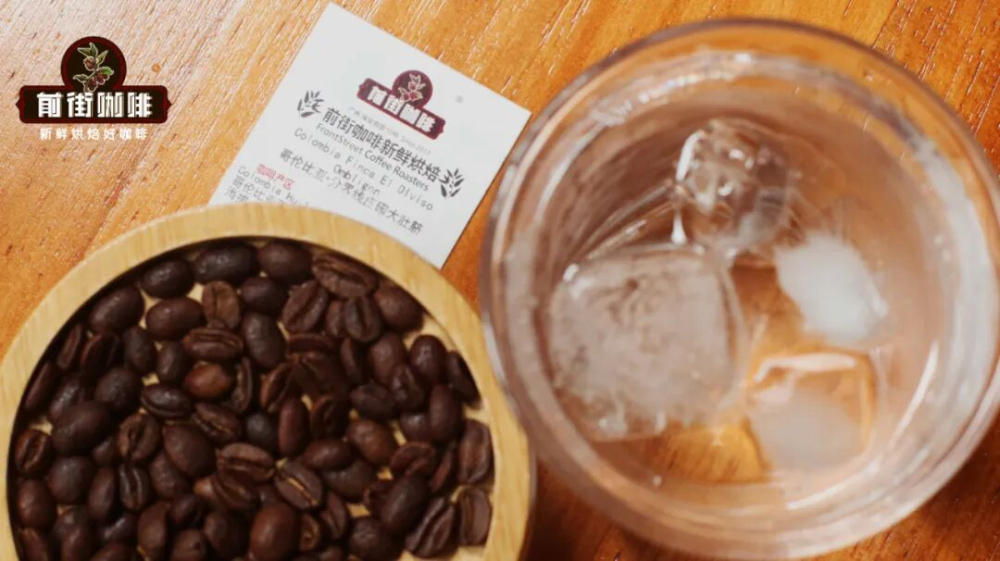
First make the room-temperature water version. Use Front Street Colombia Belly Button beans, weigh 20g, grind to granulated sugar coarseness, with an 80% passing rate on a No. 20 sieve, which converts to 9.5 on an EK43s electric grinder and 24 on a C40 hand grinder. This bean itself is mainly fruit-forward in profile, and the concentration should not be too high, so Front Street set the coffee-to-water ratio at 1:12.
Find a clean sealable container, add 20g of coffee grounds and 240g of purified water in sequence, stir evenly, seal it, and place it in the refrigerator to soak for 12 hours. When the time is up, filter out the coffee grounds with filter paper.
The operation for making cold brew with ice water is not complicated either. Also first grind 20g of Belly Button coffee beans, but because the ice water temperature is lower, extraction efficiency will decrease, so Front Street adjusted the grind slightly finer: 82% passing rate on a No. 20 sieve, corresponding to 9 on an EK43s electric grinder and 22 on a C40 hand grinder.
There is one more point to consider: the ice cubes Front Street usually uses are relatively large and melt slowly, so the proportion of water needs to be appropriately increased and the amount of ice reduced. The final coffee-to-water-to-ice ratio decided on was 1:8:4, that is, 20g of coffee grounds, 160g of purified water, and 80g of ice cubes. Likewise pour into a pot, stir evenly, soak for 12 hours, and then filter out the coffee grounds for later use.
Ice water vs room-temperature water: which makes better-tasting cold brew?
Room-temperature water cold brew: darker in color; on the palate you can sense berry aromas such as blueberry and grape, with bright acidity like grapefruit, moderate fermented notes, a relatively thick mouthfeel, and a slightly bitter finish;
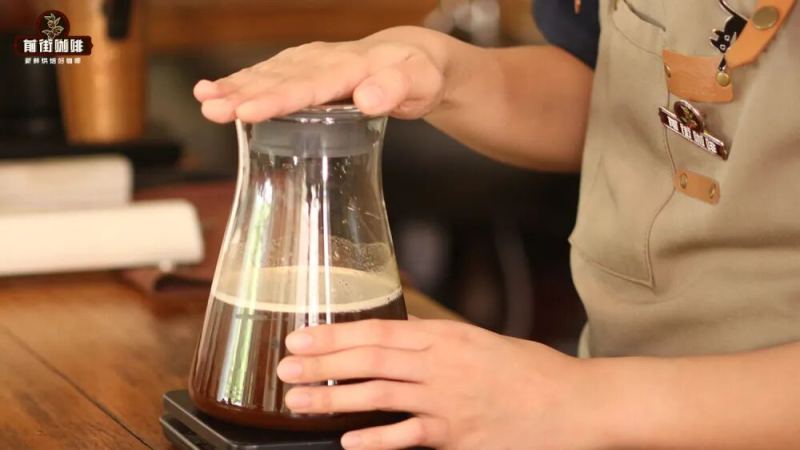
Ice water cold brew: during soaking, the ice cubes did not completely melt, and small residual ice particles could still be seen on the filter paper during filtration, so the resulting coffee liquid was naturally a bit less. But what surprised Front Street was that as soon as this cup of coffee entered the mouth, it showed a rich aroma interwoven with grapes, pineapple, oranges, and cherries, with a clear and sweet taste and almost no perceptible bitterness, like a glass of mixed fruit juice, leaving a very deep impression.
Why does cold brew made with ice water taste different?
Temperature is a key variable in coffee extraction, and the first thing it affects is extraction efficiency. The higher the temperature, the faster the soluble substances in coffee are released; the lower the temperature, the slower the release. Room-temperature water is generally 18–27°C, while ice water is only 0–10°C, much colder, so its extraction efficiency on coffee grounds is naturally slower. In other words, under the same parameters, cold brew made with ice water will have a lower total amount of soluble substances.
On the other hand, coffee beans contain hundreds of compounds, each with different solubility characteristics. Some substances are released quickly, some slowly, and some flavor components are extracted only within a specific temperature range.
According to extraction patterns, the release order of coffee flavor substances is roughly acidity—sweetness—bitterness. Volatile small molecules with pleasant floral and fruity aromas are released first, followed by caramel-like compounds that provide sweetness. When the soaking water temperature is lowered to near 0°C, extraction efficiency decreases, and the release of certain large-particle sweet and bitter substances is also inhibited to a certain extent, so the coffee is more likely to present a refreshing and juicy mouthfeel.
The above content is compiled by CoffeeHunters, a coffee news website.


