







How Do Arabica and Robusta Coffee Beans Differ in the Cup?
Arabica coffee bean trees take about five years from transplanting to fruit and supply roughly 70 to 75 percent of the global market, with Brazil harvesting May to September and Colombia April to June. Robusta bears in two to three years, harvests from Indonesia and Vietnam across overlapping months, and accounts for about 20 to 25 percent of supply.
Arabica cups milder with aroma and wine-like acidity, and carries higher commercial value; robusta coffee beans resist pests and disease but lack aroma and lean bitter. Yunnan small-bean coffee is Arabica, grown mainly as Typica, Bourbon, and Catimor, and Catimor there is evaluated for its own flavor rather than dismissed as a lesser variety.
Among the three major coffee species in the coffee world, Arabica and Robusta account for the vast majority of market share. The two differ in growth cycle, yield, flavor characteristics, appearance, and suitable applications, and their commercial value varies greatly. This article will systematically sort out the core differences between Arabica and Robusta, while also answering a common question: which category does Yunnan small-bean coffee actually belong to? The article also introduces the origins and development of Yunnan coffee's main cultivated varieties—Typica, Bourbon, and Catimor—as well as Front Street Coffee's evaluation of the flavor of Yunnan Catimor. Whether you are an everyday drinker or a specialty coffee enthusiast, you will find clear reference points here.
Coffee beans are mainly divided into three major categories: Arabica, Robusta, and Liberica. At present, the two most widely circulated on the market are the first two, so many readers have privately messaged to ask: what exactly is the difference between these two types of coffee beans?
To help everyone understand them more clearly, next we will compare the differences between Arabica and Robusta coffee beans one by one.
1. Harvest cycle and yield
Arabica coffee trees need about five years from transplanting seedlings to flowering and bearing fruit. Brazil's main harvest season is concentrated from May to September each year, while Colombia's is from April to June, and their total output accounts for about 70% to 75% of the global market. By contrast, Robusta coffee trees need only two to three years to bear fruit. Indonesia's harvest period is from April to August each year, while Vietnam's lasts from October to April of the following year, with total output accounting for about 20% to 25% of the global market.
2. Characteristics and uses
Arabica's flavor tends to be milder, with aroma and wine-like acidity, and its quality is higher, so its commercial value is greater. Moreover, the same Arabica bean can present diverse coffee flavors under different roast levels, making it highly playable. Taking the "Front Street" bean list as an example, among the nearly one hundred coffees it offers, more than 95% are single-origin Arabica varieties.
Robusta has strong resistance to pests and diseases, but the coffee beans it produces lack aroma and have a prominent bitterness (due to their higher caffeine content), with relatively low acidity as well, so they are mostly used to make instant coffee, canned coffee, or three-in-one brewed drinks. Compared with Arabica, Robusta's price is noticeably lower.
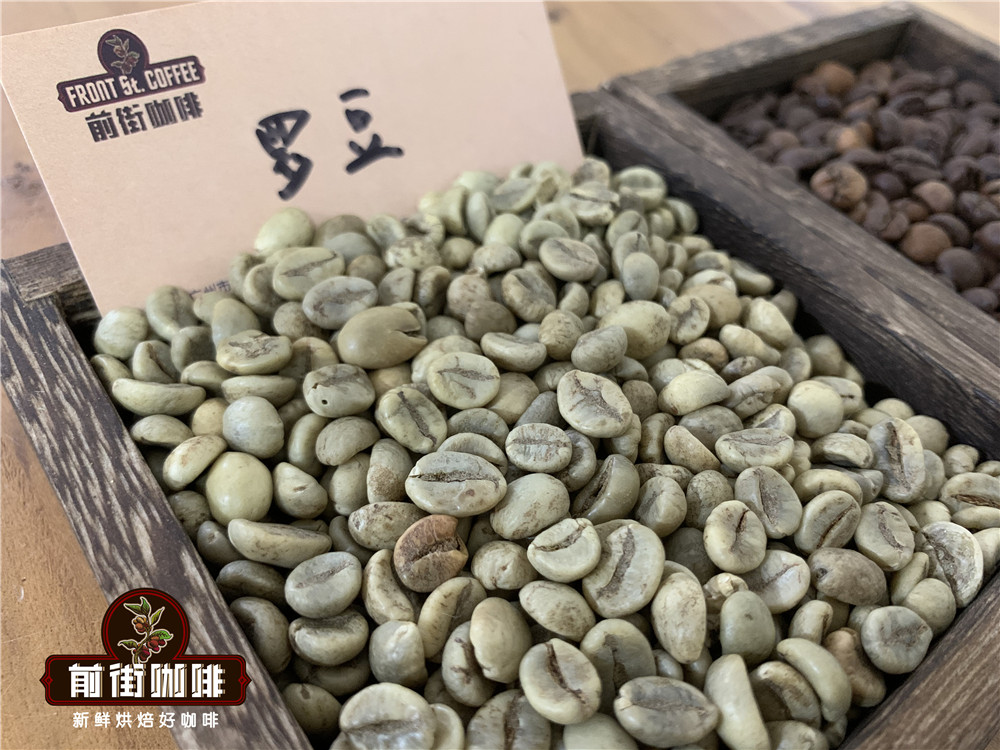
Arabica's flavor is more refined, its mouthfeel smooth, and its overall quality better. At present, it is hard to find single-origin coffee made from pure Robusta on the market (although some specialty coffee importers do indeed have such products). Washed Robusta is of better quality and can be used in blends to enhance mouthfeel and body, forming a complementary advantage with Arabica. Three well-known coffee beans—Hawaiian Kona, Jamaican Blue Mountain, and Yemen Mocha—all belong to the Arabica variety. Arabica green beans are dark, narrow, and elongated in appearance and are regarded as representing high-quality highland coffee, characterized by rich layers of taste including sweetness, acidity, and aroma.
Overall, Arabica is mostly used for single-origin or specialty coffee, while Robusta is commonly found in instant coffee. Although Arabica can be positioned as premium coffee and Robusta as secondary, there is no need to rigidly adhere to this classification; choosing based on the flavor you personally prefer is more reasonable. From the perspective of taste preferences, the United States and Japan more often drink light coffee brewed from Arabica, while Europe prefers espresso made from a blend of Arabica and Robusta.
[Shape differences]
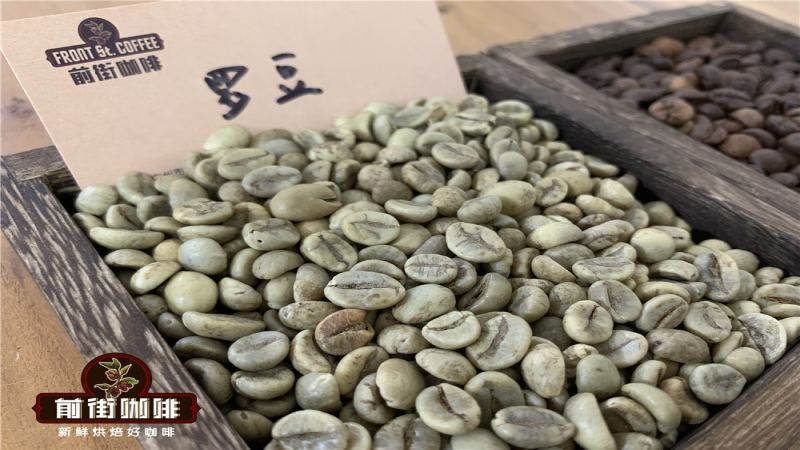
Arabica coffee beans are oval in fruit form, usually containing two slightly flattened beans. The beans are small and plump, with a long oval front, a narrow center crack curved in an S shape, and a relatively flat arc on the back of the bean. Its main producing areas include South America, the countries of Central America, Africa, and Asia, and China's Yunnan, Hainan, and Taiwan regions also grow a small amount of Arabica coffee beans.
(Arabica on the left, Robusta on the right)
Robusta coffee beans are oval in shape and smaller in size, relatively round, with the side bearing the center crack slightly swollen and the groove relatively straight. Their aroma is weaker, their bitterness heavier, and their appearance reminds one of soybeans. Robusta is mainly used to make instant coffee. Because its origin is in Africa, most Africans drink Robusta coffee.
Different flavor characteristics
[Arabica]
Arabica coffee has varied and broad potential flavors. Arabica coffee produced in different regions, at different altitudes, and under different climate conditions usually has its own characteristics and can display distinctly different individual flavors. Unroasted Arabica smells fresh and grassy, and after proper roasting it presents the "fruitiness" of medium-light roasts and the "caramel sweetness" of dark roasts. Overall, it has better aroma and flavor than Robusta beans, and it is also the only one among these original species that can be drunk directly on its own, either as a single-origin coffee or used in espresso blends.
[Robusta]
Robusta coffee's flavor is usually relatively ordinary, flat, and pungent. In addition, the vast majority of Robusta worldwide is grown in low-altitude regions (currently only India has a small amount of high-altitude, high-quality, washed Robusta), so the flavor differences brought by different regions and climates are not significant, and its individuality is relatively lacking. When unroasted, it smells like raw peanuts, and cheap Robusta after roasting usually presents flavors ranging from the "barley tea taste" of medium-light roasts to the "rubber tire taste" of dark roasts, making it difficult to show delicate flavors.
Does Yunnan small-bean coffee belong to Arabica?
Ninety-nine percent of domestically produced coffee comes from Yunnan. Yunnan coffee belongs to a variant of the Arabica original species, developed through long-term cultivation and domestication, and is generally called Yunnan small-bean coffee, with a planting history of more than a hundred years. Today let's talk about some secrets about Yunnan coffee that you may not know.
First, Yunnan coffee is by no means the worst coffee in all of Asia; behind it are Indonesian Robusta beans and East Timorese hybrid beans at the bottom;
Second, Yunnan coffee is not the worst in China either, because there are still Hainan Xinglong Robusta beans at the bottom; (all right, let's not compare with Robusta beans)
Third, Yunnan coffee is not the best in China either; the best is in Taiwan (an inalienable part of our country).
What is Yunnan small-bean coffee?
Yunnan small-bean coffee is named in contrast to Vietnam's medium-bean coffee, and this naming comes from the difference in planted varieties. The variety planted in Yunnan is the Arabica species, whose beans are smaller than the Robusta species planted in Vietnam, hence the name small-bean. The variety planted in Yunnan belongs to the same Arabica species as the most expensive Blue Mountain coffee. Yunnan is China's largest Arabica coffee producing region, so the Arabica coffee produced in Yunnan is also called small-bean coffee.
What varieties of Yunnan small-bean coffee are there?
Typica and Bourbon, two classic high-quality coffee varieties, are the main cultivated varieties of Yunnan coffee. In 1991, the Catimor series varieties were introduced from Kenya (with stronger virus resistance and higher yield), belonging to a variant of the Arabica species (also known as the small-bean species). Because these two varieties are similar in form and habits, mixed cultivation is often used.
Typica coffee originated in Ethiopia and southeastern Sudan and is the most widely cultivated coffee variety in the Western Hemisphere. Typica plants are relatively robust, with a slender, tall tree shape and copper-red top leaves, hence the common name red-top coffee. However, this variety is not tolerant of light and has poor disease resistance and relatively low yield, so many coffee farmers pursuing high yields are unwilling to grow it and instead switch to other higher-yielding varieties, which is also the main reason Typica is increasingly rare today.
Bourbon arose from a natural mutation of Typica, with the bean shape changing from slender and pointed to round. It was first discovered on Bourbon Island, now Reunion Island, off the eastern coast of Africa. In 1715, France transplanted round beans from Yemen Mocha to Bourbon Island off the eastern coast of Africa (renamed Reunion Island after the French Revolution), and only afterward did it gain the name Bourbon. Bourbon round beans were introduced to Brazil in 1727 and began to be cultivated there.
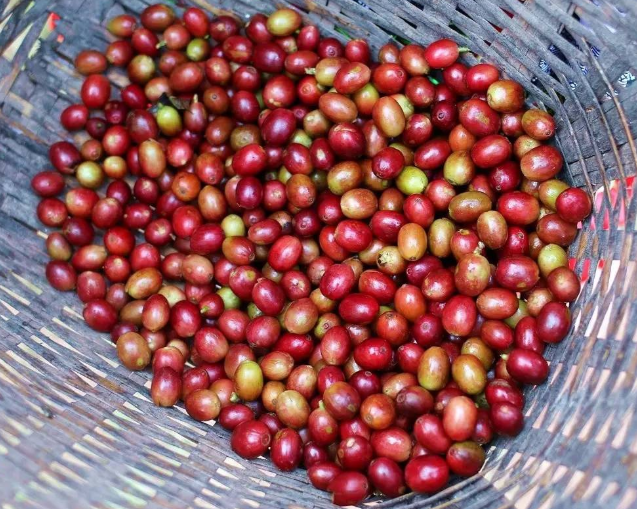
Although its yield is not considered high, compared with the fragile Typica, Bourbon has stronger resistance to leaf rust. Bourbon coffee grown at high altitude has a rich, delicate flavor, a strong aroma, and soft, smooth acidity. Common Bourbon fruit changes from green to slightly yellow, orange-yellow, red, and finally to fully ripe dark red, which is what we call Red Bourbon. There is also a rarer Yellow Bourbon, whose ripe fruit is bright yellow. Front Street Coffee's Brazil Queen Estate coffee belongs to the Yellow Bourbon variety.
Catimor is a combination of the Arabica species and the Robusta species. The Robusta species has good resistance to leaf rust and rich oils, high yield, and is easy to cultivate. After hybridizing with the Arabica species Typica, Catimor possesses 25% Robusta genes, which both improves resistance to leaf rust and retains rich oils, while also inheriting part of the rich flavor of the original Typica species. Therefore, most Yunnan estates began to plant Catimor on a large scale. Front Street believes that Catimor coffee grown in Yunnan carries flavors of nuts, brown sugar, and plums, but its overall cleanliness is not as excellent as that of the Typica variety.
For more specialty coffee beans, please add the private WeChat of Front Street Coffee (FrontStreet Coffee), WeChat ID: kaixinguoguo0925
The above content is compiled by CoffeeHunters, a coffee news website.


