








C.arabica and the Washed Yirgacheffe Pour-Over
Washed Yirgacheffe is the benchmark of African specialty coffee. The washed process gives it clean, bright citrus acidity and elegant floral aromas, with a light body and a sweet, tea-like finish. It suits pour-over brewing, where a medium grind, water around 90 to 92°C and a slower pour bring out the fruit and flower notes instead of burying them.
Yirgacheffe comes from Ethiopia, Africa's largest coffee producer, where the variety is a landrace of c.arabica. Production there falls into four systems: forest coffee, semi-forest coffee, garden coffee and large plantations, with garden coffee the most common, often no more than about 4 hectares per household. Small harvests go to cooperatives and processing stations, which handle the green bean preparation for each area.
Yirgacheffe is the benchmark of African specialty coffee, and the washed process gives it clean, bright citrus acidity and elegant floral aromas. Front Street Coffee starts with Ethiopia's coffee-growing culture, outlines the unique terroir of the Yirgacheffe region, focuses on how the washed process shapes its classic flavor, and shares café-level pour-over extraction ideas and parameters. Whether you're a beginner just getting started or a seasoned enthusiast looking to refine your brewing technique, you'll find practical reference here.

For more specialty coffee knowledge, please follow our WeChat official account: Front Street Coffee (FrontStreet Coffee)
Front Street's first encounter with specialty coffee began with a cup of Ethiopian pour-over. That fruit-forward character interwoven with sweet and tart notes was unforgettable, and it was precisely this that plunged Front Street headlong into the world of specialty coffee. Many of you, like Front Street, must have a particular fondness for Ethiopian coffee's floral and fruity notes. Today Front Street will talk about this captivating coffee—the representative of Ethiopian specialty coffee, Yirgacheffe.
Ethiopian Coffee Cultivation and Culture
If you pay attention to pour-over café menus, you'll notice a phenomenon: well-known single origins like Geisha and Blue Mountain aren't necessarily available at every shop, but Ethiopian coffee is almost never absent. Take Front Street's daily bean list as an example—there are eight Ethiopian beans, with names like Yirgacheffe, Sidamo, and Guji consistently occupying the top spots.
Ethiopia is Africa's largest coffee-producing country. Here, coffee is not only an important source of income but is also deeply woven into the entire nation's culture and daily life. Coffee is a pivotal cash crop locally, with a tradition of cultivation and consumption in most regions. Ethiopia's coffee production system can be categorized into four types: forest coffee, semi-forest coffee, garden coffee, and large plantations, with garden coffee being the most common, typically with each household cultivating no less than 4 hectares. Because smallholder yields are limited, cooperatives and processing stations of varying scales are established locally to handle green bean processing for their respective areas. Farmers deliver their harvested coffee cherries to processing stations near water sources for unified processing, after which the coffee is sold under the processing station's name.
Beyond exports, a large portion of Ethiopia's coffee is consumed domestically. Regardless of household circumstances, nearly every family has a set of coffee-making equipment. For Ethiopians, drinking coffee is like our tea drinking—an important social ritual.
Ethiopia also preserves a time-honored coffee ceremony: first, green beans are roasted in a flat pan, then crushed with a pestle and mortar, and finally boiled in a clay pot called a "Jebena." When the water mixed with coffee grounds comes to a boil, the coffee is ready. The ceremony has three rounds: the first cup is called Abol, with elders offering blessings; the second is called Tona, when people begin chatting about daily life; the third is called Beraka, symbolizing joy, and only after drinking this cup does the ceremony come to a satisfying close.
Ethiopian Coffee Varieties: Heirloom
Those who regularly drink Ethiopian coffee will notice that the beans' shapes and sizes are often uneven, especially among natural-process beans. This is actually quite normal. As the birthplace of coffee, Ethiopia has preserved tens of thousands of heirloom Arabica varieties, making it a veritable natural coffee museum. Add to that the dominance of smallholder farming—farmers plant independently, and processing stations directly purchase coffee cherries from surrounding farmers for processing during harvest season.
With varieties already so diverse and identification extremely difficult, and with the Ethiopian government unwilling to disclose variety information for protection reasons, these coffees are collectively referred to as "heirloom." Coffee is an agricultural product, and flavor is inseparable from the innate conditions of variety and terroir. Front Street believes that the reason Ethiopian coffee possesses such captivating aromas and fruity character is largely thanks to its exceptional growing environment and the outstanding genetics of heirloom varieties.
Yirgacheffe
Yirgacheffe is a small town in Ethiopia at an altitude of approximately 1,700–2,200 meters. Temperatures are relatively low, slowing coffee growth, which instead allows more time to accumulate nutrients and flavor compounds. Because the coffee produced there has a unique flavor and outstanding quality, local farmers take pride in their coffee carrying Yirgacheffe characteristics.
The Yirgacheffe region was originally under the administration of the Sidamo region, but later, due to its high flavor distinctiveness and growing fame, it became independent from Sidamo and became its own dedicated Yirgacheffe region. The small town is shrouded in mist year-round, with spring-like weather in all seasons, gentle breezes, cool but not hot, humid but not damp, and no cold damage in winter—ideal for coffee growing.
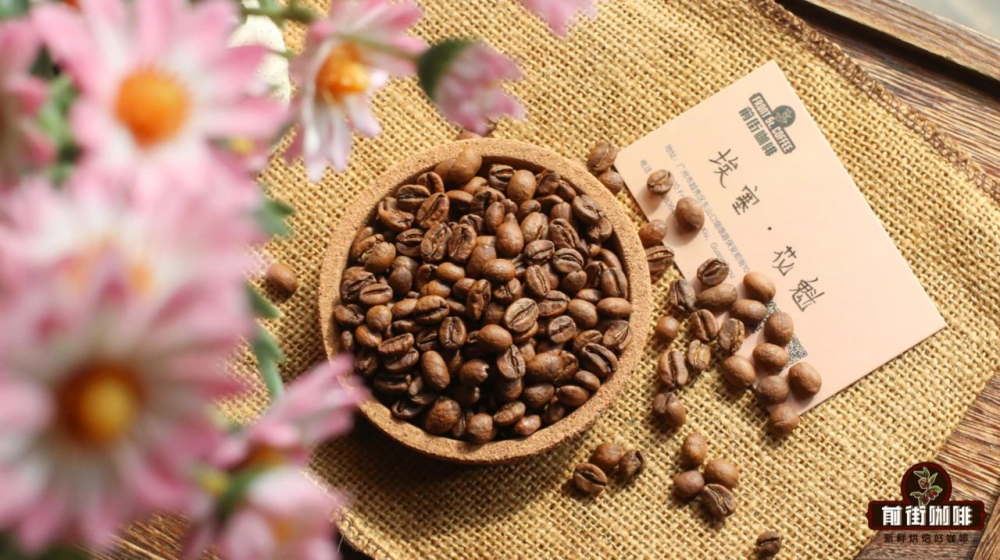
Washed Yirgacheffe
In the eyes of coffee people worldwide, Yirgacheffe is an outstanding representative of African coffee. It has bright acidity—a concrete yellow lemon aroma rather than a generic citrus note—a clean mouthfeel, and a refreshing finish. Yirgacheffe's ability to form such a distinctive style, beyond its innate terroir, is largely thanks to the washed processing technology that the Ethiopian government introduced from Central and South America in 1972.
Post-harvest processing of green coffee is a specialized skill. Farmers who know how to grow coffee don't necessarily know how to process green beans. The processing workflow for specialty coffee is intricate and detailed, often requiring "capital-intensive" equipment to monitor production. Farms using the washed method must build washing channels and have a constant supply of fresh water, making production costs higher. However, the multiple stages of washing greatly reduce the defect rate and also bring Yirgacheffe its fresh citrus notes and elegant white floral aromas—the overall flavor is bright, delicate, and clean, and thus widely acclaimed.
Front Street's Yirgacheffe daily drinker beans use the washed process and a medium-light roast, carrying the classic Yirgacheffe flavor profile and suitable for pour-over, cold brew, French press, and other brewing methods. Front Street's daily drinker series lets those new to coffee taste a region's foundational flavors at an affordable price, and the small-package design also prevents waste from unfinished bags. If you want to experience Yirgacheffe's classic aroma, Front Street believes pour-over black coffee is the most suitable choice.
Although washed coffee once became popular, the natural process remains a major part of Ethiopian coffee. What's different from the past is that today's natural processing invests more effort in manual sorting and uniform drying. The Gutinguting Cooperative coffee beans on Front Street's bean list use the classic washed process, while another—the Red Cherry coffee beans—is a Yirgacheffe with refined natural processing, offering a fuller fermented quality and tropical fruit flavors.
How to Properly Brew Yirgacheffe
A follower left a message on Front Street's backend saying that their Yirgacheffe only tasted sour, and they couldn't get that rich aroma from the café. Here, Front Street will explain Yirgacheffe's extraction approach using café output standards.
First, regardless of the extraction method used, Front Street believes coffee bean freshness is crucial. Coffee more than two months past its roast date has most likely lost its aroma, and no brewing technique, however masterful, can restore the aroma in the cup. To let everyone experience coffee at its best tasting stage, Front Street only ships beans freshly roasted within 5 days, so by the time you receive them, they're just about ready to brew.
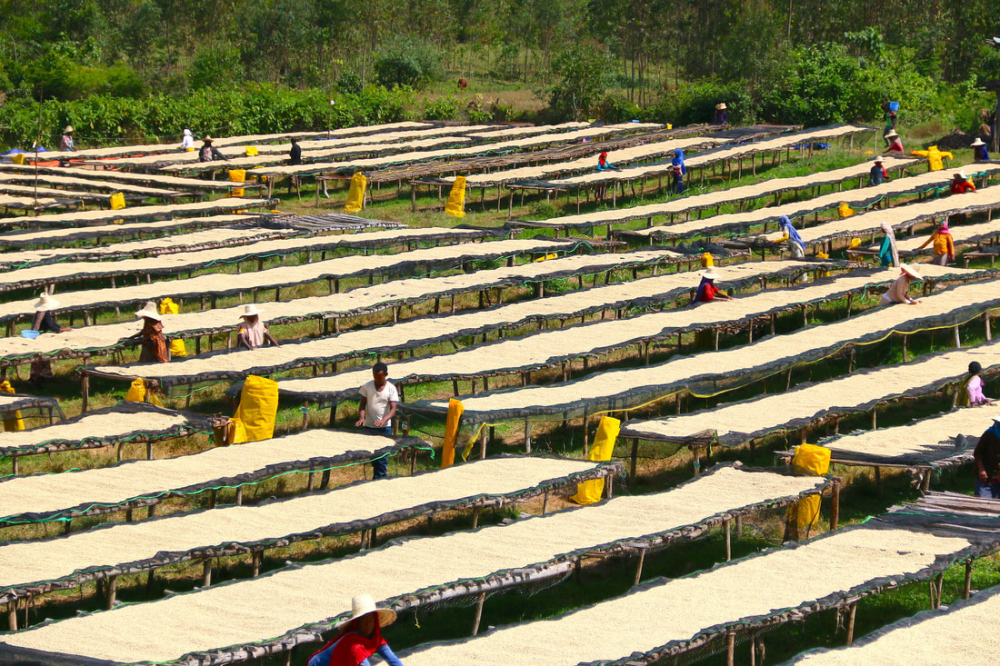
Yirgacheffe uses a light roast, and the beans are relatively hard, requiring hot water at 92°C–93°C to bring out the floral and fruity notes. For grind size, Front Street recommends medium-fine (78% passing through a Chinese standard No. 20 sieve). Too coarse and you can't extract the rich compounds—the coffee will taste thin; too fine and it's easy to over-extract at high temperatures, producing bitterness. If your extraction only tastes sour, it's very likely the water temperature was too low and the flavor compounds weren't fully released.
During cupping, Front Street noticed that this bean presents different flavors at different temperatures, so a three-stage extraction is used during brewing to let different flavor compounds express themselves better as the coffee bed rises in temperature stage by stage. To highlight washed Yirgacheffe's fresh, captivating aroma, Front Street uses a V60 dripper. The dripper's spiral rib design allows coffee grounds to degas better, maximizing the volatilization and dissolution of aromatic and acidic compounds.
For the brewing ratio, Front Street believes 1:15 to 1:16 works well. If you want a richer mouthfeel, use 1:15; if you want to perceive the floral sweetness more clearly, use 1:16 to let the flavors unfold more freely.
Dripper: V60 Water temperature: 92–93°C Dose: 15g Coffee-to-water ratio: 1:15 Grind size: fine granulated sugar (78% passing through a No. 20 sieve)
Three-stage pouring: First, wet the coffee bed with twice the coffee's weight in water, and after a dome forms, bloom for 30 seconds; then, with a small stream, pour in circles from the center outward, pausing at 125g; when the coffee bed drops to half the dripper's height, continue with the same fine stream for the third stage up to 225g, until all the coffee liquid has filtered through, then remove the dripper—total time about 2 minutes. After the coffee in the dripper flows into the server, remove the dripper, swirl the server to mix the coffee evenly, and you can begin tasting Yirgacheffe's flavors starting from high temperature.
Pour-Over Washed Yirgacheffe Flavor Description
After grinding washed Yirgacheffe, you can smell honey and jasmine. After Front Street pours in hot water, berry notes gradually emerge. The pour-over black coffee enters with bright lemon, citrus, and green tea notes, and as the temperature changes, it reveals berry, cream, and sugarcane in the finish, with a pronounced sweet aftertaste and a clean, sweet mouthfeel.
The above content is compiled by CoffeeHunters, a coffee news website.


