







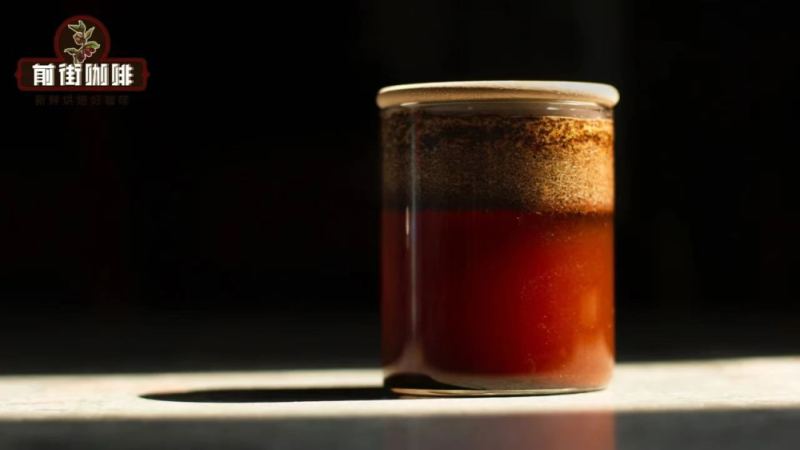
How Long Should Cold Brew Coffee Steep for Good Flavor?
Cold brew should steep between 8 and 24 hours, with a coffee-to-water ratio of 1:12 to 1:13. Use a grind close to pour-over coarseness, with 70 to 85 percent passing a No. 20 sieve. Cold brew is an immersion method, so the time variable is entirely up to the brewer.
Two practical plans work well: a coarse grind with a long steep, or a medium-fine grind with a medium-long steep. The cold brew coffee making process is tolerant of extraction conditions, so decent results are possible without professional equipment. A ratio higher than 1:13 tends to taste weak and thin, while lower than 1:12 turns too intense.
Cold brew coffee is an ideal choice for making iced coffee at home, with high extraction fault tolerance, and you can achieve decent flavor performance without professional equipment. But how should grind size and steeping time be paired, what range should the coffee-to-water ratio be controlled within, and how will the flavor differ at different time points? Based on Front Street's practical experience, this article sorts out the complete logic for making cold brew coffee: the recommended coffee-to-water ratio is 1:12 to 1:13, the grind size references pour-over coarseness (70-85% passing rate on a No. 20 sieve), and the steeping time should be controlled between 8 and 24 hours. At the same time, it provides two practical plans: coarse grind with long time, and medium-fine grind with medium-long time, along with complete cold brew steps and Front Street bean recommendations.
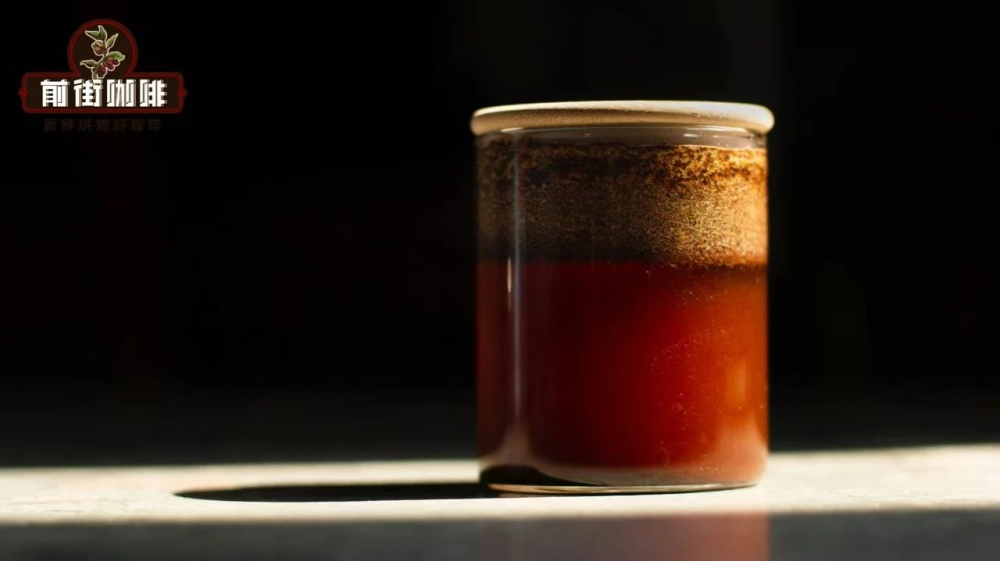
In Front Street's view, cold brew coffee can be considered the most suitable category of iced coffee to make at home, because it is quite tolerant of extraction conditions, and even without professional equipment on hand, you can still make a decent-quality finished product. Recently, a friend happened to ask Front Street about how to choose between grind size and steeping time, so we'll take this opportunity to discuss this topic systematically.
Although that friend did not mention the ratio issue, the parameters in an extraction plan are interrelated, and pulling one hair moves the whole body, so the coffee-to-water ratio still needs to be clarified first. Front Street recommends controlling the coffee-to-water ratio for cold brew between 1:12 and 1:13. According to Front Street's tests, when the ratio is higher than 1:13, some coffee beans show problems of weak flavor and a thin body; while when the ratio is lower than 1:12, it becomes too intense and not smooth enough on the palate.
Next, Front Street will talk about how to choose the grind size and time for cold brew coffee. To understand this, we first need to start with the extraction principle of cold brew. Cold brew is essentially immersion extraction, which means the time variable is entirely up to us—we can steep it as long as we want and stop it whenever we want.
But cold brew also has another characteristic, namely low-temperature extraction, which means the extraction temperature is a fixed constant. Whether you want the cold brew coffee to show a more refreshing acidity or a fuller body depends on adjusting the two parameters of grind size and time. Compared with other extraction methods involving multiple variables, cold brew coffee is undoubtedly the simplest and most friendly choice.
As for grind size, the principle is not hard to understand: the finer the coffee is ground, the faster the flavor is released; the coarser it is ground, the slower the coffee substances dissolve. However, Front Street would like to remind you here that cold brew is a long steeping extraction, and if the coffee grounds are too fine, the particles will stick together into clumps, which instead makes it harder for cold water to contact the coffee substances.
Therefore, too fine a grind is not suitable for making cold brew coffee. After repeated testing, Front Street found that coarseness close to pour-over grind size (measured with a No. 20 sieve, with a passing rate between 70% and 85%) can all be used for cold brew production.
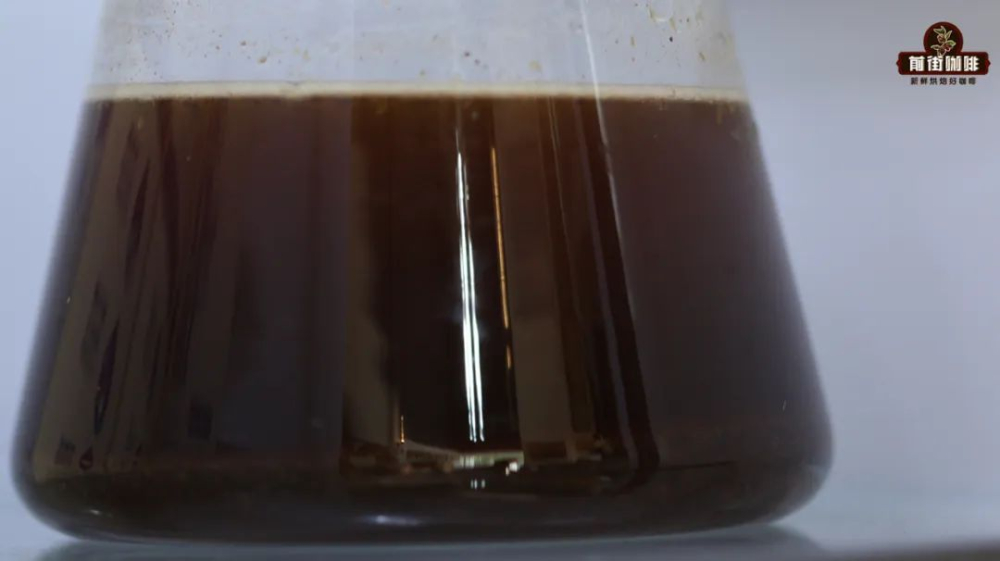
As for time, it is even easier to understand: the longer the steeping, the greater the total amount of substances released by the coffee, and the stronger the finished product naturally is. But the dissolution of coffee substances is not better the more there is. Through experiments, Front Street found that after steeping for more than 24 hours, cold brew coffee tends to develop bitter notes similar to nuts and wood shavings; while steeping for less than 8 hours does not release enough coffee substances, and most likely gives you only a cup of weak-flavored water that barely tastes like coffee. Therefore, the relatively safe cold brew steeping range is 8 to 24 hours.
At this point, some friends may ask: why can the time span be stretched so long? Between 8 and 24 hours there is a full 16-hour difference—won't the flavor be vastly different? You should know that when extracting espresso, a difference of 1 second can already make the flavor noticeably different, and when brewing pour-over, a difference of 20 seconds can also reveal flavor changes. That is because espresso uses high-temperature pressurized extraction, and pour-over also relies on high temperature plus agitation to improve extraction efficiency. But the water temperature for cold brew coffee averages only 4 to 10 degrees Celsius, making extraction efficiency extremely low. In addition, the coffee grounds and water remain relatively still, lacking external driving force, so the flavor substances released by the coffee grounds are very limited.
At 8 hours of steeping, the coffee flavor shows bright acidity and is refreshing and pleasant.
At 16 hours of steeping, the coffee flavor tends to become round and full, with balanced acidity and sweetness.
At 24 hours of steeping, the coffee's flavor and mouthfeel become fuller, richer, and more balanced.
If the grind size range (70% to 85% passing rate on a No. 20 sieve) is divided into three levels—coarse, medium, and fine—and the time range (8 to 24 hours) is divided into three levels—short, medium, and long—then reasonable cold brew coffee production plans are as follows:
A safe and hassle-free approach is coarse grind paired with long extraction time, making it the top choice for lazy people. For example, if you are free at a certain time today, then you will most likely also be free at the same time tomorrow, which saves you the trouble of calculating time (and also prevents you from forgetting that you are still steeping cold brew).
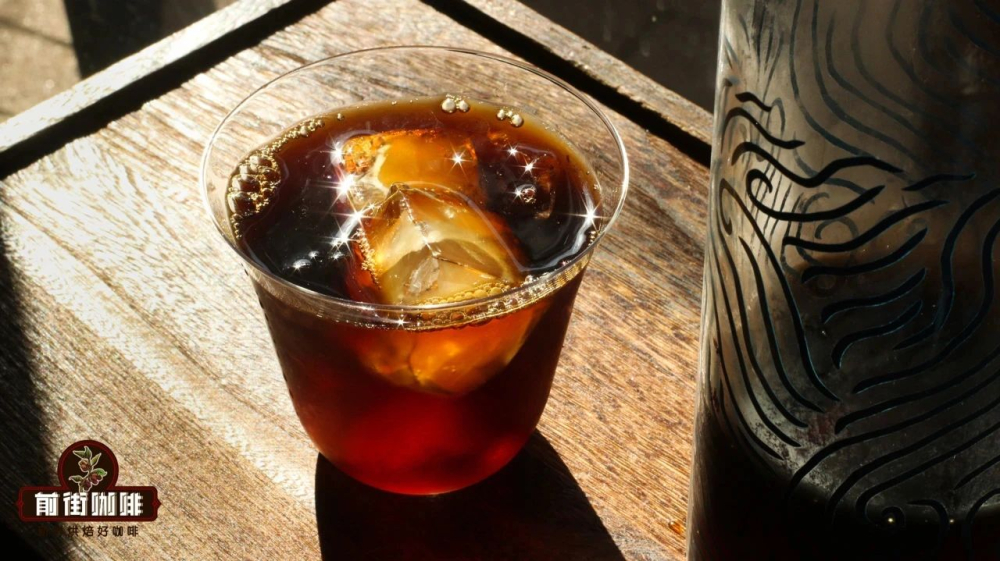
The efficiency-seeking approach is medium-fine grind paired with medium-long time, which can correspondingly shorten the extraction duration, and reducing steeping time also makes the coffee's overall performance more refreshing.
Finally, let's review the cold brew coffee making process again!
As for coffee beans, Front Street tends to choose light to medium roast beans. If you prefer floral notes, you can go for Front Street. Washed Gedeb coffee; if you want tropical fruit flavors, Front Street. Sun-dried Huakui is a good choice; if you like coffee with the fermented feel of ripe fruit, Front Street. Colombia Pink Bourbon is worth recommending.
Here, Front Street Strawberry Candy coffee beans are used as an example for making it, and its juicy feel is very full. As for equipment, you only need a clean sealable container. Take 40 grams of coffee powder, grind it to a fine grind (85% passing rate on a No. 20 sieve), pour it into the container, then add 480 milliliters of cold water, stir evenly with a wooden stick, and cover with a lid.
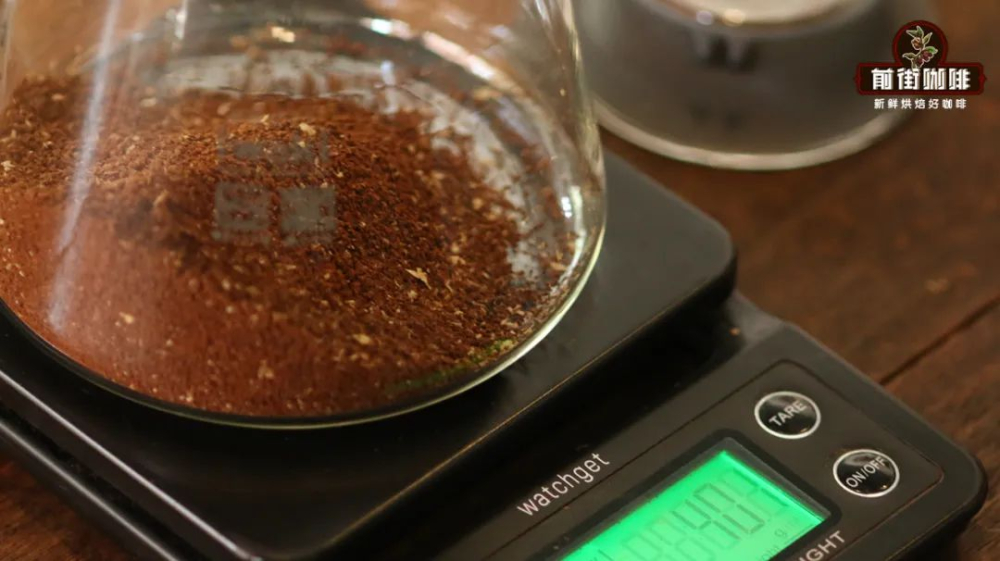
Refrigerate for 12 hours, then take it out and strain the grounds. The coffee liquid with the grounds filtered out is ready to drink directly; you can also bottle the filtered coffee liquid and continue refrigerating it for 4 hours, and the flavor and mouthfeel will be even better.
The Strawberry Candy cold brew made this way has moderate acidity and sweetness, with soft berry and rose aromas on the palate, an orange-like mouthfeel filling the mouth, and after swallowing, a rounded sweetness accompanied by almond and candied fruit notes.
The above content is compiled by CoffeeHunters, a coffee news website.


