







How Does Coffee Cultivation Shape Ethiopian Coffee Varieties?
Ethiopia's coffee cultivation falls into three systems: wild forest coffee, courtyard plots near farmers' homes, and large estates. Wild forest trees are genetically mixed through natural hybridization, courtyard trees are planted and sold by smallholders, and estate varieties are recorded and managed to standard. The Heirloom label on bags usually means a mix of native varieties, not one single plant.
The numbered varieties 74110, 74112 and 74158 came out of a disease-resistance breeding program run by JARC in the 1970s. Gesha Village is a well-known large estate in this system. Knowing which cultivation model a lot comes from helps when reading how many types of coffee trees are there? and judging what the variety name on a bag really tells you.
Ethiopia, as a genetic treasury of coffee, has a variety system far more complex than one might imagine. The commonly seen Heirloom native species label on the market is actually a collective term for mixed harvested varieties, not a specific single variety. The frequently appearing numerical codes such as 74110, 74112, 74158 in recent years originate from the disease-resistant breeding program of JARC in the 1970s. This article will systematically sort out the classification of Ethiopian coffee cultivation models, the essential meaning of Heirloom, the origin of the 74-series numerical varieties, and the identification and naming of Landrace local varieties, helping coffee enthusiasts understand the variety information on Ethiopian bean bags.
For more specialty coffee knowledge, please follow: Front Street Coffee ( Frontsteet Coffee )
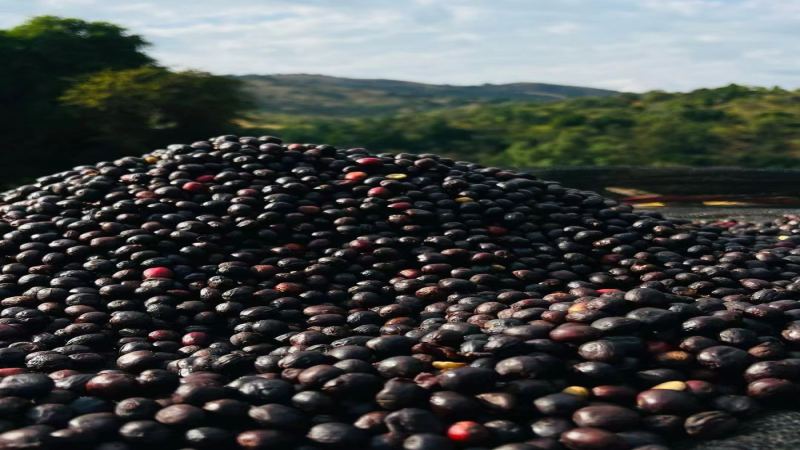
In Ethiopia, coffee cultivation methods can be roughly classified into three types. The first is wild forest coffee, where these coffee trees are usually distributed in the forests of southwestern Ethiopia. Due to natural hybridization, the variety composition is extremely mixed, and their reproductive capacity and yield often cannot compare with artificially selected superior varieties.
The Kafa Forest on Front Street's bean list comes from this forest cultivation system. After the coffee cherries mature, nearby farmers go into the forest to pick them and then transport them to nearby processing plants for washed or natural processing. The batch launched by Front Street this time uses the more stable washed processing, combined with a medium-light roast, to better present floral notes and fruit acidity.
The second is courtyard cultivation, where coffee trees are planted near farmers' residences, with each household managing about a few hundred trees. The cherries are picked and sold as soon as they mature, which is the main source of livelihood for most small-scale coffee farmers. These coffee trees may have been left by former landlords, or obtained through exchanges between neighbors, or even grown from seeds introduced from other producing regions. The third is large coffee farms or estates. These cultivation entities have large areas of land, the planted varieties have clear archival records, and field management follows standardized procedures. The most famous among them is undoubtedly the Gesha Village Estate.
A large proportion of the Ethiopian coffee circulating on the market comes from cooperatives. Cooperatives gather the coffee cherries harvested by farmers in a certain area, process them uniformly, and then sell them externally. It is estimated that Ethiopia currently has between 10,000 and 15,000 coffee varieties, most of which have not yet undergone formal genetic identification. Therefore, Heirloom does not point to a specific variety; it essentially represents a mixed lot of green beans from a producing region—cooperatives combine the harvests of many smallholders from the same period into a blend. Precisely because there are genetic differences among varieties, these coffee beans vary in grain size, dimensions, and shape, with some large and some small, some long and some round. It can be understood as a "blended lot."
When purchasing Ethiopian coffee in daily life, the variety column on the packaging is mostly labeled "Heirloom," translated into Chinese as native species or heirloom, which refers to this mixed harvested variety combination. However, in recent years, numerical codes such as 74110, 74112, 74158 have begun to appear in the variety information of many Ethiopian beans. What exactly do they mean?
In the 1970s, coffee plants in many producing regions of Ethiopia were severely attacked by Coffee Berry Disease (CBD). Infected coffee cherries gradually turn from green to gray-black and eventually necrose on the branches. Once a coffee tree is infected with this disease, crop losses can reach as high as about 80%.
In 1972, growers began applying chemical fungicides to prevent and control CBD. Although certain results were achieved, spraying alone ultimately treated the symptoms but not the root cause. In the long run, it was necessary to find varieties with naturally strong resistance to coffee berry disease. The following year, Ethiopia's JARC (Jimma Agricultural Research Center) selected 19 collection sites in the southwestern region to carry out variety collection work. By 1975, researchers had collected a total of 639 seed samples. After scientific identification and field trials, 13 coffee varieties were ultimately selected that were both resistant to CBD and drought-tolerant, high-yielding, and excellent in flavor.
The later 74 series and 75 series were developed and cultivated from this batch of mother trees. JARC recorded this major category as "1974/1975 CBD-Resistant Selections." Therefore, "74" represents the year 1974, which is the year the variety was cataloged, and the following three digits are the trial sample number. The 74-series varieties we often hear about were all included during this period. For example, the Sidamo Santavini coffee beans on Front Street's bean list use the numerical variety 74158. After 96 hours of fermented natural processing, the mature cherries present rich pink floral notes as well as tropical fruit flavors such as guava and pineapple.
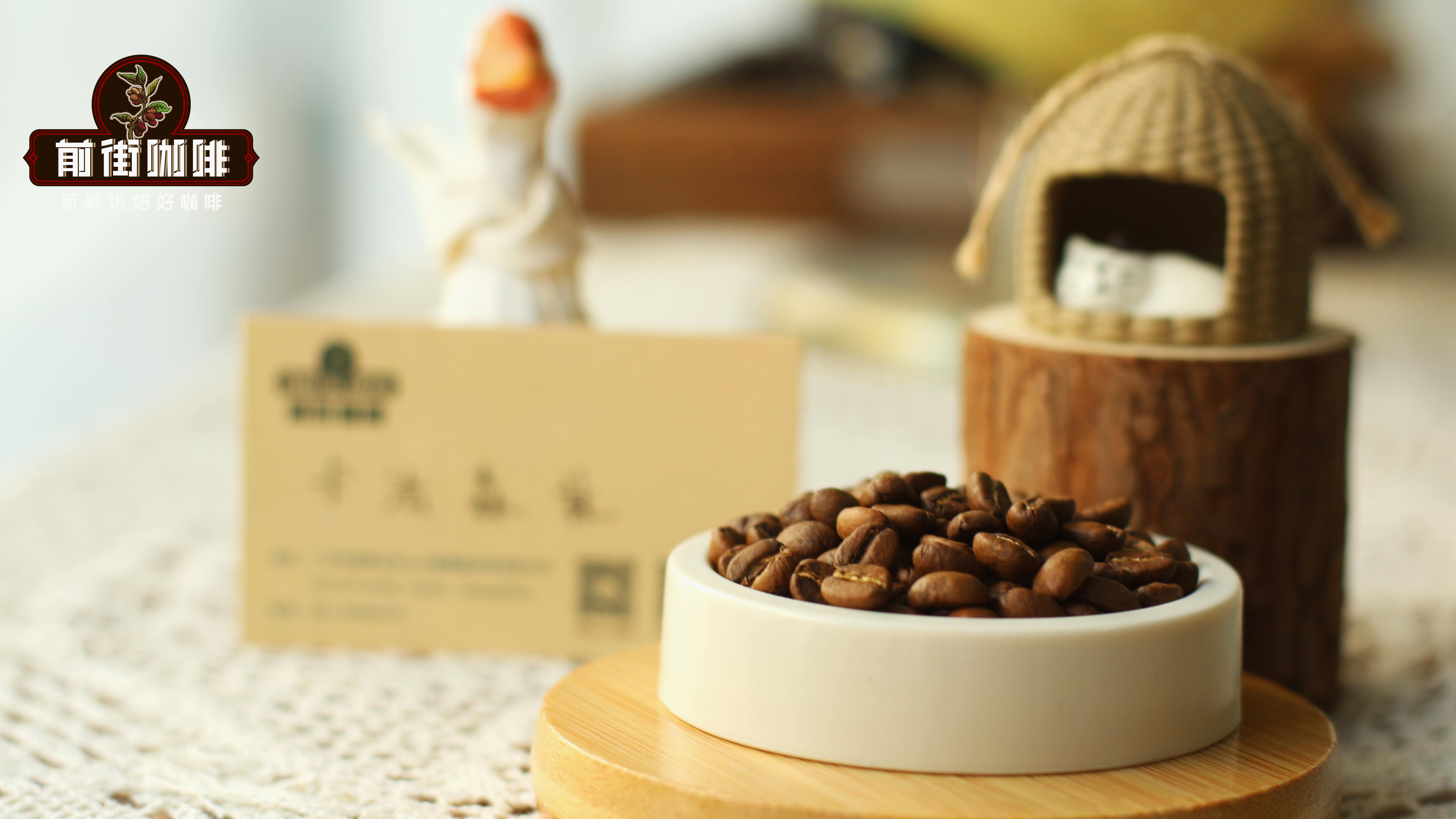
Front Street Coffee (FrontStreet Coffee): Ethiopia Sidamo Santavini 74158 Coffee Beans
Country: Ethiopia
Grade: G1
Region: Sidamo
Processing Station: DWD Santavini Processing Station
Altitude: 2050 meters
Processing Method: All red cherries 96-hour anaerobic natural
Variety: 74158
Flavor: Citrus, pineapple, guava, red wine finish
In addition to numerical varieties, some attentive friends may also have noticed that some Ethiopian coffees use unfamiliar English names to label their varieties. So what is the relationship between such names and native species?
In fact, all coffee trees planted in the field differ from one another in growth. Some plants show stronger cultivation advantages. They not only adapt to the local soil, climate, and environmental conditions, but their flavor gradually becomes more stable. At the same time, they also possess disease resistance and high yield, and are therefore deliberately retained by farmers. After years of cultivation and hybridization, they are slowly "domesticated," and with farmers' conscious selection and breeding, the traits of certain plants are no longer difficult to predict and become stable and regular. This type of variety is called Landrace in the industry, meaning "local variety."
In recent years, under the promotion of Ethiopia's agricultural management agency JARC (Jimma Agricultural Research Center), many regional local varieties formerly broadly classified under the Heirloom category have been identified one by one and given names, such as Kurume, Wolishao, Dega, Choche, Sardo Buna, Bedessa, and others. At the same time, more and more international green bean traders, in order to meet the needs of consumers pursuing "uniqueness," tend to purchase local varieties that highlight the characteristics of the producing region. From the cultivation side, these local varieties can show good adaptability locally while ensuring decent returns, so both new and old farmers are naturally more willing to plant them.
The above content is compiled by CoffeeHunters, a coffee news website.


