








How Does Cold Brewing Coffee Grounds with Milk Actually Work?
Milk cannot replace water for hot pour-over because brew temperatures above 90°C push milk sugars and amino acids into compounds that are not desirable, and milk's density slows extraction. Cold brew changes the equation: immersion at low temperature keeps the milk stable, and a longer steep time offsets milk's weaker extracting power. Medium-dark beans, a controlled coffee-to-milk ratio, and coarse grounds are the practical starting points.
Front Street's hands-on testing recommends medium-dark roasts with notes of dark chocolate, caramel, and roasted nuts, since they hold up in a milk base and give a fuller mouthfeel. Beans such as Brazil Red Bourbon, Bird of Paradise, and Colombia Huila are suggested, along with attention to grind size and steep time. The same ratio thinking behind a coffee milk ratio latte applies here, only with a longer, cooler extraction.
Can you use milk instead of water to brew pour-over coffee? From the perspectives of temperature and extraction efficiency, this idea is almost unworkable. But think about it from another angle—if milk is used as the immersion medium for cold brew, using time to compensate for extraction effectiveness in a low-temperature environment, the situation becomes completely different. Based on Front Street's hands-on testing experience, this article documents in detail the complete process of cold-brewing coffee grounds with milk, including bean selection recommendations, coffee-to-milk ratio, grind size control, and key precautions during the immersion process. Friends who enjoy making milk coffee at home might want to follow Front Street's steps to verify this interesting brewing approach.

To get more specialty coffee knowledge, you can follow the WeChat official account: Front Street Coffee (FrontStreet Coffee)
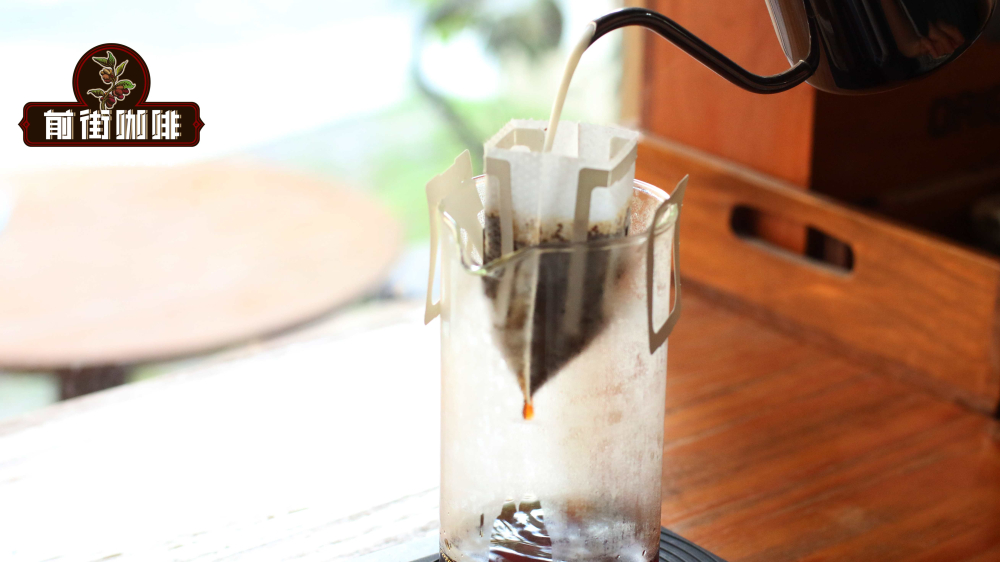
A customer once asked Front Street: "Can you make pour-over coffee with milk?" Thinking about it carefully, this is indeed quite tricky. First, there's the temperature concern—pour-over typically requires water above 90°C, and at such high temperatures, the amino acids in milk react with sugars to produce fructoselysine, a substance that is not friendly to human health. Second, milk itself is far more concentrated than water, so the efficiency of extracting compounds from coffee grounds in it is actually very low. From an extraction standpoint, it is not an ideal medium for pour-over either.
However, if we think differently—what about using milk to soak coffee grounds for cold brew milk coffee? This might actually work. The biggest difference from pour-over is that cold brewing doesn't require high temperatures at all, so the milk won't spoil from heat. Furthermore, immersion and drip methods work by different mechanisms—although milk's extraction capability is weaker, this shortcoming can be compensated for by extending the immersion time.
In terms of bean selection, Front Street tends to choose medium-dark roasted beans, which typically present notes of dark chocolate, caramel, and roasted nuts, and pair with milk for a richer, fuller mouthfeel. Front Street Brazil Red Bourbon Coffee, Front Street Bird of Paradise Coffee, and Front Street Colombia Huila Coffee are all good choices;
If you prefer coffee with a solid body and high richness, Front Street recommends the highest-grade Front Street Golden Mandheling Coffee. This bean has undergone multiple rounds of manual sorting, with the defect rate kept extremely low, so the coffee's aroma is clearer and the sweetness is more outstanding. You can place orders through Front Street stores or the Front Street Tmall flagship store. Without further ado, let's get hands-on and give it a try (or play around with it).
The coffee used in this experiment is Front Street Sunflower Warm Sun Blend Coffee, which is also the espresso bean used in Front Street stores, with flavor notes of vanilla cream, sherry, brown sugar, and chocolate. Front Street wanted the final milk coffee to taste richer, so the coffee-to-milk ratio is smaller than regular cold brew, roughly 1 part coffee grounds to 8 parts milk.
Front Street's specific method is as follows: First, grind 25 grams of coffee beans to a particle size like fine granulated sugar, with 85% passing through a No. 20 sieve as the standard. The ground coffee must be placed into a filter bag—this step is quite critical. When Front Street tried it the first time, they poured the coffee grounds directly into the milk like making regular cold brew, and the result was that the milk flowed extremely slowly during the filtration step, taking considerable effort. So to save trouble later, wrapping the coffee grounds in a filter bag avoids those headache-inducing filtration problems.
Place the filter bag containing coffee grounds into a bottle, then pour in 200ml of fresh milk. You can shake the bottle or use a tool to ensure the coffee grounds are fully saturated. Then put on the lid, confirm the seal is tight, and place it in the refrigerator. This step is equally important because milk is a highly perishable beverage—if the seal is not tight or it's not kept cold, it will spoil quickly.
Soaking at low temperature in the refrigerator for 12 hours is sufficient. Front Street does not recommend soaking too long, mainly out of concern about the milk spoiling. If you want to improve extraction, you can stir the filter bag during the soaking period.
After soaking, remove the filter bag, or simply pour out the milk coffee. Observing the color, it already looks similar to an iced latte, with a clear sherry aroma and the sweetness of lactose. Taking a sip, the chocolate milk flavor immediately emerges, and the overall concentration is just right.
A friend remarked: "Add some ice, and a 12-hour iced latte is done."
The above content is compiled by CoffeeHunters, a coffee news website.


