







What Is the Coffee-to-Water Ratio in Pour-Over?
The coffee-to-water ratio in pour-over is the weight of the coffee grounds compared with the total water poured. A common store setting is 15 grams of coffee at a 1:15 ratio, which means 225 milliliters of hot water. More water lowers the strength and spreads the flavor; less water raises the strength and makes the cup more concentrated.
The ratio also sets extraction yield, the percentage of dissolved coffee solids relative to the grounds' weight. That is why is coffee strength changes when the same beans are brewed with different water amounts. After fixing the ratio, the three-pour method and its timing control how evenly flavor develops, so the ratio and the pour sequence work together rather than separately.
The reason pour-over coffee is so appealing is that it can present different flavors by adjusting parameters, and the coffee-to-water ratio is one of the most critical variables. The ratio not only determines the strength of the coffee but also directly affects the extraction yield and the direction of the mouthfeel. Starting from the definition of the coffee-to-water ratio and drawing on brewing experience from Front Street Coffee's stores, this article explains how to find a suitable ratio range and provides a detailed introduction to the three-pour method and its parameter settings. Whether you are a beginner just getting into pour-over or an enthusiast looking to refine your technique, you will find practical reference here.
Many people become interested in pour-over coffee because of the sense of ritual it carries. The charm of pour-over lies in the fact that you can fine-tune various parameters and change the extraction conditions at different stages to ultimately get a cup that suits your taste preferences. Front Street Coffee has always believed that the coffee-to-water ratio is an extremely critical variable in pour-over extraction. Mastering the relationship between coffee and water can both improve extraction consistency and take flavor expression to the next level.
What exactly does the coffee-to-water ratio in pour-over mean?
During the pour-over process, hot water contacts the coffee grounds and acts as a solvent, releasing the soluble flavor compounds inside the coffee. The coffee-to-water ratio describes how much water we use to extract these flavor components. Specifically, it is the ratio between the weight of coffee grounds and the total amount of water poured, and it directly determines the strength of the brewed coffee. No matter which brewing method Front Street Coffee uses, the coffee-to-water ratio is confirmed before extraction. Taking store output as an example, a single cup usually uses 15 grams of coffee grounds and, at a 1:15 ratio, a total of 225 milliliters of hot water is poured.
When other conditions remain the same, the more water poured, the lower the coffee strength and the more dispersed the flavor; the less water poured, the higher the strength and the more concentrated and full-bodied the taste. At the same time, increasing the amount of water also means the extraction yield will rise, and more soluble substances will be released. Extraction yield refers to the percentage of substances dissolved from the coffee grounds relative to the weight of the grounds. However, the further the pouring goes, the more the extraction efficiency gradually declines, and it also tends to bring out unpleasant bitter compounds, which then drags down the overall taste of the cup. Therefore, only by finding the right coffee-to-water ratio can you achieve an ideal balance between strength and extraction yield.
How do you determine a suitable coffee-to-water ratio?
The coffee-to-water ratio is usually judged by experience, and there is no hard-and-fast rule. For example, when Front Street Coffee's stores serve Jamaican Blue Mountain coffee, they choose a 1:15 ratio in order to present balanced strength and mouthfeel; when brewing Geisha Estate Natural Red Label coffee, they want the flavor to be clearer and the acidity brighter, so Front Street Coffee adjusts to 1:16 for extraction. Based on Front Street Coffee's past brewing insights, beginners are advised to start experimenting within the range of 1:15 to 1:18, meaning 15 grams of coffee grounds for a single serving corresponds to 225 to 270 grams of water.
Of course, the coffee-to-water ratio is not the only factor that influences coffee flavor. Extraction time, water temperature, grind size, pouring technique, and the characteristics of the dripper and filter paper all affect the final taste. Once you begin to understand the relationships among the various pour-over parameters, variables that were originally fixed, such as the coffee-to-water ratio and water temperature, can become tools for flexible adjustment to make coffee taste better.
Why use staged pouring?
When watching baristas brew, you can often see them pause briefly during pouring and continue adding water after the water level drops. This is staged extraction.
In the first stage, a small amount of hot water is poured to wet the coffee grounds, with the aim of expelling gas from inside the coffee bed so that it does not interfere with subsequent extraction. This step is called "blooming." The most common approach is to pour water at twice the weight of the coffee grounds and bloom for 30 seconds. For example, when Front Street Coffee uses 15 grams of grounds, it blooms with 30 milliliters of water, which is also the blooming formula easiest for beginners to master.
The criterion for staged pouring is whether there is a pause in pouring after blooming. If the pouring after blooming is completed in two stages, then adding the bloom makes it "three-stage pouring"; and so on. If there is no pause after blooming and the water is poured all at once, it is called "one-pour flow."
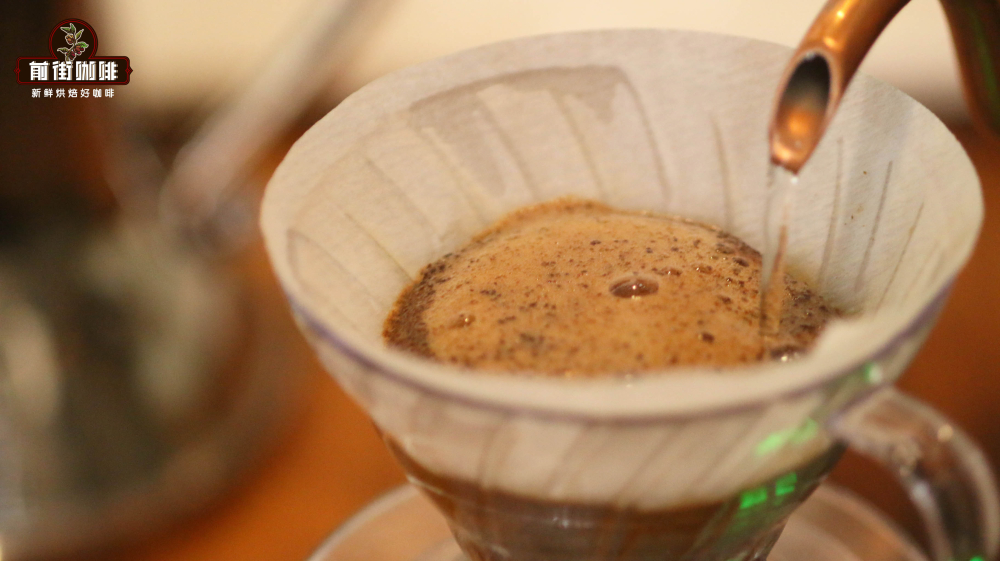
Baristas choose staged extraction because different substances dissolve at different rates during pour-over. The order in which hot water releases flavor is roughly sourness, sweetness, then bitterness. Under the same coffee-to-water ratio, the more stages there are, the less water is poured in each stage, the more times the water flow scours and agitates the coffee bed, and the higher the extraction yield becomes.
In addition, more stages lengthen the overall extraction time, and the substances released at each stage are more abundant, giving the flavor a stronger sense of layering. But Front Street Coffee would like to remind you of one point: the more stages there are, the longer the operation takes, and the risk of over-extraction also rises. In the later stages of extraction, the coffee's large-molecule substances are more easily brought out, and sweetness is instead suppressed. It is clear that more pouring stages is not necessarily better. So how exactly should staged pouring be divided?
The universal three-stage pour-over method
Based on Front Street Coffee's many years of brewing experience, beginners are advised to use three-stage pouring. Three-stage extraction helps dissolve flavor substances more fully during brewing, enriches the layering of the mouthfeel, and at the same time avoids over-extraction caused by too long a steeping time.
If using 15 grams of coffee grounds, a 1:15 coffee-to-water ratio, and a total water amount of 225 milliliters, the three pouring stages can be divided as: 30 milliliters, 95 milliliters, and 100 milliliters. The weights shown on the scale are, in order: 30 grams, 125 grams, and 225 grams.
Here, Front Street Coffee's washed Yirgacheffe Gittingi Cooperative coffee beans are used for demonstration. This coffee uses a medium-light roast and has abundant white floral notes, citrus-lemon-like acidity, and a green tea-like mouthfeel. It is suitable for pour-over, cold brew, and many other brewing methods.
A Hario V60 dripper is used for brewing. The V60's spiral rib design helps the coffee grounds degas better and maximizes the volatilization and dissolution of aromatic acidic substances. Because Yirgacheffe is a light roast and the beans are relatively hard, hot water at 92°C to 93°C is needed to fully release the floral and fruity notes.
As for grind size, Front Street Coffee recommends a medium-fine grind (78% passing through a Chinese standard No. 20 sieve), with a coarseness similar to fine granulated sugar. If the grind is too coarse, it is difficult to extract a full, rounded flavor, and the coffee will seem thin; if the particles are too fine, over-extraction is likely at high temperatures, bringing a bitter taste.
Regarding the brewing ratio, Front Street Coffee believes both 1:15 and 1:16 are acceptable. If you want a richer mouthfeel, use 1:15; if you want to experience the floral notes and sweetness more clearly, use 1:16 to let the flavor open up more.
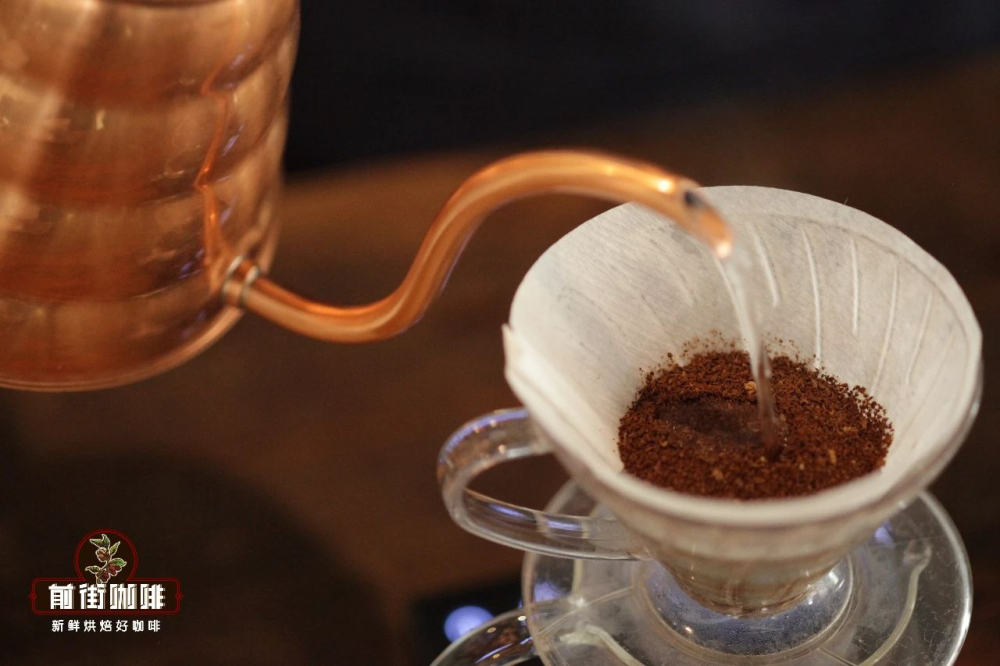
First, place the folded filter paper into the dripper and fit it against the wall, add 15 grams of ground coffee, then tare the scale to zero.
For the first stage, pour 30 grams of water and bloom for 30 seconds. Start timing as you pour, using a small stream throughout and circling from the center outward, taking care to wet the entire coffee bed.
After 30 seconds, use a slightly stronger stream to steadily pour the second stage of 95 grams of water, with the aim of lifting the entire coffee bed. The stream should be poured vertically and evenly. At this point the timed scale shows 125 grams, and the pour should be finished at around 55 seconds. When the liquid level drops to the halfway point, switch to a small stream and pour the third stage of 100 grams in a small circle, trying to keep the flow from becoming too strong so as not to break up the coffee bed and cause under-extraction.
The final total poured amount is 225 grams, and the drip filtration is completed in about 2 minutes. After removing the dripper, swirl the coffee in the server to mix it evenly, and it is ready to drink.
Finally, Front Street Coffee would like to remind you that the amount poured in each stage is not fixed. We can adjust flexibly based on our accumulated pour-over experience and our understanding of the coffee beans. What Front Street Coffee understands as coffee brewing is an experiment with a scientific foundation. If you want to learn pour-over well, you need to deeply understand the true meaning behind each brewing parameter. Only then can you find an experimental method that suits you and gradually build your own brewing framework.
The above content is compiled by CoffeeHunters, a coffee news website.


