







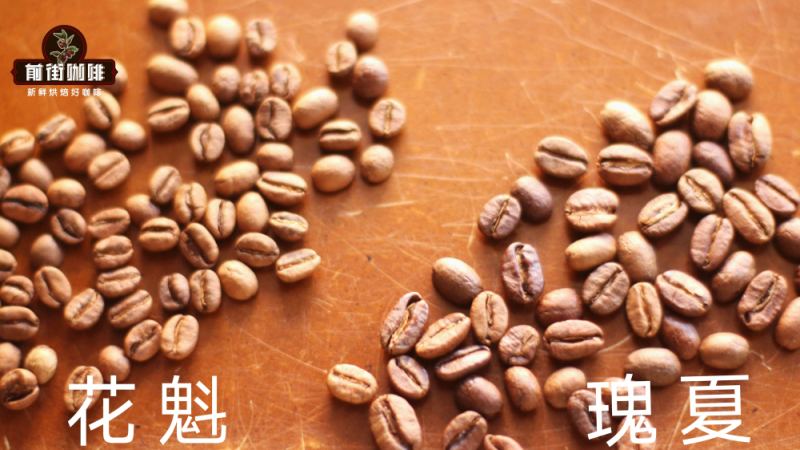
What separates gesha coffee from the name Geisha?
Gesha coffee is an independent Arabica variety, named after the Gesha area of Ethiopia where British collectors gathered samples in 1929 and sent them on to Kenya in 1931. The name Geisha is a separate, largely domestic Chinese label used for a sun-dried heirloom from the Buku Abel station in Hambela, Sidama, sold abroad under the Hambella region.
The confusion traces back to translation, since Gesha and Geisha sound alike and both are tied to Ethiopia. Gesha spread as a variety regardless of origin, while Geisha refers to a specific selected population. The article also covers bean sizing, the numbered lots, roasting curves and pour-over parameters used for this Hambela coffee.
Geisha coffee quickly rose to fame after winning the TOH in 2017, but many enthusiasts often mistake it for Gesha. In fact, Geisha is a sun-dried heirloom variety produced by the Buku Abel processing station in the Hambela region of Sidama, Ethiopia, and is labeled as Hambella on foreign jute bags. Starting from the definition of the variety, this article will clarify the differences between Geisha and Gesha, sort out the origin of the name Geisha, the scope of its production area, the meaning of its numbering, and the independent status of small-bean Geisha, and also include Front Street Coffee's roasting curve and pour-over parameters, helping readers fully grasp the ins and outs of this bean and the key points of brewing.
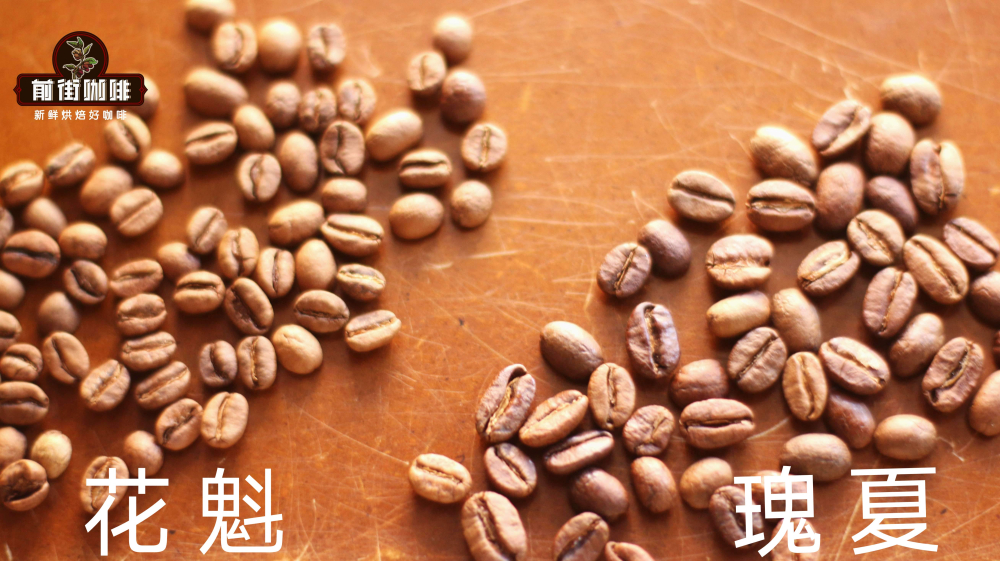
Due to the Chinese translation of the name, many coffee enthusiasts have easily confused Geisha coffee with Gesha coffee since Geisha coffee beans became popular.
Simply put, the name "Geisha" is used only within China and specifically refers to the sun-dried heirloom variety from the Buku Albe processing station in the Hambela region of Sidama, Ethiopia. This bean does not appear overseas as "Geisha" because the jute bags are labeled with the Hambella producing region when exported.
The reason it is so frequently confused is that Gesha coffee has another Chinese translation—Geisha coffee. This translation comes from "Geisha" having the same pronunciation as the Japanese word for geisha, and was first used in China's Taiwan region. The name "Gesha" was determined by Mr. Yuan, the former head of Coffee Dream Dew Green Bean Company in mainland China.
Gesha represents an independent variety within Arabica coffee, not restricted by producing region or origin, and is the name of a coffee plant variety. What Geisha corresponds to is an Ethiopian heirloom variety, belonging to a population selected and propagated through natural mixing.
What exactly is the Gesha variety?
The original birthplace of Gesha is also Ethiopia. In 1929, Britain sent a colonel to the Benishangul region of Ethiopia to collect coffee samples from a place marked as Gesha on an old map, and he also purchased other varieties at local markets. At that time, there was no concept of distinguishing coffee varieties, so in 1931 the colonel mixed all the samples he had collected and purchased and sent them to British plantations in Kenya.
After completing the mission in 1935, the colonel mistakenly wrote it as "Geisha" in a letter to the British minister, and this spelling was subsequently widely adopted. The Gesha variety we know today, with its enchanting floral and fruity aroma and grown in Latin America, is one of the varieties developed and domesticated over generations, numbered Geisha T2722.
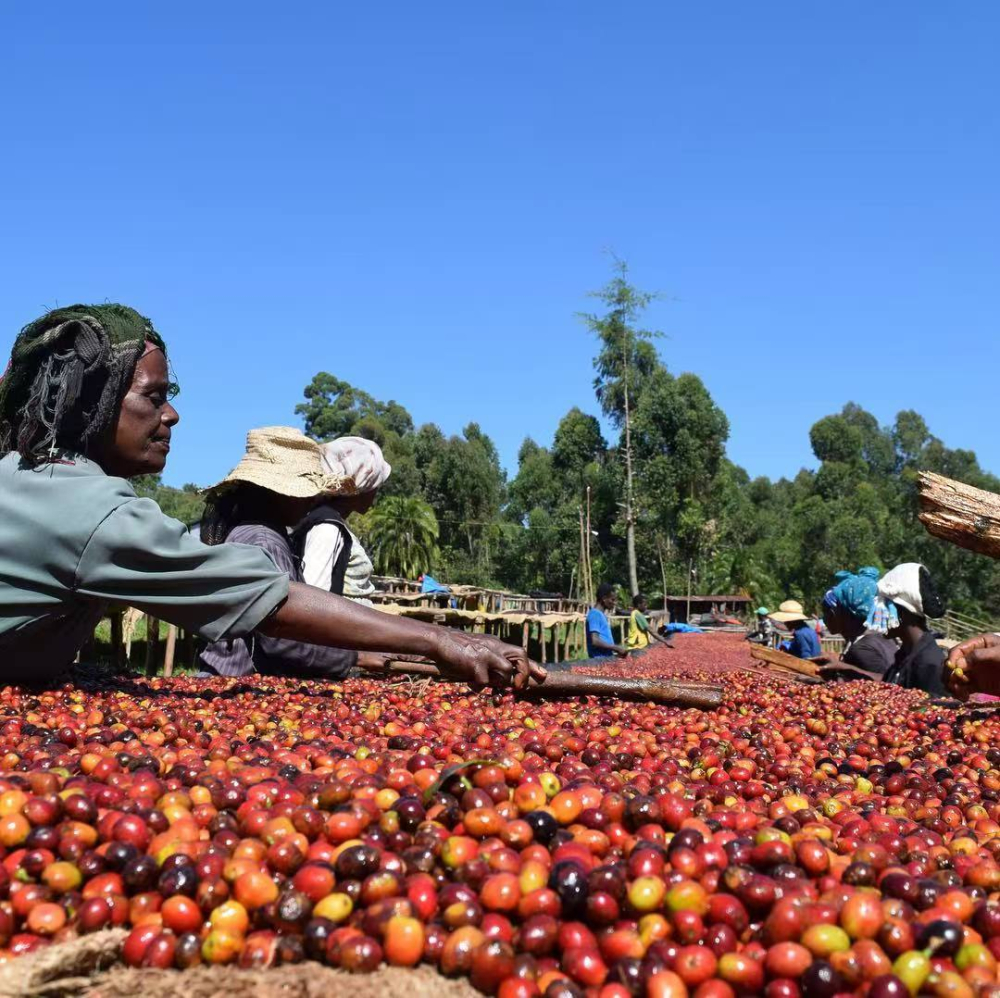
In Ethiopia, the area where Gesha samples were collected still preserves a large number of heirloom coffee varieties. They have a certain blood relationship with Geisha T2722 (one could also say it is extremely weak), but their flavor expression is completely different. The flavor of heirloom Gesha is mainly berries, nuts, and spices.
In order to distinguish domesticated varieties from heirloom varieties, the Ethiopian authorities use the term Gesha for local heirloom Gesha.
What exactly are Ethiopian heirloom varieties?
Unlike heirloom Gesha, which must be specified as being from Benishangul, Ethiopian heirloom varieties generally refer to coffee from across Ethiopia that has not been subdivided and is grown and harvested in mixed lots.
Most Ethiopian varieties appear under this name, and the fundamental reason is that the number of local varieties is too large. Ethiopia is like a natural gene bank for Arabica. On the one hand, there are so many varieties that identification and classification are extremely difficult; on the other hand, the government is unwilling to disclose variety information for conservation reasons, so they are collectively called Ethiopian heirloom, meaning "family treasure."
Because the varieties are numerous and mixed, and because they are grown and harvested in mixed lots, FrontStreet Coffee has noticed that beans of Ethiopian heirloom varieties are often of uneven size. Most coffee beans of this variety show flavor characteristics of floral and fruity notes and citrus acidity.
Why is Geisha coffee called "Geisha"?
This coffee was originally the champion bean in the sun-dried group of the 2017 TOH, originally named Ethiopian Hambela sun-dried coffee beans. In the same year, after the green beans from this champion lot were introduced by a Beijing green bean trader, they were named "Geisha," implying the chief of a hundred flowers and a bewitchingly graceful bearing.
Chinese coffee enthusiasts truly came to know Geisha at the 2017 World Brewers Cup China competition—runner-up Li Jianfei used this lot of Geisha coffee beans and defeated many competitors who chose Gesha. In an era when Gesha almost "swept" competitions large and small, a sun-dried bean from Ethiopia defeated many Geshas, naturally making everyone sit up and take notice, and it was from then on that the term "Geisha" began to be widely mentioned.
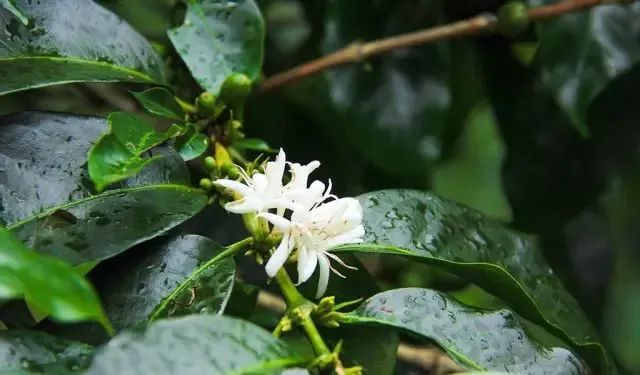
Can all coffee beans from the Sidama Hambela region be called "Geisha"?
After winning the championship in 2017, DW Company further added processing stations in Dimtu, the core production area of Hambella, including "Buku Abel," "Buku Saysay," "Haro Soresa," and "Tirtiro Goye," with an annual coffee output of about 1,100 tons. From the perspective of growing regions and processing stations, among these estates and processing stations, only coffee from the processing area of the "Buku Abel" station covers the small production area that originally produced the sun-dried coffee bean "Geisha." Therefore, FrontStreet Coffee believes that only sun-dried Ethiopian heirloom varieties from the Hambela Buku processing station can truly be called Geisha coffee.
Why do Geisha coffee beans have the number X.0 after them?
As an agricultural product, coffee's flavor expression changes every year with factors such as weather, soil, and rainfall. In order to distinguish the champion Geisha from 2017, a number of X.0 has been added every year since then. For example, the 2018 one is called Geisha 2.0 coffee beans... and the 2022 one is called Geisha 6.0 coffee beans.
Is small-bean Geisha Geisha coffee?
Yes. Through cupping, FrontStreet Coffee found that the flavor and aroma of small-bean Geisha coffee beans are very similar to the champion Geisha of 2017. At first, Front Street tasted flavors similar to the 2017 Geisha in the 2018 and 2019 Geisha lots, but they were not as good as the 2017 Geisha in body and aftertaste.
By comparing different lots of Geisha, we realized that the main source of the aroma in the 2017 Geisha was that the Geisha coffee beans contained some especially small beans. Similar small beans also appeared in the 2018 and 2019 Geisha lots, and sometimes a few sacks of similar small beans would appear among ten sacks. In 2019, we confirmed this information and informed the green bean supplier. Starting in 2020, Geisha split into two types: 4.0 and small-bean Geisha. Therefore, small-bean Geisha does not belong to the [X.0] series, but it is still Geisha coffee.
At present, everyone can buy authentic Geisha coffee beans at FrontStreet Coffee's physical stores and Taobao store. In order to let everyone better experience the rich floral and fruity aroma of Geisha coffee and the charm of freshly roasted coffee beans, coffee beans ordered from the online store are guaranteed to be shipped within 5 days after roasting is completed.
How to roast Geisha coffee beans?
FrontStreet Coffee has noticed that the green beans of Geisha coffee have a fermented wine aroma of coffee flowers, completely different from the grassy aroma of ordinary green beans; moreover, Geisha green beans are of uneven size, with many pointed at both ends (Ethiopia Heirloom), and have good moisture content, about 11%, but they are not very hard SHB beans. Because the beans are dense and hard, it is necessary to extend the dehydration time in the early stage, enter first crack after raising the temperature before first crack, and preserve floral and other small-molecule aromatic substances as much as possible to reduce their loss.
Therefore, the following roasting approach was formulated: Yangjia 800N, roast quantity 550g, bean charging temperature 190°C, turning point 151°C, 5:51, drop at 193°C, first crack development 1 minute 30 seconds, first crack at 9'50. The development time after first crack is recommended to be controlled within 1 minute 30 seconds, and not less than 1 minute. (It is recommended to open the damper wider and lower the heat to regulate the speed.) Use a sampling spoon to smell the aroma. At around 193°C, a strawberry jam aroma can be detected, and then it can be dropped. It is especially good to keep the total time within 11 minutes.
How should Geisha coffee be brewed to taste good?
FrontStreet Coffee stores use the pour-over method for extraction. Using a V60 dripper, grind the coffee to a medium-fine level (granulated sugar size / 80% passing rate on a Chinese No. 20 standard sieve), water temperature 90°C, coffee-to-water ratio 1:15, three-stage pouring.
First start the timer, pour 30 grams for the bloom, with a bloom time of 30 seconds; pour the second stage up to 125 grams, with a 10-second interval; then pour the remaining water, up to 225 grams. The total extraction time is about 2 minutes. After all the poured water has passed through the bed, remove the dripper, and remember to swirl evenly before tasting.
Geisha coffee brewing flavor performance: aromas of berries/tropical fruits with sweet-and-sour juicy acidity, and an aftertaste with the sweet finish of oolong tea.
The above content is compiled by CoffeeHunters, a coffee news website.


