







How Does Yunnan Coffee From Lincang Build Its Own Flavor?
Front Street Coffee planted Typica in Lincang, Yunnan, instead of relying on Catimor, the variety that has long supplied most of the region's raw coffee material. The 2013 natural Typica grows at 1,300 meters and is roasted medium, giving a cup with nuts, berries, brown sugar and a tea-like finish. The article records that growing decision and adds cold brew parameters for the bean.
Lincang sits in southwestern Yunnan near the Lancang River, with the Tropic of Cancer crossing its south and average annual temperatures between 16.8°C and 17.2°C, plus distinct dry and wet seasons. Front Street Coffee had roasted for about eight years and farmed for roughly eight and a half, and its founders concluded that variety, altitude and processing method must be matched in that order to give a region a clear flavor.
Yunnan coffee has long relied on Catimor as the mainstay of its raw material supply, but Front Street Coffee chose a more difficult path: starting from breeding, planting Typica in Lincang, and exploring a specialty coffee flavor that belongs to China itself. This article tells the origin story of Front Street 2013 Yunnan Natural Typica, covering the natural conditions of the Lincang production area, the variety differences between Typica and Catimor, the logic and challenges behind cultivation, and provides the cold brew preparation parameters and specific steps for this bean. For coffee lovers who want to understand the development trajectory of Yunnan specialty coffee and how to present Typica flavor through cold brew, this article offers a complete first-hand record and practical reference.
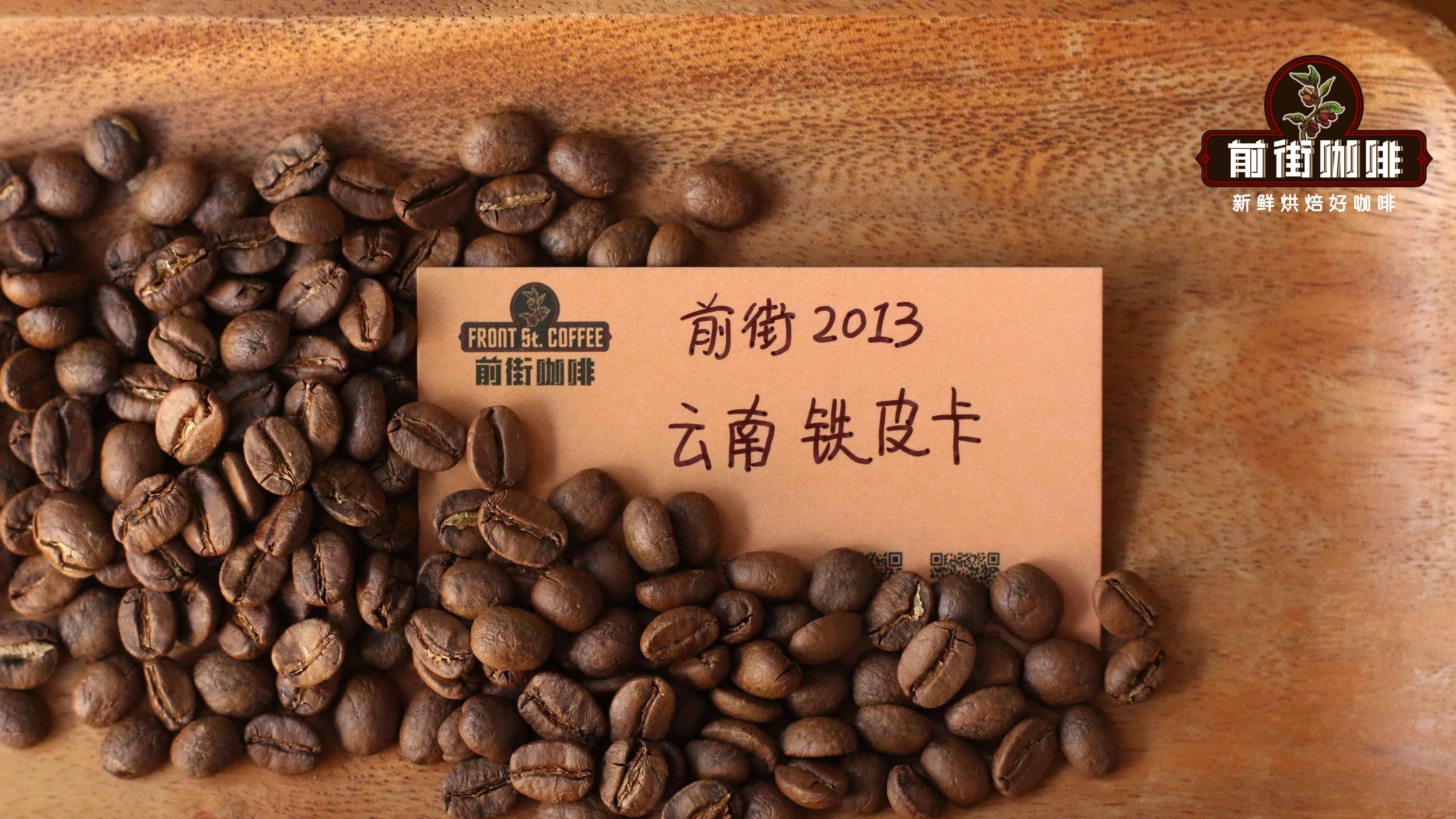
Front Street Coffee — Front Street 2013 Yunnan Natural Typica Country: China Region: Yunnan, Lincang Variety: Typica Altitude: 1,300 meters Processing Method: Natural Roast Level: Medium Roast Flavor profile: nuts, berries, brown sugar, tea-like.
Lincang City Lincang City is located in the southwest of Yunnan Province, with the Tropic of Cancer running across its southern part. It borders Pu'er to the east, Dali to the north, Baoshan to the west, and Myanmar to the southwest. It is named after its proximity to the Lancang River and is a shining pearl on the southwestern frontier of the motherland. Lincang's average annual temperature ranges between 16.8°C and 17.2°C, with distinct dry and wet seasons and abundant sunshine.
Coffee Bean Introduction Front Street Coffee (FrontStreet Coffee) has been roasting coffee for about 8 years, and our involvement in coffee cultivation has been about 8 and a half years — yes, half a year longer than we've been roasting coffee.
Front Street Coffee (FrontStreet Coffee) was formerly known as "Dazhen Coffee." We chose this name because we wanted to grow coffee in a place in Guangdong called Dazhen. When we grew Catimor seedlings to 20 cm, more than half a year had passed before we finally understood: the relationship and order of variety, altitude, and processing method. Choosing the right variety, planting it at the appropriate altitude, and after maturity experimenting to find a processing method that expresses its distinctive flavor — this is the only logical relationship I believe can give specialty coffee a clear regional flavor, and it is also the work led by the Yunnan Department of Agriculture: establishing a flavor map for Yunnan specialty coffee. This means identifying the regional flavor that Yunnan specialty coffee should have. So we gave up our planting plan in Guangdong and opened our first coffee roasting location on Bao'an Front Street, and thus renamed "Dazhen Coffee" to "Front Street Coffee (FrontStreet Coffee)."
Yunnan currently has over 2 million mu of coffee, most of which was developed under the stimulus of coffee prices in 2010-2011. Yunnan coffee's positioning is to supply raw coffee materials, so high-yield Catimor, a hybrid variety, was chosen. What we wanted to understand was how Typica and Bourbon perform in Yunnan, so it was unlikely we could just buy an existing Yunnan coffee farm — we could only start growing coffee from scratch through breeding. The reason various processing methods are now popular in Yunnan is largely because they originally planted Catimor, which is essentially a shortcut to highlighting post-processing flavors without changing the variety or altitude.
At Front Street, while roasting coffee, we continued forward with our specialty coffee cultivation ideas, successively visiting the Tropical Crops Research Institute — which conducts in-depth research on coffee cultivation and houses the Ministry of Agriculture's coffee germplasm bank — and the few coffee farmers who grow specialty coffee. We clarified why Yunnan does not grow the mainstream specialty coffee varieties Typica and Bourbon, and by chance found land suitable for cultivation. If we merely wanted a ready-made coffee estate of our own, it would actually be easy. The reason Yunnan coffee farmers have always been unwilling to grow coffee is that the labor cost of picking one kilogram of coffee is more expensive than its selling price. Unless the family has surplus labor, they are unwilling to pick even when the coffee is ripe. At this time, buying a
small plot of land from a coffee farmer before harvest, then doing some natural processing, some honey processing, and so on — Yunnan specialty coffee can be produced in two or three months. We don't know whether this controversial approach is correct, just as the former director of Yunnan Coffee wrote in a comment published earlier: "The current situation of over one million mu of Catimor in Yunnan's production areas is the main problem urgently awaiting transformation and improvement before us." So having debate is a good thing, but it cannot negate all the efforts we are making now. In the fog, Front Street Coffee (FrontStreet Coffee) has偏偏 chosen the most difficult path: selecting highlands, breeding Arabica varieties, and cultivating rationally.
Yunnan has no four seasons, only a dry season and a rainy season. Most coffee production areas have similar conditions, which is also the fundamental reason some production areas use the natural method. Entering June marks the beginning of the rainy season in the production areas, and the next three to four months will bring rain — the most favorable period for growing coffee. Only by planting seedlings at this time, with several months of nourishment from the rain, can they develop a well-established root system to survive the first dry season lasting half a year. The seedlings we chose for this batch are Typica, and the copper-colored new leaves they put out are their characteristic feature.
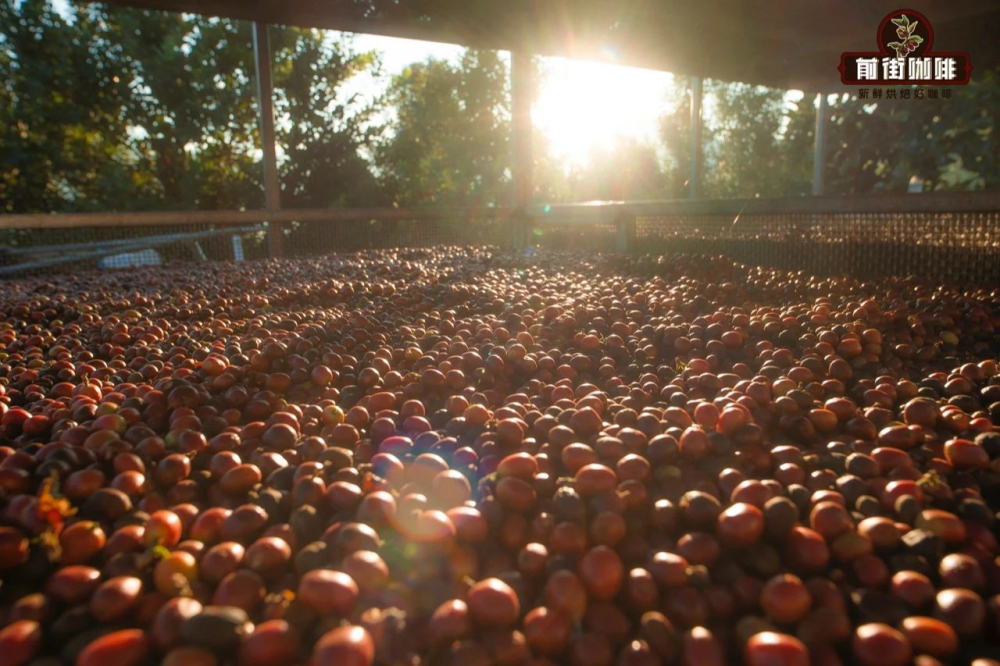
Typica has a very low yield, only one-third that of Catimor, which is why it is more expensive. At the same time, Typica and Bourbon are also very susceptible to coffee leaf rust, which is one of the reasons farmers are unwilling to grow Arabica. Due to time constraints, in order for this batch of planting to have a good growth foundation when it goes into the ground, we raised seedlings in the nursery a year in advance. This is usually done within one or two months after the harvest of the previous season, and during that year we appropriately controlled water and fertilizer to prevent too-rapid growth, ensuring the seeds have the highest germination rate while the seedling's taproot does not grow too long and need to be cut off when planting in the coffee garden.
We hope that on the coffee journey we can walk wider and farther. To have our own specialty coffee.
Front Street 2013 Yunnan Typica Recipe: Cold Brew Coffee
Cold Brew Coffee Preparation Parameters: 1:12 coffee-to-water ratio, grind size of medium granulated sugar coarseness (Chinese standard No. 20 sieve (0.85mm holes) with 75% passing rate), using ice water for immersion.
When making cold brew coffee, Front Street uses 50 grams of ground coffee, adds 500 milliliters of filtered water and 100 grams of ice, stirs evenly, then seals the bottle and places it in the refrigerator's cold storage compartment. Extract at low temperature for 8 to 12 hours; exceeding 16 hours is not recommended (it easily over-extracts and produces off-flavors). After the immersion extraction is complete, use a filter device to filter out the coffee grounds.
The above content is compiled by CoffeeHunters, a coffee news website.


