







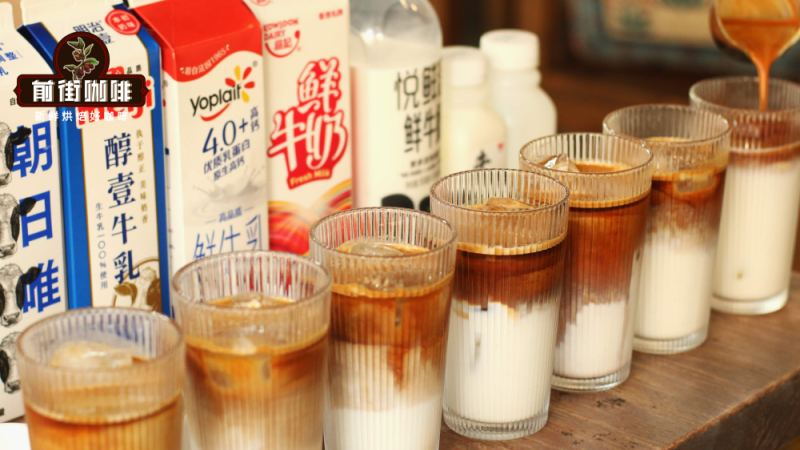
Which Espresso Coffee Beans Make a Rich Iced Latte?
An iced latte and an iced coffee both use cold coffee, but the latte's richness comes from milk and a properly extracted espresso shot. The usual home problem is weak pressure. A machine delivering only 3 to 4 bar produces watery espresso, and milk dilutes it further, so the drink never matches the creamy texture of a cafe version.
Choose espresso coffee beans roasted for milk-based drinks, or a single-origin option if a lighter, fruit-forward soe latte is the goal. Extraction standard matters as much as the bean: aim for a concentrated shot, then build the drink with ice first, milk second, and espresso last, keeping the coffee-to-milk ratio steady so the flavor does not wash out.
It's also iced coffee, so why is the iced latte from the shop always richer and smoother? From Front Street's perspective, this article breaks down the conceptual differences between an iced latte and iced coffee, explains whether espresso can be used to make a latte, and provides actionable tips for making iced lattes at home, covering household equipment, coffee bean selection, espresso extraction standards, coffee-to-milk ratios, and ice usage. The article also recommends two espresso beans—Front Street Specialty Blend and Front Street Classic Blend—suitable for different needs such as home, office, and latte art beginners, helping you get closer to the flavor performance of coffee shop offerings.
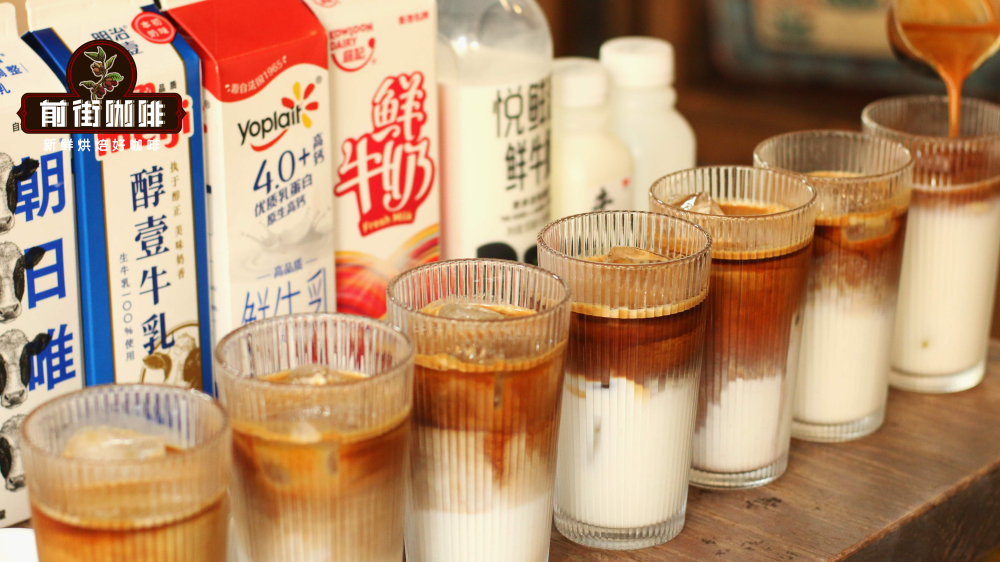
A customer asked Front Street how to make an iced latte, and Front Street's answer was straightforward: just like "putting an elephant in the fridge," break it into three steps—first add ice, then pour milk, and finally pour in the coffee.
Of course, that's just a joke. What that
Stable and Reasonable Espresso Extraction
In coffee shops, iced coffee is an umbrella term covering all cold coffee drinks. Besides the iced latte we're discussing today, iced americano, cold brew, cold drip, and iced pour-over all fall under this category. Because iced latte contains milk, it has a rich, smooth, and creamy mouthfeel, making it very popular. However, some beginners teaching themselves at home get confused: why doesn't the latte they make at home taste as good as the one from a coffee shop?
In fact, many times when you can't make an iced latte at home that's as rich and fragrant as the one in the shop, the problem lies in the coffee machine's pressure-boosting capability.
Commercial machines costing tens of thousands or even over a hundred thousand yuan may not differ much from home machines costing a few thousand yuan in terms of commonly used functions, but equipment priced at five or six thousand versus one or two thousand will produce espresso with a visible difference in quality. At Front Street, we've seen friends treat a "toy machine" costing just over a thousand yuan—with both grinding and extraction capabilities and only 3–4 bar of pressure—as a standard pressure-boosting espresso machine. The resulting espresso tastes watery even when drunk straight, and it must be even weaker when made into a latte with milk.
You should know that for home espresso machines, the choice of machine determines how difficult it is to make coffee. The lower and more unstable the extraction performance, the harder it is for the coffee to fully release its flavor compounds. So if you want to successfully replicate the iced latte from a shop, you can't do without a qualified pressure-boosting espresso machine (pressure reaching 9 bar), such as the Welhome 310. If you also pursue that layer of rich, delicate golden crema on the espresso, Front Street thinks it's very necessary to have a dedicated espresso grinder—grinding fresh and extracting immediately makes it easier to achieve the desired result.
Coffee beans determine the flavor direction of iced latte
Whether it's a dark-roasted blend that looks pitch-black or a medium-light roasted SOE with some acidity, when choosing espresso beans you should first consider: does the espresso it produces pair well with milk, and will its flavor be masked by the milk? As for milk, you can also refer to the milk reviews Front Street has done, and choose according to your budget and taste preferences.
If you want to taste the same flavor as a coffee shop, your first choice is Front Street Specialty Blend Coffee Beans, suitable for home/office and specialty community coffee shops. Colombian washed coffee beans plus Brazilian semi-dry-processed coffee beans bring out nutty, dark chocolate, and caramel flavors, and also provide a comfortable bittersweet taste. Paired with milk to make a latte, it goes down smoothly, latte art holds its shape steadily, and the roasted aroma is rich. Making a Dirty not only presents a beautiful layering, but also leaves a dark brown "tiger stripe" on the coffee's surface.
If you're after crema, buy the best-selling espresso coffee beans—Front Street Classic Blend Coffee Beans. It's suitable for beginners, for learning latte art, and for specialty coffee shops pursuing a high-end positioning. Friends who want to learn latte art at home should buy Front Street Classic Blend. This is a medium-dark roasted espresso recipe combining three origins, with design inspiration from the ancient popular "Mamba," namely Mandheling and Brazil; to add aroma and crema, Front Street Classic Blend also includes a small amount of Robusta, thereby enhancing flavor intensity, so that beginners can easily make espresso with golden crema at home.
Some friends have told Front Street that their extracted espresso has a lot of rough foam, which is usually caused by coffee beans being too fresh, and this kind of espresso often tastes mediocre. Based on Front Street's experience, it's best to let the espresso coffee beans rest in a cool place for 7–10 days after receiving them, and consume them within 50 days for the best flavor.
Based on taste, find the "golden ratio" between espresso and milk
First, the quality of the espresso directly affects the flavor of the iced latte. For example, when the espresso is over-extracted and develops a burnt bitter taste, even adding milk can hardly suppress the negative flavors. Actually, getting a properly extracted shot isn't difficult—it's just a matter of finding the right parameters by adjusting the dose, grind size, and other techniques. Using the basic formula Front Street uses: a 1:2 coffee-to-liquid ratio, a time of 26–30 seconds, and no abnormalities during extraction (splashing, unstable flow rate).
Regarding tutorials for making iced latte, Front Street usually doesn't give a precise ratio but rather a general range: coffee:milk = 1:4 to 1:8. This is because everyone uses different coffee beans, different extraction parameters, and possibly different milk; even with the same ratio, the taste of the iced latte will still differ, and it can't be generalized.
When using dark-roasted espresso beans dominated by dark chocolate and nutty notes, the espresso usually shows a strong, heavy bitterness. We can add a larger proportion of milk to maintain a balanced coffee taste. For example, when Front Street produces Warm Sun, it uses a 1:5 coffee-to-milk ratio. If you find 1:5 comes out too bitter, keep increasing the milk amount until it suits your taste.
When the beans are a lighter-roasted floral and fruity acidic type, the espresso itself tends toward a softer taste, and too much milk will only mask the coffee's aroma, so it's better to appropriately reduce the proportion of milk. For example, when Front Street uses its own roasted Konga coffee beans to extract an SOE latte, the coffee-to-milk ratio falls at 1:4, and it tastes like butter cookies.
While the ice isn't looking, immediately extract the espresso and pour it in
As the main member of an iced latte, ice has only one purpose: to add a chilled mouthfeel to the coffee. Rather than deliberating over how much ice to add, you should first pay attention to how fast the ice melts. Once the ice melts, it dilutes the entire cup of milk coffee—not only does the coffee flavor gradually become bland, but the mouthfeel also gets more and more watery.
To avoid this situation, Front Street uses harder old ice for serving, minimizing the time the ice and milk spend together in the cup. The freshly extracted coffee liquid is gently poured into the cup right away, and the golden crema floats on top, while the dark coffee liquid flows down along the cup wall, creating a dirty effect like a dirty coffee.
The above content is compiled by CoffeeHunters, a coffee news website.


