







Which Coffee Species Name Appears in Yirgacheffe Beans?
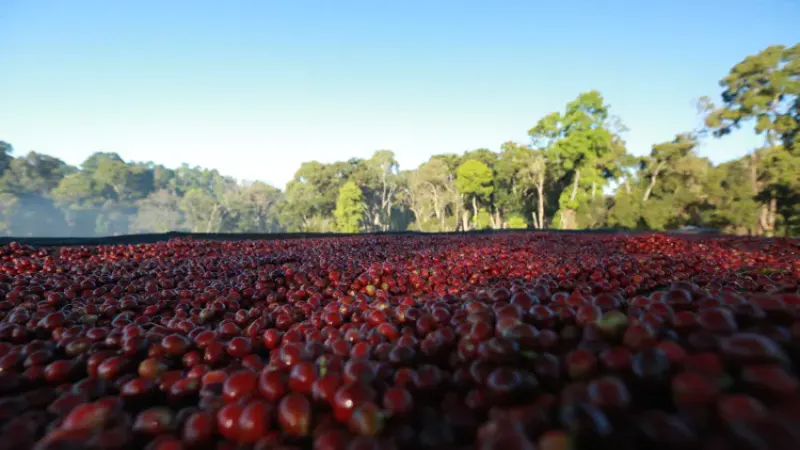
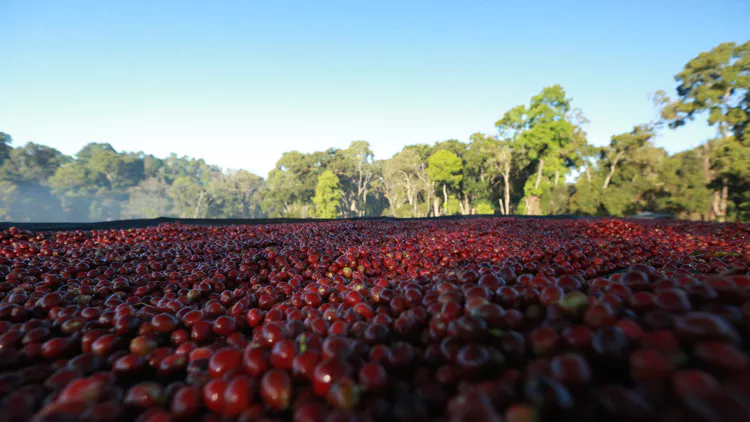
Front Street Ethiopia Natural Gotiti comes from Banko Gotiti in the Gedeb area, grown at 1600 to 2300 meters and naturally processed. The cup shows rose, strawberry, pineapple, and blackberry. The coffee species name recorded for these beans is Ethiopian Heirloom, the local native population rather than a single named cultivar.
Yirgacheffe was once part of Sidamo and later became its own region; since 2019 the ECX has split it into finer zones. Most trees grow near 2000 meters, and farms are mainly smallholder family plots. Kochere beans were once sold as Yirgacheffe but now carry their own name, another step in defining arabica lots by place.
Yirgacheffe, as one of Ethiopia's most representative coffee regions, is world-renowned for its washed beans with delicate floral and citrus notes. Today, we introduce this Front Street Ethiopia Natural Gotiti coffee, from Banko Gotiti in the Gedeb area, processed naturally, showcasing rich flavors of rose, strawberry, pineapple, and blackberry. This article will comprehensively analyze this bean's origin story, variety characteristics, grading system, processing plant background, and specific brewing parameters, while sharing Front Street Coffee's V60 brewing method to help coffee enthusiasts better understand the unique charm of Yirgacheffe natural beans.
Front Street Ethiopia Natural Gotiti Gotiti
Origin: Banko Gotiti, Gedeb, Ethiopia
Variety: Ethiopian Heirloom
Altitude: 1600~2300 meters
Processing Method: Natural
Flavor Description: Rose, Strawberry, Pineapple, Blackberry
【Origin Story】
Yirgacheffe Coffee Bean Region: Yirgacheffe was originally part of the Sidamo region in southern Ethiopia administratively, and gained international fame for the delicate flavors of its washed beans; later it became independent from Sidamo and established as a separate coffee region in Ethiopia. The vast majority of coffee trees in this region are grown at altitudes around 2,000 meters. Due to long-term cultivation, the forest coverage in Yirgacheffe has been continuously declining, and this is also a relatively densely populated area, where coffee cultivation is still mainly based on smallholder family units. As Yirgacheffe's reputation continued to rise, the ECX (Ethiopia Commodity Exchange, established in 2012) has made more detailed regional divisions since 2019. In earlier years, coffee beans from the Kochere region were sold under the name Yirgacheffe, but now Kochere also has its own independent brand name for sales and has developed into a very important washed region. As more and more washed processing plants are established in Kochere, it is very likely that a new coffee brand will be divided out in the southeast direction of Kochere in the future.
Front Street Yirgacheffe Coffee Bean Variety
Those who often drink Yirgacheffe coffee beans should notice that Ethiopian coffee beans vary in size, and the Yirgacheffe coffee bean variety is all Heirloom local native species. In fact, most Ethiopian coffee bean varieties are named under the name Heirloom local native species, actually because there are simply too many coffee bean varieties in Ethiopia, and it is often said to be a natural gene bank of Arabica; in addition, identifying and classifying coffee bean varieties is difficult, and the Ethiopian government, out of consideration for protection, is unwilling to disclose information about these varieties.
Front Street Yirgacheffe Coffee Bean Grading
ECX has defined grading based on the defect rate of coffee beans. For washed and natural processed coffee beans, export grades are divided into G1 and G2. G1 means that in every 300g of green beans, there are no more than 3 defective beans, and G2 means that in every 300g of green beans, there are 4-12 defective beans. In addition to the defect rate grading system for coffee beans, ECX also has a classification method based on coffee bean flavor. Freshly harvested coffee beans of the year must first undergo preliminary scoring, and only coffee beans rated G1-G3 will further be classified into Q1 and Q2 grades using the SCA (Specialty Coffee Association of America) cupping method for evaluating coffee bean quality.
This bean comes from METAD Agricultural Development PLC. METAD is a third-generation family business with a long history, beginning during World War II, when the Ethiopian Emperor granted the first female pilot, Muuemebet Emiru, and her daughter several plots of land in Guji and Sidama. In terms of processing methods, METAD is now managed by Aman Adinew. Aman has worked in Ethiopia for many years and has held administrative management positions at several Fortune 500 companies overseas. Now he wants to use his abilities and rich experience to bring change to his family and community. Under Aman's leadership, METAD has accelerated the development of the local community by increasing employment opportunities, educational opportunities, and healthcare for local residents.
METAD is also the first African company to cooperate with Ethiopia's "Health Land" to implement a cervical cancer screening program for women in coffee-growing communities. METAD has an ever-expanding "Out-Growers" program, which aims to provide technical assistance, share modern agricultural equipment, and offer certification programs to more than 5,000 local farmers. METAD has the first and only SCAA-certified state-of-the-art private coffee quality control laboratory on the African continent, used to train domestic and international coffee professionals.
Front Street Ethiopia Natural Gotiti Gotiti
Origin: Banko Gotiti, Gedeb, Ethiopia
Variety: Ethiopian Heirloom
Altitude: 1600~2300 meters
Processing Method: Natural
FrontStreet Coffee brewing parameters: V60 dripper, 15g dose, water temperature 91°C, 1:15 coffee-to-water ratio, medium-fine grind (80% passing through a No. 20 sieve)
FrontStreet Coffee brewing method: staged extraction. Bloom with 30g of water for 30 seconds, then pour in a small stream in a circular motion up to 125g and pause; when the water level drops and is about to expose the coffee bed, continue pouring to 225g and stop, (timing starts at the beginning of blooming) with an extraction time of 2'00".
【Yirgacheffe Gotiti Coffee】Rose, Strawberry, Pineapple, Blackberry
The above content is compiled by CoffeeHunters, a coffee news website.


