







What Does Arabica Mean in a Yirgacheffe Coffee?
Yirgacheffe is a coffee region in southern Ethiopia whose name comes from the town of Yirgacheffe, sitting at 1,700 to 2,100 meters above sea level. Beans from here are Arabica, one species within the Coffea genus, and they are known for bright acidity, floral aroma and black tea notes. The washed process shapes most of that classic profile.
To define arabica in this context: Ethiopian cultivation is mostly smallholder farming, with about 90 percent of production from family plots and roughly 1.2 million households involved. Garden coffee is the most common system, and cherry is delivered to processing stations for centralised handling. Brew with a V60, a moderate ratio and a three-stage pour.
Yirgacheffe is one of Ethiopia's most iconic coffee regions, winning over countless coffee lovers with its bright acidity and elegant floral aromas. But do you truly understand the meaning behind this name? From regional divisions, green bean grading, and the origins of the Heirloom variety, to why the washed process became the cornerstone of its classic flavor, this article will guide you through a complete knowledge framework of Yirgacheffe. At the same time, Front Street Coffee will share a proven pour-over recipe, including the V60 dripper, water temperature, coffee-to-water ratio, and three-stage pouring technique, to help you consistently brew that clean and sweet cup of Yirgacheffe.
Ethiopia's standing in the specialty coffee world needs no elaboration. For centuries, this land has continued to produce single-origin beans that astonish coffee lovers worldwide—layered flavors, vivid acidity, and delicate floral notes make it an irreplaceable presence on the coffee map. Step into a Front Street location, and you'll find dozens of options on the bean menu, yet many customers sit down and immediately call for a cup of Ethiopian Yirgacheffe. This exotic-sounding name—what kind of coffee does it actually represent? Next, let Front Street take you into the world of Yirgacheffe.
Introduction to the Yirgacheffe Region
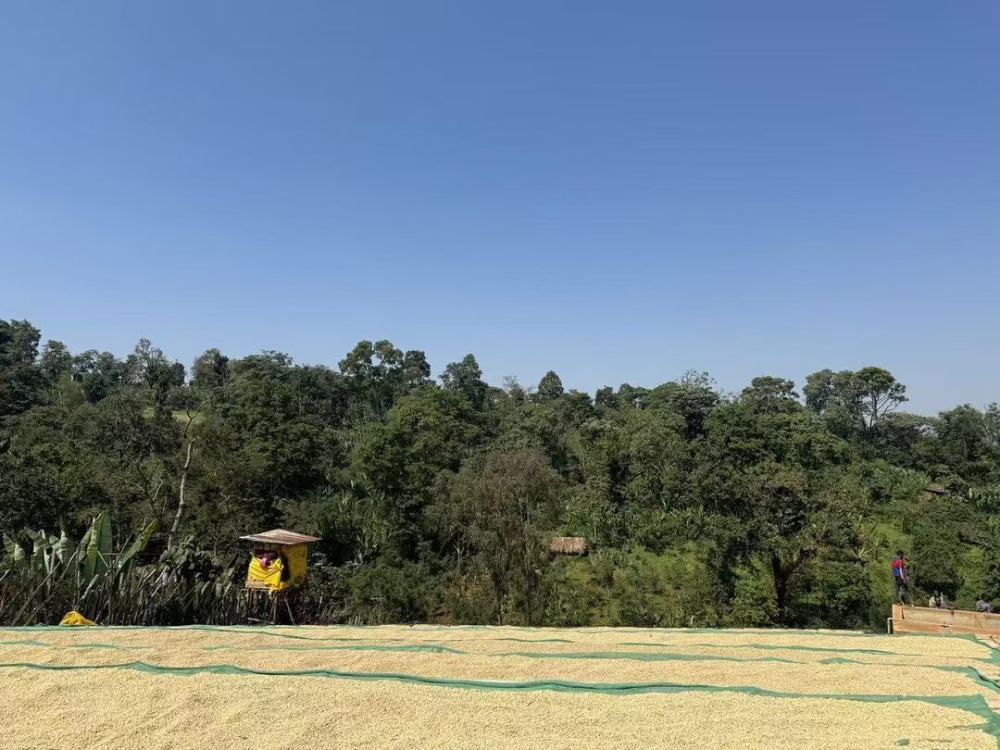
Coffee cultivation in Ethiopia is mainly concentrated in the western and southern zones, where smallholder family farming accounts for about ninety percent of total production, with roughly 1.2 million farmer households depending on coffee for their livelihood. The local coffee production system can be classified into four types: forest coffee, semi-forest coffee, garden coffee, and large plantations, with garden coffee being the most common. Because individual farmers have limited output, coffee cooperatives and processing stations of varying sizes have emerged across regions to handle the centralized processing of green beans. Farmers deliver harvested coffee cherries to processing stations built near water sources, where uniform processing is completed, after which the coffee is sold under the processing station's name. The Yirgacheffe region is a typical example of this operating model.
The name Yirgacheffe comes from the town of the same name, "Yirgacheffe," located in a highland area between 1,700 and 2,100 meters above sea level, where daytime is often shrouded in mist and the climate is mild as spring. Local coffee farmers habitually interplant coffee trees with other crops in their backyards or front fields. Administratively, Yirgacheffe was originally a sub-region under Sidamo Province, located to the northwest of Sidamo. Later, because the coffee produced there displayed a distinctive flavor profile and gained international fame, it was eventually separated from Sidamo to become an independent region.
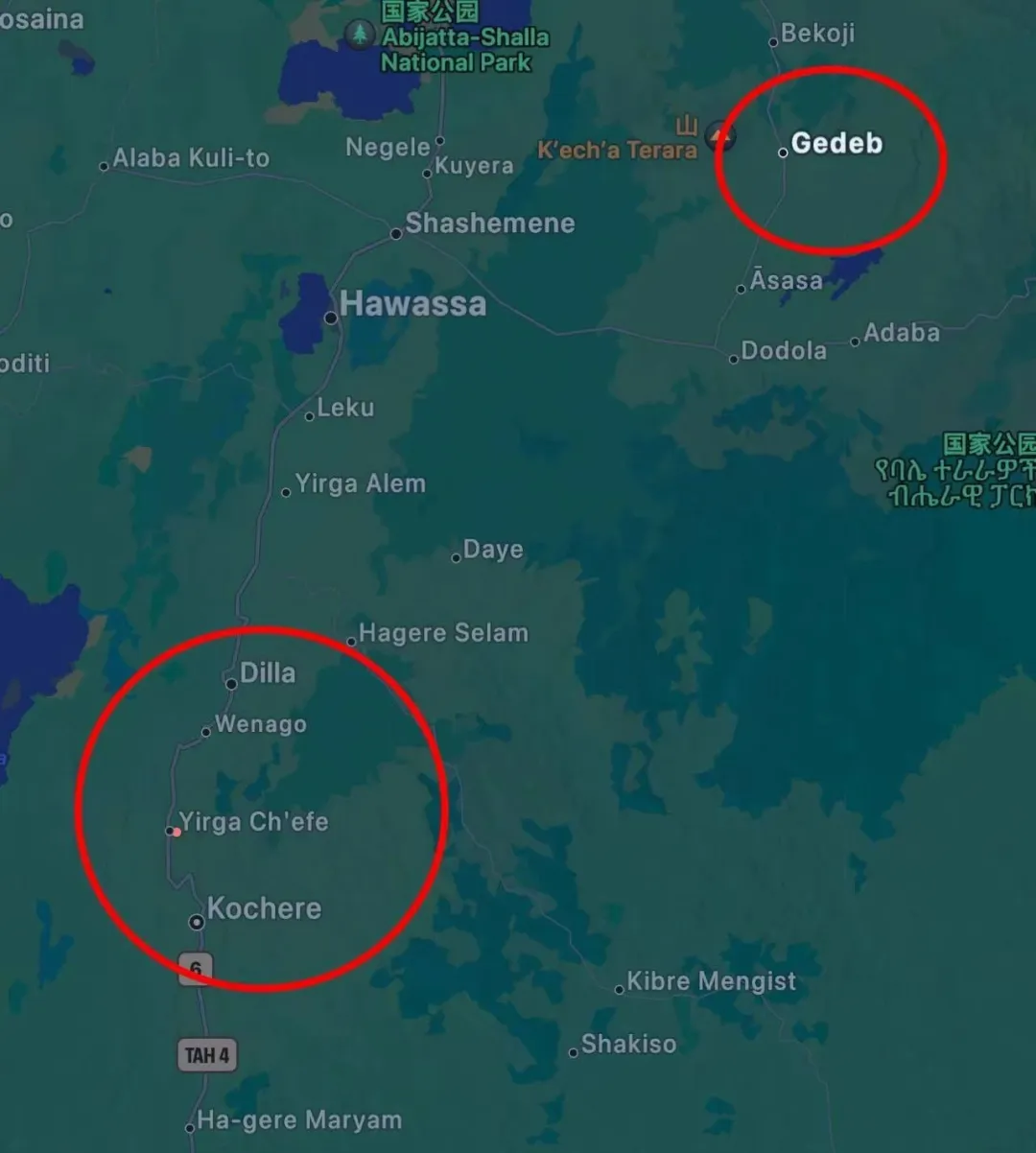
To promote the standardized development of the coffee industry, the Ethiopian government registered the flavor names of three domestic coffee regions as commercial trademarks in 2004, and Yirgacheffee® was one of them. In 2008, the Ethiopia Commodity Exchange (ECX) was established, and coffee entered the exchange as one of the auction items. The government implemented quality grading and flavor classification for exported coffee to ensure that buyers indeed receive products carrying the flavor represented by the corresponding trademark. Production areas approved to use the Yirgacheffe flavor label include Yirgacheffe, Wenago, Gelena Abaya, and Kochere.
However, not all coffee produced in these four administrative areas can be sold under the name "Yirgacheffe flavor." Products must first pass the Ethiopian government's flavor certification, confirming that they indeed possess Yirgacheffe's flavor characteristics, before they may use the trademark. Front Street's Yirgacheffe daily-drinker beans are precisely washed-process, G2-grade Yirgacheffe coffee beans.
G1 or G2—Which Is Higher Grade?
Ethiopia's green bean grading system is divided into two major categories according to natural and washed processing methods, and further classified by defect count and cupping performance. Grades begin with the letter G and comprise five levels, with a smaller number indicating a higher grade. The G1 standard allows no more than 3 defective beans per 300 grams of green beans; the G2 level permits 4 to 12 defective beans per 300 grams of green beans. Because manual sorting is performed both before and after roasting, the actual defect gap between G1 and G2 narrows significantly at the roasted bean stage. For this reason, G2-grade Yirgacheffe performs exceptionally well in terms of value for money.
What Is Heirloom?
Friends who frequently encounter Ethiopian coffee should be familiar with the variety name Heirloom. In Ethiopia, Heirloom is a collective term broadly referring to the country's large number of wild-growing or genetically undefined native varieties. In the dictionary, Heirloom means "a valuable possession passed down from generation to generation," which also implies that coffee holds an irreplaceable "family treasure" status in the hearts of Ethiopians.
As the birthplace of Arabica coffee, Ethiopia preserves tens of thousands of native Arabica varieties. Coffee cultivation is broadly divided into three systems: smallholder cultivation, semi-forest cultivation, and forest cultivation. Among these, coffee trees in semi-forest cultivation are mostly wild varieties, and farmers manage the growing areas while also planting other cash crops. Heirloom varieties are usually identified and confirmed by growers based on long-accumulated experience, because the number of varieties is so vast that large-scale genetic testing and verification is nearly impossible. At the same time, out of consideration for protecting these unknown varieties and preventing industry players from various countries from rushing to obtain them, the local government decided to uniformly name them "Heirloom."
Ethiopia is the birthplace of Arabica coffee and possesses thousands of Heirloom varieties, making it a unique coffee origin in the world. Heirloom native varieties usually have smaller, rounder beans with somewhat irregular shapes, mostly between 14 and 15 screen sizes. In cupping performance, they often present elegant floral and fruity notes, widely favored by coffee lovers.
Why Choose Washed Yirgacheffe?
The reason Yirgacheffe can form such a distinctive style lies not only in its exceptional terroir but also, to a large extent, in the washed processing technology that the Ethiopian government introduced from Central and South America in 1972.
Farms using the washed method must build washing channels and ensure a continuous supply of running water, so production costs are relatively higher. During processing, fermented coffee beans are placed in channels and pushed back and forth; through friction between the beans and the force of the water flow, the coffee beans are washed to a smooth and clean state. Every step removes impurities and defective beans, so green bean quality is more uniform and stable, and the final transaction price is also higher than that of coffee processed by natural drying.
Front Street's Yirgacheffe daily-drinker beans use washed processing and a medium-light roast, carrying the classic Yirgacheffe flavor profile and suitable for pour-over, cold brew, French press, and many other brewing methods. Front Street's daily-drinker series aims to let friends new to coffee appreciate the region's basic flavors at an affordable price, and the small-package design also effectively avoids waste from being unable to finish a bag. If you want to experience Yirgacheffe's classic aroma, Front Street believes pour-over black coffee is the best choice.
Brewing Suggestions
Dripper: V60 Water temperature: 92-93°C Dose: 15g Coffee-to-water ratio: 1:15 Grind size: fine sugar size (sift with a No. 20 sieve to 78%)
Three-stage pouring: First wet the coffee bed with twice the coffee grounds' weight in water, form a dome, and let it bloom for 30 seconds. Then pour in a thin stream in circles from the inside outward, pausing the stage at 125 grams. When the coffee bed drops to half the height of the dripper, continue pouring the third stage in the same thin stream to 225 grams. After all the coffee liquid has finished filtering, remove the dripper; total time is about 2 minutes.
After grinding Front Street's washed Yirgacheffe daily-drinker beans, you can smell the fresh fragrance of honey and jasmine. After Front Street pours in hot water, berry aromas begin to release gradually. The pour-over black coffee enters with bright lemon, citrus, and green tea flavors; as the temperature drops, berry, cream, and sugarcane aftertastes emerge one after another, with obvious sweetness returning, and the overall mouthfeel is clean and sweet.
The above content is compiled by CoffeeHunters, a coffee news website.


