







Can coffee make you drunk, and why does a double shot feel stronger?
Coffee does not contain alcohol, so it cannot make you drunk in the usual sense. What people describe as feeling coffee drunk is the effect of caffeine, which can bring jitters, a racing pulse, and a lightheaded feeling after a large dose. Ordering a double espresso instead of a single also raises caffeine intake, which can deepen that sensation.
The single versus double difference is not just volume. A single espresso may use an 11g dose in a single basket to yield about 30ml, while a double uses an 18g dose in a double basket to yield about 60ml. Basket structure and puck uniformity change extraction, so a single shot is not simply half of a double.
When ordering an espresso at a coffee shop, you can ask for a single shot or a double shot. On the surface, single and double espressos differ only in volume, but from the barista's operational standpoint, this involves two completely different extraction schemes. Portafilter basket capacity, puck structure, and uniformity of pressure distribution all create noticeable differences in the final product. This article starts from Front Street's extraction experiments, using specific data to compare the extraction performance of single baskets versus double baskets, explaining why a single espresso is not simply half of a double, and includes a standard double espresso preparation procedure to help you gain a deeper understanding of the craft behind this small cup of coffee.
For more specialty coffee knowledge, please follow: Front Street Coffee ( Frontsteet Coffee )
When you go to a coffee shop wanting espresso, besides directly saying "I'll have an espresso," you can also say "I'll have a shot." Shot is the unit of measurement for espresso; 1 shot espresso refers to a single espresso, sometimes also written as "single espresso." If you feel one is too little and not satisfying enough, you can say "double shot" when ordering, which means a double espresso.
So, is the difference between single and double espresso merely in quantity?
For customers, single and double really are just different in volume; but for baristas, these two require different operational approaches.
Anyone who has used an espresso machine knows that the basket has a range for how much coffee grounds it can hold. For example, an 18g basket typically holds between 17–19g of grounds in practice. Too much coffee and the portafilter won't lock onto the group head; too little and it interferes with extraction.
Therefore, to reduce the dose, you must switch to a smaller-capacity basket. This is precisely the core difference when extracting single versus double espresso.
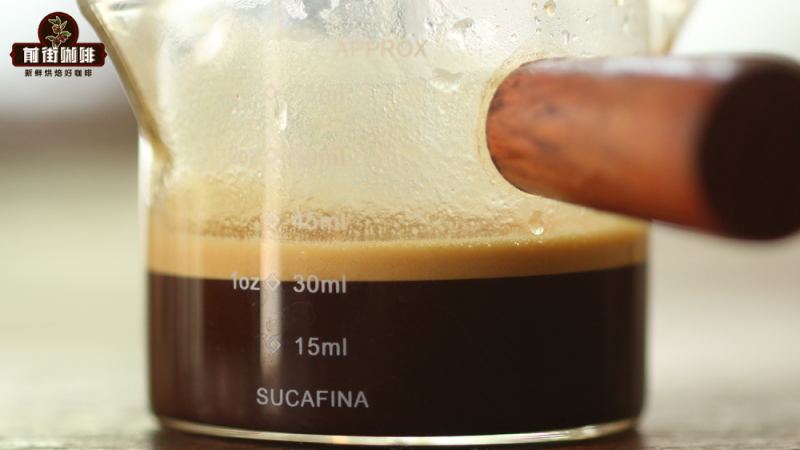
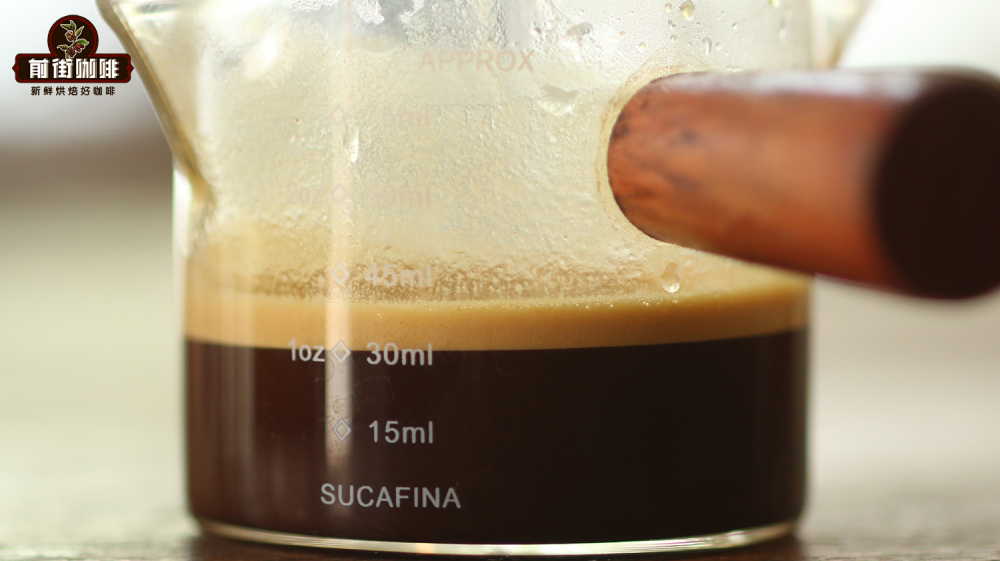
Taking actual practice as an example: when making a single espresso, the barista uses a single basket, doses 11g of coffee grounds, and extracts 30ml (about 22g) of espresso. When making a double espresso, they switch to a double basket, dose 18g of coffee grounds, and extract 60ml (about 40g) of espresso.
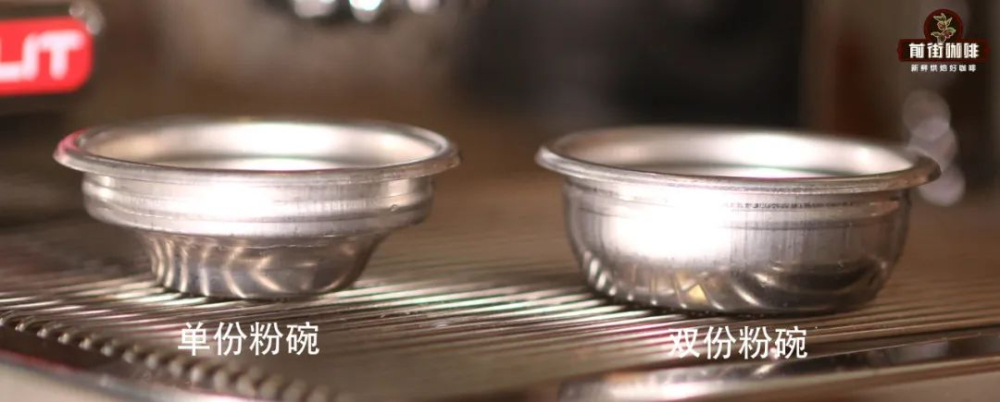
However, the structural differences between the two baskets also cause different extraction results. The double basket has a straight cylindrical interior; the puck knocked out after extraction is a neatly shaped "round almond cookie."
The single basket, on the other hand, is an inverted cone shape, roughly divided into upper and lower layers. The upper layer's diameter matches the double basket, but since the dose is only half, the lower layer is narrowed so that while maintaining the same diameter, the maximum puck thickness also stays consistent.
In Front Street's extraction experiments, the single basket's performance was not as simple as half of the double basket. Front Street used a double basket, with 20g of grounds as the baseline, extracting 40g of coffee liquid in 27 seconds, measuring 10.48% concentration and 21.72% extraction yield.
Switching to a single basket, with 10g of grounds as the baseline, extracting 20g of coffee liquid, the flow rate was noticeably faster, taking 22 seconds, measuring 8.83% concentration and only 18.38% extraction yield. The gap between the two is quite obvious.
To make the single basket's output approach that of the double basket, you can only adjust the grind finer or increase the dose. But for a coffee shop, adjusting the grinder on the fly is not realistic; increasing the dose raises costs and brings more uncertainty. Front Street ran tests and found the dose needed to be increased to 12.5g for the concentration to approach the double basket's data.
Why is there such a big difference?
The root cause is still structural. The double basket is a straight cylinder, so during tamping and pressurized extraction, all parts receive even pressure, making extraction naturally more consistent.
The single basket, in order to maintain a uniform diameter (so it fits the group head) while ensuring puck thickness, can only sacrifice the bottom structure. As a result, whether tamping or extracting under pressure, the pressure around the edges is always higher than at the center at the same level. In other words, when tamping, the edges are denser than the center; during extraction, in the upper layer the water penetrates faster at the center than at the edges, but in the lower layer, water from the edges converges toward the center, causing uneven extraction and, in severe cases, channeling.
Below, Front Street will use Front Street Classic Blend with a commonly used double basket to demonstrate the preparation of a standard espresso. Those who want to learn, remember to take notes.
First, Front Street uses the capacity of a double basket, with the dose controlled at 18–20 grams, and an extraction ratio of 1:2, meaning 20 grams of coffee grounds extract 40 grams of coffee liquid; if using 18 grams of grounds, that corresponds to 36 grams of espresso. Time is related to the coffee grounds' flow rate; a single extraction is generally controlled between 20–35 seconds, because under 20 seconds the flavor tends to be thin, and over 35 seconds it tends to over-extract and develop burnt bitterness. Front Street's espresso mostly falls in the 28–30 second range.
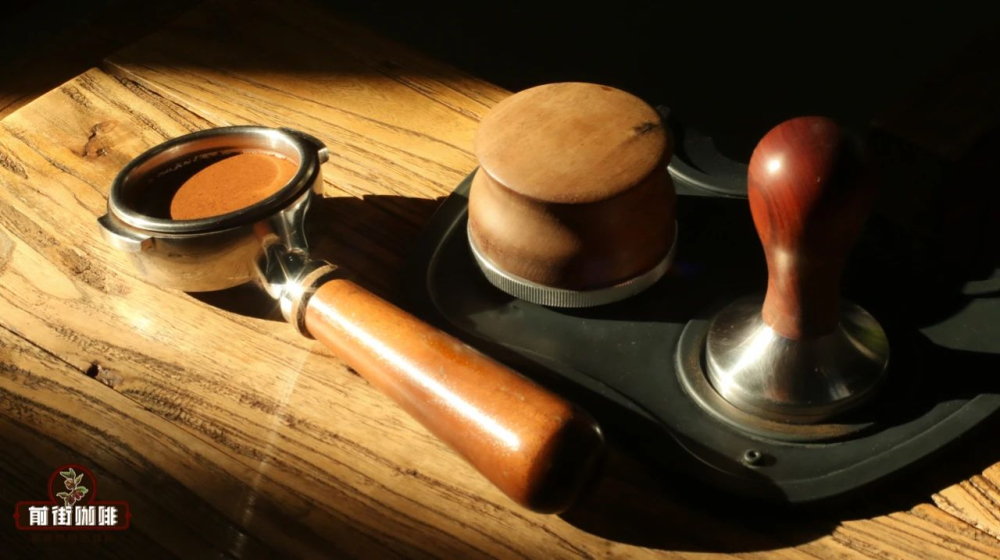
Before extraction, first wipe the basket dry, turn on the grinder to grind a double dose of coffee grounds, place on the electronic scale and adjust until reaching 20 grams. Then use a distribution tool to level the grounds, and use a tamper to press straight down with force, compressing the puck firmly to ensure more stable extraction.
Then turn on the extraction switch to release water for 1–2 seconds, moistening the group head while rinsing off any stuck coffee grounds. Place an electronic scale under the cup that will catch the espresso, tare it to zero, and place it under the group head when extracting.
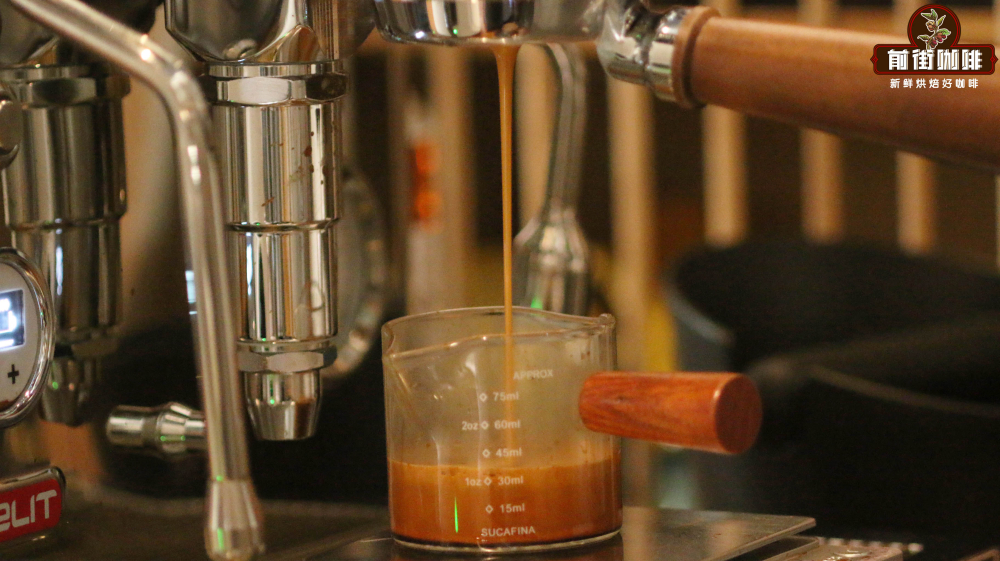
Gently lock the portafilter onto the group head, flip down the extraction switch. Observe the changes in the extracted liquid; when the electronic scale shows the coffee liquid has reached 40 grams and the time is about 30 seconds, flip the switch down to stop extraction. Brewing parameters will vary slightly with daily air humidity and coffee bean condition, so the dose, grind setting, and extraction yield need to be adjusted accordingly.
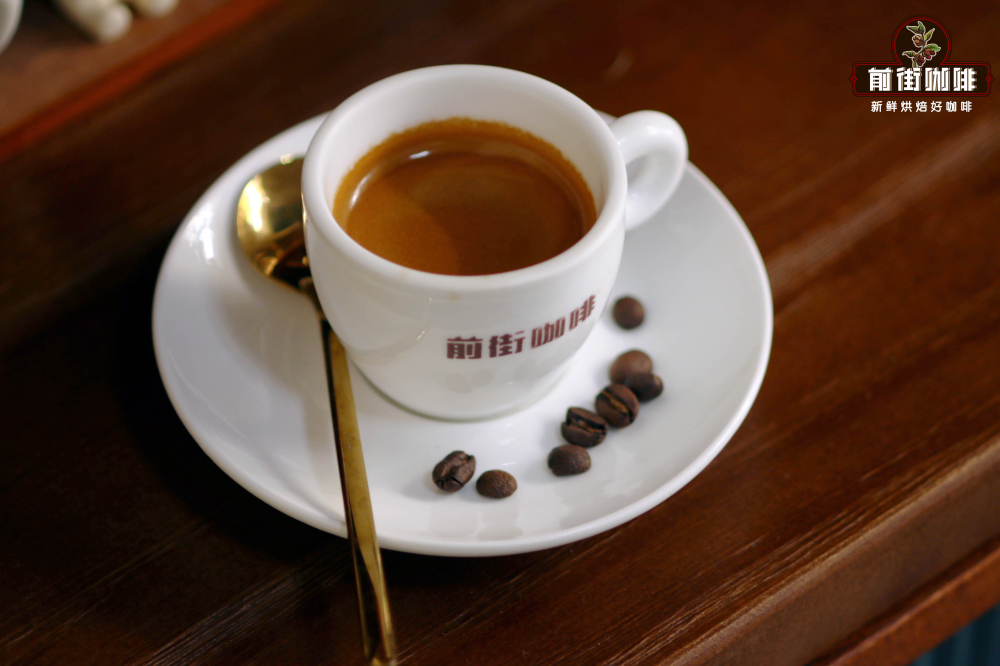
The extracted espresso can be drunk directly; with a glass of water to rinse the palate, you can feel the dense crema and the rich, full-bodied mouthfeel of the coffee liquid beneath. If you can't handle the intense bitterness, you can also dilute with water or milk to taste, making it softer.
Tasting a freshly extracted espresso, Front Street first smells the aroma; this coffee carries full notes of butter, caramel, roasted nuts, and cocoa. It can be drunk directly; gently stir with the prepared metal spoon to blend, and the first sip brings dense crema along with full, rich chocolate aroma. Then take a big sip, and the warm coffee liquid along with the crema enters the mouth, with intense nut cookie and chocolate flavors.
It can also be made into an Americano or latte with water or fresh milk, with rich overall aroma and distinct layers that linger in the memory.
The above content is compiled by CoffeeHunters, a coffee news website.


