







Arabica Terroir at the Yirgacheffe Gotiti Cooperative
Yirgacheffe, a town in Ethiopia's Sidamo area, sits at 1,700 to 2,100 meters, one of the highest coffee zones anywhere. The Gotiti Cooperative lies in the Worka micro-region, separated from larger cooperative systems as buyers pursued higher green bean quality. Its natural processing yields jasmine-like florals, lemon acidity, and honey sweetness.
As the birthplace of arabica, Ethiopia produces coffees with marked regional character. Yirgacheffe's cool, misty climate and traditional cultivation support delicate, tea-like cups. Gotiti lots are dried in the sun, then roasted and brewed with tuned parameters, which is why the region's micro-lots draw attention from roasters and drinkers alike.
Yirgacheffe is one of Ethiopia's most iconic specialty coffee regions, and the Gotiti Cooperative is a standout independent micro-region within it. This article provides a complete breakdown of this sun-dried Gotiti—from the region's geography, historical origins, and variety characteristics, to the sun-drying process, and finally Front Street Coffee's roasting curve and brewing parameters—decoding the flavor secrets of this coffee. Whether you're a newcomer to specialty coffee or a seasoned drinker looking for your next daily bean, you'll find valuable reference here.
For more specialty coffee knowledge, please follow: Front Street Coffee (Frontsteet Coffee)
As the birthplace of Arabica, Ethiopia has nurtured many world-class coffee regions, and Yirgacheffe is undoubtedly one of the brightest stars among them. Front Street knows well that this region holds a special place in the hearts of countless coffee lovers—if one word were needed to describe its flavor, "flower fairy" fits perfectly: delicate floral notes with jasmine particularly prominent, accompanied by bright lemon-like acidity and a tea-like quality. The layered mouthfeel is delicate and smooth, with a honey-like sweetness that lingers in the finish. Today Front Street is discussing a bean from the Gotiti Cooperative, located in the Worka region of Yirgacheffe. It originally belonged to a larger cooperative system, but as bean hunters pursued ever-higher green bean quality, many high-performing areas were separated out individually—which is how the market came to have a dazzling array of specialty micro-regions such as Dumerso, Worka, and Kochere.
About Yirgacheffe
Yirgacheffe was originally just a small town under the Sidamo administrative region of Ethiopia. This town has been a wetland since ancient times—in the local ancient language, "Yirga" means "to settle down," and "Cheffe" means "wetland." Yirgacheffe is one of the highest-altitude coffee regions in the world and is synonymous with Ethiopian specialty coffee. The altitude of 1,700 to 2,100 meters, combined with the year-round cool, misty, spring-like climate, and the unique terrain and cultivation system, provide exceptional conditions for growing specialty coffee. Strictly speaking, Yirgacheffe is a sub-region of Sidamo. The town is located to the northwest of Sidamo, nestled by mountains and lakes, and is one of the highest-average-altitude coffee regions in all of Ethiopia. But because its flavor is so distinctive, it eventually became independent from Sidamo and developed its own identity, becoming Africa's most renowned region. Coffee trees in the Yirga area are mostly planted in farmers' own backyards or intercropped with other crops in their fields. Each household's output is limited—a classic garden coffee model.
What we commonly call the "Yirgacheffe flavor" refers to intense jasmine aroma, lemon or lime-like acidity, and the sweet notes of peach and almond along with tea-like fragrance. Yirgacheffe coffee is layered and complex, with a delicate and alluring body and a sweet finish. "Coffee enters the mouth, a hundred flowers bloom" is the perfect description—as if flowers are blossoming across your taste buds and nasal passages. Beyond the floral notes, that delicate body is like silk massaging your mouth, a wondrous tactile sensation.
Yirgacheffe Gedeo Zone Region
Gedeb is a township located below Kochere town, 60 kilometers from Yirgacheffe town, and is a famous specialty coffee bean region in Ethiopia. At 1,900 to 2,200 meters, it is considerably higher than the average Yirga region. The advantage of high altitude makes Gedeb a natural treasure for coffee cultivation—a micro-region gradually emerging onto the scene. Although this town is classified under the Kochere region in the ECX auction market, it is at the same administrative level as Kochere town. In the specialty coffee world, it can be distinguished separately from Kochere as a Yirgacheffe sub-region of equal standing. Villages under this town that produce coffee include Worka Sakaro, Halo Bariti, Banko Gotiti, and Banko Dahato.
Gotiti Cooperative
The Yirgacheffe Gotiti Cooperative is located in the Worka region at the southeastern end of Yirgacheffe, and was originally part of the Worka Cooperative under the Yirgacheffe Coffee Farmers Cooperative Union (YCFCU). As demand for traceability in green coffee grew, independent "single-origin" lots were discovered one by one by coffee hunters around the world. In 2012, Gotiti—with approximately 300 farmer members—formally became independent and established the "Gotiti Cooperative." Gotiti village was the first village area to be independently separated; many smallholder farmers were originally members of the Worka Cooperative, so their production expertise goes without saying. The Gotiti Cooperative is hailed as the last pure land of Yirgacheffe, and therefore employs very traditional processing methods (washed and sun-dried).
Sun-Dried Processing
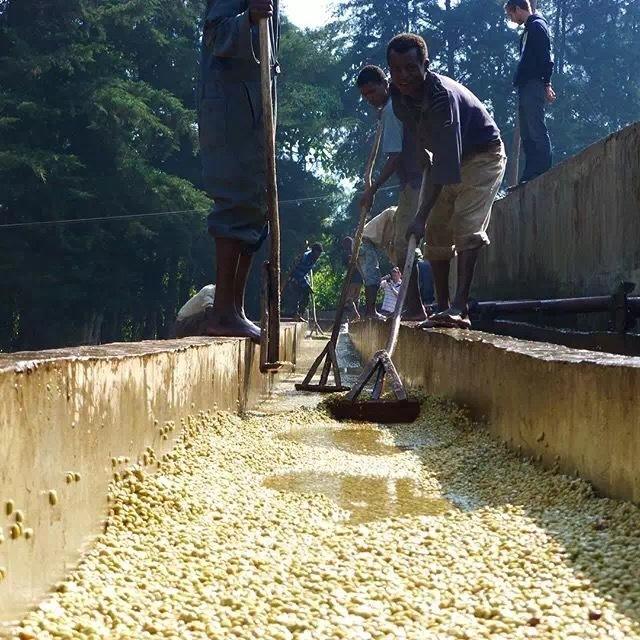
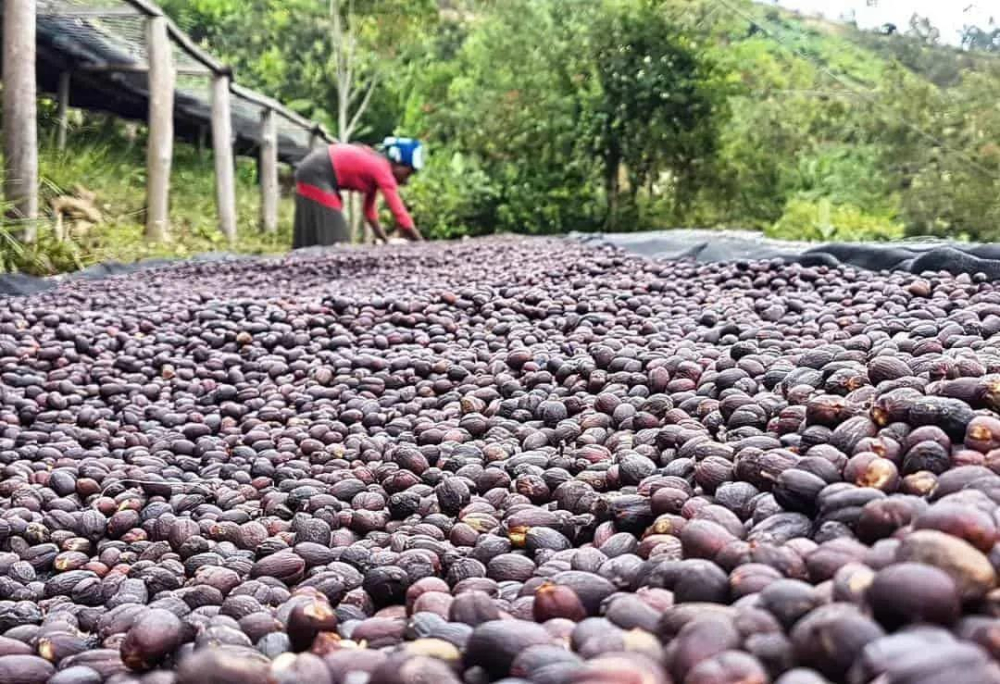
The sun-dried processing method at the Yirgacheffe Gotiti Cooperative requires farmers to carefully select fully ripe coffee cherries at harvest, which are then sent to the processing station and spread directly on African raised beds for sun-drying over a period of 2 to 3 weeks. During drying, underripe berries are removed by hand, and experienced workers regularly turn the coffee cherries to prevent any damage to the green bean flavor during the drying process. The selection of breathable mesh fabric for the raised beds and the thickness of the spread cherries are all matters of considerable attention. After sun-drying is complete, the dried fruit pulp and parchment layer are removed, and the green beans are stored in warehouses until moisture content drops to 11% to 12% before export.
Heirloom
Most Ethiopian varieties are named with this term. It's actually because Ethiopia has so many varieties—it's like Arabica's natural gene bank: on one hand, the sheer number of varieties makes identification and classification difficult; on the other hand, the Ethiopian government, for protection reasons, is unwilling and unable to disclose this variety information. In Ethiopia, coffee mostly grows wild or semi-wild in fields, backyards, or under forest canopy. Once the coffee cherries ripen, farmers collect them together for processing. In reality, this is a grand assemblage of many different natural variants, and because the cherries all grow under the same terroir, they develop certain similar flavors—this is the fundamental framework of a coffee region's flavor. Nearly 2,000 coffee varieties have been recorded in Ethiopia, including 1,927 native varieties and 128 introduced varieties. So judging purely by appearance, Ethiopian coffee varieties are like a "Grand View Garden"—long, short, thin, plump, there's everything you could imagine. This is also why we often see Ethiopian coffee beans of uneven size.
Front Street Coffee (FrontStreet Coffee) Curve Analysis — Roaster: Yangjia 800N (batch size 300g)
For beans like Yirgacheffe, Front Street's roasters often use a light roast to bring out the floral and fruity notes. For this sun-dried Gotiti, we still use a low flame to extend the bean's dehydration time. Charge at 175°C, damper set to 3, heat at 120; turning point at 1'32", at 140°C heat stays the same, damper opened to 4; at this point the bean surface turns yellow, the grassy smell completely disappears, and the dehydration phase begins. At 166°C heat is reduced to 100, at 176°C heat is reduced to 80, damper remains unchanged. At 8'28", ugly wrinkles and dark patches appear on the bean surface, and the toast-like smell clearly transitions to coffee aroma—this can be defined as the prelude to first crack. At this point you need to listen carefully for the sound of first crack. At 9'38" first crack begins; adjust the damper to 5 (adjust heat very carefully—don't reduce it so much that no cracking sound is heard). After first crack, develop for 1'30", drop at 193.5°C.
Front Street Coffee (FrontStreet Coffee) Yirgacheffe Gotiti Color Values
Agtron bean color value 74.6 (top image), Agtron ground color value 79.8 (bottom image), Roast Delta value 5.2
Front Street Coffee (FrontStreet Coffee) Gotiti Cupping Record
Ethiopia Yirgacheffe Banko Gotiti Coop
Yirgacheffe Gotiti Cooperative
Country: Ethiopia
Region: Yirgacheffe Gedeo Zone Region
Altitude: 2000-2100m
Variety: Heirloom
Processing: Sun-dried
Grade: G1
Front Street Coffee (FrontStreet Coffee) Brewing Parameters
Dripper: Hario V60 — Water temperature: 90°C — Dose: 15g — Ratio: 1:15 — Grind: medium-fine (80% passing through China standard No. 20 sieve)
Brewing method: Pulse pouring. Bloom with 34g of water for 36 seconds, then pour in a slow circular stream to 120g for the first pulse. When the water level drops and is about to expose the coffee bed, continue pouring to 229g and stop. When the water level drops and is about to expose the coffee bed again, remove the dripper. (Timing starts from the beginning of bloom.) Total extraction time: 2'00".
Flavor: The overall mouthfeel is solid, with prominent fermented aroma and tropical fruit notes. As the temperature changes, berry and cream flavors emerge, and the citrus sweet-and-tart sensation lingers persistently between the teeth and lips in the finish.
For more specialty coffee knowledge, add Front Street Coffee's personal WeChat (FrontStreet Coffee). WeChat ID: kaixinguoguo0925
The above content is compiled by CoffeeHunters, a coffee news website.


