







How the Roasting Process Shapes Pour-Over Dark Roast Coffee
Dark roast beans have a loose internal structure after a long roasting process, so copying a light roast recipe usually produces bitterness. Lower the water temperature, coarsen the grind, and control the pour rhythm to keep extraction in check, targeting caramel-chocolate aroma, a silky body, and a lingering sweet aftertaste.
The coffee-to-water ratio and dripper choice matter as much as temperature. A three-pour technique, used with beans such as Queen's Estate, Bird of Paradise, Blue Mountain No. 1, or PWN Golden Mandheling, can bring out sweetness within about two minutes, and a V60 brewing cup is a practical dripper for that approach.
Dark roast coffee beans have always had a loyal following thanks to their rich caramel-chocolate aroma, mellow and smooth mouthfeel, and long-lasting sweet aftertaste. However, brewing a great cup of dark roast is no simple task—the loose bean structure means that a moment of carelessness leads to over-extraction and bitterness. Drawing on brewing experience with dark roast products such as Queen's Estate, Bird of Paradise, Blue Mountain No. 1, and PWN Golden Mandheling, Front Street Coffee breaks down the key parameters and operational points for pour-over dark roast beans—from water temperature, grind size, and dripper selection to coffee-to-water ratio and the three-pour technique—to help you reliably recreate, within two minutes, a cup of dark roast coffee with prominent sweetness and a lasting aftertaste.
Although light roasts dominate the coffee scene today, there is still a group of people who are particularly fond of dark roast beans. Rather than bright acidity, they prefer that heavy, full-bodied mouthfeel. That is precisely why Front Street Queen's Estate with its creamy peanut notes, Front Street Bird of Paradise with its toasted bread aroma, Front Street Blue Mountain No. 1 with its balance of acidity, sweetness, and bitterness, and Front Street PWN Golden Mandheling with its sandalwood and herbal notes are all regulars in their shopping carts.
To brew a satisfying cup of dark roast coffee, the key is to fully bring out its signature traits: caramel and chocolate aromas, a thick and silky texture, an intense dark roast character, and a lingering sweet aftertaste—these are the unique flavor hallmarks of dark roast beans. Next, Front Street will discuss how to present each of these "soul" characteristics in the cup.
Extraction Parameters
First, one thing needs to be made clear: after a long roasting process, the internal structure of dark roast beans has become quite loose. If you simply copy a brewing recipe for light roast beans, you are almost certain to end up with a cup of coffee with pronounced bitterness. Therefore, both water temperature and grind size—the two variables that directly affect extraction efficiency—must be readjusted.
Lower the water temperature: The reason light roast beans are matched with higher water temperatures is that their hard texture requires enough extraction strength to fully "pull out" the aromatic compounds. Dark roast beans need no such forceful approach. In a high-temperature environment, the loose bean structure is very easily extracted into negative flavors. Therefore, Front Street recommends keeping the water temperature between 86–88°C when brewing dark roast beans, with specific values fine-tuned according to grind size—the finer the grind, the lower the water temperature should be.
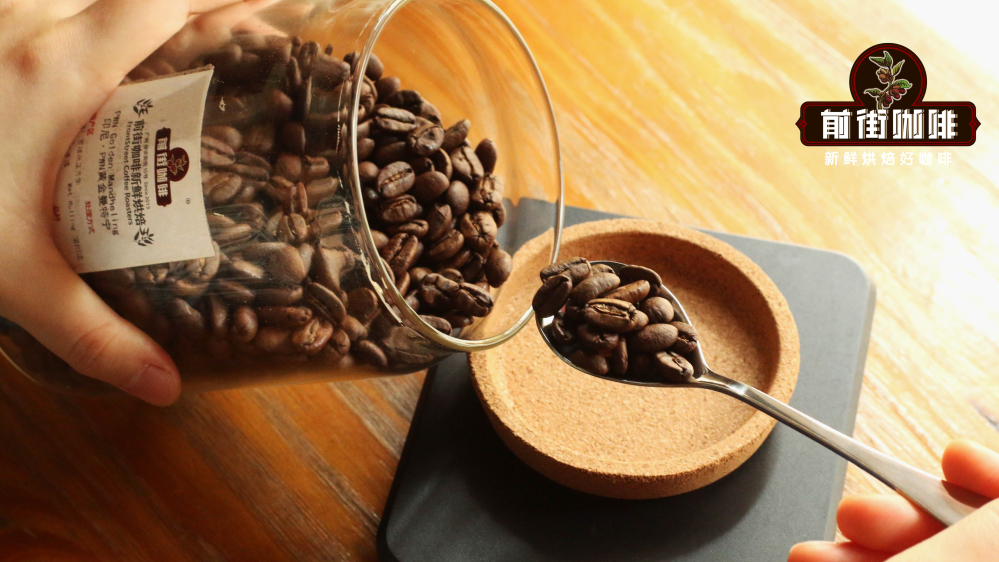
Grind coarser: In terms of grinding, dark roast beans require a coarser setting than light roast beans. This is not only because the loose bean structure is easy to extract, but also for another reason: dark roast beans are more brittle, and at the same setting the particles produced are inherently finer than those of light roast beans. With both factors combined, you must correct the deviation by going coarser. Take Golden Mandheling, for example—Front Street typically uses setting 11 on the Ek43, yielding a particle state close to coarse sugar, corresponding to about a 70% pass-through rate on a No. 20 sieve.
Dripper Selection
The full body of dark roast coffee can only be achieved through sufficient extraction. If you choose a fast-flow dripper like the V60, the final body is often less than ideal—overall extraction efficiency is insufficient, and with water flowing too quickly it is hard to ensure enough bitter compounds to support that heavy mouthfeel.
So when brewing medium-dark roast beans, Front Street suggests choosing a slower-flow dripper, such as a Kono or a wedge-shaped dripper. A slow flow rate extends extraction time, making it easier to get a cup of coffee with a full mouthfeel.
Coffee-to-Water Ratio
The coffee-to-water ratio can be flexibly set according to personal taste. Front Street's commonly used ratio is 1:15; at this ratio, the brewed dark roast coffee has moderate strength and balanced flavor expression. If you prefer a richer layering of flavors, you can loosen the ratio to 1:16 to dilute the strength and let the flavors open up; conversely, if you like a more intense mouthfeel, you can tighten it to around 1:14. But be careful not to go too low—excessively high concentration will instead suppress flavor release and can easily make the coffee unpleasant to drink.
Brewing Recommendations
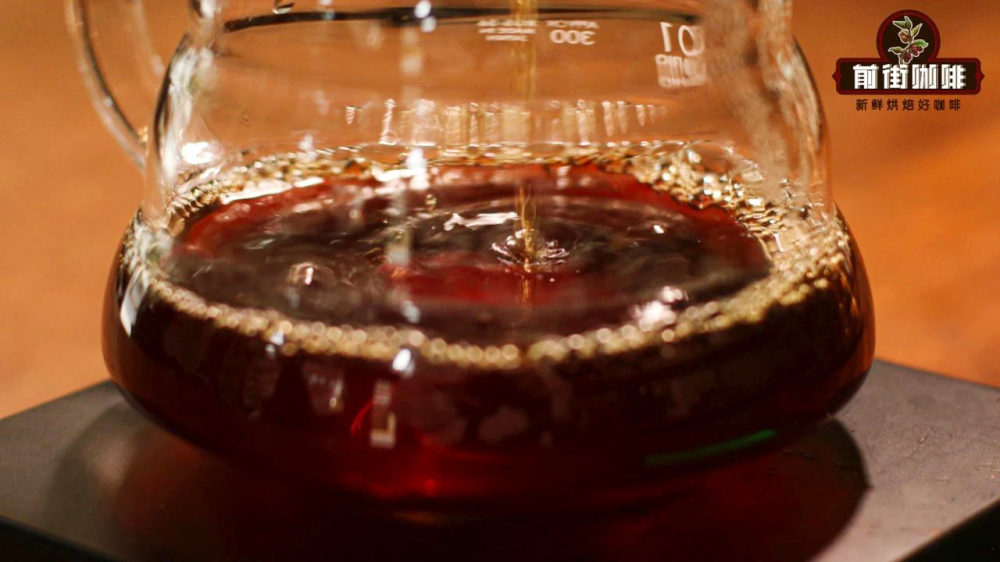
For the pouring method, Front Street recommends the three-pour technique. This extends the extraction time and allows for more precise extraction of the target flavors, while the three-pour approach also provides greater room for error—which is why Front Street is especially fond of it. If using a 1:15 ratio, the total water can be divided into three pours of 30/100/95 ml.
Dark roast coffee does not need much stirring to assist extraction—as mentioned earlier, these beans readily give up their compounds. Therefore, when pouring, you should slow down the circling speed appropriately to avoid overly forceful water flow causing the coffee grounds to churn violently, thereby reducing the generation of off-flavors and negative flavors.
The specific steps are as follows: First, wet the coffee bed completely with water at twice the coffee dose, and let it bloom for 30 seconds (for dark roast beans, you can judge whether the bloom is finished based on the degree of bed saturation—there is no need to rigidly adhere to 30 seconds); after the bloom is complete, pour the second stage of 100 ml hot water in a slow, wide circle with a smaller flow rate (about 5 ml/s); when the water level is about to reach the bottom, continue pouring the remaining 95 ml of hot water in a slow, small circle (coin-sized range) at the center with a small flow rate; once all the coffee liquid has dripped through, remove the dripper and enjoy.
Normally, if the entire brewing process can be completed in about 2 minutes, this cup of dark roast coffee will most likely possess all the characteristics mentioned at the beginning. However, if the extraction time deviates significantly from 2 minutes—for example, by more than 10 seconds short—the taste may still be acceptable, but the mouthfeel and aftertaste will be noticeably weaker. In that case, it is best to adjust the grind size or brewing technique, with the specific adjustment determined by the actual taste in your cup. The same logic applies if it goes well over 2 minutes.
The above content is compiled by CoffeeHunters, a coffee news website.


