







What Grade Does Hacienda La Esmeralda Geisha Coffee Hold?
Hacienda La Esmeralda geisha coffee from Panama is treated as a benchmark in the specialty world. The estate's grading system separates Red Label, Green Label and Blue Label, each with its own origin, altitude, processing method and flavor profile. The article explains how those tiers differ and what each label signals for buyers.
The comparison extends to other high-priced coffees such as Hawaiian Kona and Kopi Luwak. Panama's abundant sunshine, mountains and high altitude support the intense floral fragrance and juice-like mouthfeel associated with geisha coffee from Panama. The two renowned producing regions are Boquete and Volcán, and roasting and brewing approaches differ across the washed Red Label, washed Green Label and natural Blue Label.
The status of Geisha coffee in the specialty coffee world needs no elaboration, and the Geisha produced by Panama's Hacienda La Esmeralda is regarded as the benchmark. This article centers on Hacienda La Esmeralda's grading system, detailing the origin, altitude, processing methods, and flavor profiles of the three major brands—Red Label, Green Label, and Blue Label—while also comparing the differences with other high-priced coffee beans such as Hawaiian Kona. The article also introduces the two renowned producing regions of Boquete and Volcán, as well as Front Street Coffee's roasting and brewing approaches for Hacienda La Esmeralda's washed Red Label, washed Green Label, and natural Blue Label, helping readers systematically understand the tier positioning and purchasing direction of Panama Geisha.
Globally, expensive coffee beans are not uncommon—Jamaican Blue Mountain, Hawaiian Kona, and the renowned Kopi Luwak all qualify as high-priced representatives. However, Front Street believes that when it comes to the pursuit of delicate floral aromas and fruity notes, Geisha coffee is the choice more worthy of investment in the minds of seasoned enthusiasts. The Geisha coffee from Panama's Hacienda La Esmeralda is of a very high tier, with its intense floral fragrance and juice-like mouthfeel placing it firmly among the top-tier coffee beans.
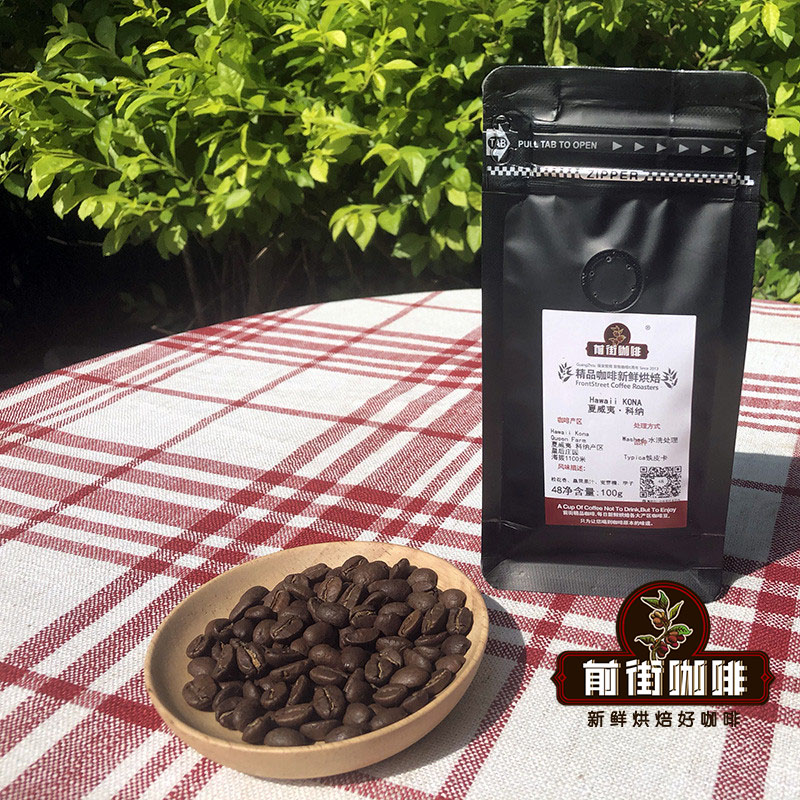
Front Street Coffee (FrontStreet Coffee) has always held that to judge the quality of a country's coffee beans, one can first look at the growing environment of the coffee trees, because environment, altitude, and climate play a decisive role in shaping flavor. Panama happens to satisfy these conditions—abundant sunshine, complemented by mountains and high altitude—so it is no surprise that it can produce excellent coffee. Of course, low-altitude regions can also produce good beans; for example, a Hawaiian Kona that Front Street sourced is grown at an altitude of only 1,100 meters, which does not reach the height defined by the specialty coffee world for Arabica, yet Kona beans are hailed as the most beautiful coffee beans in the world, and their flavor performance is also remarkable.
When Front Street brewed this Kona, it was very smooth on entry, with a sweetness reminiscent of osmanthus, a soft malt finish, and as it cooled it resembled a cup of mulberry tea. Its cleanliness is very high, thanks to Hawaii's commonly used washed processing method: first, floatation is used to remove defective beans, then a depulper removes the skin and pulp, after which the beans are fermented in a water tank to break down the mucilage, washed, and then dried; the process is complete when the moisture content drops to around 11%–13%. Hawaii typically uses sweet mountain spring water, which also gives the coffee a pure and refreshing taste.
However, the coffee beans from Panama's Hacienda La Esmeralda differ noticeably in flavor from this Kona. Kona's growing conditions lean toward altitude and climate, its washing water is sweeter mountain spring water, and its mouthfeel is cleaner; whereas Panama Geisha's floral aroma is more intense. Front Street has cupped many Geisha coffee beans, and they exude an elegant, enchanting perfume-like floral fragrance that evokes the fruity aromas of fruit; this lingering aroma is precisely the hallmark of this coffee.
Of Panama's two most famous specialty coffee regions, Boquete and Volcán must be mentioned. Several of Front Street Coffee's (FrontStreet Coffee) beans come from Boquete, such as Butterfly coffee beans and Elida Typica. Boquete is home to many famous estates, such as Hacienda La Esmeralda, Elida Estate, and Kotowa Duncan Estate. Among them, the most closely watched is undoubtedly Hacienda La Esmeralda, and Front Street Coffee (FrontStreet Coffee) also highly recognizes Hacienda La Esmeralda's coffee beans. This is not only the primary origin of Geisha coffee beans; the estate also grows Caturra and Catuai, and groups these two varieties under the two brands Diamond Mountain and Palmyra.
According to Front Street Coffee (FrontStreet Coffee), Hacienda La Esmeralda is extremely strict in its cultivation and management of the Geisha variety. The estate owner delineates planting plots based on altitude and separates Geisha into several grades such as Red Label, Green Label, and Blue Label.
You may not be very familiar with the concepts of Red Label, Green Label, and Blue Label, so Front Street will explain them here. High-quality Geisha comes from the three estates of Jaramillo, Cañas Verdes, and El Velo. Hacienda La Esmeralda divides its coffees into five major brands based on cupping performance, planted variety, and plot, of which the Geisha variety accounts for three: Esmeralda Special, Private Collection, and Geisha 1500.
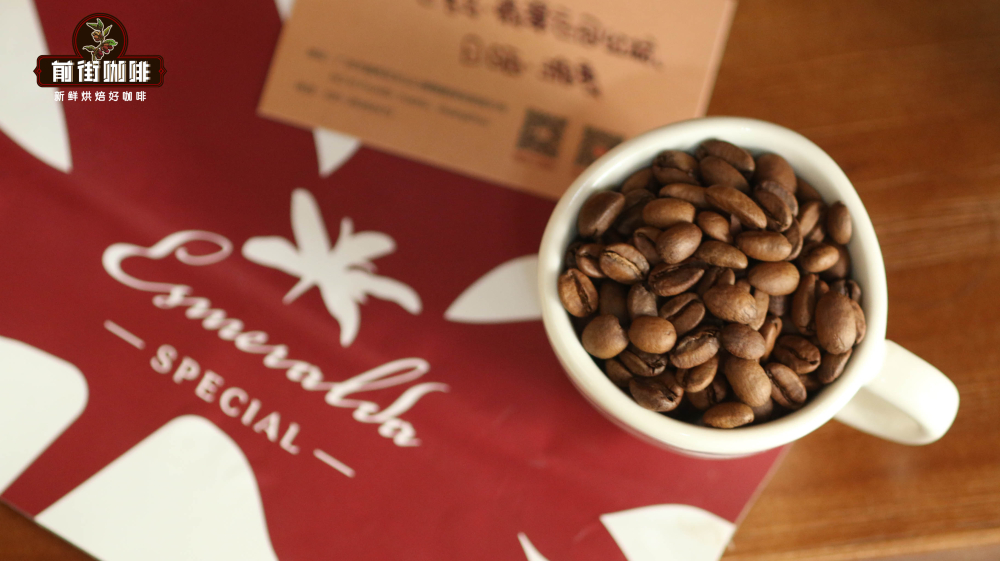
Red Label: namely Hacienda La Esmeralda Esmeralda Special Geisha. Altitude 1,600–1,800 meters, cupping score above 90 points, produced from Jaramillo and Cañas Verdes. The Red Label sent to auction is called Auction Red Label, while those not participating in the auction are simply called Red Label. In fact, non-auction Red Label and Auction Red Label come from the same plot, and Front Street believes both are good choices; if you are just starting out wanting to taste Geisha, you can begin with Red Label Geisha. This grade includes both natural and washed processing, with a very distinctive, bright flavor carrying floral and citrus aromas.
Green Label: Private Collection, commonly known as Green Label, is a Geisha variety that does not participate in auctions but is of excellent quality, belonging to a blend of micro-lots from different plots.
Blue Label: the Geisha 1500 brand is the commonly seen Blue Label Geisha, a blend of beans from three different plots, selected at an altitude of 1,400–1,500 meters. What sets Blue Label apart from the other two is that Blue Label Geisha is generally only washed processed, with a flavor carrying slight floral notes and fruity acidity. Front Street Coffee (FrontStreet Coffee) not only offers washed Blue Label Geisha, but also provides natural-processed Blue Label Geisha coffee beans.
Front Street Coffee (FrontStreet Coffee) puts it simply: Hacienda La Esmeralda divides Geisha coffee into three brands based on cupping scores and growing altitude, and all three brands can be traced back to their corresponding plots and processing methods. Because Red Label Geisha can only be obtained through global auctions, you get what you pay for, and the price of Red Label is correspondingly higher than Green Label and Blue Label.
This batch of washed Red Label Geisha that Front Street purchased comes from Hacienda La Esmeralda's Jaramillo plot. Hacienda La Esmeralda puts the harvested coffee cherries into a fermentation tank, skims off debris floating on the water surface, then drains the water away, pushes the selected coffee cherries down the funnel, and proceeds to the next step of processing.
The washed Green Label Geisha has a relatively hard bean texture, and the new-crop beans have good water activity, so Front Street chooses high temperature and rapid dehydration during roasting, using a faster roasting rhythm to express Green Label Geisha's multi-layered fruit flavors and intense floral aroma.
In previous years, Blue Label Geisha was only washed processed, but this year a natural process has been added, and Front Street has also listed a natural-processed Blue Label Geisha. Front Street will briefly introduce the natural Blue Label Geisha.
Generally speaking, Hacienda La Esmeralda's natural processing sends the harvested coffee fruit directly to the courtyard to dry. As the fruit slowly dries, the coffee beans remain inside, and the beans become full of fruity and aromatic notes. When sufficient dryness is reached, they are placed in a Guardiola dryer and rotated for 72 hours to complete drying and prevent fermentation. After drying is complete, they are put into nylon bags and stored in the warehouse. Of course, Hacienda La Esmeralda's natural processing also has a challenge it must face: during the drying process, if there is even a moment of inattention, the parchment beans will reabsorb moisture and ruin the quality.
Many countries grow Geisha coffee, such as Costa Rica's Little Candle Estate and Ethiopia's Gesha Village. Front Street has cupped coffee beans from multiple producing countries and multiple regions, but still believes that the flavor of Panama Hacienda La Esmeralda Geisha coffee beans most possesses the characteristics of Geisha coffee, and better matches the best Geisha coffee flavor in the public's mind.
Professional coffee knowledge exchange More coffee bean information Please follow Coffee Workshop (WeChat public account cafe_style)
For more specialty coffee beans, please add the private WeChat of Front Street Coffee (FrontStreet Coffee), WeChat ID: kaixinguoguo0925
The above content is compiled by CoffeeHunters, a coffee news website.


