







What Drives the Price of Panama Geisha Coffee Beans?
Panama Geisha coffee beans are expensive because the variety is delicate and low-yielding. Geisha has few, fragile roots and weak branches, so each tree produces roughly half the fruit of common Caturra and Catuai varieties. In September 2022, the Lamastus family sold an Aguacatillo batch from Elida Estate for $6,000 per pound, and that lot totaled only 7 pounds.
Altitude and climate add to the cost. The Aguacatillo plot sits above 2,000 meters, and hurricanes or heavy rain in Central and South America can further cut the harvest. Geisha's clean body with citrus and floral tea notes keeps demand strong. Front Street Coffee sells three Panama Geisha beans with pour-over parameters and brewing steps for reference.
In recent years, Panama Geisha coffee, with its fresh, clean, citrus-and-floral-tea-like flavors, has replaced Blue Mountain as the focus of the specialty coffee world. But at the same time, its price is staggering—in 2022, a single pound of Geisha from the Lamastus family sold for $6,000, and Elida Estate's Aguacatillo batch produced only 7 pounds. Why is Geisha so expensive? From its fragile root system and demanding altitude and climate requirements to its extremely low yield proportion, every link drives up the cost. This article will systematically sort out the reasons behind Geisha's price and introduce three Panama Geisha beans currently sold by Front Street Coffee, with pour-over parameters and brewing steps for coffee lovers' reference.
For more specialty coffee knowledge, please follow the WeChat public account: Front Street Coffee (FrontStreet Coffee)
When it comes to expensive coffee, Blue Mountain is no longer the only focus. In recent years, consumers have increasingly favored crisp, clean coffee flavors, and the Geisha variety produced in Panama has gradually become the center of attention. Geisha coffee has a clean, translucent body, with citrus and floral tea notes in its flavor, and at the same time, some Panama Geisha coffees are indeed astonishingly expensive!
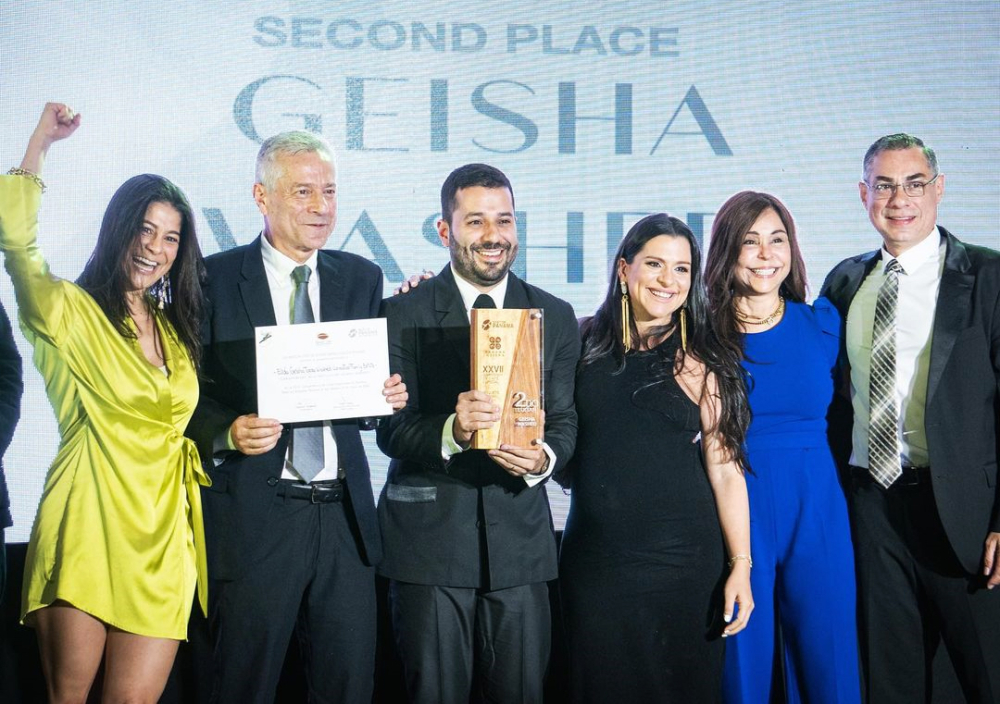
In September 2022, the well-known Lamastus family of Panama sold Geisha coffee from Elida Estate's Aguacatillo batch at an independent auction for $6,000 per pound (equivalent to more than 40,000 RMB). According to the family's official website, this batch of Geisha was grown in the highest-altitude plot of Elida Estate, at over 2,000 meters above sea level, and the total output was only 7 pounds.
Why is Geisha coffee so expensive?
The reason is that Geisha is a rather delicate variety.
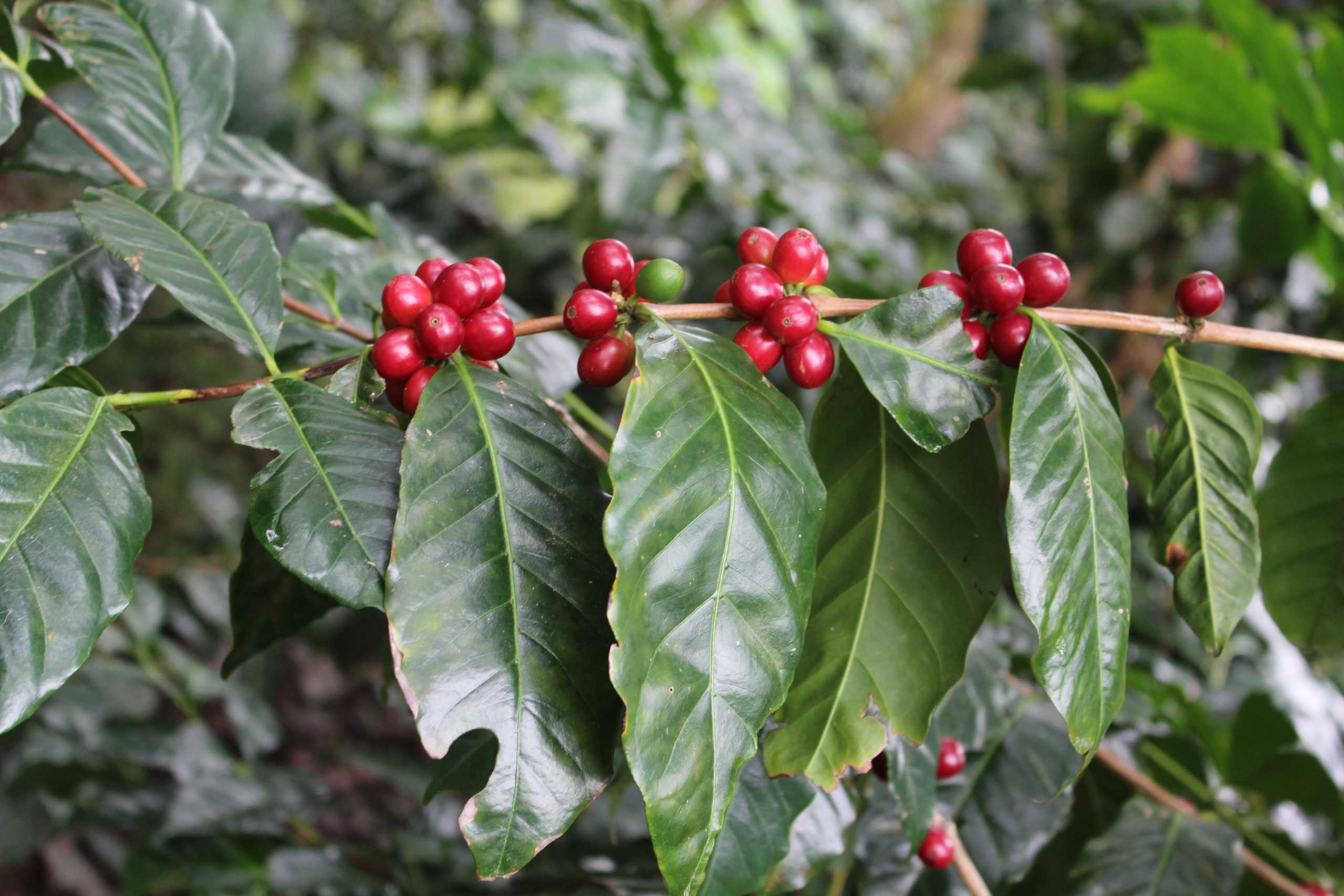
Front Street Coffee (FrontStreet Coffee) has learned that compared with other Arabica varieties, Geisha has few and very fragile roots, and its leaves and branches also have insufficient load-bearing capacity, so the fruit yield per tree is always low, about only half that of the Caturra and Catuai varieties commonly seen in Central and South America.
Because its root system is not strong enough, and Central and South America is often affected by extreme weather such as hurricanes and heavy rain, once strong winds or heavy rainfall occur, the number of Geisha cherries in that season will further decrease, and quality will also be affected.
Based on Panama's national annual coffee production of about 10,000 tons, Geisha accounts for only 3% of it. And Hacienda La Esmeralda, which has the largest Geisha production in Panama and was also the first to discover Geisha's potential, produces only around 270 kilograms of Geisha coffee each year.
Geisha also has extremely strict requirements for cultivation and growing environment!
The Geisha plant itself is relatively weak, yet it prefers places with large temperature differences between day and night, a not particularly comfortable environment, rainfall that is neither too much nor too little, and an altitude above 1,500 meters. Only in this way can it develop its refined and enchanting flavors.
Therefore, its roots bear pressure far beyond their own capacity. It is also for this reason that although Geisha has a low fruiting rate, its root system can deliver sufficient nutrients to each cherry, and together with the effect of temperature differences between day and night, the growth and ripening speed of the cherries is also slowed down.
Therefore, Geisha coffee beans grown above 1,500 meters above sea level can display a perfume-like enchanting flavor, accompanied by the fresh fragrance of various flowers, the acidity of citrus and berries, and a tea-like sweet aftertaste. The higher the altitude, the more refined the flavor. This is also why Geisha grown in high-altitude areas by many famous Panama estates can sell at high prices.
Where to buy delicious Panama Geisha coffee beans?
Currently, Front Street Coffee (FrontStreet Coffee) sells three Panama Geisha coffee beans:
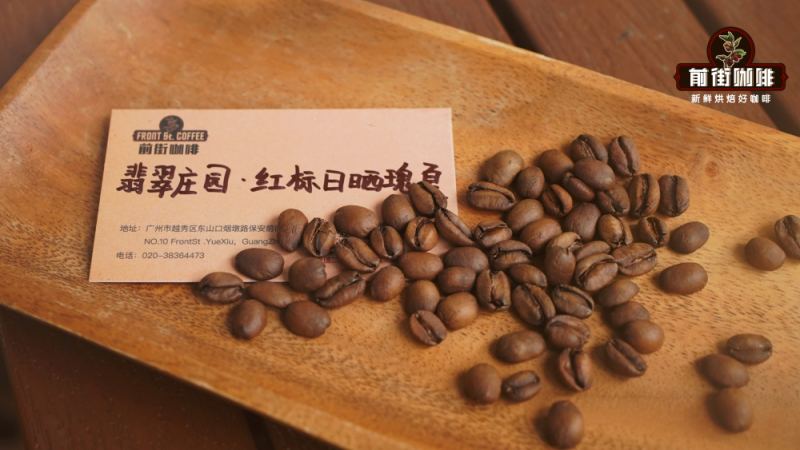
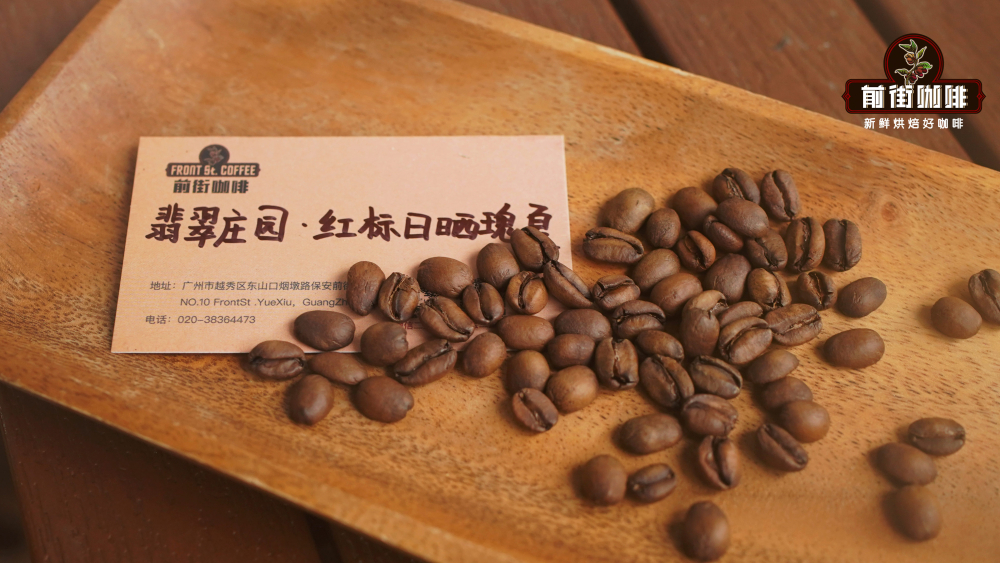
Panama Hacienda La Esmeralda · Red Label Geisha Coffee Beans
Region: Boquete
Estate: Hacienda La Esmeralda, Jaramillo Farm
Plot: Mario
Altitude: 1,600m-1,800m
Processing method: Natural process
Variety: Geisha
Flavor description: Rose, berries, apricot, complex fruits, honey, black tea
Panama Hacienda La Esmeralda · Front Street Green Label Geisha Coffee Beans
Region: Boquete
Estate: Hacienda La Esmeralda, Jaramillo + Cañas Verdes Farm
Altitude: 1,600m-1,800m
Processing method: Washed process
Variety: Geisha
Flavor description: Jasmine, ginger lily, orange juice, honey, green tea
Panama Boquete Region · Front Street Washed Geisha Coffee Beans
Region: Boquete
Altitude: 1,600m
Processing method: Washed process
Variety: Geisha
Flavor description: White floral fragrance, citrus, honey, tea-like mouthfeel
What parameters should be used for pour-over Geisha coffee?
Geisha coffee is known for its rich floral fragrance and complex fruit notes. In order to retain more high-quality acidity, Front Street's roaster uses a medium-light roast (minor adjustments are made for different batches). This roast level does not greatly change the hardness of high-altitude beans, so during brewing it is necessary to appropriately increase the extraction rate to present a fuller flavor hierarchy. It is recommended to use a higher water temperature and a slightly finer grind to stimulate more aromatic substances; in addition, to make Geisha's flavor expression clearer, Front Street slightly widens the coffee-to-water ratio, using 1:16.
In order to improve the extraction rate of Geisha, avoid over-extraction, and at the same time highlight the layers of sweet and sour flavor, the baristas at Front Street Coffee (FrontStreet Coffee) choose the V60 dripper. The V60 body has guide ribs connecting the top and bottom and a large central hole, which can speed up the flow of water downward; the spiral vent groove design extends the water flow path and increases the contact time between coffee grounds and hot water. Each stream of water converges along the grooves toward the center of the dripper, concentrating the pressure on the coffee grounds and extracting coffee with richer layering.
Below, Front Street demonstrates the brewing steps for the in-store offering of Esmeralda Red Label Natural Geisha. You can refer to it and compare it with your own brewing approach.
The pour-over parameters for Red Label Geisha coffee are: Dripper: V60, Water temperature: 92°C, Coffee dose: 15g, Coffee-to-water ratio: 1:16, Grind size: fine granulated sugar size (80% passing a No. 20 sieve)
Fold the filter paper and fit it against the dripper, wet the filter paper with a small amount of water and make it sit more snugly, then discard the water in the server. Next, add the coffee grounds and tap gently so the coffee bed is evenly distributed. For the first pour, gently add 30g of water for blooming, with a blooming time of 30 seconds; for the second pour, pour until about 125g of water, circling outward evenly and steadily. Then wait for the coffee liquid to drop. When it has dropped by half, pour the final stage of water until 240g. After all the coffee has finished dripping, the total extraction time is generally about 2 minutes.
The pour-over Esmeralda Red Label Geisha tastes with fresh jasmine, citrus, and tropical fruit acidity. The flavor layers vary with temperature, the overall mouthfeel is smooth, and the tea-like finish is delightful.
The above content is compiled by CoffeeHunters, a coffee news website.


