







How Does a French Press Differ From a Clever Cup?
A French press and a Clever Cup both use immersion extraction, but they produce different cups. The French press is a glass cylinder with a metal filter and plunger; grounds steep and are pressed down, giving a full-bodied coffee with more oils. The Clever Cup uses a piston valve at the bottom and a paper filter, so the brew is cleaner and clearer.
Front Street Coffee compared the two using the same water temperature, grind size, and coffee-to-water ratio with Sun-Dried Red Cherry beans. Material, shape, and pouring method separate them further: glass versus PCT material, cylindrical versus trapezoidal. The metal filter keeps oils in the French press, while filter paper traps them, which explains the texture gap.
In the realm of immersion extraction, the French press and the Clever Cup are two devices often compared. Both use immersion, yet the final coffee flavor heads in completely different directions. This article starts from Front Street Coffee's comparative experiment: first introducing the structure and operating principles of the two devices separately, then distinguishing them across dimensions such as material, shape, and pouring method, and finally using [Front Street Sun-Dried Red Cherry] as an example, brewing with the same water temperature, grind size, and coffee-to-water ratio to explore where the French press's rich smoothness and the Clever Cup's clean clarity come from, and what role oils and filter paper play in this, helping coffee lovers make a choice based on taste preference.
For more specialty coffee knowledge, please follow: Front Street Coffee ( Frontsteet Coffee )
When it comes to immersion extraction, Front Street Coffee (FrontStreet Coffee) naturally thinks of the French press and the Clever Cup. Is the flavor they extract similar, or does each have its own merits? Front Street Coffee (FrontStreet Coffee) explores this through the comparative experiment in this article.
What is a French press?
The French press is arguably one of the simplest and least expensive coffee brewing methods. It consists of a heat-resistant glass body combined with a metal filter and plunger, making the structure very simple. The working principle is to let the coffee grounds fully immerse in hot water, then use the metal filter with the plunger to press the grounds down to the bottom of the pot, resulting in a cup of full-bodied coffee. Even beginners new to coffee can quickly master it and produce a decent cup.
What is a Clever Cup?
The cleverness of the Clever Cup lies in the "piston valve" structure at the bottom. After hot water is poured in, water pressure automatically closes the piston valve, allowing the coffee grounds to fully immerse in the water; after immersion is complete, placing the dripper on a carafe or cup compresses the base plate, opening the piston valve so the coffee liquid slowly flows down.
What is the difference between the Clever Cup and the French press?
1. Material: [French press] glass material; [Clever Cup] PCT material.
2. Shape: [French press] cylindrical; [Clever Cup] trapezoidal.
3. Pouring method: [French press] use the plunger to press the coffee grounds down, then pour the coffee liquid out from the top spout; [Clever Cup] when placed on a server, the piston opens and the coffee liquid flows out from the bottom.
What is the difference between coffee brewed with a French press and a Clever Cup?
First, choosing freshly roasted coffee beans is essential to present better aroma and flavor. Currently, all coffee beans sold by Front Street are shipped 5 days after roasting is completed, and the best flavor period is 5-35 days after the roast date printed on the back label.
Both brewing methods use the same water temperature, coffee grind size, and coffee-to-water ratio. Taking [Front Street Sun-Dried Red Cherry] sold by Front Street Coffee (FrontStreet Coffee) as an example, it is recommended to use a medium-fine grind (caster sugar size / 80% passing rate on the China No. 20 standard sieve), a water temperature of 90-91°C, and a 1:15 coffee-to-water ratio (i.e. 1g coffee grounds added to 15g water). This time Front Street Coffee (FrontStreet Coffee) will use 15g of coffee grounds for the brewing demonstration.
The steps for brewing coffee with the Clever Cup are as follows: fold the filter paper and place it in the Clever Cup, place the Clever Cup on a container, and rinse the filter paper with hot water to preheat the device at the same time. Then move the Clever Cup to the electronic scale (the valve will automatically close at this point) and pour the ground coffee into the center of the dripper.
For the first pour, add 30g of hot water, start the timer, and bloom for 30 seconds; after blooming, pour hot water up to 225g, then immerse for 1'50". After immersion is complete, move the Clever Cup onto a container to open the valve and filter out the coffee liquid in the dripper. The whole process takes about 15 seconds, and the total coffee extraction time is 2'05".
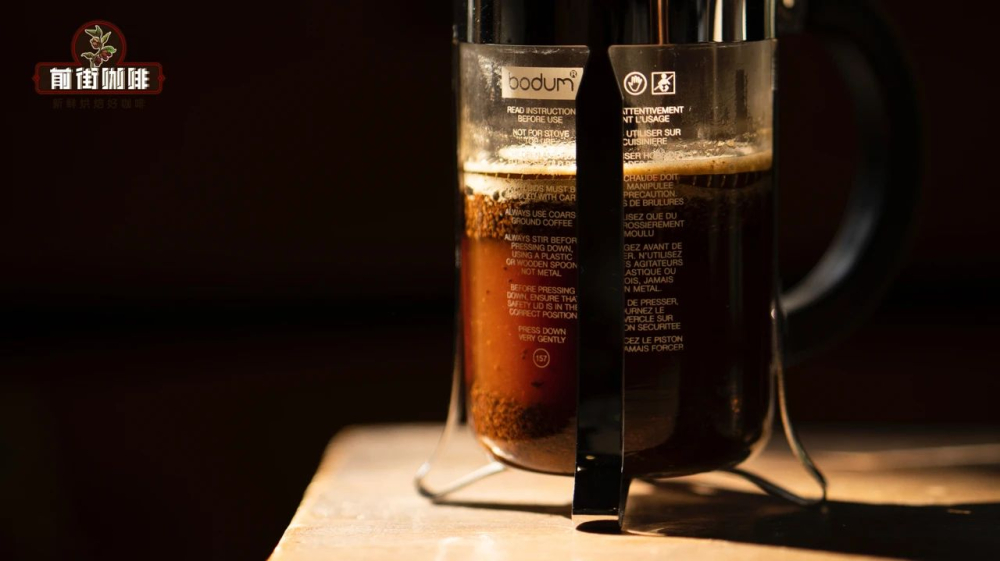
The French press immersion steps are as follows: French press: add 15g of coffee grounds, prepare 225g of hot water and pour it into the pot in a bold stream, stir the plunger, put on the lid, and wait 4 minutes. Then slowly press down the plunger until the filter screen is at the middle of the pot body, pour the coffee liquid into a mug, and it is done.
After the comparative experiment, Front Street Coffee (FrontStreet Coffee) finds that the biggest difference between the [French press] and the [Clever Cup] is their mouthfeel. After extraction with the [French press], the coffee looks a bit cloudy, and many friends think the coffee cup has been contaminated—NO! NO! NO! That is the coffee's oils, which can enhance its rich, full-bodied mouthfeel, so coffee extracted with the [French press] tends to be quite smooth. The liquid extracted by the [Clever Cup], on the other hand, is relatively clean and clear, and the flavor when drinking is also clean and clear, with relatively distinct layers.
So why does the [French press] have oils while the [Clever Cup] does not? That is because their pouring methods are different. First, the [French press] uses a metal filter screen plus filter paper, and the plunger presses the coffee grounds from top to bottom, which slightly increases its extraction rate.
Then, the coffee liquid is poured out from the top spout; the oils that originally floated on the coffee liquid also flow into the server along with the stream; the plunger's stainless steel filter screen plus filter paper actually does not filter very tightly, so some coffee grounds also flow out along with the stream. The coffee's oils add to its richness and smoothness and make the flavor softer and more balanced.
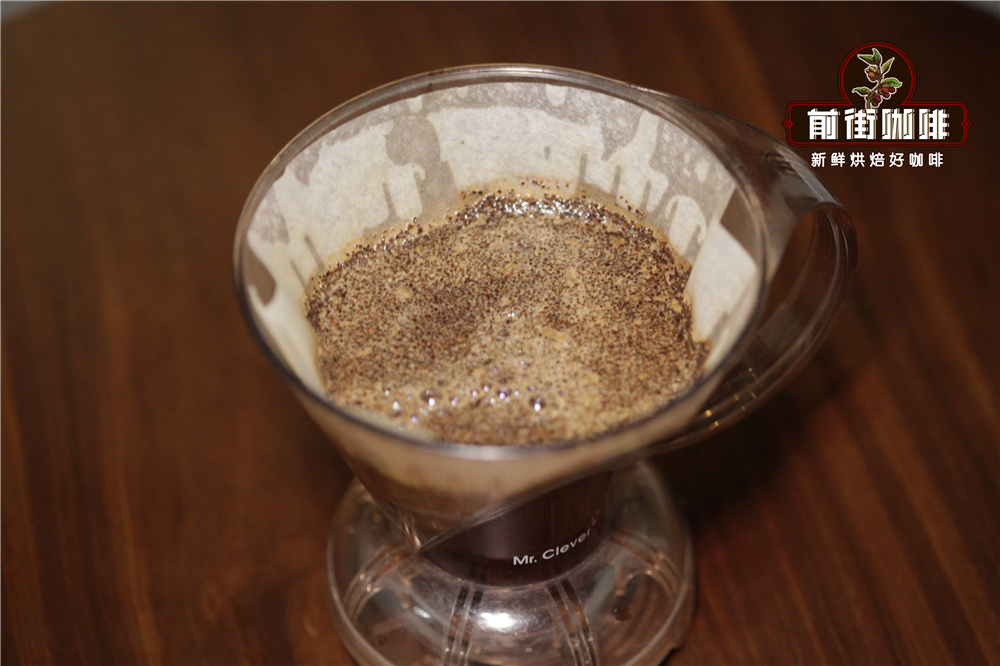
The [Clever Cup], however, uses a drip-style outflow method, and the coffee's oils are filtered out layer by layer by the coffee grounds and filter paper, so the liquid looks relatively clear, the mouthfeel is relatively light and clean, and the flavor appears more layered.
The above content is compiled by CoffeeHunters, a coffee news website.


