








How Are Sumatra Mandheling Grades Classified?
Mandheling is Arabica coffee grown on the Indonesian island of Sumatra, and Golden Mandheling refers to a certified top grade rather than a separate variety. The main specialty-growing areas are the Lintong region around Lake Toba and the Gayo highlands in Aceh. Indonesia's wet-hulling process gives these beans their heavy body and spice notes.
Roughly ninety percent of Indonesian coffee is Robusta, with Arabica concentrated on Sumatra, Java, and Sulawesi. Lake Toba sits at about 900 meters and anchors the Lintong zone. As an arabica coffee bean, Mandheling responds well to dark roasting, showing caramel and dark chocolate alongside a subtle pine-like finish, and it holds up in blends as well as single-origin.
Mandheling coffee has long been sought after by dark roast enthusiasts for its heavy, mellow body and distinctive spice notes. It comes from the Indonesian island of Sumatra and is the flagship of the region's Arabica coffee. This article covers Mandheling's growing regions, its highest grade classifications, the certification system for Golden Mandheling, Indonesia's unique wet-hulling process, and the differences between Mandheling and Americano in flavor and extraction methods. It also shares Front Street Coffee's sourcing approach and pour-over recommendations for Lintong Mandheling and PWN Golden Mandheling, helping coffee lovers gain a more systematic understanding of this classic Indonesian coffee.

In the genealogy of Indonesian coffee, Sumatra Mandheling has always occupied a special place. It has a solid, full body, rich spice tones, and after dark roasting, a relaxing smokiness. On the palate you can sense caramel and dark chocolate-like sweet-bitterness interwoven, while the finish often carries a subtle pine-like resonance. This complex yet grounded expression is precisely what makes it so captivating.
Coffee beans from Sumatra have always held an irreplaceable position in the hearts of seasoned coffee lovers. Their flavors are intense and their structure is solid; they drink steadily and reward patience, rarely becoming tiresome. For this reason, whether as a single-origin Mandheling coffee or as Mandheling coffee beans used in blends, they enjoy a stable following in the consumer market.
Sumatra Coffee Growing Regions
Of the coffee grown in Indonesia, Robusta accounts for about ninety percent, while the remaining Arabica is mainly concentrated on the islands of Sumatra, Java, and Sulawesi.
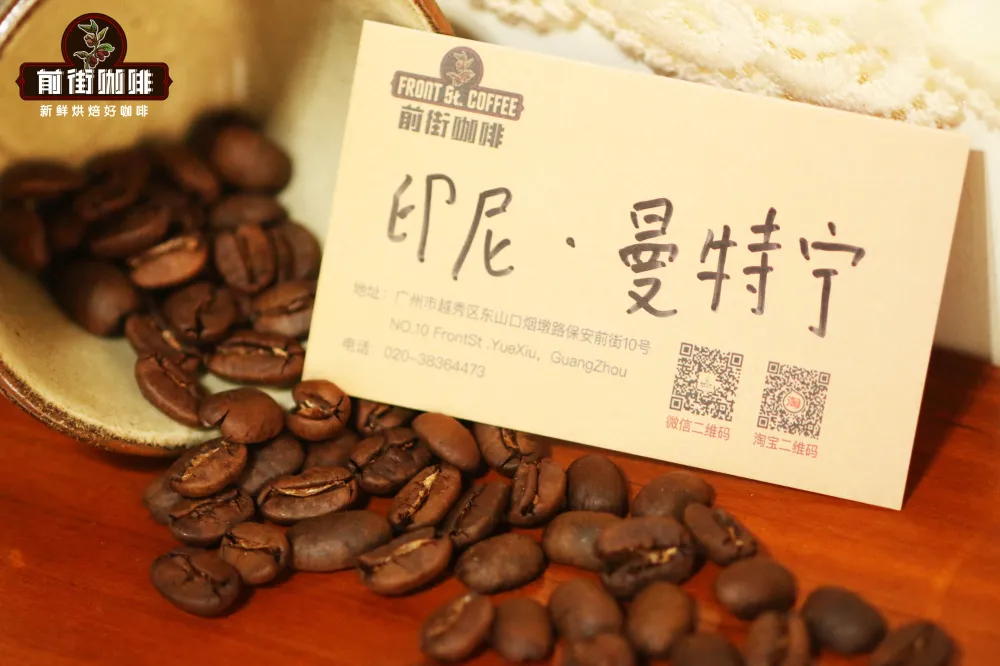
The term Mandheling specifically refers to Arabica coffee beans grown on the island of Sumatra. Sumatra is located in western Indonesia and is the sixth-largest island in the world. The areas on the island capable of producing specialty-grade Mandheling coffee are mainly distributed around the Lake Toba Lintong region (Lintong) and the Gayo highlands in Aceh.
"Lake Toba Lintong Region"
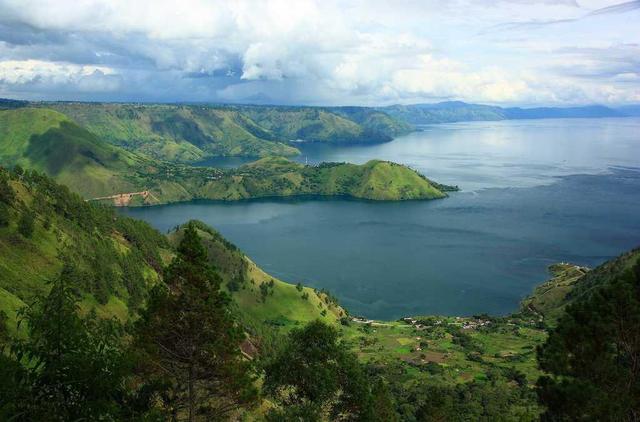
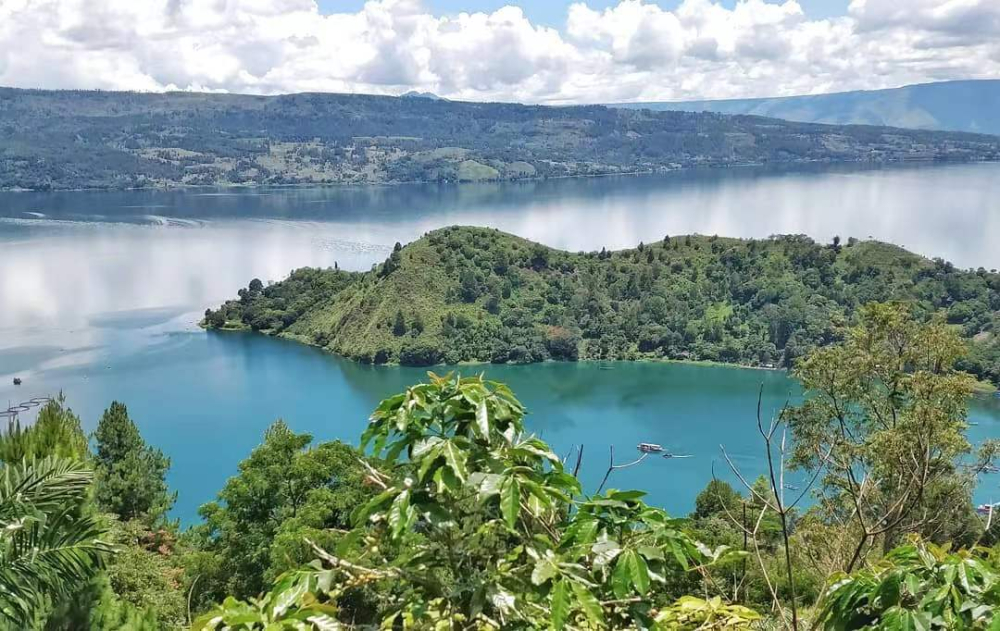
Lake Toba is located north of Medan, the capital of North Sumatra Province. It is a high-altitude freshwater lake with an average surface elevation of about 900 meters. The lake is diamond-shaped, roughly 100 kilometers long and 30 kilometers wide, covering an area of 1,130 square kilometers. The surrounding coffee-growing areas sit at an average elevation of roughly 1,100 to 1,600 meters.
Among the regional staple beans selected by FrontStreet Coffee, the Mandheling coffee beans representing Indonesia come from the Lintong region. Front Street has always believed that a specialty coffee bean must not only be excellent in quality itself, but more importantly, must express the distinctive terroir of its origin.
Influenced by climatic conditions and Indonesia's unique processing methods, Sumatran coffee generally shows low acidity, high body, and notes of herbs and spices. The Lintong Mandheling coffee selected by Front Street not only offers excellent value for money, but also carries well the flavor distinctiveness that the Sumatra region should have.
"Aceh Gayo Highlands Region"
The Gayo mountain range (Gayo) is located in Aceh Province in northern Sumatra. Coffee is mainly grown on the slopes around the town of Takegon and Lake Tawar. The coffee-growing elevation in this area averages between 1,110 and 1,600 meters. It is cultivated by smallholders under shade trees and processed using the wet-hulling method, presenting a unique flavor structure that combines deep, low-toned notes with a lively, full-bodied richness.
In this region, a coffee company called PWN (Prawira Nusantara) sells Golden Mandheling coffee beans that are deeply favored by many dark roast enthusiasts. The reason is that the Golden Mandheling produced by this company can be considered the highest-grade Mandheling coffee beans in all of Indonesia.
PWN purchases Mandheling coffee beans grown in the Aceh region and subjects them to wet-hulling. After processing, the Mandheling green beans must undergo one machine sorting and three rounds of hand sorting to ensure the batch reaches Indonesia's highest grade, G1.
The purpose of machine sorting is first to limit the bean size to 18 screen or above; the subsequent rounds of hand sorting are to remove irregularly shaped defective beans. Reducing the defect rate directly improves the overall quality of the Mandheling coffee.
Because Golden Mandheling is so famous, there are many carefully selected Mandheling coffee beans on the market being sold under the name Golden Mandheling. However, it must be made clear that Golden Mandheling coffee beans are a registered trademark of PWN. To help consumers distinguish genuine from fake, PWN provides a certification certificate, which any first-hand buyer can obtain, and the jute bags holding the green beans are all printed with the company logo.
The Golden Mandheling coffee beans sold by FrontStreet Coffee all come from PWN. At Front Street's offline stores, you can see the corresponding certification certificate as well as the green bean jute bags printed with the PWN logo.
Indonesia's Unique Coffee Processing Method — Wet-Hulling
Sumatra is close to the equator, with high temperatures and frequent rain year-round, and it often encounters typhoons. Therefore, it is impossible to adopt African-style natural processing or Central and South American washed processing on a large scale to handle coffee green beans. To prevent the green beans from molding and spoiling during processing, locals greatly compress the fermentation time and drying time to adapt to the local weather.
After the coffee fruit is stripped of its outer skin, it is fermented only briefly for a few hours, then sun-dried. When the moisture content of the parchment beans drops to 30% to 50%, the beans are still in a semi-dry state. At this point, locals use a specially made hulling machine to strip away the still fairly hard parchment layer through friction, and then continue drying the hulled beans until they reach the moisture content standard.
Because every step is completed in an environment with 70% to 90% humidity, and the parchment layer has already been removed before the final drying step, the "exposed" green beans easily absorb moisture from the air. As a result, the Mandheling coffee produced has some extra woody and herbal notes.
Which tastes better, Mandheling coffee or Americano?
Mandheling coffee is a single-origin coffee bean and can be paired with a variety of extraction methods. Mandheling coffee made by pour-over is cleaner in presentation and has clearer layers. Americano, on the other hand, is the product of espresso plus water. If Mandheling coffee beans are used to extract espresso, the body will be higher and the flavor more intense, but the mouthfeel and coffee complexity will be somewhat weaker than with the pour-over method.
How do you make Mandheling pour-over coffee?
First, the most important point is to choose freshly roasted coffee beans. In order to highlight the high body of Mandheling coffee and retain more herbal spice notes, Front Street's roasters use a medium-dark roast.
Freshly roasted Mandheling coffee needs 7 to 10 days of degassing and resting before it enters its optimal flavor window. Front Street wants every customer who places an order to taste full aroma, so it only ships coffee beans freshly roasted within 5 days, allowing everyone to enjoy the coffee's complete flavor window upon receipt.
After roasting, coffee beans expand in volume and become looser in texture, making them more likely to absorb more water after grinding and accelerating the release of various substances. To avoid over-extraction, Front Street uses a medium grind size and a slightly lower water temperature, reducing the release of bitter large molecules from the extraction stage.
Therefore, the brew served at FrontStreet Coffee stores uses the short-ribbed dripper Kono, which has an immersion effect, a water temperature of 87 to 88°C, a medium-coarse grind (70% passing through China standard No. 20 sieve), 15 grams of coffee powder, and a coffee-to-water ratio of 1:15.
Three-stage pouring method: the first pour is 30g of water for a 30s bloom; the second stage is a small stream poured in circles up to 125g, then wait for the water level in the coffee bed to drop by half before pouring again, continuing with a small stream in circles up to 225g. After all dripping is complete, the total extraction time is about 2 minutes 10 seconds.
The above content is compiled by CoffeeHunters, a coffee news website.


