








Does phosphoric acid in coffee explain Kenya AA acidity?
Kenya AA coffee pours at a 1:15 coffee-to-water ratio: 15 grams of coffee, 225 milliliters of water, 91 degrees Celsius, in a V60. Its bright berry acidity and juicy body trace partly to phosphoric acid in Kenyan soil and partly to the K72 washed process, a 72-hour fermentation split into three 24-hour rounds with fresh-water rinses between each.
Kenyan farmers dry beans on raised steel beds rather than on the ground, which protects the clean cup the AA grade is known for. Size grades run AA and AB, while exporters add flavor grades such as TOP, PLUS, and FAQ. Medium-light roasting keeps the layered blackberry notes intact through the staged pour.
Kenya AA is a highly recognizable grade in specialty coffee, known for its bright berry acidity, solid juicy body, and cleanliness. This article focuses on Front Street Kenya Cherry Tomato, an AA-grade coffee, and sorts out the sources of its flavor and processing details: from the phosphoric acid components in the local soil, to the famous K72 72-hour washed fermentation, to the impact of Kenyan steel beds on cleanliness during drying. It also explains the size grading of AA, AB, etc., as well as the TOP, PLUS, and FAQ flavor grades set by exporters. Finally, it gives Front Street's medium-light roast approach and pour-over parameters: 1:15 coffee-to-water ratio, 15g coffee, 225ml water, 91°C, V60, along with the staged pouring rhythm and brewing flavor description.
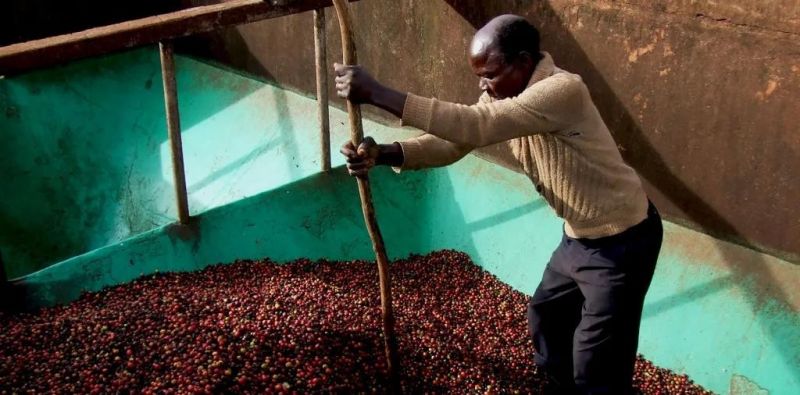
Front Street Kenya Cherry Tomato is a specialty representative within the AA grade. Its most captivating aspect lies in its layered berry and fruit notes, solid acidity, and juicy sweetness, often leaving a lasting impression after drinking. The reason it can present blackberry-like acidity and aroma is related on one hand to the phosphoric acid-rich components in Kenyan soil, and on the other hand to the local highly representative K72 washed processing method.
Generally speaking, washed processing more easily brings bright acidity, because the wet fermentation during processing is semi-aerobic fermentation. Sugars are decomposed under semi-aerobic conditions, generating more organic acids, so washed beans often taste more acidic. Fermentation usually does not exceed 36 hours, but Kenya differs from neighboring producing countries: its washed fermentation time lasts as long as 72 hours.
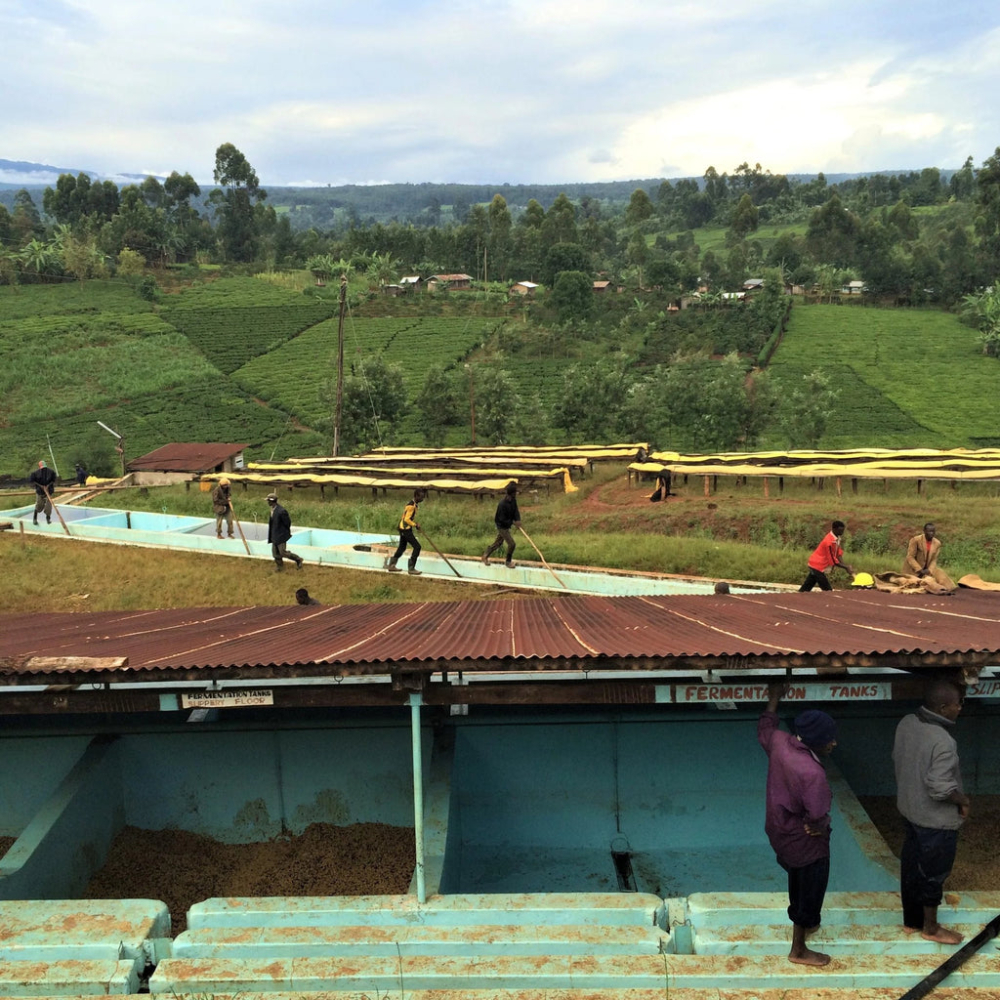
However, these 72 hours are not a single continuous soak, but are divided into three rounds, each lasting 24 hours. After each fermentation round, the beans are rinsed with fresh water and soaked again, until the full 72 hours are completed before moving to the next stage. Because of this, this unique washed process is called Kenyan-style 72-hour fermentation washing, or K72 for short. With fermentation time doubled or even longer than common practices, Kenyan coffee naturally accumulates more abundant acidity.
In addition, drying during processing is equally particular. Kenyan coffee farmers do not casually spread the beans on any ground to dry, because that can easily introduce "wild" off-flavors.
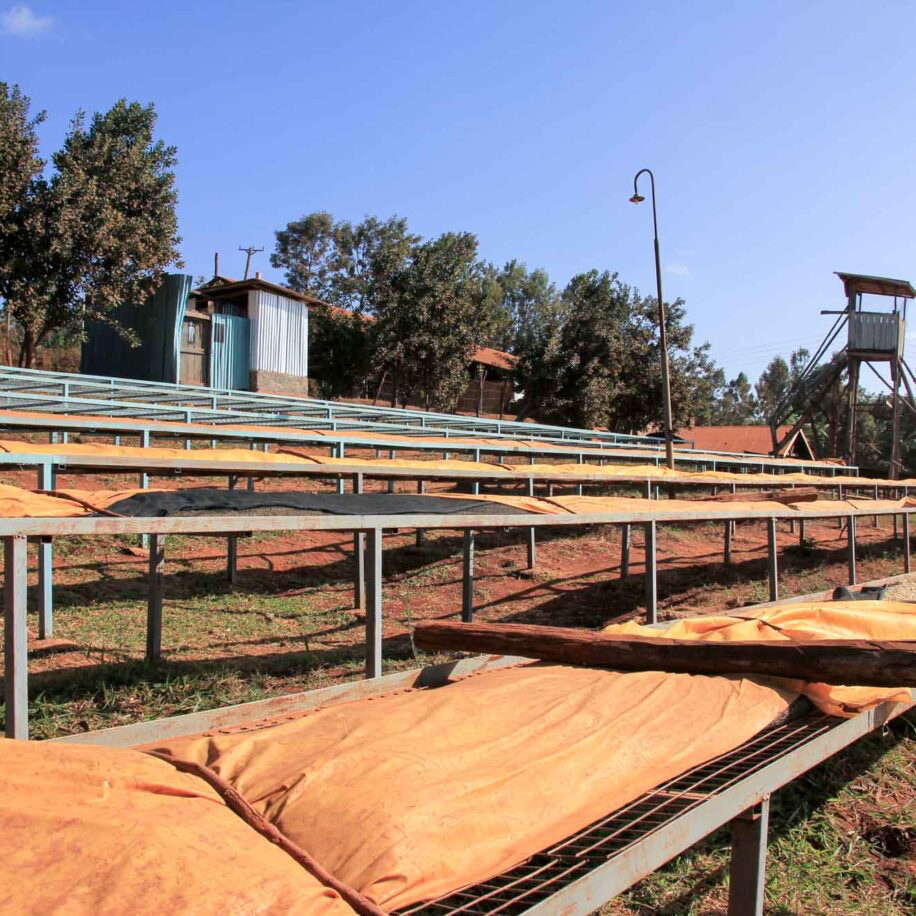
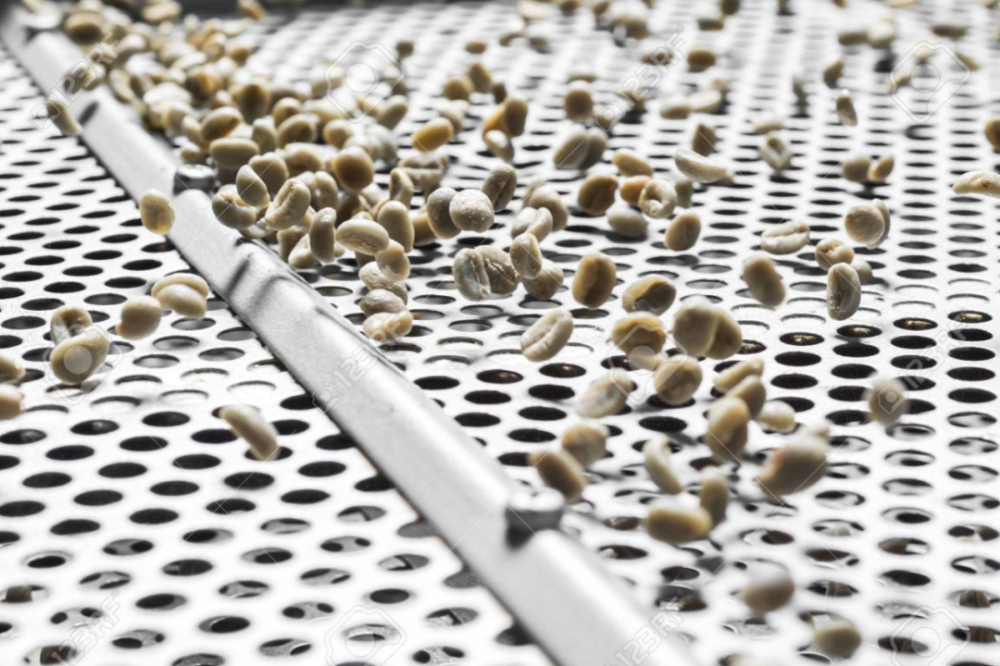
They place the coffee beans on specially made steel plates to dry. The steel plates are elevated and kept at a distance from the ground, so the beans are less likely to absorb dust and flying ash. The steel plate surface has holes of consistent diameter and spacing, allowing the beans to dry more evenly and ventilate more smoothly during drying. After reducing interference from unstable factors, Kenyan coffee achieves a cleaner cup performance, and this specially designed steel plate is also called a "Kenyan steel bed."
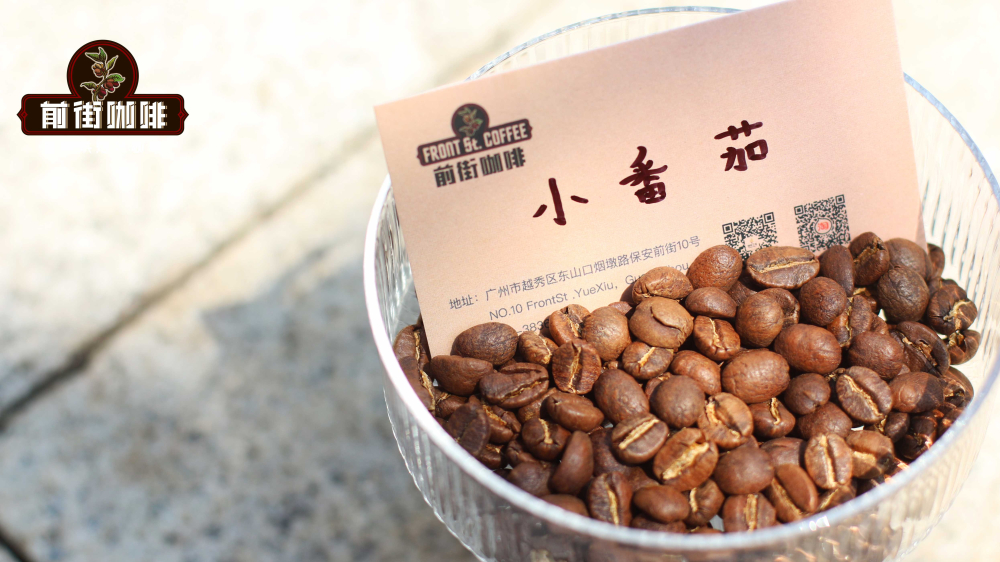
Front Street's own roasted Front Street Kenya Cherry Tomato coffee beans are precisely processed with K72-hour washing, using local high-quality SL28 and SL34 varieties, and graded at the local highest AA. To highlight the full floral and fruity flavors, Front Street uses a medium-light roast, suitable for pour-over, cold brew, ice drip, French press, siphon, Clever Cup, and many other brewing methods. If you want to know what Kenyan coffee actually tastes like, you might as well give it a try, and place an order at Front Street's Tmall flagship store or Front Street's Taobao store.
Coffee bean grading system (grading by size)
AA Plus (AA+): AA grade with especially excellent cup quality (flavor, mouthfeel).
AA beans: size (Screen Size) 17-18 mesh.
AB beans: size (Screen Size) 15-16 mesh, accounting for most of production.
C beans: those smaller than AB in size (Screen Size).
TT: from AA and AB grade beans, lighter-weight beans blown out by an airflow sorter.
T: from C grade beans, lighter-weight beans blown out by an airflow sorter.
E Elephant Bean: a large mutated bean formed by two beans joined together, also called Elephant ear.
PB Peaberry: classified by appearance, unrelated to flavor or weight.
For green beans of the AA and AB grades, exporters also add special grading based on cupping results (not an official Kenyan national designation), from high to low: TOP, PLUS (+), FAQ. The Kenya Asalia flavor level on the FrontStreet Coffee bean list has reached the TOP grade. However, as mentioned above, this is not an official designation system, and among the several Kenyan producing-region coffees FrontStreet Coffee purchases, not every one carries a flavor grade, so there is no need to dwell on it too much. Usually, as long as it reaches AA or AB grade, the flavor is already considered to be at a premium level by default.
The Kenya Cherry Tomato listed by FrontStreet Coffee comes from AA-grade coffee beans in the Thika producing region. Next, Front Street will talk about how we roast this bean, how we brew this bean, and how the flavor performs.
FrontStreet Coffee Roast Analysis
When FrontStreet Coffee roasts this Kenyan coffee bean, considering the need to highlight rich fruit acidity and a full berry-juice mouthfeel, it uses a medium-light roast.
Front Street Brewing Suggestions
Considering that this bean uses a medium-light roast, FrontStreet Coffee will use a higher water temperature and a faster-flow dripper. The core idea is to extract its bright acidity with high temperature while avoiding over-extraction caused by high temperature, so a faster-flow V60 dripper is chosen.
Coffee-to-water ratio: 1:15
Coffee grounds: 15g
Total water poured: 225ml
Water temperature: 91°C
Grind size: fine granulated sugar coarseness | EK43s setting 10 (80% passing through a No. 20 standard sieve)
For the first stage, pour 30g of water for a 30-second bloom, then pour 95g (the electronic scale shows about 125g), finishing the pour in about 1 minute. When the water level drops to 2/3 of the coffee bed, pour the remaining 100g (the electronic scale shows about 225g), finishing the pour in about 1 minute 40 seconds. Dripping is completed at 2'00", remove the dripper, and extraction is complete.
Brewing flavor: on entry, there are notes of smoked plum and cherry tomato; on the palate, the acidity is strong and full-bodied, with prominent sweetness in the middle, a juicy feel, a finish of berry aroma and brown sugar sweetness, and green tea aroma.
The above content is compiled by CoffeeHunters, a coffee news website.


