







Why Is the Yirgacheffe Coffee Region Known for Floral Flavor?
Yirgacheffe is Ethiopia's most representative specialty coffee region, known for delicate white floral notes and a refined mouthfeel. Its flavor depends on local growing conditions and on how the beans are processed, so washing and natural processing give noticeably different cups. Pour-over and drip bag methods each present those differences in their own way.
The name carries weight beyond the cup. In 2004 Starbucks tried to trademark Yirgacheffe, and after an international legal dispute the Ethiopian government reclaimed it in 2007. Frontstreet coffee store staff use different pour-over parameters for washed and natural lots, so beginners and experienced drinkers can both find a Yirgacheffe direction that fits their taste.
Yirgacheffe is Ethiopia's most representative specialty coffee region, renowned worldwide for its delicate white floral notes and refined mouthfeel. This article will start from the historical origins of the Yirgacheffe region, analyze the causes of its unique flavor, compare the flavor differences brought by washed and natural processing methods, and introduce in detail the pour-over parameters and drip bag brewing techniques commonly used at Front Street Coffee stores. Whether you are a coffee novice just starting out or a veteran looking for a daily staple, you can find a Yirgacheffe flavor direction that suits you.
For more specialty coffee knowledge, please follow our WeChat official account: Front Street Coffee (FrontStreet Coffee)
When it comes to black coffee, many people's first reaction is bitterness. When they first taste pour-over coffee and find it actually has acidity, quite a few will exclaim in surprise: coffee can actually be sour? Of course, there are also many beginners who hold the fixed impression that "coffee equals bitter," get dragged into a café by friends, and randomly order a Yirgacheffe from the dazzling array of bean names on the menu—and from that moment on, they step through the door of specialty coffee.
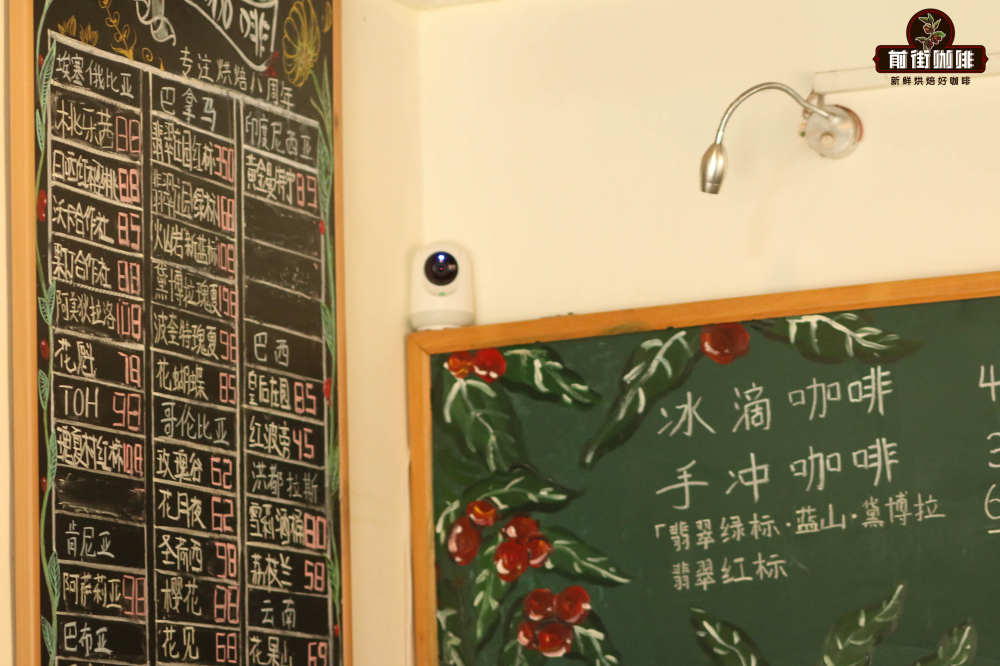
Many coffee novices walk into a Front Street Coffee (FrontStreet Coffee) store and, faced with nearly a hundred coffee beans densely written on the blackboard, don't know where to start. But when they recall the bean that first got them "hooked," it seems to have been called "Yirgacheffe"—yet they can't find those four characters anywhere on the menu.
So what exactly is Yirgacheffe? Let Front Street explain it for everyone below.
In recent years, China's specialty coffee culture has developed rapidly. Walk into any independent café at random, and you can almost always find Yirgacheffe on the menu. It is Ethiopia's most renowned and pivotal coffee region, and one of the most highly sought-after origins in the specialty coffee world. Even the globally famous commercial chain Starbucks once had designs on the name "Yirgacheffe"—in 2004, Starbucks attempted to register it as a trademark, and the Ethiopian government filed an international lawsuit over it, only successfully reclaiming the name "Yirgacheffe" in 2007.
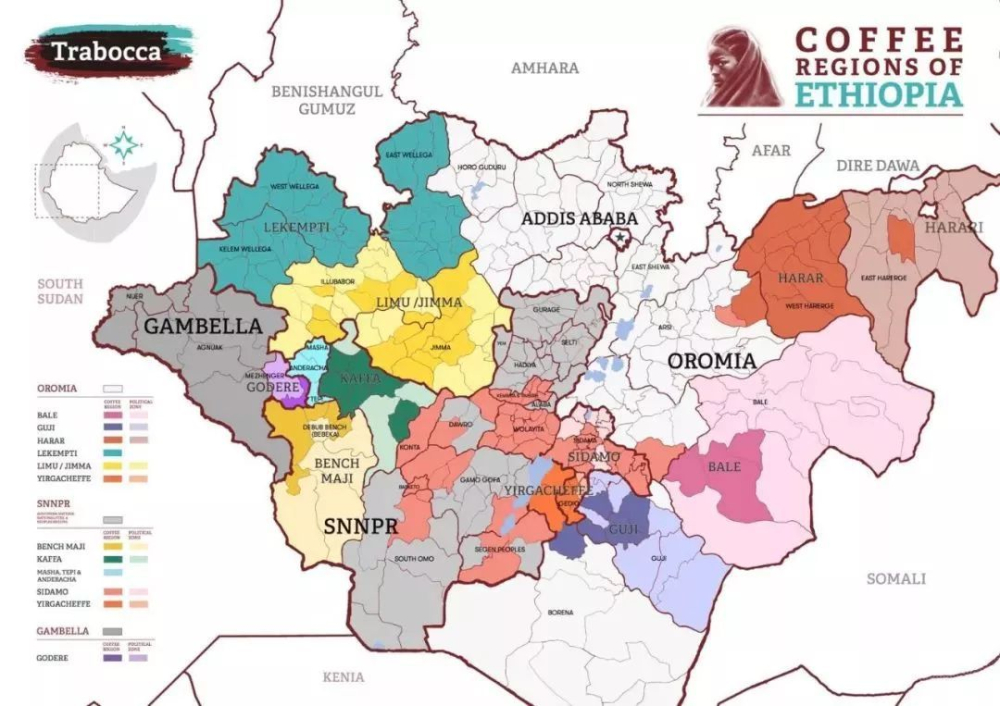
The reason Yirgacheffe is so widely renowned is that these four characters represent the unique flavor of a single region. Yirgacheffe was originally a sub-region under the Sidamo region, but because the coffee produced there carried delicate white floral notes, a large number of growers within Sidamo began claiming their beans also came from Yirgacheffe. Later, Yirgacheffe was separated from Sidamo and became an independent coffee region, and only then was this confusing situation put to rest.
If you ask just how special Yirgacheffe coffee's flavor really is, anyone who has tasted it will have a deep impression. Customers often walk up to the bean rack at a Front Street Coffee (FrontStreet Coffee) store and ask the barista: I want beans with floral notes, but not the taste of special processing methods. At times like this, Front Street Coffee (FrontStreet Coffee) baristas usually recommend Panama Geisha or coffee beans from Ethiopia's Yirgacheffe region. The reason Yirgacheffe coffee beans possess that enchanting white floral note is closely tied to the local way of processing green beans.
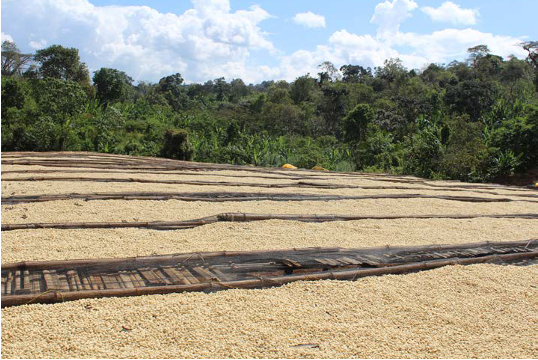
To solve the quality problems of green coffee beans, the Ethiopian authorities introduced the washed processing method from Latin America in the 1970s. After picking and sorting out fully ripe coffee cherries, the skin and pulp are removed, and the parchment beans still covered in slippery mucilage are placed in a water tank with added water for a brief fermentation, then manually stirred so the parchment beans rub against one another and the mucilage is thoroughly washed off. Once cleaning is complete, the parchment beans are evenly spread on raised drying beds to avoid contact with soil, and finally dried to a moisture content of 13%.
Because the sugars in the pulp and mucilage layer do not participate in the fermentation and drying process, washed Yirgacheffe coffee can clearly present white floral notes, and Yirgacheffe coffee beans are characterized by a delicate mouthfeel, just as Han Huaizong described in his book "Specialty Coffee Studies" as "a hundred flowers in full bloom."
Washed coffee beans have a clean and bright flavor without excessive embellishment, best showcasing the most fundamental flavor tone of a region. As a signature specialty coffee region, Yirgacheffe represents Ethiopia in Front Street Coffee's (FrontStreet Coffee) staple bean series. Front Street Coffee's (FrontStreet Coffee) staple bean series has seven products in total, each embodying the basic tone of a signature region, helping coffee novices more quickly understand the terroir characteristics of important regions at an affordable price.
Washed Yirgacheffe is clean, bright, and delicate—the first choice for many coffee veterans when they can't make up their minds. However, naturally processed Yirgacheffe also has its own distinctive style. On Front Street Coffee's (FrontStreet Coffee) bean list, Red Cherry and Konga are both coffee beans processed using the natural method.
The natural processing method is the most primitive and traditional way of processing coffee: carefully selected red coffee cherries are spread whole on raised drying beds for sun drying, and during this period the fruit is turned at regular intervals to avoid producing too many unpleasant fermented flavors.
Because the whole coffee fruit is retained, more sugars from the pulp and mucilage participate in the green bean processing, giving the coffee a fuller body, richer aroma, and more prominent sweetness.
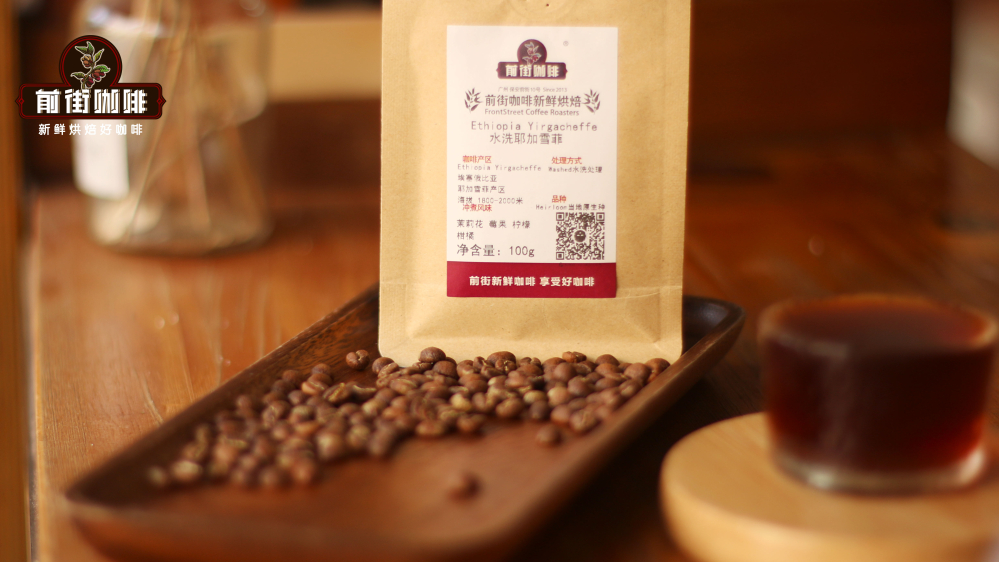
With so many coffee beans from the Yirgacheffe region on Front Street Coffee's (FrontStreet Coffee) bean list, which one tastes better? Front Street Coffee's (FrontStreet Coffee) bean rack always keeps washed Yirga Gudingding and natural Yirga Red Cherry on hand as representatives. Front Street Gudingding is fresh and natural, with a tea-like feel reminiscent of green tea; Front Street Red Cherry, because it uses the natural processing method, presents a berry-like sweet-and-sour taste with a slight fermented note and intense sweetness.
For many coffee lovers, buying beans isn't hard, but brewing the ideal flavor is a major challenge. Next, Front Street Coffee (FrontStreet Coffee) will introduce the brewing parameters used by Front Street baristas when serving Yirgacheffe.
Dripper: Hario V60
Water temperature: 90°C
Dose: 15 grams
Coffee-to-water ratio: 1:15
Grind size: 80% passing a Chinese standard No. 20 sieve
The coffee beans shipped by Front Street are all freshly roasted within 5 days, and by the time they arrive they have already gone through a 4-to-7-day resting period, so the flavor is at its peak. Front Street recommends blooming during brewing to help the coffee grounds release carbon dioxide; this step allows the aromatic substances in the coffee to be extracted more completely.
First pour in 30 grams of hot water and bloom for 30 seconds, then slowly pour in a thin stream in circles from the center point up to 125 grams; when the water level drops to the point where the coffee bed is about to be exposed, continue pouring in circles up to 225 grams. Total extraction time is about 2 minutes.
Some friends, after falling in love with Yirgacheffe, want to recreate the same aroma at home or in the office, so they buy drip bag coffee—only to find the brewed taste is rather weak and the aroma clearly insufficient, so they come to ask Front Street how to brew it. Below, using Front Street Red Cherry drip bags and Front Street Gudingding drip bags as examples, we'll demonstrate how to brew a full-bodied Yirgacheffe black coffee.
A bag of Front Street drip coffee usually contains about 10g of coffee grounds. After multiple measurements, pouring half a bag's worth of hot water into the drip bag comes to about 30–40g, and filling it to nine-tenths full in one pour is about 60–80g, so you can roughly estimate the total water amount by combining the number of pours.
If following a pour-over coffee-to-water ratio of 1:15 to 1:18, you would need to pour in 150–180ml of hot water. If you usually prefer a rich mouthfeel, you can pour in three stages: first pour half the hot water to wet the coffee bed, pause for 20 seconds, then pour twice in succession up to nine-tenths full. Total time is about 1.5 minutes, and the total water amount is roughly 140–160g.
Since both Yirgacheffe coffees use a medium-light roast, and the drip bag material filtering out the coffee grounds is non-woven fabric, the brewed black coffee contains almost no oils, but the flavor presents a clear sweet-and-sour tone.
Front Street Gudingding drip bags have a citrusy acidity on the palate, with a tea-like feel reminiscent of green tea, a slight white floral note, and a delicate, clean mouthfeel. Front Street natural Red Cherry drip bags, meanwhile, are smooth and delicate on entry, expressing the sweet-and-sour taste of ripe fruit to the fullest, with a hint of fermentation and a finish featuring honey-like sweetness.
The above content is compiled by CoffeeHunters, a coffee news website.


