







What Makes Yunnan Arabica Coffee Distinct?
Yunnan sits in the coffee belt between the Tropic of Cancer and the Tropic of Capricorn, one of the few places in China suited to growing coffee. Coffee arrived in the 1890s at Zhukula in Binchuan County, Dali, and the region's beans are now widely known as Yunnan small-bean coffee, marked by a balanced, mild flavor.
Two varieties dominate: Typica, the older Yunnan variety with elegant, layered flavor, and Catimor, which fills about 99 percent of the current planted area. Hainan also grows coffee, notably around Wanning and Xinglong, but its output is very limited, and the intense sunlight there calls for shade trees such as rubber. Pour-over and cold brew both suit Yunnan beans.
Yunnan, as China's core coffee-producing region, is known for the balanced flavor of its small-bean coffee. This article starts with the region's history and terroir, tracing the origins and differences between the two major varieties, Typica and Catimor, and provides a detailed introduction to the flavor profiles of two representative coffees: Front Street 2013 Yunnan Natural Typica and Front Street Yunnan Small Bean. It also shares the specific operational points and parameter control for three-stage pour-over brewing, along with Front Street's cold brew recipe and storage recommendations, helping coffee enthusiasts gain a comprehensive understanding of Yunnan coffee from variety to extraction.
Yunnan coffee can be said to be riding the wave of the times. After a century of accumulation, domestic coffee consumption demand continues to rise, and the quality of Yunnan coffee has been improving accordingly.
Yunnan is one of the few regions in China with the conditions suitable for coffee cultivation, conveniently located in the golden latitude belt for coffee growing—the zone between the Tropic of Cancer and the Tropic of Capricorn. Yunnan small-bean coffee has deep historical roots, tracing back to wild coffee in Africa, which later spread to Europe through Arabia and gradually became known, hence the name. In the 1890s, it was introduced to Zhukula in Binchuan County, Dali, China, and has since taken root in mainland China. The characteristics of Yunnan coffee beans have gradually become a symbol of Chinese coffee, which is why Yunnan coffee is also called "Yunnan small-bean coffee."
Hainan in China also produces coffee beans, with those from Wanning and Xinglong being the most famous. Hainan's climate conditions are similar to Yunnan's—warm and humid, with an average annual temperature between 22°C and 26°C and annual rainfall reaching as high as 16,000 millimeters. Although Hainan has the conditions for coffee cultivation, its output is very limited. However, Front Street has learned that Hainan's terrain differs from Yunnan's. For example, Hainan Island has fertile volcanic ash soil—loose, fertile, and rich in organic matter—which is very suitable for coffee tree growth. But Hainan's sunlight is too intense, which is clearly a disadvantage for coffee trees. Simply planting taller plants like rubber trees around the coffee trees can provide shade. In contrast, Yunnan's foggy weather naturally provides good shade for coffee trees.
There is also the topic everyone pays close attention to—Yunnan coffee varieties. Currently, Yunnan mainly cultivates the Catimor variety. If you have some understanding of Yunnan coffee, you'll find that Yunnan still retains a small amount of Typica and Bourbon coffee. These two ancient varieties are the "founding elders" of Yunnan Arabica, and Typica is precisely the earliest representative of Yunnan small-bean coffee.
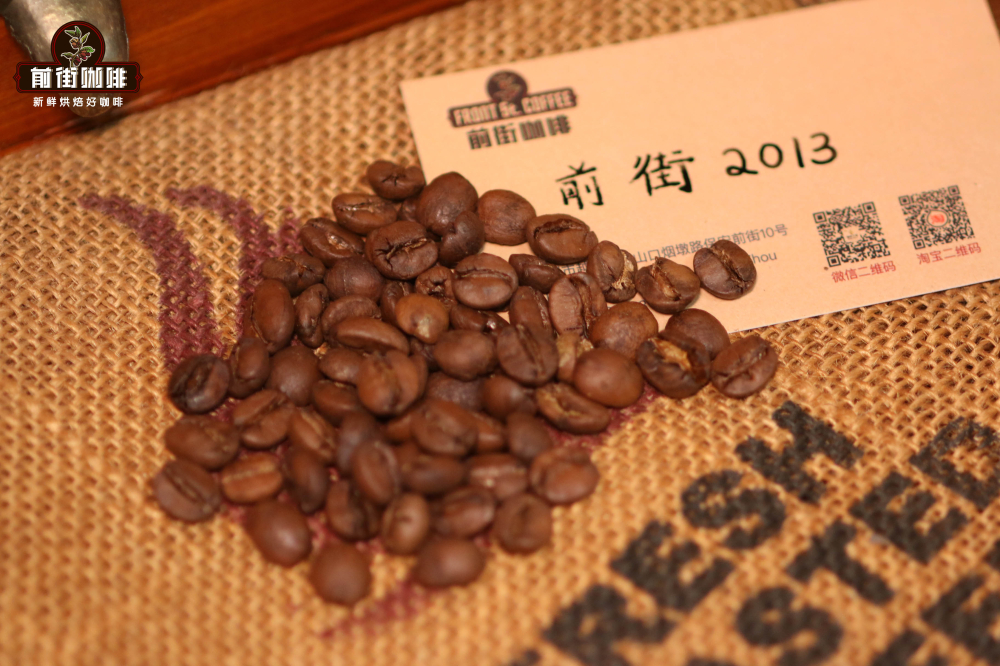
Yunnan Small-Bean Typica Recommendation: Front Street 2013 Yunnan Natural Typica
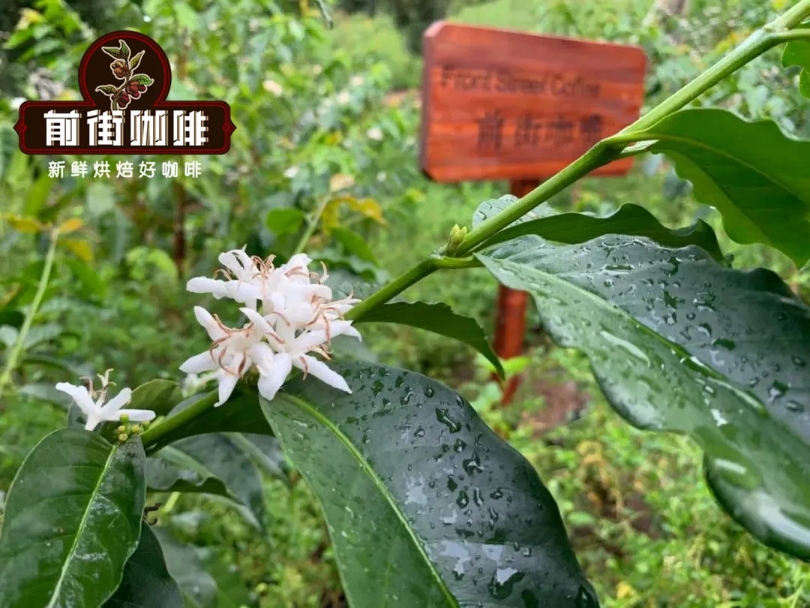
Typica is the oldest native variety from Ethiopia, and all Arabica coffee derives from Typica. Typica has bronze-colored tips on its leaves, and its beans are oval or slender-pointed in shape. It has an elegant flavor but poor disease resistance and low yield, making it suitable for pour-over and cold brew.
Typica is susceptible to leaf rust, and combined with its low yield, coffee farmers are reluctant to grow it. Because coffee trees take at least three to four years from planting to harvesting, the low yield of Typica simply cannot sustain local livelihoods, making the high-yield Catimor naturally more favored by farmers. Additionally, Catimor coffee carries the genes of both Arabica and Robusta, inheriting Robusta's disease resistance while also producing richer coffee oils when extracted. It is not only suitable for pour-over but can also be used in moka pots and drip coffee machines.
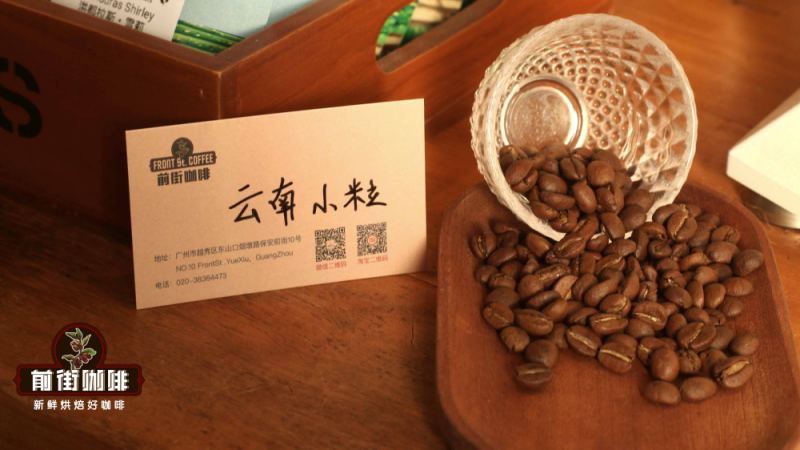
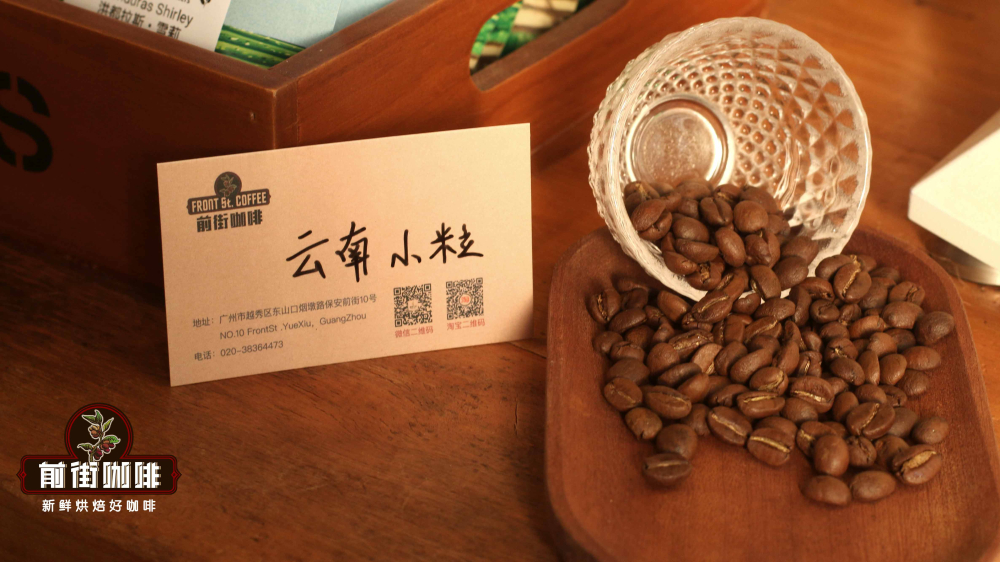
Yunnan Small-Bean Catimor Recommendation: Front Street Yunnan Small Bean
The Catimor variety was obtained by Portugal in 1959 through crossing Timor and Caturra, resulting in a coffee variety with strong resistance to leaf rust, strong resistance to coffee berry disease, and high yield. Because Catimor carries Robusta genes, its flavor is rich and full-bodied but also carries a slight defect note.
Front Street uses the three-stage method to brew this Yunnan coffee bean. First, use 30 grams of hot water to thoroughly wet the coffee grounds. The second pour can begin when the scale shows 30 seconds. Starting from the center, pour a thin stream into the bottom of the coffee bed. To concentrate the penetrating force of the water stream, keep the circling motion small, then spiral outward.
During this process, try to control the flow rate well—don't let the stream surge and dwindle, and try not to let it break. Because too little water will result in coffee grounds not being fully saturated, giving the coffee a noticeably rough and astringent mouthfeel with a short finish. Too much water, on the other hand, means the hot water in the bloom phase hasn't extracted enough coffee compounds, resulting in a coffee with a relatively flat flavor profile where the bright acidity from the early extraction stands out prominently and masks other flavors. Front Street believes that for a stable circling amplitude, you can circle from inside out, from outside in, or use a center-pour diffusion method—these pour-over gestures can be chosen according to your own habits.
For the third pour, FrontStreet Coffee suggests paying close attention to the rate at which the water level drops, and beginning the third pour just before the coffee bed is about to be exposed. Again, start from the center and pour in circles, keeping the water level below the height of the coffee bed. Stop pouring at 1 minute 50 seconds, and allow it to finish draining by 2 minutes.
Then, through tasting, Front Street reached the following conclusions about the flavor characteristics of these two Yunnan coffee beans: Front Street 2013 Typica Coffee Bean Cupping Results: Rich melon and fruit aromas on entry, herbal notes, smooth on the palate, nuts in the mid-palate, chocolate flavors, with a lively and bright plum acidity in the finish, followed by black tea and brown sugar notes in the aftertaste.
Yunnan Small Bean Coffee Cupping Results: Bright acidity, soft acidity, good body and balance, rich layers, with prominent dark chocolate, honey, and sucrose notes in the finish. After fully cooling, brown sugar flavors emerge.
Yunnan small-bean coffee is relatively neutral in terms of mouthfeel—neither too acidic nor too bitter. It is truly a coffee that is fragrant without being bitter, full-bodied without being harsh, and mildly acidic with a comfortable taste, making it quite suitable for the general palate. If you prefer fruity acidity, you should specifically choose Yunnan small-bean coffee grown at high altitude with a lighter roast profile—these beans have high acidity and mild bitterness. If you simply dislike acidity, then choose dark-roasted beans, though the bitterness will be somewhat higher.
Front Street's method for making cold brew with Yunnan small-bean coffee is actually very simple—we just need to get the parameters right.
Front Street's cold brew recipe uses 50 grams of coffee grounds, with a restored coffee-to-water ratio of 1:10, so add 600 milliliters of cold water. The coffee grounds absorb twice their own weight in water. After stirring evenly, seal and store in the refrigerator for 24 hours. Then take it out and filter the grounds using filter paper, then seal the coffee liquid in a clean airtight bottle and refrigerate for more than 12 hours.
After extraction, it can be kept refrigerated for 5 days. During storage, the coffee liquid continues to ferment in the bottle, and this fermentation process creates changes in the coffee's flavor, adding different layers of richness and smoothness. It is generally recommended to refrigerate the finished cold brew for 1 to 3 days before drinking, because during the 24 to 36 hours of overnight resting, as time passes, the coffee liquid undergoes full mellowing, resulting in a better flavor.
The above content is compiled by CoffeeHunters, a coffee news website.


