








How does raisin honey processing shape Central American coffee?
Costa Rica's Canet Estate Bach coffee, part of the Musician Series, uses Caturra beans grown at 1,950 meters in Tarrazu and processed with the raisin honey method. That combination produces a fermented, rice-wine-like aroma with berry sweetness. The cup shows the raisin honey processing characteristics clearly.
Costa Rica sits on the Central American isthmus, where Pacific and Atlantic currents and sea breezes regulate the climate. Volcanoes near 2,000 meters and mineral-rich volcanic ash soil let cherries ripen slowly, giving beans full layers. Costa Rica is one of the recognized coffee producing regions, and this Bach lot reflects that terroir.
Among the Costa Rican Musician Series, the Bach coffee beans present an impressive fermented aroma and tropical fruit tonality through their unique raisin honey processing method. This Canet Estate Bach launched by FrontStreet Coffee uses the Caturra variety, originates from the Tarrazu region at a high altitude of 1,950 meters, and is given a rice-wine-like fermented feel and berry sweetness through raisin honey processing. This article will systematically sort out the origin background of Bach coffee beans, the story of Canet Estate, the details of the raisin honey processing technique, roasting curve analysis, and V60 pour-over parameter suggestions, and share the cupping flavor performance, helping coffee lovers fully understand this specialty coffee that combines vinous aroma and fruity sweetness.
Professional coffee knowledge sharing. For more coffee bean information, please follow the WeChat public account: FrontStreet Coffee.
Friends who often visit FrontStreet stores or are used to placing orders on Taobao should know that FrontStreet carries a quite rich variety of Central American coffee beans, and among them, the Costa Rican Musician Series definitely stands out for its special aroma. There is a regular customer at FrontStreet who comes every few days to order a cup of Costa Rican Bach pour-over. This Bach coffee bean carries the aroma of Chinese sausage, which older Cantonese people know all too well, and this is exactly the effect brought by raisin honey processing. Can sausage aroma really go together with coffee? FrontStreet has met quite a few customers encountering Bach for the first time, and before ordering they all had similar doubts, but once they actually took a sip, almost all of them accepted it happily, and some even became obsessed with this bean.
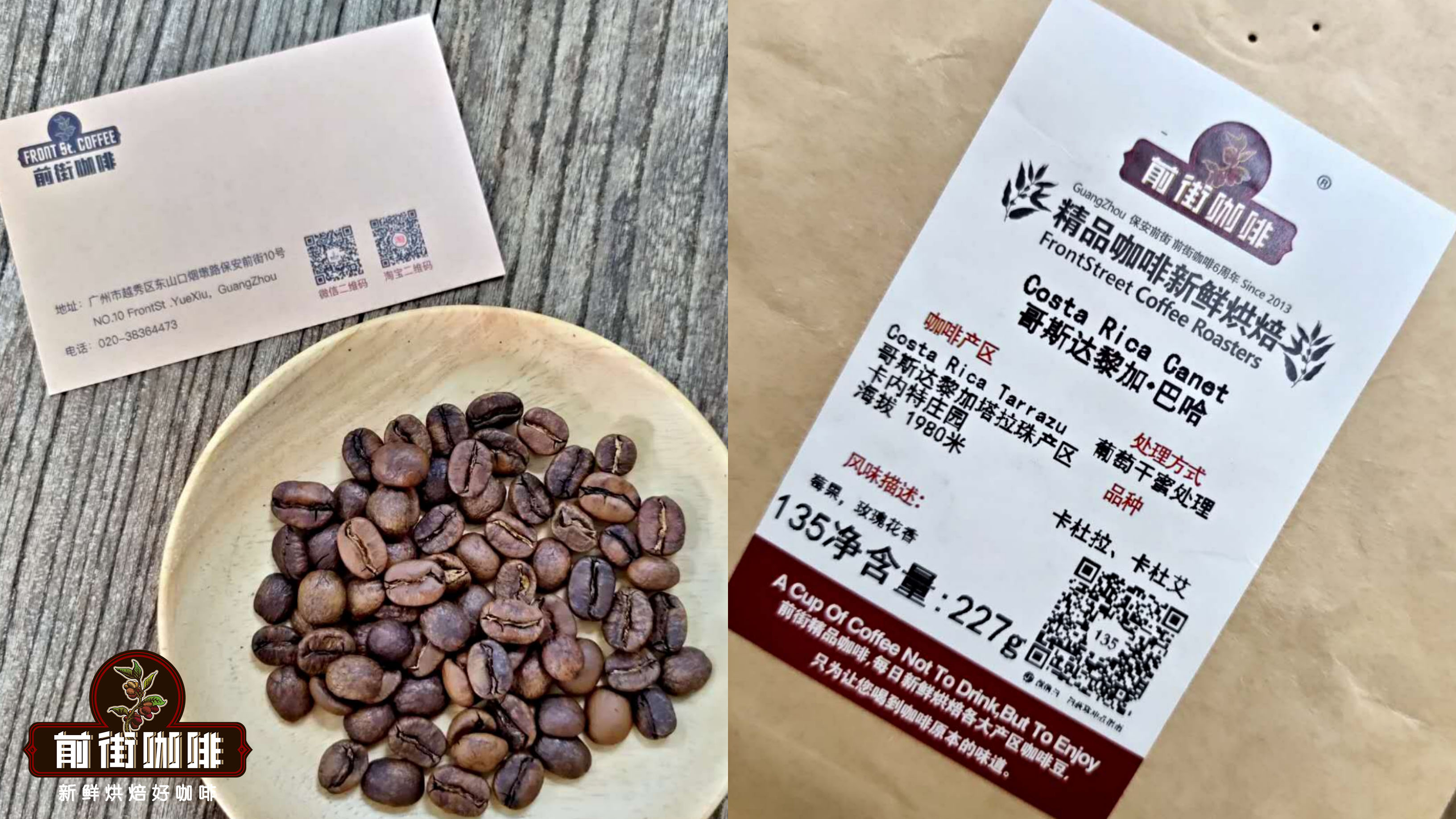
FrontStreet Costa Rica Bach Coffee Beans
Costa Rica Canet Musician Bach
Country: Costa Rica
Region: Tarrazu
Altitude: 1,950 meters
Grade: SHB
Variety: Caturra Processing method: Raisin honey processing Located in the Central American isthmus, Costa Rica is climate-regulated by both Pacific and Atlantic ocean currents and sea breezes. Several volcanoes reaching 2,000 meters in altitude stand within the country, so coffee cherries can slowly mature in mineral-rich volcanic ash soil and a cool high-altitude environment, ultimately producing coffee beans with full layers and complete flavor.
Costa Rica can be divided into two seasons throughout the year. From December to April of the following year is the dry season, which happens to be the coffee harvest period; from May to November is the rainy season, during which coffee completes its growth. In recent years, micro-processing stations have sprung up like bamboo shoots after rain. These processing stations use only 5% of the water consumed by traditional washed-processing stations, and they do not require large tanks or drying yards, so the initial investment is relatively low. As a result, "honey-processed coffee," with lower acidity, improved complexity, and prominent sweet aroma, has become an object of eager pursuit in the coffee world in recent years.
Just as washed processing made Yirgacheffe famous, FrontStreet has also launched a red honey-processed Yirgacheffe, which adds sweetness and fermented notes on the basis of the classic Yirgacheffe flavor, and the body and layering are correspondingly much richer.
Costa Rican Coffee Producing Regions
Costa Rica's coffee cultivation history can be traced back two hundred years. It was first planted on the slopes of Poas and Barva volcanoes, an area now known as the Central Valley.
At present, Costa Rica has 7 main producing regions: Valle Central Occidental, Valle Central, Tarrazu, Tres Rios, Orosi, Brunca, and Turriabla.
Tarrazu is one of Costa Rica's most important coffee producing areas. This region has a long history of coffee cultivation and once won the favor and recognition of the British royal family, and was even mentioned and praised in a papal speech.
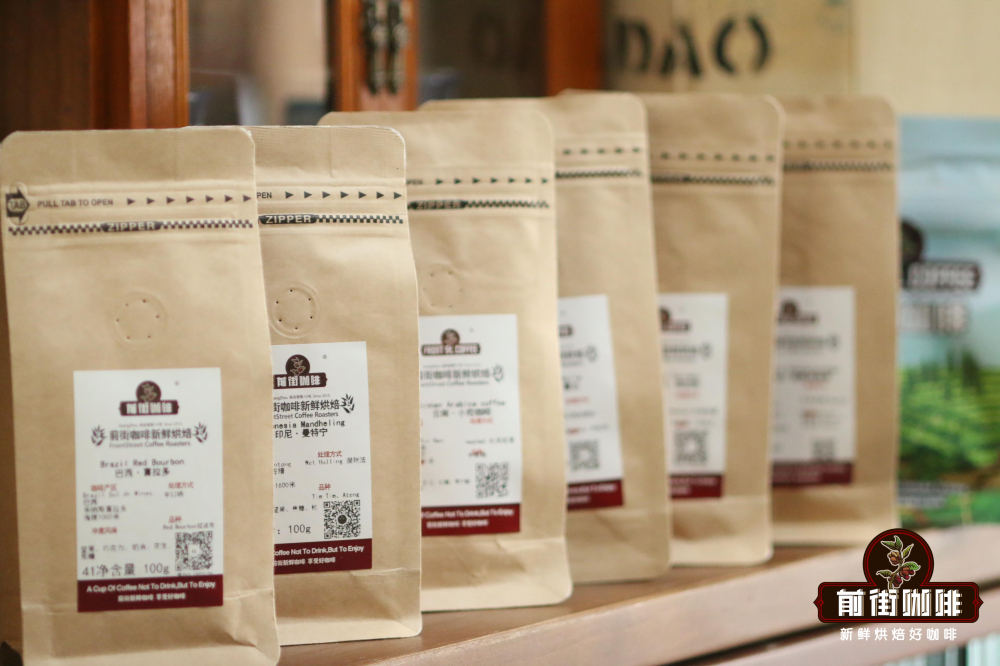
FrontStreet's everyday bean series includes a Costa Rican Tarrazu coffee bean. FrontStreet's everyday beans cover all major coffee producing regions and can be called the "face" of regional beans, because the basic regional flavors of these beans are more recognizable, and they are also a low-price, high-value choice. Before FrontStreet Coffee lists an "everyday bean," it carefully selects the representative bean from each region with the most authentic local flavor. In terms of packaging, FrontStreet recommends a 100g trial size to everyone. The meaning of everyday beans is to let everyone identify the basic flavors of different regions at a lower cost, such as the citric acidity of Yirgacheffe, the herbal notes of Mandheling, and the nutty chocolate tonality of Brazil and Colombia, and so on.
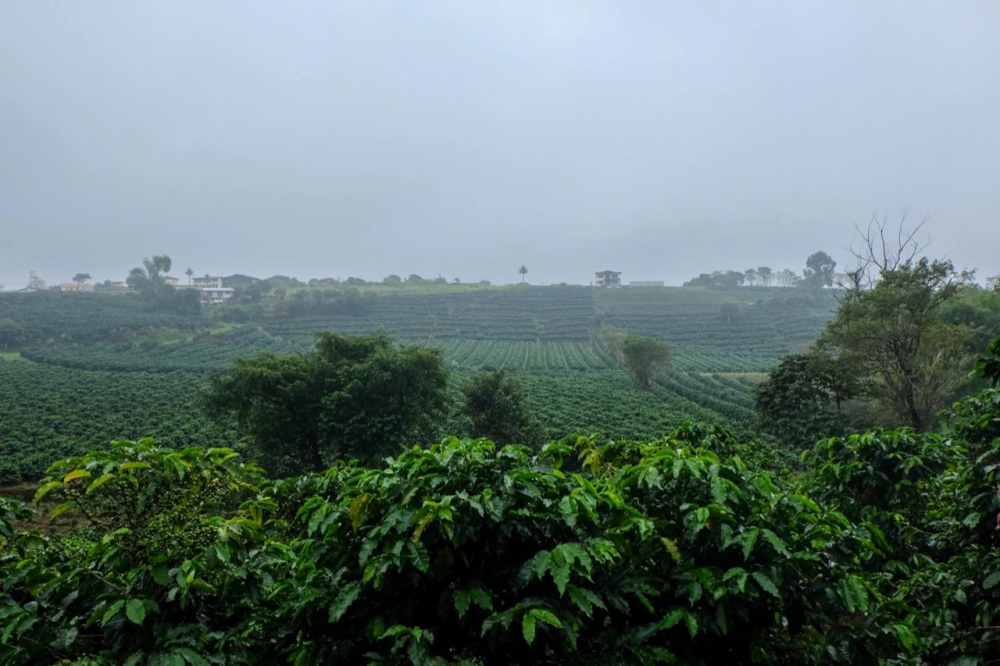
Canet Estate
Canet Estate is located in the highest-altitude area of the Tarrazu region, and it is also the area with the most concentrated fruit cultivation in Costa Rica. Canet Estate mainly grows passion fruit, and its coffee cultivation is quite limited. Coffee is planted only in specific plots and given special care. All coffee cherries are picked by hand, selecting only ripe red fruits. After picking is completed and before processing, they undergo another screening step to remove beans that are not ripe enough or overripe.
The naming origin of Canet Estate's Musician Series is that the estate owner is passionate about classical music, so the coffee beans produced by the estate are all named after musicians.
Canet Estate mainly grows two varieties, Caturra and Catuai, and uses raisin honey processing and washed processing to produce the world-renowned Musician Series coffee beans, respectively named "Beethoven," "Bach," "Chopin," and "Mozart." The altitude ranges from 1,700 to 1,950 meters, and they are all SHB-grade high-altitude strictly hard beans, sweet in flavor, with rich fruit aroma, vinous aroma, and tea aroma.
Processing Method
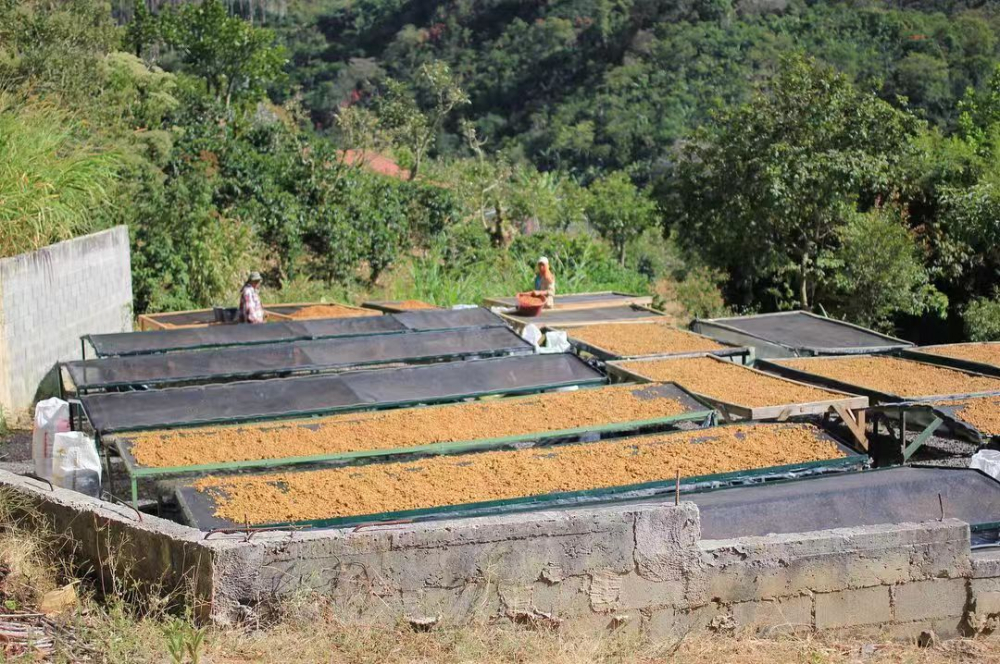
The raisin honey processing method retains 100% mucilage and adopts a zero-water processing method. This practice increases the difficulty of honey processing and requires strict control of time. On the day the coffee cherries are harvested, the fruit is poured into a large tank. Fully ripe and plump fruits sink to the bottom of the tank, while underdeveloped or overripe fruits float on the surface, and these floating beans need to be removed. After screening, the coffee fruits are placed on raised drying beds to dry for at least three days, and the surface of the fruit gradually forms wrinkles similar to raisins. Then the cherry skin is removed, and the mucilage is retained for continued drying. At this stage, climatic conditions directly determine the success or failure of honey processing.
During drying, these coffee cherries must be constantly turned to ensure even drying, but the frequency of turning must be handled properly. Drying must be slow enough to ensure even fermentation of the coffee, but not so slow that fermentation becomes excessive.
Coffee Bean Variety
Caturra is a relatively common variety among American coffees, especially in Central America. Caturra is a mutation of Bourbon, discovered in Brazil in 1937. Its yield and disease resistance are both superior to Bourbon, and its tree shape is short, making harvesting convenient. It has strong adaptability and does not need shade trees, growing vigorously even when directly exposed to the sun, so it is called Sun Coffee. Caturra is suitable for planting in areas from low altitudes of 700 meters to high altitudes of 1,700 meters. Its altitude adaptation range is very wide, but the higher the altitude, the better the flavor, while the yield decreases accordingly. Perhaps this is the fate of specialty coffee beans.
This FrontStreet Bach green coffee bean shows a yellow-green color, which is the typical appearance of honey-processed coffee beans. When smelled closely, one can sense fresh citrus fruit aroma and a faint fermented fruity note.
Roasting Analysis
The roaster used by FrontStreet is a Yangjia 800N semi-direct flame roaster (batch size 300g).
FrontStreet's specific roasting approach is as follows: preheat the roaster to 200°C and charge, adjust the heat to 160, open the damper to 3, the turning point is 1'36", and maintain the heat; at 140°C keep the heat at 160 and open the damper to 4. At 4'50" it turns yellow, the grassy smell dissipates, and it enters the dehydration stage. At 166°C lower the heat to 135 and keep the damper at 4.
At 8'05" dehydration is complete, wrinkles and dark patches appear on the bean surface, and the toast smell changes into coffee aroma. This is the prelude to first crack, and at this time one must listen carefully for the sound of first crack. At 8'38" first crack begins, open the damper fully to 5, and keep the heat unchanged. The development time after first crack is 1'45", and the beans are dropped at 193.8°C.
Cupping Flavor
Dry aroma: rose floral aroma, berries
Wet aroma: fermented fruit aroma, cocoa
Palate: berries, strawberry, citrus, cream, cocoa, caramel, tropical fruit
Costa Rica Bach Coffee Bean Brewing Suggestions
FrontStreet's brewing parameters are: V60 dripper, 1:15 coffee-to-water ratio, 90°C water temperature, 15g coffee dose, grind size (80% passing through a Chinese standard No. 20 sieve).
Before brewing, there is one point to note, and that is the freshness of the beans. Before listing a coffee bean, FrontStreet goes through a series of processes, including roast adjustment, cupping, and brewing, to ensure that the bean's flavor has both regional characteristics and a unique personality. This is also why FrontStreet has listed so many coffee beans but none of them are identical. Returning to the topic of bean freshness, because the beans are fresh, the brewed flavor best matches the characteristics of the beans themselves. Many people think freshly ground coffee is equivalent to fresh coffee, but that is not actually the case.
In fact, if you want to drink the aroma of coffee, it is not enough just to grind fresh; you also need to pay attention to the roasting time of the coffee beans. Whether in stores or in the online Taobao shop, FrontStreet supplies freshly roasted coffee beans. Only if the customer requests grinding before shipping will we grind according to the customer's usage method (espresso or pour-over). FrontStreet uses a staged extraction method: 30g of water for blooming for 30 seconds, then slowly pour in the center to 125g as the first stage. When the water level drops and is about to expose the coffee bed, pour with a slightly stronger stream until 225g to end brewing. The total extraction time is 2 minutes (including blooming time).
Costa Rica Bach coffee bean flavor: it smells like the fermented aroma of rice wine, and on the palate it has the sweet-and-sour sensation of ripe tropical fruits and berries, with flavors of nuts, cocoa, and cream, a caramel-like sweet aftertaste, and a faint floral aroma in the finish.
The above content is compiled by CoffeeHunters, a coffee news website.


