







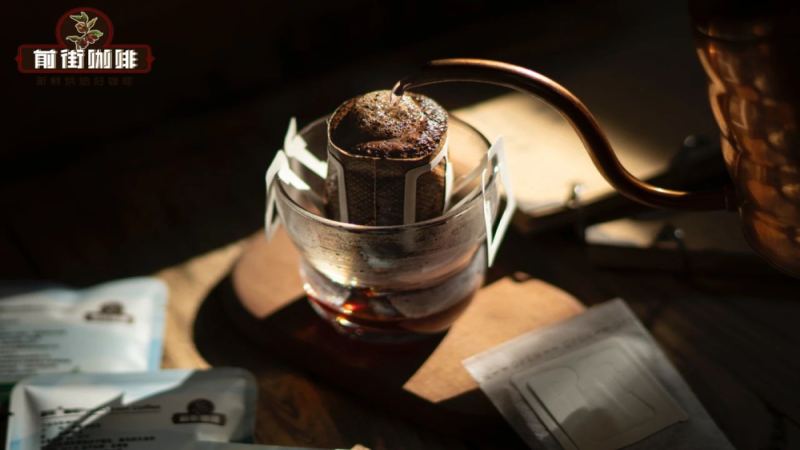
How to make powder coffee with drip bags correctly
No, a drip bag should not be steeped directly in hot water. The bag is meant to hang on the cup rim by its two ears so hot water passes through the grounds and filter in one flow. Reusing the bag or pouring the grounds out to brew also hurts the cup, since most soluble flavor is extracted on the first pass.
Drip bag coffee starts as ground beans sealed in a filter bag, usually made of biodegradable non-woven fabric, so no grinder, dripper or filter paper is needed. Getting a good cup still depends on water temperature, coffee-to-water ratio and freshness, the same variables that govern pour-over brewing, only with less equipment to control.
For office workers who can't go a day without coffee, drip bag coffee is a compromise that balances convenience and flavor. But many people wonder the first time they encounter a drip bag: can you just throw it into hot water and steep it? The answer is no. Although drip bag coffee is simple to use, getting a good-tasting cup still requires following a few basic rules—you can't steep it directly, you can't reuse it, and it's best not to pour the grounds out to brew. This article will cover the definition of drip bag coffee, how it differs from pour-over, the standard brewing process, control of water temperature and coffee-to-water ratio, and how freshness affects flavor, explaining each point one by one to help you get a consistently good cup of filtered coffee in the simplest way possible.
For more specialty coffee knowledge, please follow our WeChat official account: Front Street Coffee (FrontStreet Coffee)
In recent years, coffee culture has become more and more widespread, and many office workers can't get going without a cup every day. But the reality is that not everyone can walk into a coffee shop anytime and sit down to slowly enjoy a pour-over. So, to meet this on-the-go demand, drip bag coffee came into being.
What is drip bag coffee?
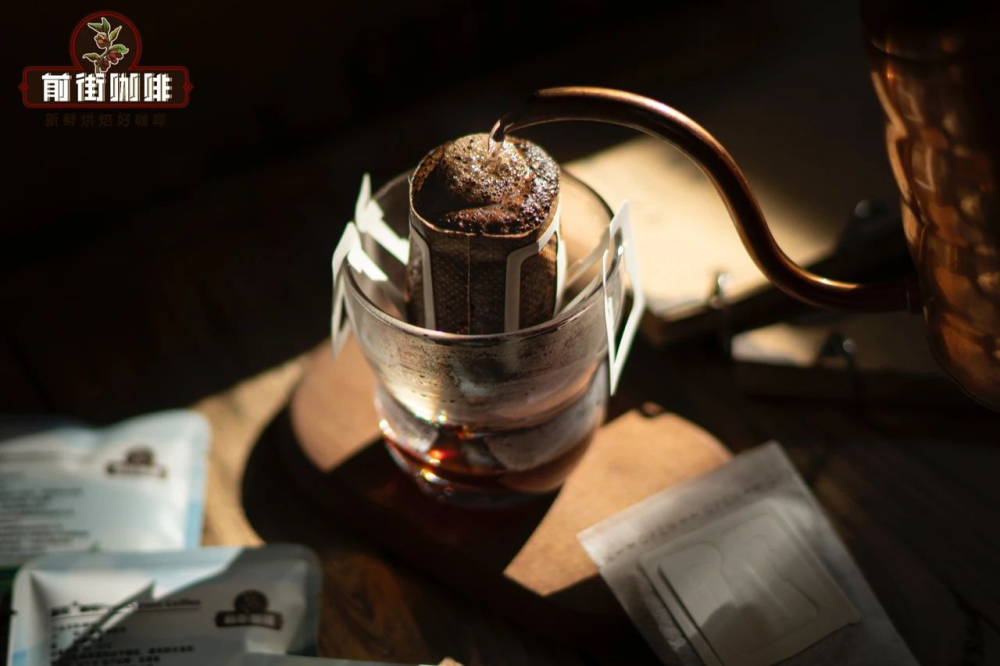
Simply put, drip bag coffee is made by first grinding coffee beans into powder, then sealing it in a filter bag. The bag has an "ear" on each side, used to hook onto the rim of a cup to hold it in place. As long as you have a kettle of hot water and a cup, you can brew it anywhere.
Drip bags and pour-over are essentially both filtered extraction methods, but drip bags are much easier to use. Here Front Street wants to remind friends who haven't tried it yet: although brewing a drip bag is simple, you still need to follow some small rules if you want good coffee—first, don't steep it directly in hot water; second, never reuse it; and third, it's best not to pour the grounds out to brew.
Pour-over coffee requires at least these tools: a pouring kettle, a thermometer, a dripper and filter paper, a grinder, a timer scale, etc. With drip bags, since the coffee is already ground, you don't need a grinder. Its filter bag is usually made of biodegradable non-woven fabric. Hot water passes through the non-woven fabric and brings out the soluble substances from the coffee grounds, so the dripper and filter paper are also eliminated.
How do you brew drip bag coffee?
Most drip bags on the market come in small portions. For example, Front Street's drip bags contain 10 grams of coffee powder each. At a 1:15 coffee-to-water ratio, you need to pour in 150 grams of hot water.
First find a container that can hold coffee—a sharing pot or an ordinary cup will do; then prepare a kettle for pouring water.
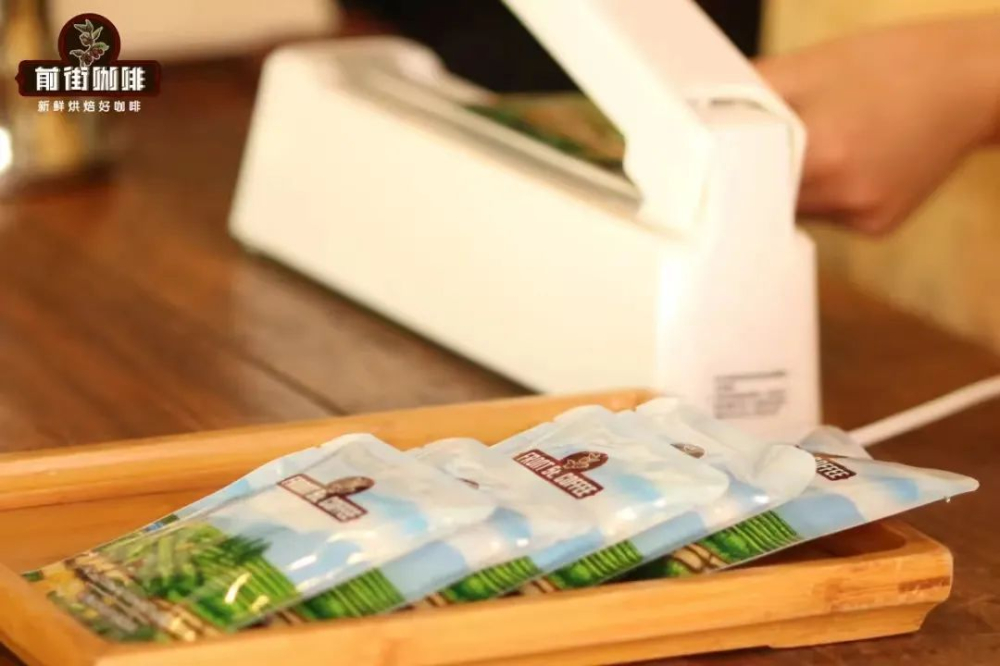
Tear open the sealed outer packaging, take out the drip bag, and tear open the non-woven bag along the dotted line at the top.
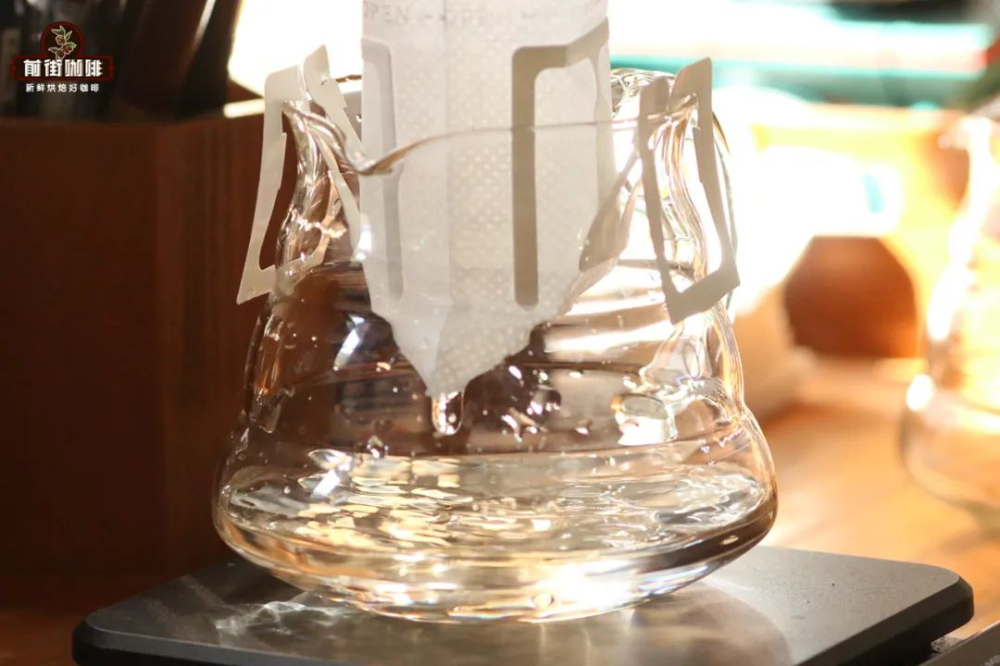
Pull the "ears" on both sides outward to open up the whole drip bag, then hang it on the rim of a cup or sharing pot.
For the first pour, wet all the coffee grounds first, and let it bloom for about 10 to 20 seconds. For the second pour, use a thin, steady stream until the liquid level approaches the bag opening, then wait for the coffee liquid to go down until it finishes dripping. Then pour the final round of water to the top. After all the coffee liquid has filtered through, gently swirl the cup to even out the coffee, and it's ready to drink.
What should you pay attention to when brewing drip bag coffee?
Just like pour-over, the flavor of drip bag coffee ultimately depends on the coffee beans themselves. Different origins and different processing methods bring different flavor profiles. The difference is that drip bag coffee is pre-ground, so the aroma isn't as full as freshly ground.
Once coffee beans are ground into powder, the surface area exposed to air increases greatly, and the internal gases and aromatic substances are lost faster, shortening the optimal drinking window. The brewed coffee has a weaker aroma and tastes thin and bland. If left too long, the coffee powder has already staled, and you may even taste a "woody" flavor.
So when buying drip bag coffee, freshness is a point you must pay attention to. The coffee beans shipped by Front Street are all freshly roasted within 5 days, and can also be made into drip bags for you. The processing fee is 20 yuan/100g. After you receive them, it's best to drink them as soon as possible—the flavor is best within the optimal tasting period.
Brewing water temperature is equally key. Pour-over usually controls water temperature between 86 and 93 degrees Celsius. Too low a temperature leads to reduced extraction efficiency and easily results in under-extraction. If conditions are limited and you can't raise the water temperature, then extend the contact time between the coffee grounds and hot water—that is, let it steep a while longer.
The amount of water poured and the flow rate also affect the strength of drip bag coffee. Front Street recommends controlling the coffee-to-water ratio at 1:15, then fine-tuning slightly up or down according to your personal preference for strength. In addition, if the flow is too fast, the extraction time of the coffee grounds is compressed and the taste tends to be weaker, so it's best to maintain a steady, thin stream throughout to make the extraction more even.
The above content is compiled by CoffeeHunters, a coffee news website.


