







How Does Golden Mandheling Compare to Lintong Mandheling?
Golden Mandheling and Lintong Mandheling both belong to the Mandheling family of Sumatra coffee, but they differ in origin, screening standards, and processing details, so the cups are not the same. Golden Mandheling is the name most often suggested to drinkers who want a cup that is not sour and has a heavy, mellow body.
Indonesian coffee cultivation traces back to 1696, when Dutch farm owners turned to Java Island; much of the Java coffee shipped to Europe in that era actually came from Sumatra, where Mandheling is produced. The name came from a local tribe. The java process coffee tradition of wet hulling, and aged wet hulling, explains the dark roast Sumatra flavor.
Mandheling is the representative of Sumatra coffee, and although Golden Mandheling and Lintong Mandheling both belong to the Mandheling family, they present different characteristics due to differences in origin, screening standards, and processing details. From the perspective of Front Street Coffee, this article reviews the history of Indonesian coffee, the origin of the name Mandheling, the craft characteristics of wet-hulling and aged wet-hulling, and compares the producing regions, grade standards, and brewing parameters of Golden Mandheling and Lintong Mandheling, helping coffee enthusiasts understand the mellow flavor and layered expression of dark-roasted Sumatra coffee.
Some coffee enthusiasts prefer coffee with bright acidity and a light body, but many others favor types with excellent mellowness and solid flavor. At Front Street Coffee's stores, customers often directly express their needs: they want a cup of coffee that is not sour and has a sufficiently heavy body. Faced with such requests, Front Street Coffee's baristas usually first recommend Golden Mandheling.
The History of Mandheling Coffee Beans and the Development of the Sumatra Coffee Industry
Indonesia is located in Southeast Asia, and its coffee cultivation history can be traced back to 1696. At that time, Dutch coffee farm owners, in order to find broader planting areas, after extensive surveys, finally set their sights on Java Island in Indonesia. After about thirty years of operation, Indonesian coffee had already established a firm foothold in the global market. However, in its development to the present day, Indonesia's most representative coffee product is actually Mandheling, which is actually reasonable—a considerable portion of the Java coffee exported to Europe in the early period actually came from the Sumatra region, and Mandheling is precisely a product of Sumatra. Therefore, Sumatra can be called a pivotal coffee-producing region in Indonesia.
The Origin of the Name Mandheling
"Mandheling" was originally the name of a local Indonesian tribe, but due to an accidental episode it became a byname for coffee beans. During World War II, Indonesia was occupied by Japan. A Japanese soldier drank a cup of extremely mellow coffee locally and asked the shop owner what the coffee was called. The shop owner mistakenly thought the other party was asking about his birthplace, so he answered "Mandheling." After the war ended, this Japanese soldier returned home and could never forget the mellow coffee he had drunk in Indonesia, so through trade partner relationships, he asked local people to help collect high-quality coffee beans, including this Mandheling. Japanese consumers were particularly fond of this coffee bean, and the name "Mandheling" also spread widely as a result.
The Processing Methods of Mandheling
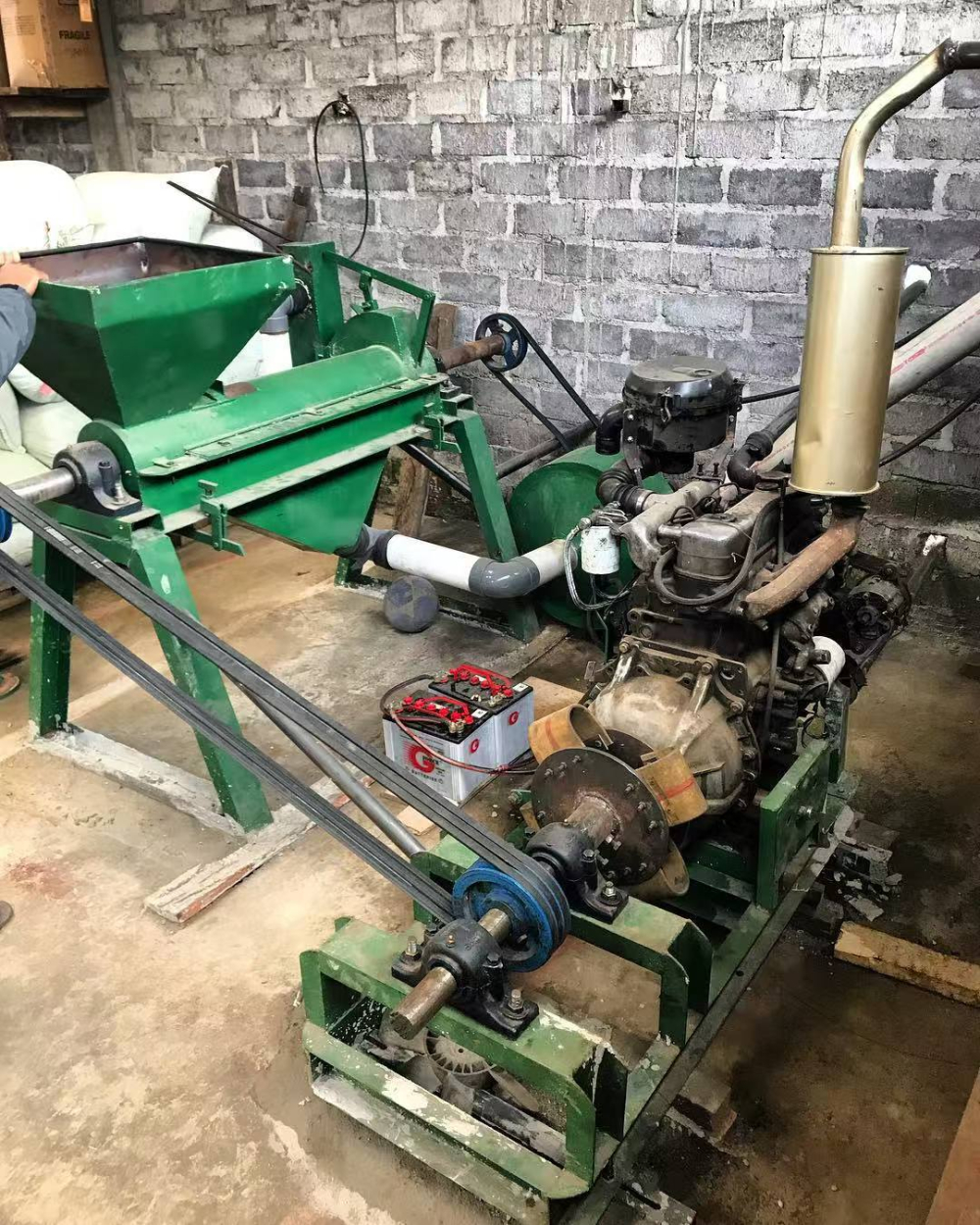
Front Street Coffee has noticed that coffee bean processing methods often adapt to local conditions, and Mandheling is no exception. Mandheling mostly uses the wet-hulling method unique to the Sumatra region. The local weather is mainly cloudy and rainy, with frequent typhoons, making it difficult to meet the long period of sunny weather required by the natural method; at the same time, local economic conditions are limited, and it cannot afford the higher-cost washed method. Against this background, the highly regional wet-hulling method came into being.
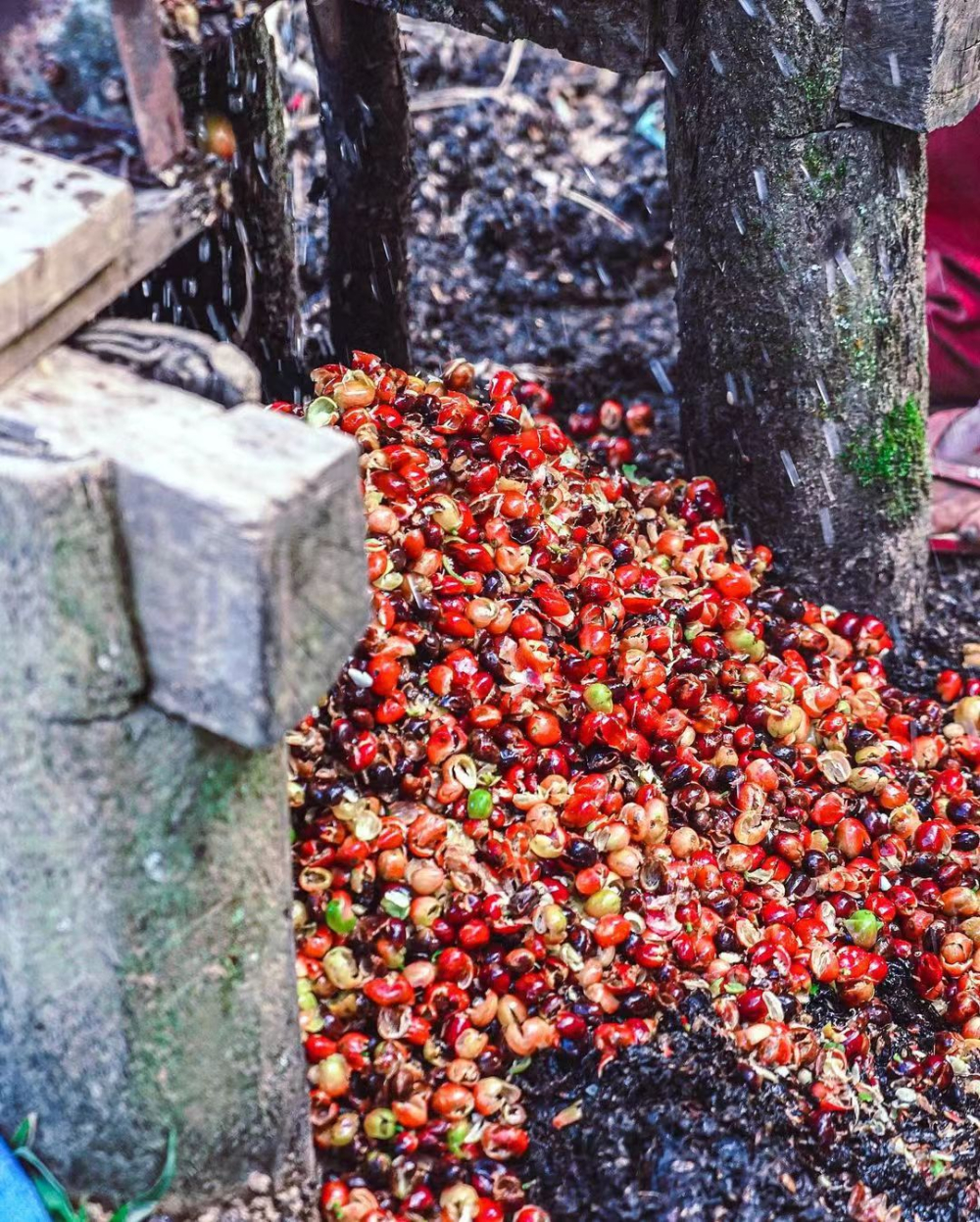
The first step is to use a wooden depulper to remove the skin and pulp, then ferment for 3 hours and dry, reducing the moisture content to between 30% and 50%, semi-dry and semi-wet.
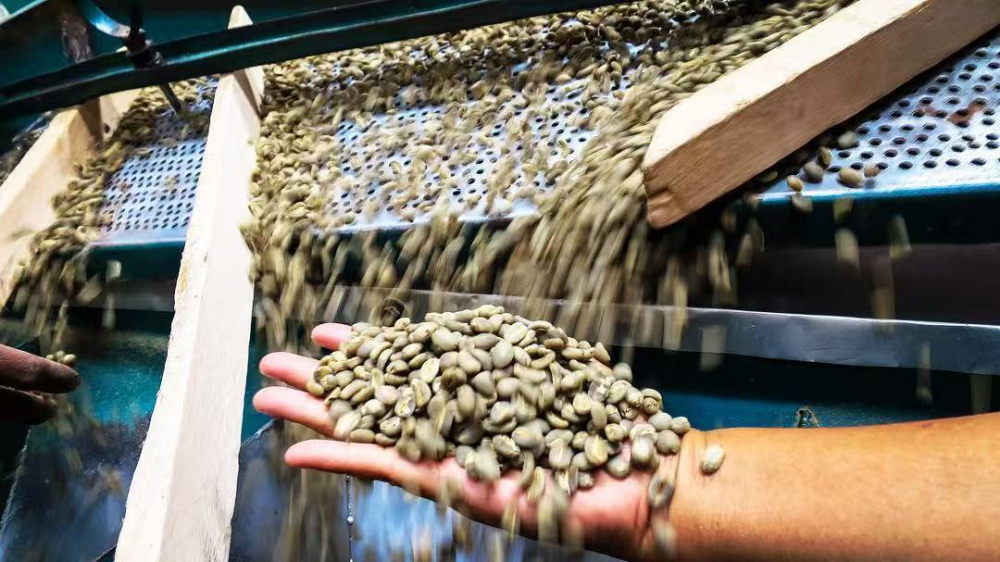
The second step is to remove the mucilage and parchment layer, and continue the subsequent drying. The entire drying process takes 2 to 4 days, and the moisture content is finally reduced to 12% to 13%.
In addition to the conventional wet-hulling method, there is also an aged wet-hulling method. The coffee beans are first processed by the ordinary wet-hulling method, then sealed and stored in a warehouse for 2 to 3 years. The warehouse needs to maintain cool and ventilated conditions, and the beans must be turned regularly to avoid mold and deterioration. During this period, the acidity of the coffee beans gradually decreases and converts into sugar, and the color also deepens, mostly appearing yellowish-brown or dark brown. Mandheling processed in this way is called Aged Mandheling.
The wet-hulling method gives Mandheling its unique flavor, and it can be said that there is a tightly bound relationship between Mandheling and the wet-hulling method. However, today's coffee market is no longer satisfied with a single model. Even though wet-hulling is Mandheling's signature craft, other processing methods have also been attempted. For example, Front Street has introduced a naturally processed Mandheling.
Front Street Coffee Indonesian Wahana Mandheling
Region: Lake Toba, Sumatra, Indonesia Altitude: 1000–1700m Variety: Bourbon, Typica Processing method: Natural
[Golden Mandheling]
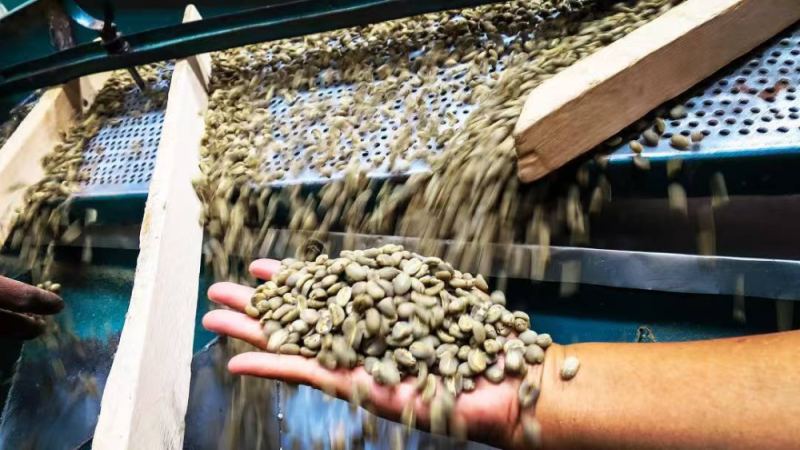
Golden Mandheling coffee beans come from Lake Tawar in the Gayo Mountains of northwestern Sumatra. After the Japanese discovered Mandheling, they always paid special attention to this coffee bean, and in the process of cooperating with local green bean merchants, they established strict screening standards. The processed green beans undergo density and color sorting, and then are manually selected four more times, finally presenting Mandheling with consistent color and uniform bean shape. It is said that when processing the green beans, Mandheling under sunlight gives off a golden luster, and the name Golden Mandheling comes from this.
The specifications of Golden Mandheling are required to reach above 18 mesh, with fewer than 3 defective beans (based on a 300g green bean sample), belonging to the highest grade G1, with a darker green color and a neat flat bean shape. Front Street Coffee has found that after strict screening, Golden Mandheling not only removes the earthy and miscellaneous flavors common in ordinary Mandheling, but its taste is also cleaner and more transparent, with a more prominent sweetness.
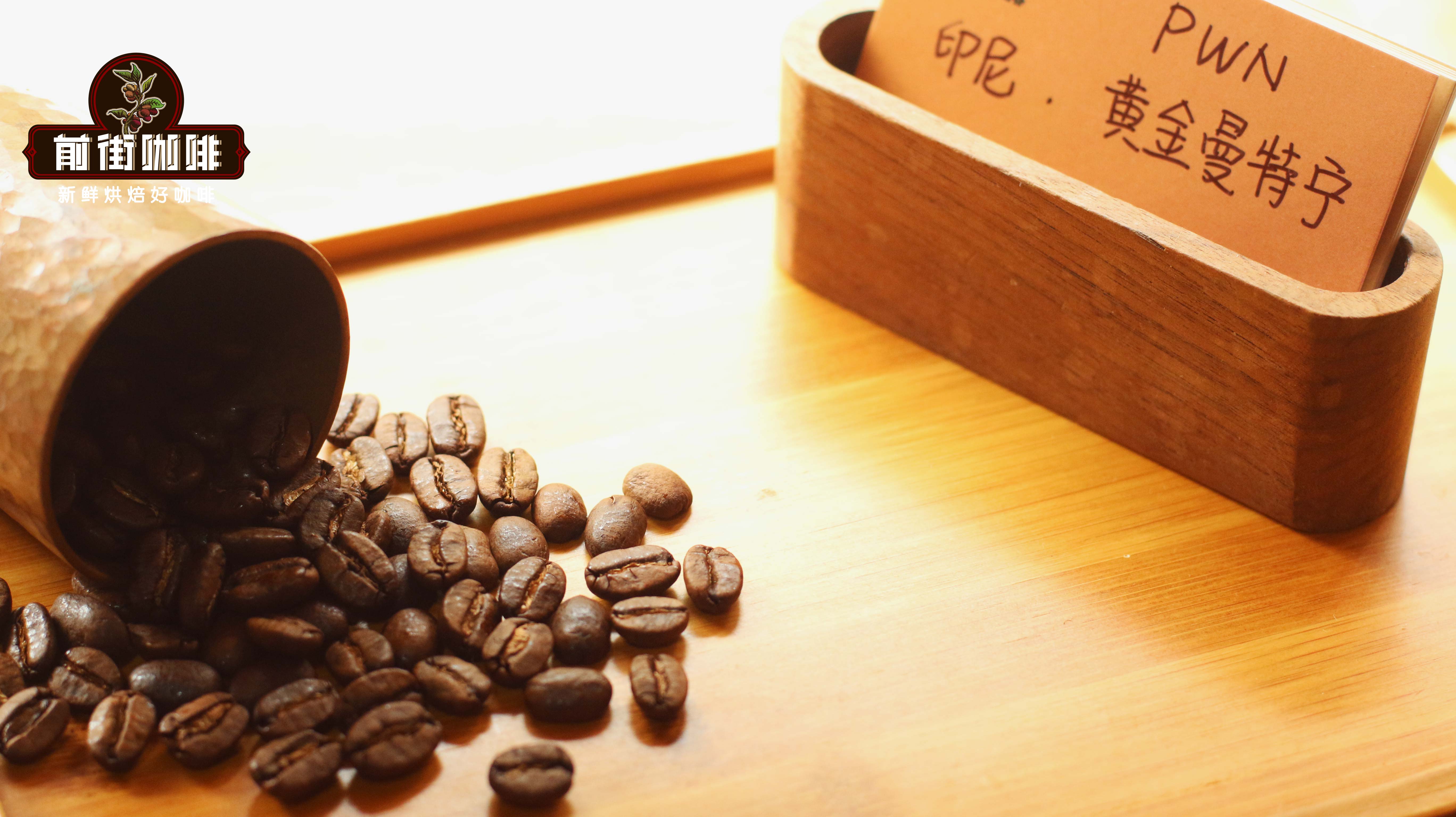
However, it was not a Japanese company that registered Golden Mandheling as a trademark, but rather the local Indonesian company PWN (Pwani Coffee Company), which cooperated with Japanese companies in exporting Mandheling coffee beans in the early period. The Japanese company registered "Gold Top Mandheling." Front Street Coffee believes that the difference in flavor expression between the two is not obvious, but due to different brands and different merchant marketing strategies, it is possible that public evaluations have become divided. Therefore, which of the two Golden Mandhelings is better can be said to be a matter of opinion.
Front Street Coffee Front Street PWN Golden Mandheling
Region: Gayo Mountain, Aceh, North Sumatra, Indonesia Altitude: 1100-1600m Variety: Ateng Processing method: Wet-hulled
[Lintong Mandheling]
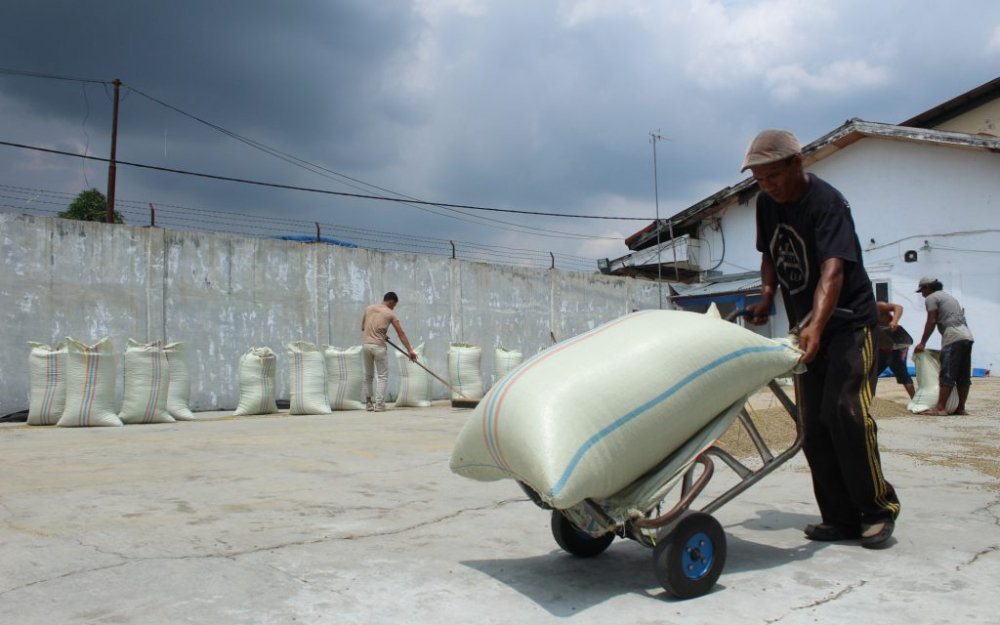
Lintong Mandheling comes from the Lintong mountain area in north-central Sumatra, near Lake Toba. Lintong Mandheling is the regular version of Mandheling. It also uses the conventional wet-hulling method, creating the characteristics of low acidity and high mellowness. But the wet-hulling method also brings about a situation: semi-hard and semi-soft moist green beans are easily crushed when the mucilage and parchment layer are removed, and the beans crack under damage, shaped like sheep hooves, commonly known as sheep hoof beans. Front Street Coffee believes that this is a very prominent characteristic of Mandheling and does not count as a defective bean. Lintong Mandheling does not make deliberate efforts in the screening stage, but this does not affect people's love for its mellow flavor.
Front Street Coffee Indonesian Mandheling
Region: Lintong producing area, Sumatra, Indonesia Altitude: 1100-1600m Variety: Typica, Caturra Processing method: Wet-hulled
Brewing suggestion
KONO dripper, 86°C water temperature, 15g coffee grounds, coffee-to-water ratio 1:15, grind size: 70–75% passing through a Chinese standard No. 20 sieve
Front Street Coffee uses staged extraction: first bloom with 30g of water for 30 seconds, then pour in a small stream in circles until 125g, pause, and when the water level drops and is about to expose the coffee bed, continue pouring until 225g and stop, and when the water level drops again and is about to expose the coffee bed, remove the dripper. (Start timing at the beginning of blooming.) The extraction time is 2 minutes 00 seconds.
Flavor
[Lintong Mandheling] Herbal, chocolate, caramel, overall relatively balanced; [Golden Mandheling] Nuts, spices, herbs, licorice, chocolate, caramel, with a clean, soft flavor.
For more specialty coffee beans, please add the private WeChat of Front Street Coffee, WeChat ID: kaixinguoguo0925
The above content is compiled by CoffeeHunters, a coffee news website.


