







What Makes Golden Mandheling Coffee Taste the Way It Does?
Golden Mandheling coffee comes from Sumatra, Indonesia, where wet hulling shapes its spice, herbal notes, and full body. PWN's four rounds of hand sorting and the G1 grade standard make it cleaner and brighter than ordinary Mandheling, and a dark roast brings out caramel sweetness, chocolate, and nutty notes.
The flavor starts in the soil. Sumatra's volcanic ash around Lake Tawar in Aceh and Lake Toba in Lintong is nutrient-rich, and constant tropical rain pushes the beans toward distinct herbal notes. Because freshwater is scarce there, farmers wet-hull instead of washing: skins and pulp come off, a few hours of fermentation follow, and the parchment dries to 30 to 40 percent moisture before collectors hull it.
Golden Mandheling is one of the most recognizable coffees from Sumatra, Indonesia, known for its spice, herbal notes, and solid, full body. This article starts with the producing region and the wet-hulling method to explain clearly the source of Mandheling's unique regional flavor, as well as the impact of wet-hulling on the appearance and flavor of green beans. It then focuses on PWN's four rounds of hand sorting and the G1 grade standard, explaining why Golden Mandheling is cleaner and brighter than ordinary Mandheling. The article also introduces Front Street's dark-roast approach for PWN Golden Mandheling, freshness recommendations, and gives Front Street baristas' Kono dripper brewing plan and three-pour parameters for this type of full-bodied bean, helping you brew caramel sweetness, chocolate, and nutty notes more consistently.
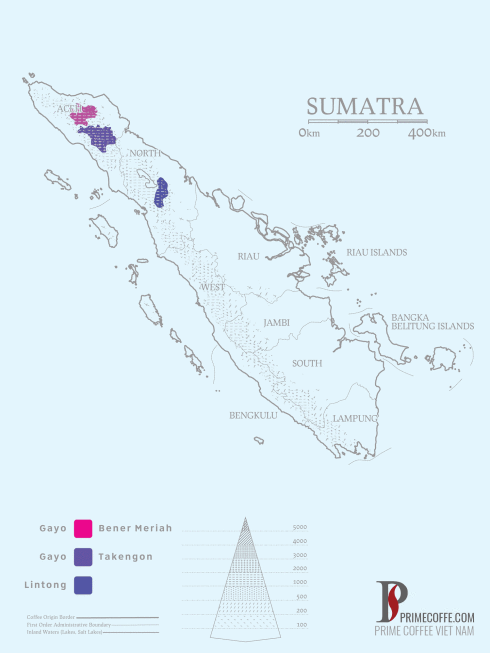
Mandheling coffee comes from Indonesia's most famous coffee-producing region—Sumatra—so it is also often called "Sumatra coffee." The finest local coffees are mainly concentrated at the northern end of the island and are distributed around two volcanic lakes: Lake Tawar in the Aceh region and Lake Toba in the Lintong region. Volcanic ash makes the soil nutrient-rich, and combined with the continuous rain common in tropical rainforest climates, the coffee beans produced in this area often carry distinct herbal notes.
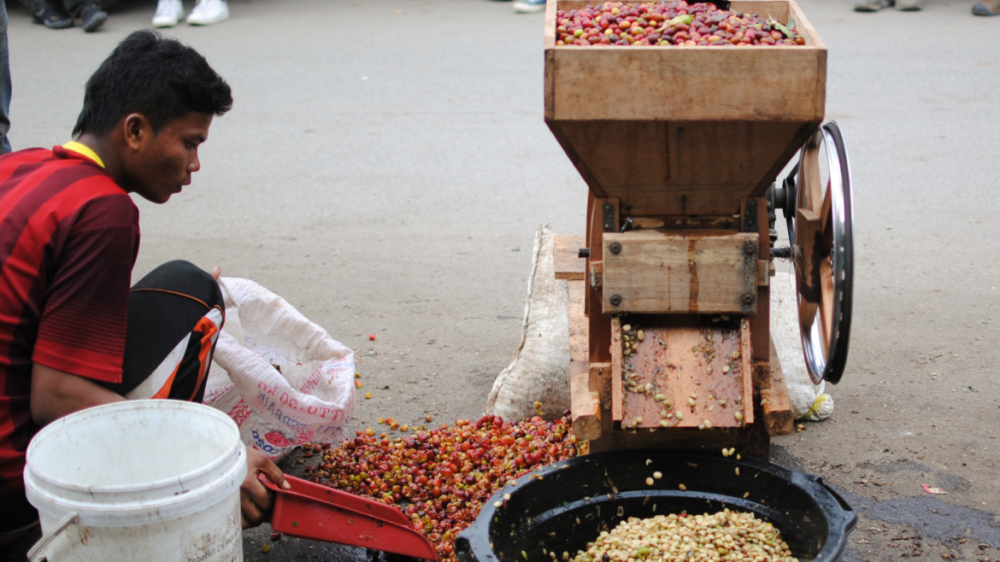
Because temperature and humidity are high year-round, while local freshwater resources are relatively scarce, residents find it hard to simply copy the washed methods of Central and South America; as for African-style sun-drying that can take twenty days, it is almost impossible under rainforest conditions. So locals adapted to their environment and developed a unique "semi-washed" path—wet hulling.
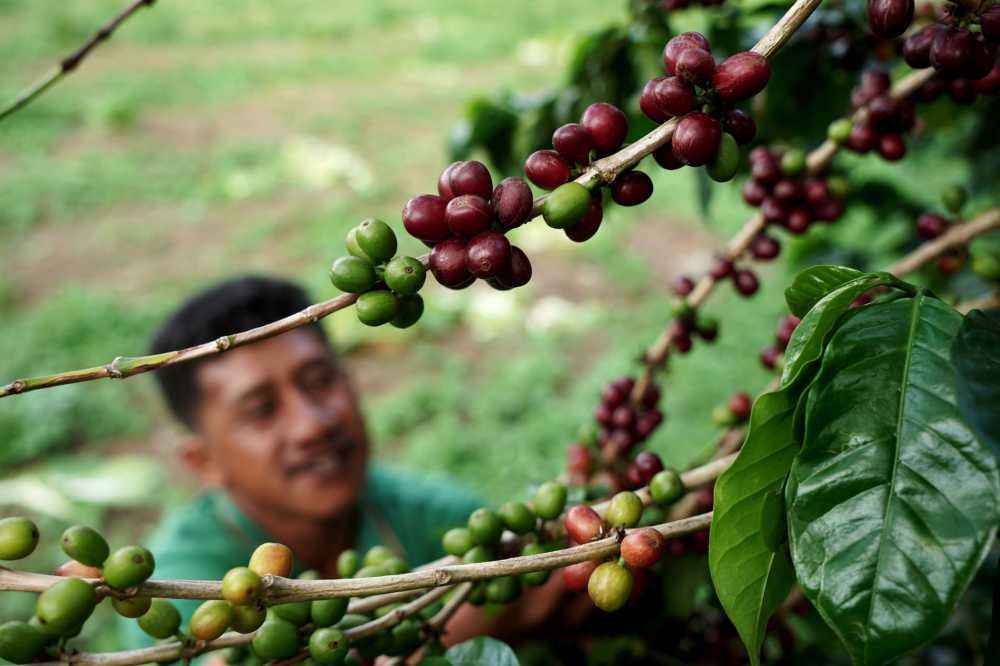
After the coffee cherries have their skin and pulp removed, they are directly poured into a tank for a short fermentation of only a few hours. At this point, a small amount of mucilage still clings to the surface of the parchment, and the sticky layer needs to be removed by scrubbing. Then comes the parchment-drying stage: the first drying only requires the moisture content to drop to 30–40%, usually taking two to three days, after which farmers sell the green beans to collectors. Once collectors receive this semi-dry parchment coffee, they directly hull it by machine to extract the innermost green beans.
Whether in fermentation or drying, wet hulling is shorter than traditional washing, thus saving considerable labor. But the huller generates great friction during operation, tearing open the parchment layer tightly clinging to the green beans; this process often exudes white or green viscous fluid. Soaked in this mucilage for a long time and also in a humid environment, the green beans eventually become soft, pale, and swollen, taking on a grayish-green appearance. The friction and agitation also increase the chance of the green beans being crushed or damaged, especially at both ends, where small gaps more easily form, creating "goat-foot" beans.
Once the parchment layer is removed, the "naked beans" dry very quickly, but they are also directly exposed to humid air, making them prone to various microorganisms. It is precisely these factors that give Indonesian coffee its unique woody, spicy, and herbal character—what is commonly called "regional flavor." If you want to try wet-hulled coffee, you can prioritize Front Street Lintong Mandheling: aromatic and rich, sweet-bitter, with a strong stimulating sensation on entry, and clove and woody aromas; the medium-dark roasted Front Street Lintong Mandheling has low acidity, presenting spice-like and minty notes, along with a strong and lasting sweet, mellow finish.
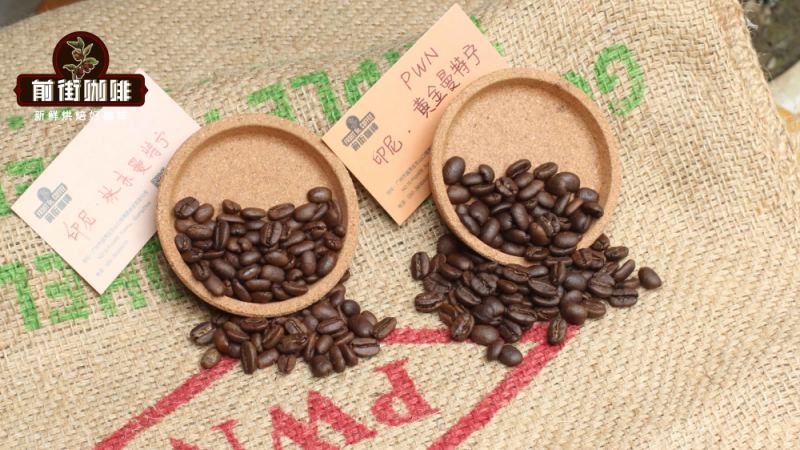
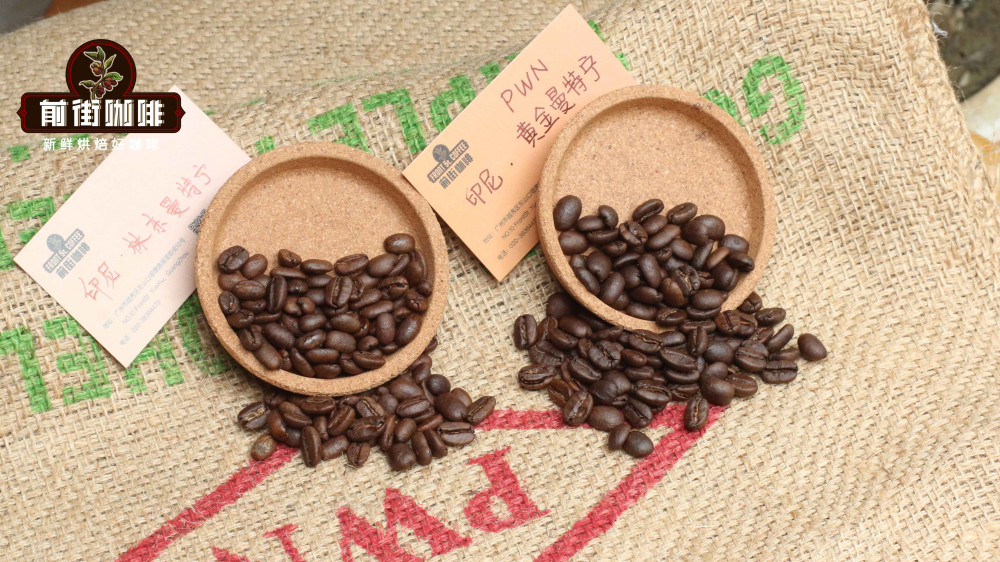
To further improve the quality of Mandheling coffee, the Indonesian company PWN gives the Mandheling green beans it purchases four rounds of hand sorting, ensuring every green bean is intact, uniform, and plump, and that the size must reach 18 screen or above, which is Indonesia's local G1 grade. After cupping comparisons, Front Street also found that strictly screened Golden Mandheling can reduce the earthy and woody flavors common in ordinary Mandheling, making the overall flavor cleaner and brighter.
It should be noted that there are quite a few coffees on the market named "Golden Mandheling," but PWN has long registered the Golden Mandheling trademark, which means only Front Street PWN Golden Mandheling is true Golden Mandheling coffee. If you want to experience the charm of Mandheling flavor, Front Street believes Front Street PWN Golden Mandheling coffee is well worth trying.
The most representative characteristics of Front Street PWN Golden Mandheling coffee are concentrated in spice, herbal notes, and body. To express this character, Front Street roasters choose a dark roast to present this coffee bean.
The pour-over flavor of Front Street PWN Golden Mandheling coffee
The aroma layers of Golden Mandheling coffee are complex. If you want to drink an ideal flavor expression, Front Street recommends using freshly roasted coffee beans for brewing. Coffee beans usually enter their best tasting period 4–7 days after roasting; once this stage is passed (about a month and a half), the aroma gradually weakens, and a woody defect-like flavor appears. Front Street has always believed that coffee bean freshness is crucial, so all coffee beans shipped are freshly roasted within 5 days; adding the time required for logistics and transport, they can basically be enjoyed directly after receipt.
The brewing approach Front Street develops for each coffee bean comes from the characteristics shown during cupping. Take Golden Mandheling coffee as an example: its flavors include herbs, dark chocolate, caramel, nuts, pine wood, and more. For this type of full-bodied bean, the baristas at Front Street Coffee (FrontStreet Coffee) choose the Kono dripper. The ribs of the Kono are less than half the height of the dripper. The purpose of this design is to let the dripper cling tightly to the wall after wetting, thereby limiting airflow, extending the water absorption time of the coffee grounds, making extraction more even, and further enhancing the full-bodied mouthfeel. The groove framework at the bottom of the Kono dripper is also the key design that allows a siphon effect to form during brewing.
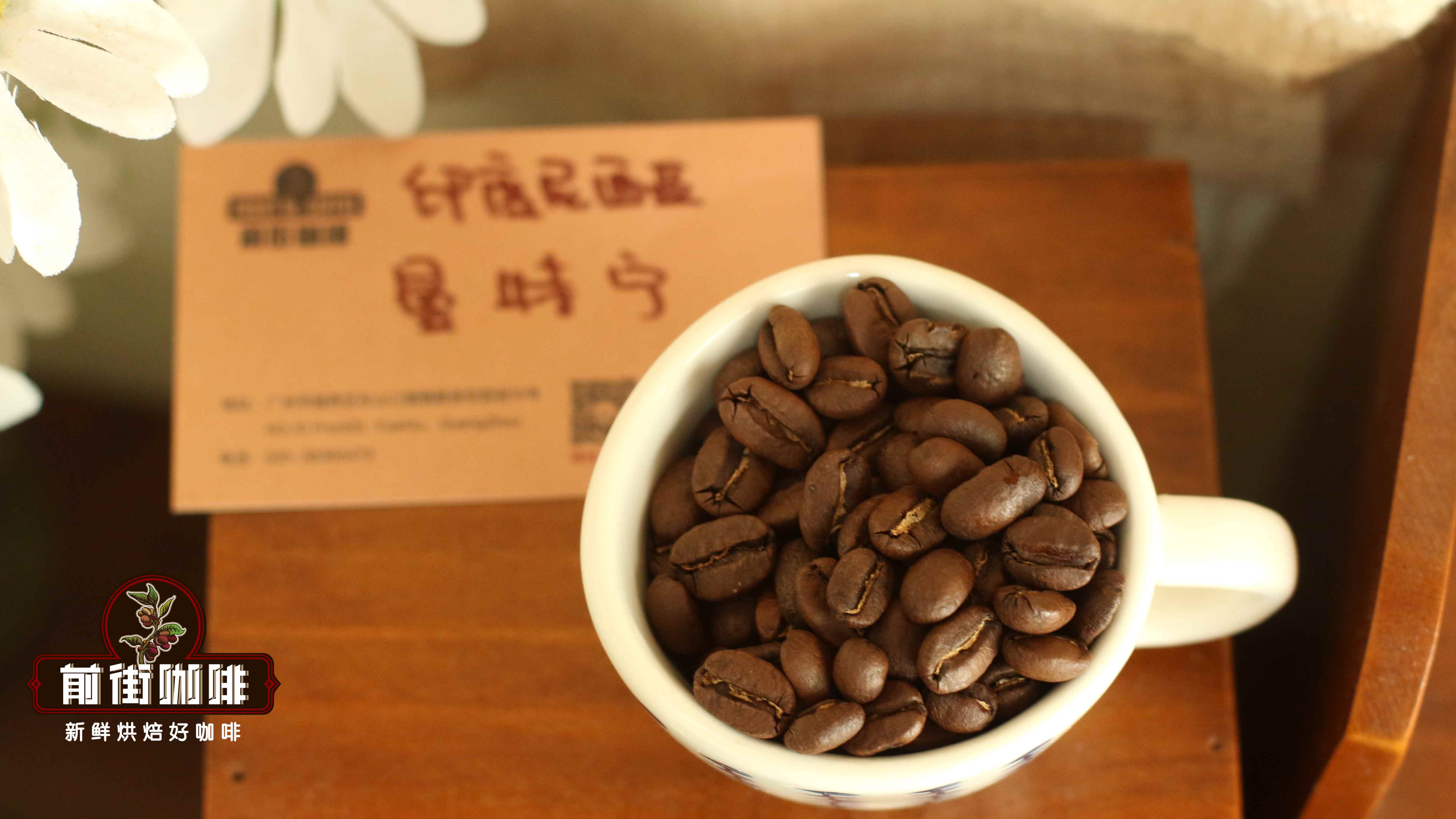
Dark-roasted coffee beans have a looser structure and strong water absorption, and can easily over-extract due to absorbing too much water, making the brewed Mandheling bitter and astringent. Therefore, Front Street grinds coarser and brews with a relatively lower water temperature.
Recommended brewing parameters: Water temperature: 87–88°C Coffee grounds: 15 g Coffee-to-water ratio: 1:15 Grind size: medium grind (70% passing through a Chinese standard No. 20 sieve)
The brewing method uses three pours. Dividing into three pours can better show the full body and caramel sweetness of Golden Mandheling coffee. For the first pour, bloom with 30 ml of water. This pour should completely wet the coffee grounds, allowing them to degas and preparing for better extraction of flavor compounds later; for the second pour, add 100 ml. This stage mainly flushes out Mandheling's golden foam while raising the coffee bed. For the final pour, gently pour 95 ml down the center, wait until all the coffee liquid has filtered through, then remove the dripper and gently swirl the coffee in the server to even it out.
The pour-over Front Street PWN Golden Mandheling coffee tastes very rich, giving off aromas of spice and herbs, and presenting an overall solid, full body, along with caramel sweetness and flavors of chocolate and nuts.
The above content is compiled by CoffeeHunters, a coffee news website.


