







Does the Grind Setting for Espresso Beans Depend on Extraction Time?
Espresso grind sits between flour and table salt, too fine to judge by eye, so the setting is dialed in by extraction time instead. A qualified shot runs 20 to 30 seconds at 9 bars of pressure and 90.5 to 96C, producing about 1 ounce with golden crema. Grind finer and time lengthens toward burnt bitterness; grind coarser and the shot runs fast.
The practical method fixes dose, pressure, and water temperature first, then adjusts the grind to hit the target time. A Colombia Sidra example moved from 34 seconds with a bitter taste to 30 seconds with clear aroma. For pour-over, cold brew, or a grind setting moka pot, particle size is visible enough to judge by sight, unlike the WBC espresso range.
The grind size for espresso falls between that of flour and table salt and cannot be judged by the naked eye, but the coarseness of the coffee grounds directly determines the flow rate, so we can work backward to tell whether the setting is appropriate by observing the extraction time. This article starts from the definition of espresso, sorts out the relationship between grind size and extraction time, explains how to set a target powder-to-liquid ratio, fix pressure and water temperature, and then adjust the grind size to reach the target time. It also uses Front Street Coffee's Colombia Sidra coffee beans as a debugging example, showing the adjustment process from 34 seconds, which was slow with a bitter taste, to 30 seconds, where the aroma was obvious. Finally, it emphasizes that after the grind size is confirmed, you still need to judge by tasting whether there are defective flavors, and if necessary, fine-tune the dose or parameters.
No matter which coffee brewing method is used, the size or coarseness of the grind setting is a key factor in determining whether a cup of coffee is good or bad. For methods such as pour-over, cold brew, and moka pot, the coarseness of the particles can be distinguished by the naked eye, while espresso grind size is roughly in the range of coarser than flour and finer than table salt, making it very difficult to measure with tools, let alone judge directly by sight. Fortunately, there is a close relationship between the coarseness of espresso grounds and the flow rate, so we can infer whether the setting is appropriate by observing how quickly the coffee liquid flows out.
How to determine the grind size for espresso
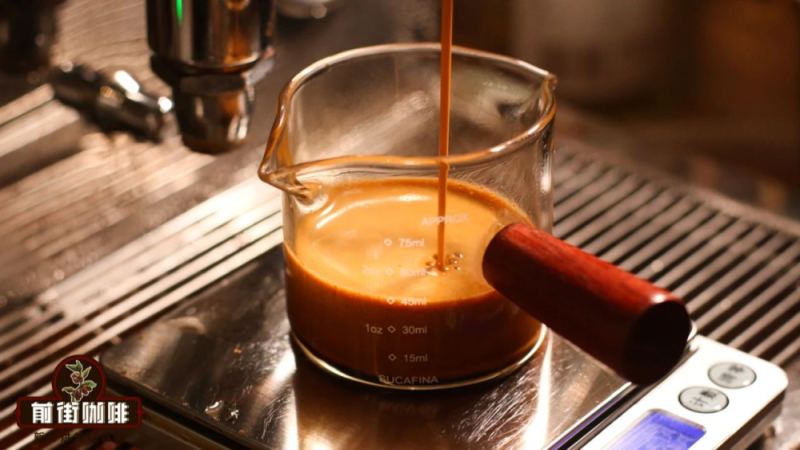
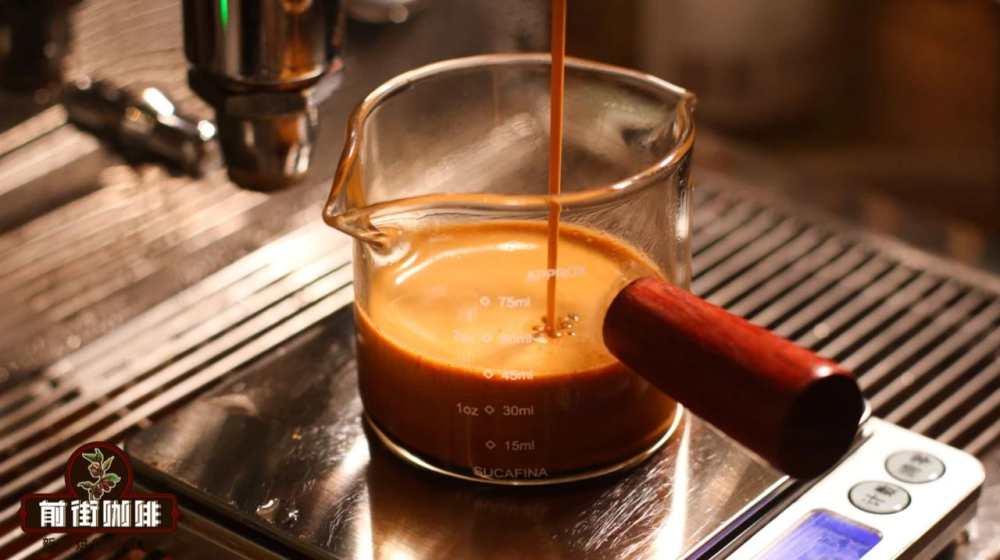
According to the definitions of Espresso by the Italian Coffee Association and the WBC, a qualified shot of espresso is one extracted in 20–30 seconds with water at 9 atmospheres of pressure and 90.5–96°C, yielding 1 ounce (about 30 ml) of espresso with golden crema.
The above definition does not directly state exactly how coarse or fine the grind size should be. But as long as the relationship between time and grind size is clear, determining the grind size becomes simple.
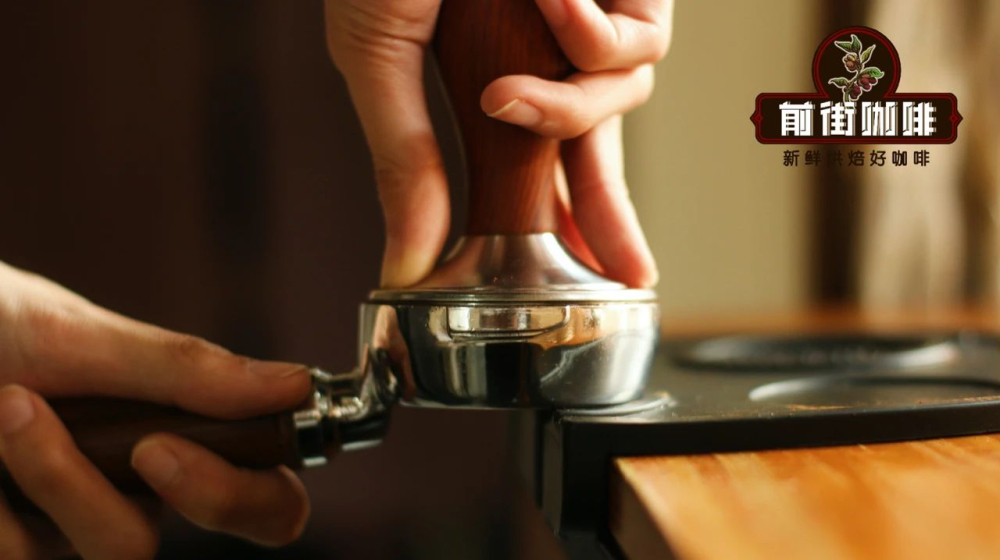
On the premise that manual operations such as distributing and tamping the grounds are done properly, the finer the coffee particles are ground, the longer the extraction time will be, and the taste will tend toward burnt bitterness, easily causing over-extraction; conversely, the coarser the particles, the shorter the extraction time, and the taste will tend toward sourness, easily causing under-extraction.
Therefore, when Front Street encounters an unfamiliar espresso bean or changes to a new grinder, the approach to determining grind size is: first set the extraction recipe. Front Street's preset espresso recipe is 20 grams of coffee powder (depending on the portafilter basket capacity), with a powder-to-liquid ratio of 1:2 (the Sunflower Warm Sun blend used by Front Street is roasted slightly lighter than typical espresso beans, so a 1:2 ratio is used to highlight the flavor characteristics of Sherry coffee and Red Cherry coffee), that is, to obtain 40 g of coffee liquid (measured by weight rather than volume because weight is more precise, and the crema weighs less than its volume).
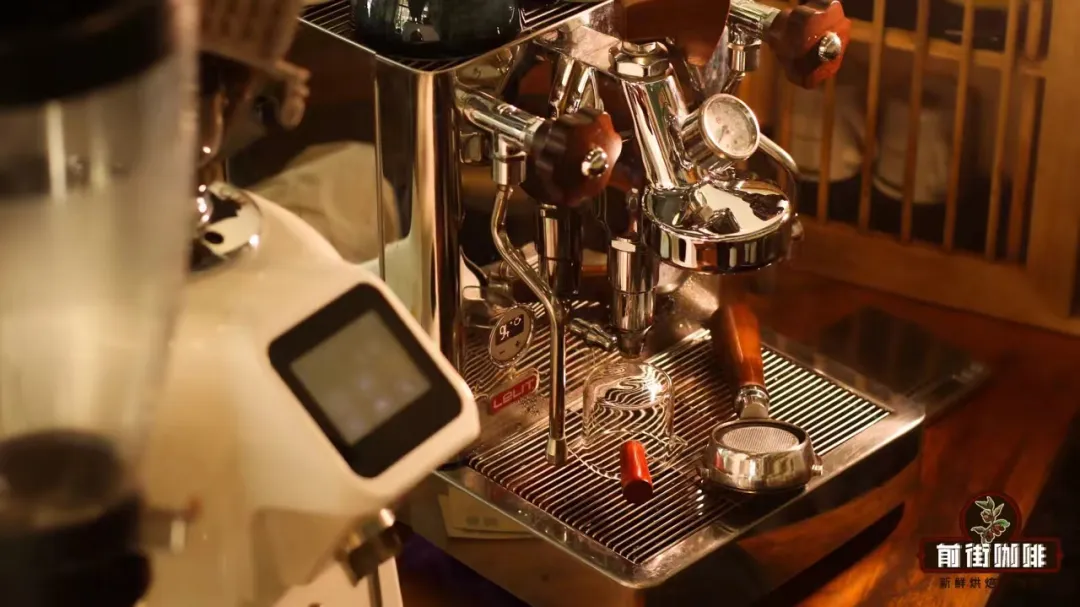
Pressure and water temperature are kept as fixed parameters. The coffee machine used by Front Street is set to 9 bar of pressure and 93°C water temperature. In this way, we only need to adjust the grind size to reach the preset time point. Some grinders have a bean hopper, and after each grind adjustment, residual grounds must be cleaned out to avoid affecting the accuracy of the adjustment.
When the adjustment reaches the preset time range, do not celebrate too soon. Because the goal is to get a delicious cup of espresso, at this point you need to taste it and judge whether there are defective flavors such as bitterness, sharp sourness, or a watery mouthfeel, and then judge whether it shows the flavors this coffee should have. If not, you need to continue adjusting, and at this point the adjustment is no longer limited to grind size. Because the brewing parameters we preset are based on existing knowledge, and when facing an unfamiliar coffee bean, we need to consider whether the preset extraction parameters are reasonable.
When judging the espresso grind size, Front Street's Colombia Sidra coffee beans were used. The initial grind setting of the Galileo Q18 grinder was 2.0, and 20 g of coffee powder was extracted at a 1:2 brew ratio to get 40 g of coffee liquid, with a time of 34 seconds, which was slow and had a bitter taste. So the setting was adjusted to 2.2, and the extraction time became 30 seconds. The bitterness disappeared and the aroma was obvious, indicating that the grind setting had been successfully set.
When testing Front Street's Colombia Sidra SOE coffee, if the right parameters are chosen (grind size, flow rate), the coffee will have a very rich grape, passion fruit, and citrus flavor . But if, after adjusting to a suitable grind size, the extraction parameters are 20 g of coffee powder extracting 40 g of coffee liquid and taking 30 seconds, and when tasting the flavor you feel a hint of burnt bitterness, then you can reduce the dose by 0.2–0.5 g to make the flow rate faster, thereby enhancing the expression of good flavors.
Therefore, when judging whether the grind size for espresso is correct, we should first determine whether the extraction parameters are within a reasonable range, and then taste and test whether its flavor meets expectations. If it does not, fine-tuning is needed.
The above content is compiled by CoffeeHunters, a coffee news website.


