







How Do Coffee Grades Shape Sidamo Huakui Natural G1?
Sidamo Huakui is a naturally processed Ethiopian coffee from the Guji and Hambela areas, and its G1 grade marks the top tier of defect sorting for the country's beans. The cup leans on rose aroma, peach, and a black tea finish, a profile built by heirloom varieties grown in highland terroir and dried at the Buku Abel processing station.
Huakui has moved through versions 1.0 to 6.0 as lots and selections evolved. Ethiopia still processes roughly seventy percent of its coffee naturally, so the clean washed Yirgacheffe style is only part of the picture. Knowing the grade, variety, and processing method helps set brewing parameters that keep the floral and stone-fruit notes readable.
Ethiopia is not only about washed Yirgacheffe — the naturally processed Huakui from the Sidamo region is equally stunning. In this article, Front Street Coffee gives you a comprehensive look at the origin of the name Huakui, the terroir conditions of the Guji and Hambela producing regions, the natural processing methods at the Buku Abel processing station, and the evolution of Huakui from version 1.0 to 6.0. We also explain the G1 grade standards, heirloom variety characteristics, and brewing parameters, along with practical brewing suggestions from Front Street Coffee to help you better appreciate this bean's signature rose aroma, peach notes, and black tea finish.
When it comes to Ethiopian coffee, Front Street believes many people's first thought is washed Yirgacheffe. Its bright citric acidity, citrus notes, and clean floral aroma are indeed unforgettable. But precisely because of this, many people mistakenly assume that Yirgacheffe is Ethiopia's only famous producing region, or that the country only produces washed beans. This is far from the truth. In Ethiopia's specialty coffee landscape, Yirgacheffe and Sidamo are the two most representative producing regions.
Washed Yirgacheffe has extremely high flavor recognition, which clearly benefits from the washed processing method. In Front Street Coffee's everyday bean series, washed Yirgacheffe has consistently been among the top sellers. Front Street Coffee has always believed that washed processing delivers the cleanest, brightest cup performance and most faithfully reflects the terroir of the origin itself. Therefore, when selecting everyday beans from various producing countries, Front Street Coffee almost always prioritizes washed lots as the representative expression of that country's coffee flavor.
However, Ethiopia's coffee processing methods are not limited to washed. Natural processing also plays an important role, and the Sidamo Huakui 5.0 launched by Front Street Coffee has been extremely well received. In fact, Ethiopia has historically relied primarily on natural processing, and even today, naturally processed beans still account for about seventy percent of the country's total production. As the birthplace of coffee, Ethiopia possesses an extraordinarily rich resource of coffee varieties, many of which have yet to be formally discovered and named. This also leads to pronounced flavor differences between producing regions, with each emphasizing different processing methods. Today, Front Street wants to talk about the naturally processed Huakui from Sidamo.
The Name Huakui Coffee
Just hearing the name "Huakui" makes one feel that this bean must have remarkable beauty. So why was it named Huakui?
According to Front Street's research, before 2017, this bean was still unknown. The turning point came in 2017, when Ethiopian green bean trader DW Company submitted a naturally processed lot from the Buku Abel processing station to the TOH (the Taste Of Harvest) green bean competition organized by the African Coffee Association. That lot won the TOH Ethiopia championship with its intense strawberry and cream aromas. The English direct translation of this bean's name is "Hambela." Some people mistakenly think Huakui and Geisha are the same bean. Front Street would like to clarify here: Geisha is the name of a coffee variety. Because it is written as "Gesha/Geisha," some people associated its pronunciation with the Japanese word for "geisha," which led to the name "geisha coffee." When Geisha was first introduced to China, Mr. Yuan of Coffee Dream translated the Chinese name for this variety, achieving a translation that is both faithful and elegant.
As for why it is called Huakui in China, it is because that year's lot of green beans was brought into the domestic market by a Beijing-based green bean trader. In the 2017 China Coffee Brewing Championship, Li Jianfei chose this bean and fought his way through a field of Geisha competitors to win second place. You have to understand that the competition field that year was almost entirely Geisha, and for a non-Geisha bean to suddenly emerge and defeat this legendary variety was no small feat. And because Geisha's English name sounds the same as the Japanese word for geisha, in order to highlight this bean's status, it was named Huakui, meaning "the finest among geishas."
Huakui Coffee Bean Producing Region
Front Street Coffee has always emphasized that coffee flavor is inseparable from climatic conditions. The Guji producing region features nutrient-rich black soil (Vertisol) with a soil depth of nearly two meters and an average altitude exceeding 1,800 meters. Its distinctive geographical features create a microclimate with large temperature differences between day and night, providing ideal terroir conditions for producing high-quality specialty coffee. It is precisely this unique growing environment and natural climate that shape the distinctive flavor of Huakui coffee. The Guji producing region originally belonged to Sidamo but was designated as a separate new producing region by the Ethiopia Commodity Exchange (ECX) in 2010. It is located to the southeast of Yirgacheffe, with complex terrain encompassing towering mountains, valleys, and plains.
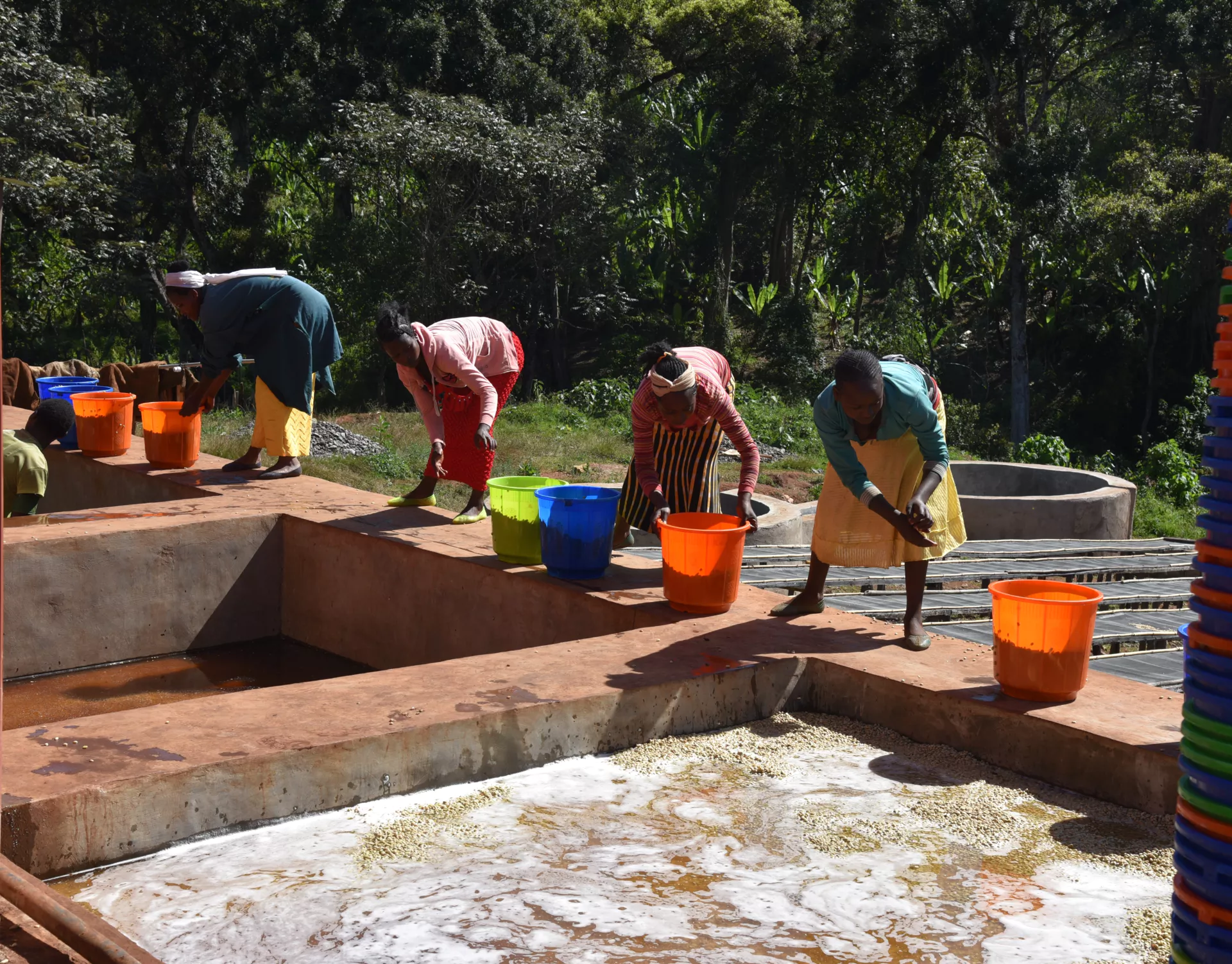
What is Hambela exactly? Hambela is essentially a coffee farm belonging to the well-known local METAD Agricultural Development PLC. It is both an independent farm and the main processing station for the surrounding growing area, responsible for centrally processing nearby coffee production and selling it as separate lots. METAD is an Ethiopian local coffee export company founded by Aman Adinew in 2013. The coffee comes from the Gedeo Zone and Gedeb District of the Southern Nations, Nationalities, and Peoples' Region (SNNPR), as well as the Guji Zone and Hambela Estate in the Oromia Region.
Aman comes from a coffee family — his grandmother established coffee farms in Ethiopia's Hara and Sidamo regions as early as the last century. Aman himself also served as Chief Operating Officer (COO) of the Ethiopia Commodity Exchange (ECX). After leaving government service, he set out to modernize the local coffee industry, founding METAD and partnering with over a thousand smallholder farmers in the Yirgacheffe and Guji areas.
Hambela Farm covers a total area of 200 hectares and is approximately 75 kilometers from Yirgacheffe, situated in Ethiopia's most core coffee-growing belt. Its processing station has reached a highly professional standard in terms of equipment, management, and scale. Combined with fertile volcanic soil, natural organic farming methods, and a relatively mature post-harvest processing system, these factors together have made this area one of the hottest sub-regions in recent years.
Huakui Coffee Processing Method
Of course, besides being influenced by climate and environment, coffee flavor is also critically shaped by the processing method. The Huakui coffee that Front Street sourced comes from the Buku Abel processing station and uses natural sun-drying techniques.
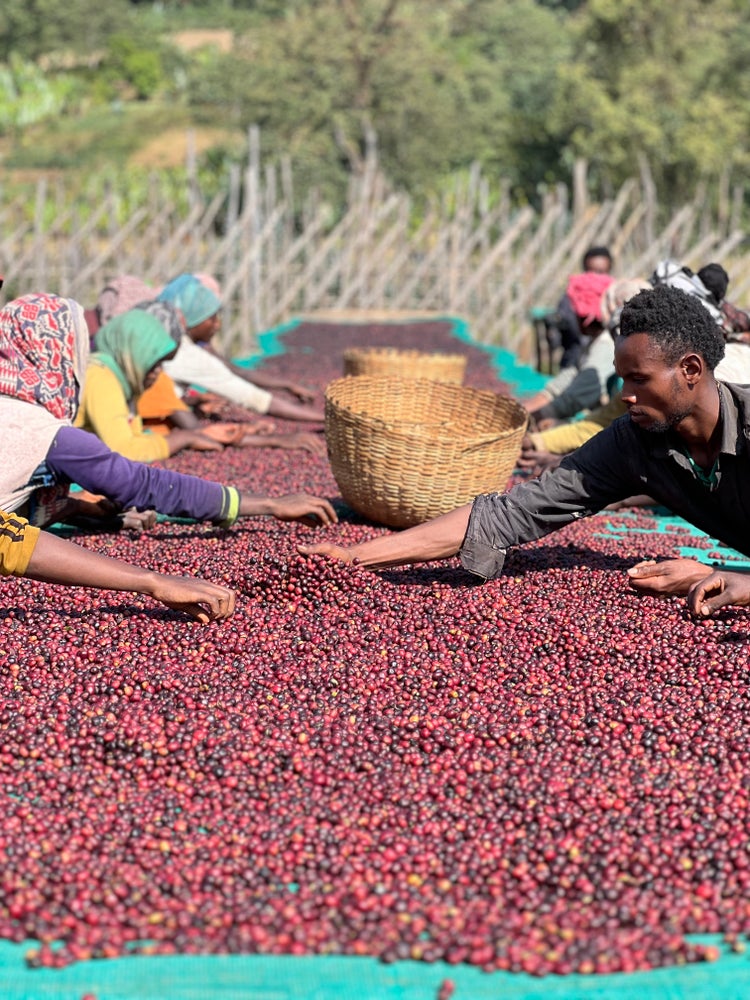
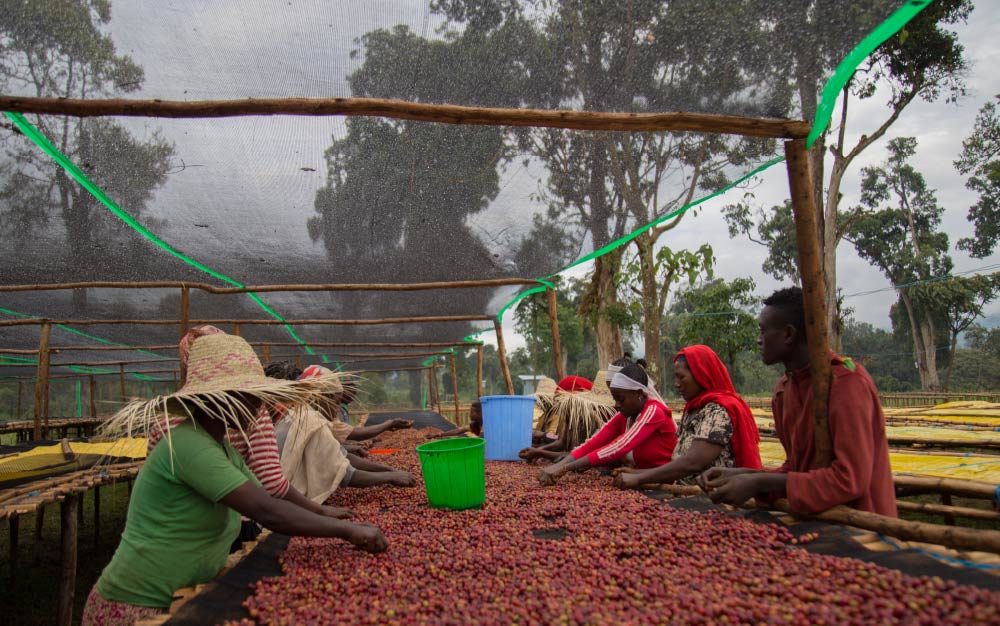
Before formal sun-drying, farmers hand-pick fully ripe coffee cherries, transport them to the processing station, and conduct a first round of sorting. Before washing, the cherries are sorted again by skin color to remove overripe or underripe fruit, ensuring consistent ripeness before entering the drying stage. For natural coffee, the farmers responsible for post-harvest processing must turn the fruit on the drying beds at high frequency during the first three days, because at this point the coffee cherries have very high moisture content. Failure to turn them promptly not only risks mold but also produces unpleasant sour or rotten fruit flavors due to uneven heating. Throughout the process, the coffee cherries are spread in only a thin layer to ensure good ventilation and drying. After 14 to 18 days, once the moisture content reaches the target level, the beans are bagged and sent to the warehouse.
After Huakui gained fame, versions such as Huakui 2.0, Huakui 3.0, Huakui 3.1, Huakui 4.0, Huakui 5.0, and Huakui 6.0 were successively released. Why make these distinctions? Front Street believes that coffee beans are ultimately an agricultural crop and will fluctuate in flavor as climate and environment change. However, the primary flavor profile does not change — only subtle differences emerge. Naming by version number also serves to more clearly distinguish each year's coffee beans.
The Variety of G1 Huakui Coffee
Ethiopia is a genetic treasure trove of coffee, with an extraordinarily rich variety of cultivars, many of which remain undiscovered. For this reason, many Ethiopian coffees list their variety as heirloom. Yirgacheffe's variety is a local heirloom, a small-bean type with a rounder appearance and very small bean size, mostly between 14 and 15 screen sizes.
Sidamo's variety is also a local heirloom, a small-bean type. The beans are slightly smaller than Longberry, with small bean size overall, but slightly larger than Yirgacheffe, mostly 15 screen size.
Ethiopian Coffee Grades
Front Street Coffee has learned that before the establishment of the Ethiopia Commodity Exchange (ECX), coffee export grades were set by the CLU department (Cupping and Liquoring Unit) under the Ministry of Agriculture, primarily grading green beans based on the number of defect beans in a 300-gram sample.
Huakui G1 natural beans undergo multiple processing steps, with an additional screening stage during bean selection, and each screening standard is extremely strict. G1 natural belongs to the light-luxury specialty tier. Ethiopian Sidamo Huakui Natural G1 coffee has a variety of Ethiopian heirloom, grown at altitudes between 2,200 and 2,500 meters. The flavor presents rose floral notes and peach character with a black tea finish and a long-lasting aftertaste.
Front Street Coffee Brewing Suggestions
Regarding brewing, Front Street recommends using freshly roasted coffee beans to maximize the rich flavor layers of the coffee. All coffee beans shipped by Front Street Coffee are within 5 days of roasting, because Front Street deeply understands the enormous impact of freshness on flavor. Front Street's roasting philosophy is "Freshly Roasted Good Coffee," ensuring that every customer who places an order receives their coffee in the freshest possible state. Coffee beans need a resting period of about 4 to 7 days, so by the time customers receive them, they are right at their optimal flavor window.
Of course, some customers need Front Street to grind the beans for them, which is completely fine. But Front Street would like to remind you of one thing: once coffee beans are pre-ground, they no longer need resting, because the pressure from carbon dioxide inside the packaging during transit also rounds out the flavor, so you can brew immediately upon receiving ground coffee. However, ground coffee should be used up as quickly as possible, because once exposed to air it oxidizes faster, flavors dissipate more quickly, and quality suffers. Therefore, Front Street recommends buying whole beans and grinding fresh for each brew to better enjoy the coffee's flavor.
Front Street Brewing Parameters:
To fully extract the rich layers of Ethiopian coffee beans, Front Street uses a higher water temperature and a finer grind size for extraction. But to avoid over-extraction from high temperatures, a faster-flow dripper is paired with it, such as the V60. The V60 has a 60° cone shape, and the cone angle allows coffee grounds to concentrate centrally. When pouring, the water flow also automatically converges toward the center of the dripper, ensuring sufficient contact time between water and coffee grounds to extract a suitable cup. Additionally, the ribs on the inner wall of the V60 form a clockwise spiral extending from bottom to top, leaving ample space between the filter paper and the dripper for good flow. Combined with the large hole at the bottom, the flow rate is relatively faster than many other drippers.
Dripper: Hario V60, Water temperature: 90°C, Coffee dose: 15 grams, Coffee-to-water ratio: 1:15, Grind size: medium-fine (80% passing through a Chinese standard No. 20 sieve)
【Naturally Processed Huakui 5.0 Coffee Flavor】 Very pronounced floral and fruity notes — citrus, passion fruit, strawberry, oolong tea — with high sweetness.
For professional coffee knowledge exchange and more coffee bean information, please follow Coffee Workshop (WeChat public account: cafe_style)
For more specialty coffee beans, please add Front Street Coffee's private WeChat: qjcoffeex
The above content is compiled by CoffeeHunters, a coffee news website.


