








What Explains El Salvador's Coffee Quality?
El Salvador is small but sits at the center of specialty coffee, and along with Costa Rica is treated as a birthplace of improved honey processing. Its coffee reads as gently acidic, sweet, aromatic, and clean. Most growing areas lie on slopes or plateaus above 1,200 meters under volcanic ash, with harvest running from October to March.
The Santa Ana volcanic region combines soil and altitude advantages that support coffee quality. Nearly all the country's crop is Arabica, mainly Pacas and Bourbon, with large beans and strong flavor. Because coffee trees prefer mild conditions, planting coffee trees under dense shade canopies is common locally, shielding them from high heat and direct sun that would harm the beans.
Although El Salvador is a small country in Central America, it occupies an important place in the specialty coffee landscape, and together with Costa Rica it is regarded as the birthplace of improved honey processing techniques. Front Street Coffee summarizes its flavor as softly mildly acidic, pleasantly sweet, full-bodied in aroma, and clean in taste. This article will review El Salvador's coffee-producing regions and altitude grading system, analyze the terroir advantages of the Santa Ana volcanic region, and provide a detailed introduction to the Bourbon variety, mixed processing methods, and Front Street Coffee's roasting curve and pour-over parameters at El Guayabo Estate, giving you a comprehensive understanding of the coffee charm of this Central American producing country.
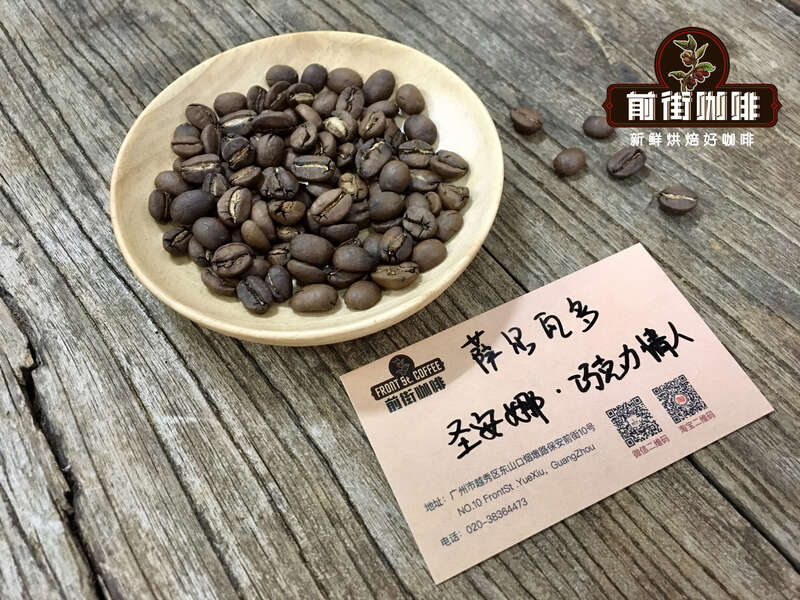
El Salvador coffee occupies a position in Central and South America that cannot be overlooked, and together with Costa Rica it is regarded as the birthplace of improved honey processing techniques. Front Street Coffee's overall evaluation of El Salvador coffee is that it has a gentle mouthfeel, mild acidity, good sweetness, a pleasant aroma with a slight acidity, and a soft and clean texture without distracting flavors.
El Salvador Coffee Distribution
El Salvador is one of the smaller countries in Central America by land area, yet its population density is quite high. The coffee produced here is famous for its excellent balance. As with Guatemala and Costa Rica, El Salvador also grades coffee by altitude: the higher the altitude, the better the quality.
The growing areas for El Salvador coffee beans are mainly divided into five producing regions, generally distributed on slopes or plateaus above 1,200 meters covered in volcanic ash, with the coffee harvest and picking season running from October to March of the following year. Coffee trees prefer a mild climate, so shade-grown coffee is commonly used locally, planting coffee trees beneath tall, dense canopies to avoid high temperatures and direct sunlight damaging the quality of the coffee beans. The coffee grown in El Salvador belongs to the Arabica species, mainly the Pacas and Bourbon types, with relatively large beans, sweet taste, and outstanding flavor performance.
Santa Ana Volcanic Producing Region
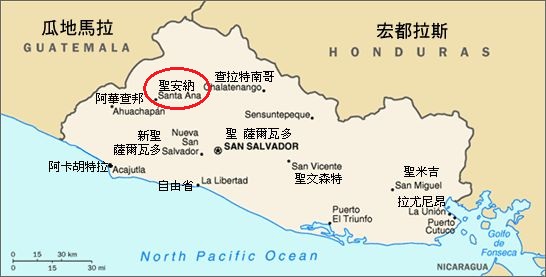
Among El Salvador's various producing regions, the one with both soil and growing-altitude advantages is the Santa Ana volcanic area west of the capital, with an altitude reaching 2,381 meters. This volcano is still active and erupted in 2005. Although that eruption caused severe economic losses and some casualties among local coffee farmers, the organic-rich volcanic ash afterward replenished the soil with sufficient nutrients, and to this day Santa Ana is still widely recognized as one of El Salvador's finest producing regions.
Front Street Coffee El Salvador Santa Ana El Guayabo
Coffee Producing Country: El Salvador Coffee Producing Region: Santa Ana Coffee Estate: El Guayabo Growing Altitude: 1450m Coffee Variety: Bourbon Processing Method: 50% washed + 50% honey Grade: SHB Harvest Season: 2020
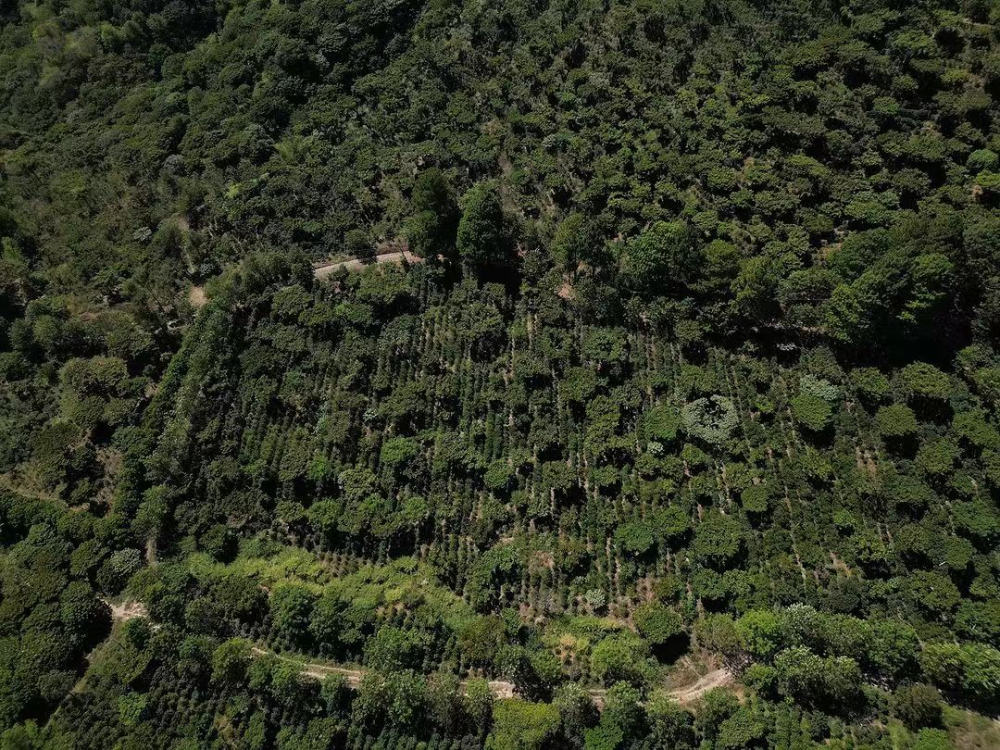
Estate Introduction El Guayabo Estate is located in El Salvador's Santa Ana volcanic region, at an altitude between 1,300 and 1,500 meters, on the mountainside of the volcanic belt, with abundant moisture and diverse microclimates, which makes the coffee grown here especially delicate in flavor. The estate mainly cultivates the Bourbon variety, and the coffee trees extend along the entire mountainside. Because the original forest cover in this area is quite well preserved, nearby birds, reptiles, and other wild animals can often be seen in the coffee plantations.
The estate owner uses jungle-style cultivation, retaining a large number of native tree species as shade trees, which also provides suitable habitat for wildlife and reflects a friendly attitude toward the global environment. The estate also cares about the lives of the farmers, distributing bonuses during different festivals to help farmers improve their living conditions.
Coffee Variety Bourbon is a variety produced by a natural mutation of Typica, and together with Typica it is one of the oldest existing coffee varieties; the fruit turns from green to bright red when ripe. Compared with Typica, Bourbon has broader leaves and denser growth; although its yield is higher than Typica, its harvesting cycle is also two years, so it still belongs to the lower-yielding varieties.
Bourbon coffee beans have high-quality taste, good aroma, bright acidity, and a sweet aftertaste, with a flavor somewhat similar to red wine when drunk.
Processing Method El Guayabo Estate uses different processing methods to present this bean, blending 50% honey processing and 50% washed processing locally in El Salvador to form this single-origin coffee with a unique flavor. Using 100% Bourbon variety combined with two processing methods makes the overall flavor layers richer and the mouthfeel fuller.
In terms of processing, for honey processing the coffee beans are first transported to a honey processing station at about 800 meters altitude for processing. The advantage of processing at a lower altitude is that clouds and fog are less likely to form locally, with sufficient sunlight and strong ultraviolet rays, so the coffee beans can absorb enough heat energy and present very good aroma; moreover, under such conditions for honey processing, the coffee fruit can be fully dried in a short time, and the flavor is presented more solidly.
Washed processing, on the other hand, relies on the region's abundant water resources to give the coffee a very clean taste. This single-estate coffee bean formulated with this mixed processing method was deliberately named "El Guayabo" by the estate owner to express the flavors of chocolate, cocoa, and stone fruit cream.
Front Street Coffee Roasting Analysis When Front Street Coffee's roaster received this El Salvador · Santa Ana green bean, they found that the beans were relatively dense, so during roasting they used medium heat to extend the dehydration time and appropriately lengthened the caramelization reaction after first crack, making the beans' sweetness more prominent in the flavor.
Roasting Machine Yangjia 800N (roasting capacity 300g) Charged at a drum temperature of 180°C, heat power 125, damper opened to 3; the turning point was 1'39", and when the drum temperature reached 140°C the damper was adjusted to 3.5 and the heat power to 100; when the drum temperature reached 151.2°C the bean surface turned yellow, the grassy smell completely disappeared, and it entered the dehydration stage; when the drum temperature reached 156°C the heat power was adjusted to 80 and the damper remained unchanged; when the drum temperature reached 166°C the heat power was adjusted to 50 and the damper remained unchanged; after first crack the damper was adjusted to 5. At 8'38", wrinkles and dark spots appeared on the bean surface, and the toasted bread smell clearly turned into coffee aroma, which can be regarded as the prelude to first crack; at this point you must listen clearly for the sound of the first crack point; at 9'25" first crack began, the damper was opened to 5, and after 2 minutes of development after first crack, the beans were dropped at 194.1°C.
Front Street Coffee Brewing Sharing Dripper: V60 Dose: 15g Water Temperature: 88-90°C Coffee-to-Water Ratio: 1:15 Grind Size: fine granulated sugar (80% passing a Chinese standard No. 20 sieve), i.e. medium-fine grind
Front Street Coffee brewing method: staged extraction. Use 30 grams of water for a 30-second bloom, pour in a small stream in circles until 125 grams for the stage break, and when the water level drops and is about to expose the coffee bed continue pouring until 225 grams and stop pouring; when the water level drops and is about to expose the coffee bed, remove the dripper. (Timing starts at the beginning of the bloom.) The extraction time is 2'00".
Front Street Coffee pour-over flavor: it smells of fruity and nutty aromas; on the palate there are nuts, cream, and caramel; the aftertaste has the acidity of berries and citrus; the overall mouthfeel is relatively balanced.
The above content is compiled by CoffeeHunters, a coffee news website.


