







How does honey processing change green coffee beans?
Honey processing does not use honey. It is a way of preparing green coffee beans by leaving part of the mucilage on the seed during fermentation and drying, placing it between the washed and natural methods. The amount of mucilage retained determines the grade: white, yellow, red, or black honey, each with its own drying time and cup profile.
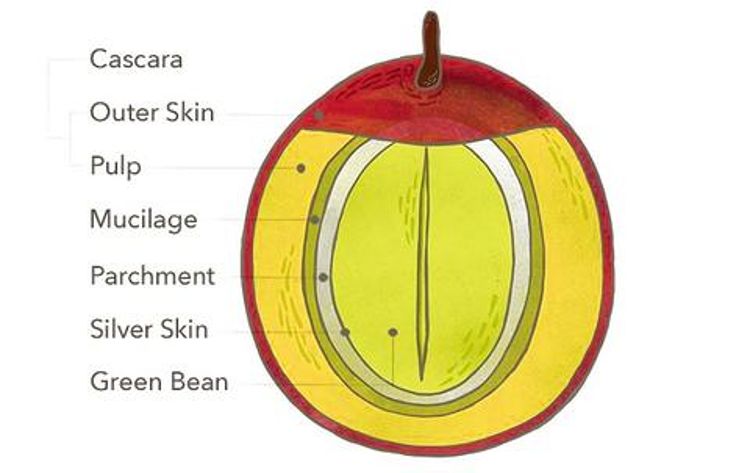
A coffee cherry holds skin, pulp, mucilage, parchment, silver skin, and the seed that is eventually ground and brewed. Washed processing removes skin and pulp before rinsing and drying, while natural processing dries whole cherries. Honey processing keeps some mucilage, and the pulped natural method that inspired it was developed in Brazil around the mid-1990s to speed up drying.
Honey processing isn't about processing coffee with honey—it's a method of processing green coffee beans by retaining part of the mucilage for fermentation and drying. It sits between washed and natural processing, and is especially popular in Central and South America. Depending on how much mucilage is retained, it is further divided into white honey, yellow honey, red honey, and black honey, each with clear differences in drying time, raking frequency, and final flavor. In this article, from Front Street's perspective, we'll sort out the origins and principles of honey processing, compare the process characteristics and cupping performance of each honey color grade one by one, and introduce the flavor information of related products on Front Street's bean list.
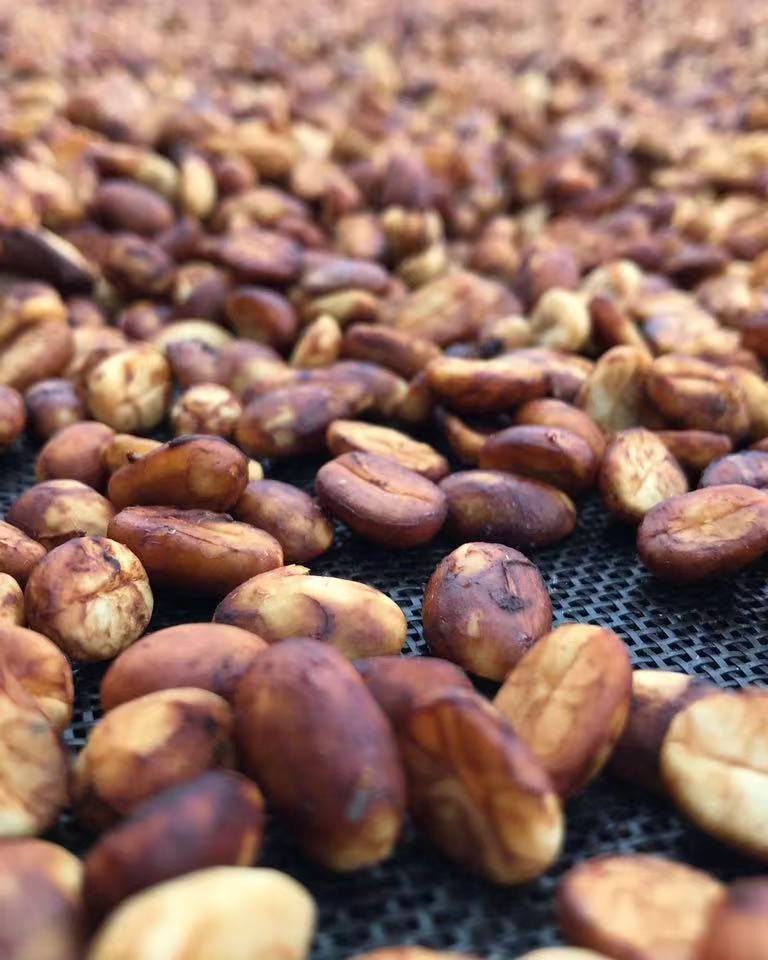
When first encountering the term "honey processing," many people mistakenly assume it means using honey to process green coffee beans, with the goal of making the coffee taste honey-sweet. Of course, that's not actually the case. Today Front Street will explain in detail what honey processing really is, and what flavor characteristics coffee treated with this process presents.
A coffee cherry consists, from outside to inside, of the skin, pulp, mucilage, parchment, silver skin, and seed, and what we ultimately grind and brew is the innermost seed. To extract the seed, there are traditionally two main paths: the washed method and the natural method.
In washed processing, fresh cherries first go through a depulper to remove the skin and pulp, then are rinsed with plenty of clean water, and afterward dried until the moisture density stabilizes, yielding green beans; natural processing skips the depulping step, spreading the whole cherries out to dry directly to the target moisture content, and finally hulling them to obtain the beans. Honey processing can be understood as a compromise between the two, and is most widely used in Central and South American countries, with Costa Rica being especially well known.
After reviewing materials, Front Street learned that around the mid-1990s, Brazilian traders invented the pulped natural method, locally called "Cereja Descascada," in order to speed up the drying of large batches of green beans. This approach removes the skin first and then sun-dries, which suits Brazil's relatively dry climate: on the one hand it shortens the drying cycle, and on the other it avoids the fermented off-flavors that Brazilian natural beans easily develop on the drying beds, significantly improving the flavor and quality of the coffee beans.
After this new post-harvest processing technique emerged, some estate owners in Central and South America followed suit and adjusted Brazil's pulped natural process to local climates. By controlling the degree to which mucilage is removed, they allowed the dried green beans to carry different levels of sugar, gradually giving rise to subdivisions such as white honey, yellow honey, red honey, and black honey.
When using honey processing, coffee farmers first pour the fresh cherries into a tank for flotation, screening out defective cherries that aren't ripe enough as well as stones and other debris, then use specialized equipment to strip off the outermost skin. At this point some pulp still clings to the beans, which then undergo a period of "dry fermentation" before being moved to drying. The so-called "honey" refers to the sticky state formed by the sugars in the mucilage after fermentation, and because it reminds people of honey, the method came to be called "honey processing."
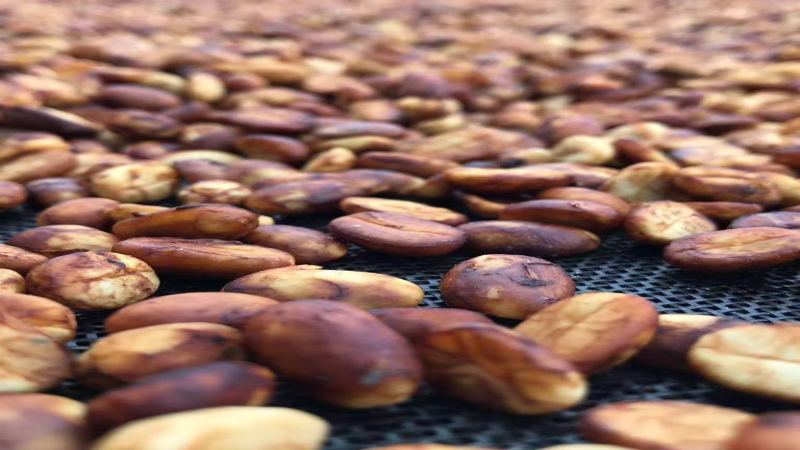
Compared with the washed method, honey processing can reduce fresh water consumption by about 40%, while also avoiding the negative defective flavors that can result from prolonged exposure to sunlight. Coffee using honey processing typically shows a full, delicate fruity sweetness and refined, complex floral aromas in the cup, with an overall fresh and clean mouthfeel. Water-saving, environmentally friendly, and excellent in flavor—these points made honey processing rapidly popular in Central and South America, and its coffee flavors are also widely favored in the specialty market.
The Guatemala Nueva Oriente Geisha coffee on Front Street's bean list is produced using honey processing; once brewed, it presents flavors of sweet orange, white champaca, bergamot, and toffee, with a rounded sweetness that leaves a deep impression.
FrontStreet Coffee: Guatemala Nueva Oriente Geisha Coffee Beans
Region: Guatemala, Nueva Oriente region
Altitude: 1,500–2,050 meters
Processing method: Honey processing
Variety: Geisha
Flavor: Sweet orange, toffee, bergamot
Besides Guatemala, another well-known producing country, Colombia, also has a honey-processed Geisha from Finca La Esperanza, likewise carrying a candy-like sweet aroma. To retain the coffee's caramel character while showcasing elegant floral and fruity notes, Front Street chooses a medium-light roast; once the beans are ground into powder, a rich red rose fragrance can be smelled, and after brewing it carries sweet-and-tart notes of grape juice, citrus, and candied fruit.
Back to the main topic: the core element of honey processing—mucilage—is mainly distributed beneath the skin and pulp and above the parchment, and is composed of water, protein, reducing sugars, pectin, and other components. In fact, mucilage is also part of the pulp. When the coffee cherry ripens, pectinase is produced inside; the enzyme breaks down pectin bonds, softening the originally firm pulp fibers into a sugar- and pectin-rich hydrocolloid slime. When the machine removes the skin and most of the firm pulp, the layer of slime remaining outside the parchment is what we call "mucilage."
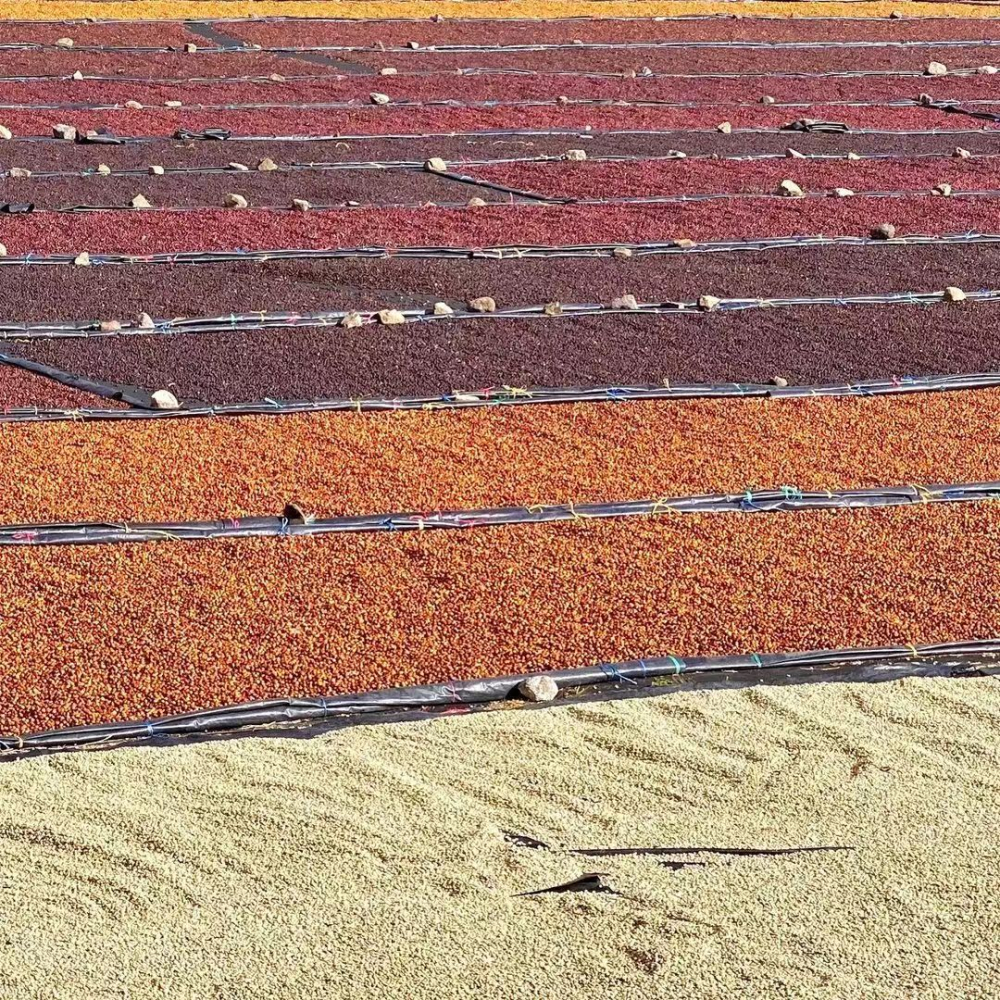
In coffee processing, mucilage is a very sweet substance with high water content and high sugar content, and it does not separate easily from the coffee seed. Therefore, whether honey processing can create refined fruity flavors depends on how much mucilage is retained and the degree of sugar fermentation. Farmers can use specialized quantitative demucilaging equipment, or adjust the number of manual rakings per day, to obtain green coffee beans of different honey colors.
Black Honey retains the most mucilage; because the mucilage is almost not removed, the drying time is also the longest, usually requiring more than 14 consecutive days. During the process, to prevent drying too quickly, covers are used to block overly strong sunlight so that sugar conversion is more complete. In some regions, black honey processing also uses shade drying to ensure sugars are converted into the coffee beans in time, though the drying time is correspondingly extended. Front Street observed black honey green beans and found that, because more mucilage is retained, the color is noticeably uneven, and it smells of intense fermentation aroma.
Red Honey retains about 50–80% of the mucilage, placing it right between washed and natural processes, and it is also the most common honey color type on the market. The darker the beans, the fewer manual rakings are needed, so black honey is usually raked only once a day, red honey needs to be raked several times a day, and yellow honey must be raked every hour, and it takes about 12 days for the coffee cherries to dry completely . Front Street observed from red honey green beans that the color is lighter than black honey, and it smells of a light fermented fruity note.
Yellow Honey generally retains 15–50% of the mucilage and needs the most direct sunlight to absorb heat, taking about 8 days to reach a stable moisture content. Because yellow honey processed beans retain very little mucilage, they look fairly uniform yellow-green to the naked eye, and smell of a grassy scent tinged with brown rice aroma.
White Honey retains only about 10%–15% of the mucilage. It is usually dried in the open air and needs frequent turning to keep enzyme and bacterial activity at its upper limit,
and it is spread more thinly on the drying beds, so drying takes less time. Compared with other degrees of honey processing, white honey green beans are the lightest in color and smell of a fresh, elegant herbal aroma.
The above content is compiled by CoffeeHunters, a coffee news website.


