







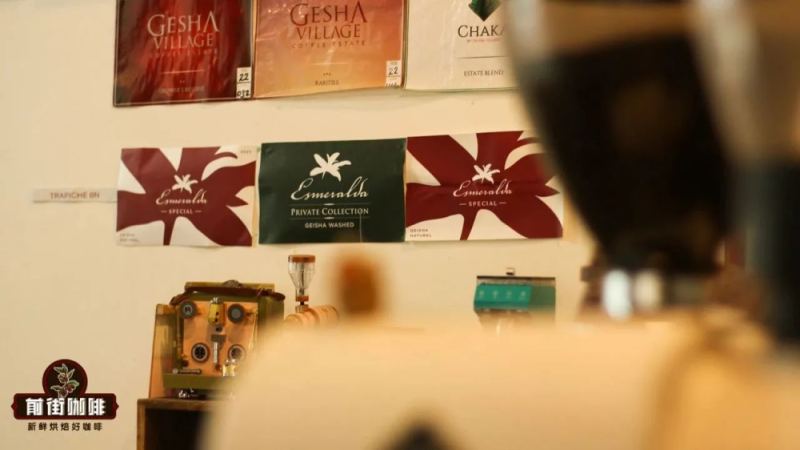
How Do Gesha Village Chaka and Panama Gesha Coffee Differ?
Chaka and Panama Butterfly are both primarily Gesha variety and both show citrus fruit notes, but they part ways in body and clarity. Chaka, from the Bench Maji region at 1900 to 2100 meters, is naturally processed and brings higher body with prominent nutty flavors. Butterfly, washed and grown in Boquete at 1600 to 1650 meters, is cleaner with obvious floral notes.
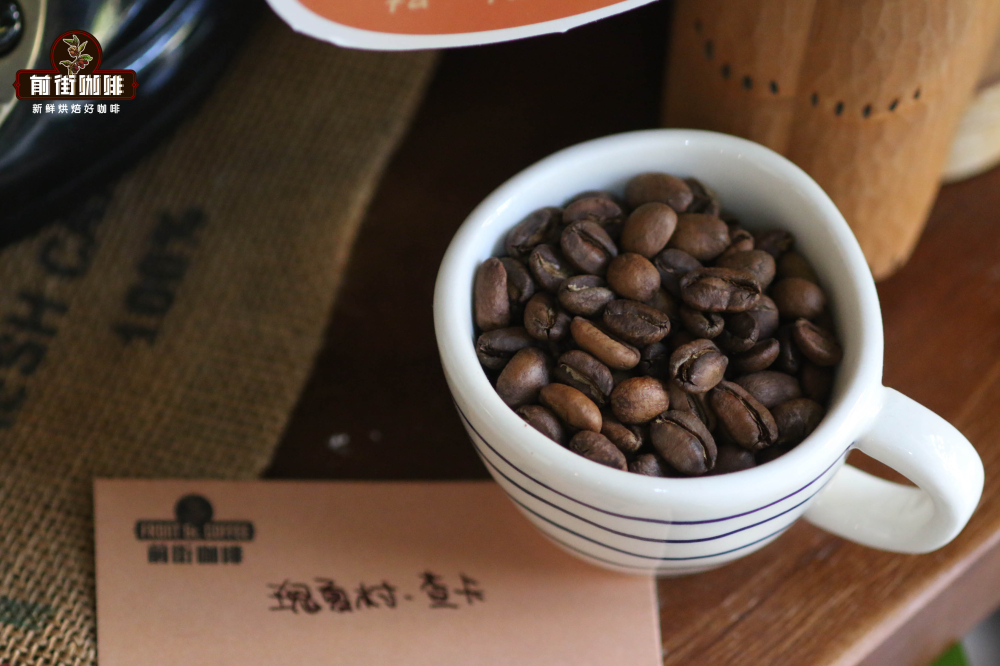
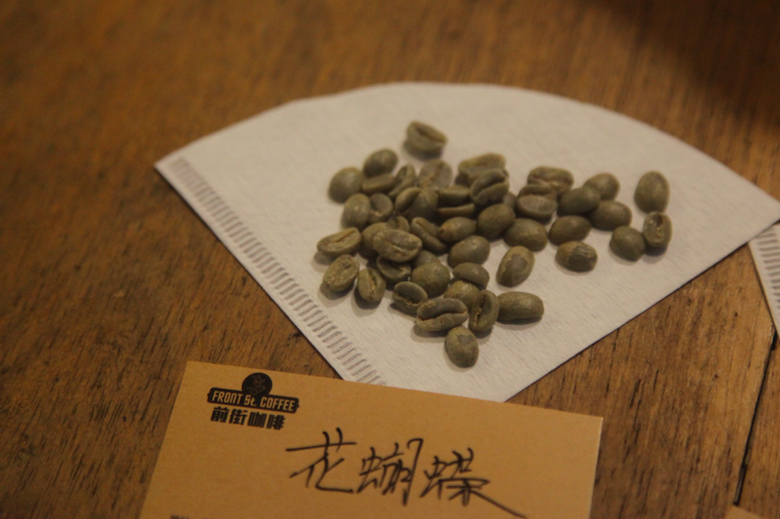
The green beans differ too: Panama Butterfly reads slightly more elongated, while Chaka is rounder, though both are uniform in size. Varieties tell another part of the story. Chaka combines gori geisha, Gesha 1931, and Illubabor, while Butterfly is roughly 70 percent Gesha with the rest Caturra and Catuai. Roast curves and brewing parameters are tuned separately for each lot.
Front Street has recently launched several Gesha Village lots, including Gold Label, Red Label, and Chaka. Many coffee enthusiasts are curious: both are Gesha blends, so what exactly is the difference between Front Street Gesha Village·Chaka and Front Street Panama·Butterfly? This article compares them from three dimensions: green bean information, roasting curves, and brewing parameters and flavor performance. Both beans are primarily Gesha variety, and both flavor profiles carry citrus fruit notes, but Chaka has higher body and prominent nutty flavors, while Butterfly is cleaner and clearer with obvious floral notes. If you are choosing a Gesha blend, this comparison may help you find the one that suits you better.
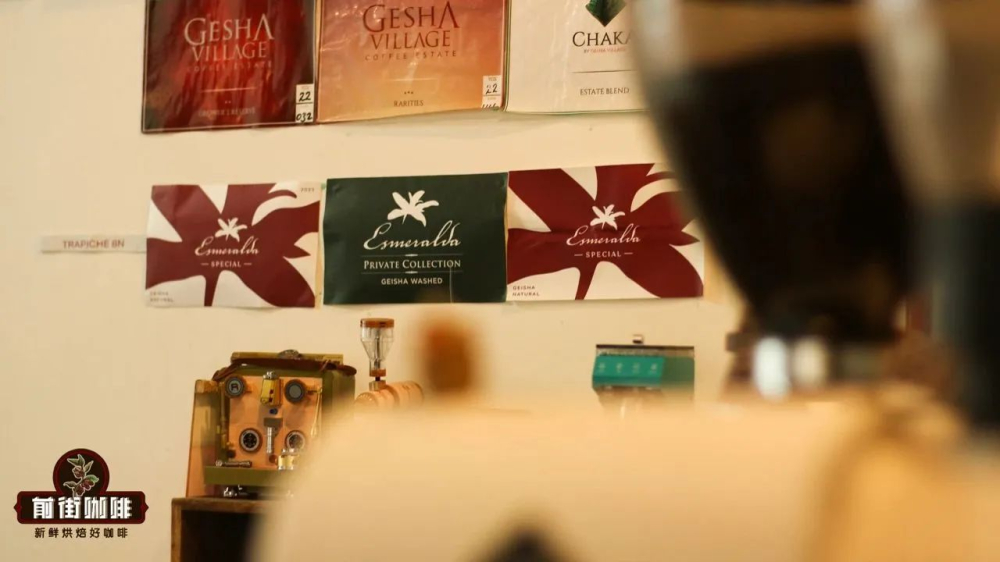
Front Street recently received a shipment of many Gesha Village beans, covering Gold Label, Red Label, and Chaka. Friends often ask Front Street: both belong to the Gesha blend camp, so what exactly is different between Front Street Gesha Village·Chaka and Front Street Panama Butterfly?
Green Bean Information
Gesha Village Coffee Estate CHAKA
Front Street Gesha Village·Chaka Lot
Region: Bench Maji
Altitude: 1900-2100m
Varieties: Gori Gesha, Gesha 1931, Illubabor
Processing Method: Natural
Bouquet Classicio Butterfly Washed
Front Street Panama Boquete Washed Butterfly
Region: Boquete, Panama
Varieties: 70% Gesha, 30% Caturra & Catuai
Altitude: 1600-1650
Processing: Washed
Visually, the green beans of Front Street Panama Butterfly are slightly more elongated than those of Front Street Gesha Village Chaka, while Front Street Gesha Village Chaka is somewhat rounder; both have relatively uniform bean sizes.
Curve Comparison
[Front Street Gesha Village·Chaka] Roasting Curve
Roaster Yangjia 800N (batch size 550g)
Charge when drum temperature rises to 190°C, set airflow to 3, adjust heat to 130, turning point at 1'45", open airflow to 4 at 148°C, reduce heat to 100 at 166°C while keeping airflow unchanged, adjust heat to 80 at 178°C while airflow remains unchanged;
At 8'24", the bean surface shows ugly wrinkling and dark spots, and the toasted bread smell clearly turns into coffee aroma, which can be regarded as the prelude to first crack. At this point, you need to listen clearly for the sound of first crack. First crack begins at 9'08", adjust airflow to 5 (adjust heat with extra caution, do not reduce it so much that there is no cracking sound), develop for 1'28" after first crack, and drop at 192.5°C.
Agtron bean color value 78.4 (upper image), Agtron ground color value 91.9 (lower image), Roast Delta value 13.5.
[Front Street Panama·Butterfly] Roasting Curve
Roaster Yangjia 800N (batch size 550g)
Charge when drum temperature reaches 200°C, open airflow to 3, turn off heat for 30 seconds then adjust heat to 150, turning point at 1'46", open airflow to 4 at 140°C, reduce heat to 120 at 166°C while airflow remains unchanged, adjust heat to 90 at 176°C while airflow still remains unchanged; at 180°C, reduce heat further to 60.
At 7'34", the bean surface shows ugly wrinkling and dark spots, and the toasted bread smell clearly turns into coffee aroma, which can be defined as the prelude to first crack. At this point, you need to listen clearly for the sound of first crack. First crack begins at 8'27", adjust airflow to 5 (adjust heat very carefully, do not reduce it so much that there is no cracking sound), develop for 1'45" after first crack, and drop at 193.5°C.
Agtron bean color value 73 (upper image), Agtron ground color value 89.4 (lower image), Roast Delta value 16.3.
Brewing Comparison
[Front Street Gesha Village Chaka Coffee]
Parameters: HARIO V60/90°C/1:15/grind size fine granulated sugar (80% passing through Chinese standard No. 20 sieve)/brewing method: staged extraction
Method: Bloom with 30g water for 30 seconds, then pour to 120g; after the water level drops until the coffee bed is visible, pour again to 227g; when the coffee bed is visible, remove the dripper; extraction time 1'53".
Flavor: citrus, grapefruit, plum, nuts, cream, oolong tea, floral, brown sugar; overall mouthfeel is on the full-bodied side.
[Front Street Panama Butterfly Coffee]
Parameters: HARIO V60/90°C/1:15/grind size fine granulated sugar (80% passing through Chinese standard No. 20 sieve)/brewing method: staged extraction
Method: Bloom with 30g water for 30 seconds, then pour to 124g; after the water level drops until the coffee bed is visible, pour again to 228g; when the coffee bed is visible, remove the dripper; extraction time 1'58".
Flavor: citrus, grapefruit, plum, nuts, almond, orange, green tea, floral, honey; the overall impression is refreshing and clean, with prominent floral notes.
Actually, the flavors of both beans are centered on citrus fruit notes, since both are led by the Gesha variety. But in comparison, the flavor difference between them is still quite obvious. The editor thinks Front Street Panama Butterfly Coffee is cleaner and clearer in flavor, with slightly lower body than Front Street Gesha Village Chaka Coffee; while Front Street Chaka, besides having higher body, also has more prominent nutty flavors. The two Gesha blends each have their own different style direction.
The above content is compiled by CoffeeHunters, a coffee news website.


