







Does one type of coffee seeds really taste better?
A common claim holds that peaberries taste better than flat beans because one round bean receives the nutrients meant for two. To test it, PB peaberries and AA-grade flat beans from Kenya's Sasseni Estate were compared across variety tracing, washed processing, roasting curves, and cupping. The background includes Kenya's main varieties, SL28 and SL34.
Do coffee beans grow on trees? Yes, both flat beans and peaberries form inside the same coffee cherry, and peaberries appear when a cherry develops a single round seed instead of two flat halves. Sasseni Estate lies in Kiambu at 1,500 to 2,000 meters, with acidic red soil, water pH between 5.5 and 6.5, and two harvest seasons each year.
In coffee enthusiast circles, there's a common saying that "peaberries taste better than flat beans," on the grounds that a peaberry gets all the nutrients meant for two beans. Does this claim actually hold up? Front Street Coffee specifically acquired PB peaberries and AA-grade flat beans from the Kenyan Sasseni Estate and conducted a complete comparative experiment spanning variety tracing, washed processing, roasting curves, and cupping and brewing. This article not only sorts out the background of Kenya's main varieties SL28 and SL34, but also records in detail the actual performance of the two bean types during roasting and extraction, using cupping results and brewed flavors to answer that old question: are peaberries really superior?
For more specialty coffee knowledge, please follow the WeChat public account: Front Street Coffee (FrontStreet Coffee)
Most coffee beans we usually see are flat on one side and curved on the other; these are called flat beans. However, on the same coffee tree, occasionally a batch of round, three-dimensionally oval beans is produced—these are peaberries.
Because of their unusual appearance, online opinions about the flavor debate between peaberries and flat beans mostly lean toward peaberries being better. Among these, the claim that "one bean gets all the nutrients of two, so it tastes better" caught Front Street's attention, so we purchased PB peaberries and AA-grade flat beans from the Sasseni Estate to verify whether this claim holds.
Kenya Kiambu Sasseni Estate
KIAMBU
The Kiambu producing region is located in central Kenya. Originally a traditional tea-growing area, it nonetheless has the highest-altitude coffee-growing belt in the region. The region is named after the town of Nakuru, with growing elevations of about 1,850 to 2,200 meters. Coffee production here is not particularly large, operating under a model where estates and smallholder farmers coexist, with two harvest seasons each year.
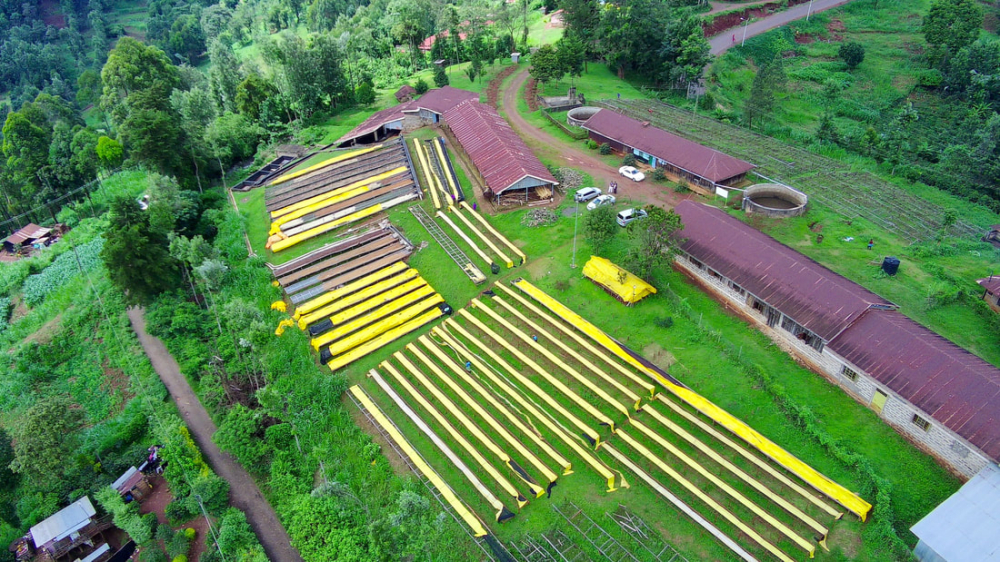
Sasseni Estate is located in the Kiambu producing region, at an elevation of 1,500 to 2,000 meters. The estate has pleasant scenery, abundant sunshine, and fertile acidic red soil that is loose in texture, deep in layer, and excellent in drainage, with water pH maintained between 5.5 and 6.5.
Where do these adorably cute peaberries come from?
Peaberry
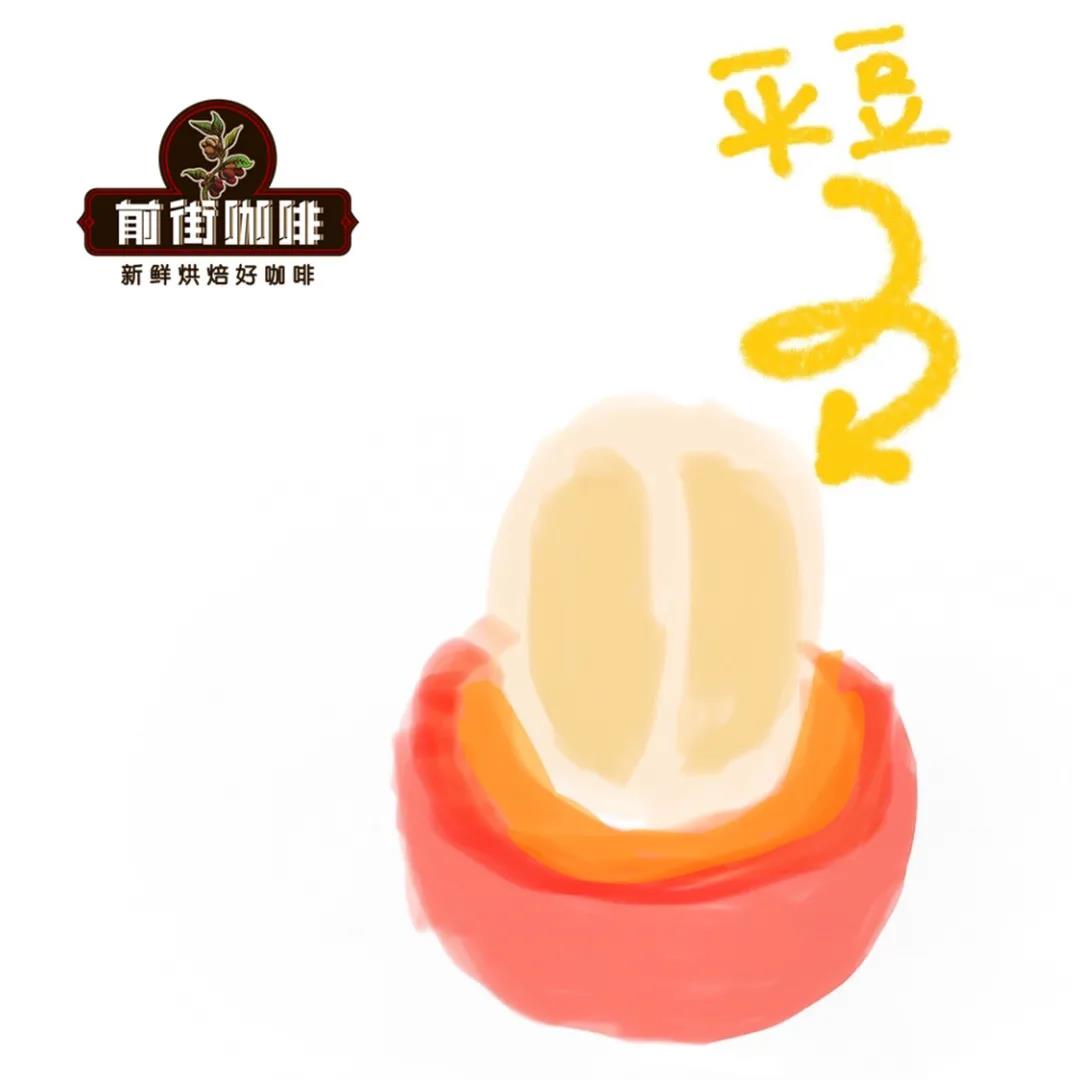
Normally, a single coffee cherry splits internally into two half-shaped coffee beans, but in rare cases the seeds do not separate; this is called a pea berry. Because the sides where the two beans press against each other are flat, they are called flat beans.
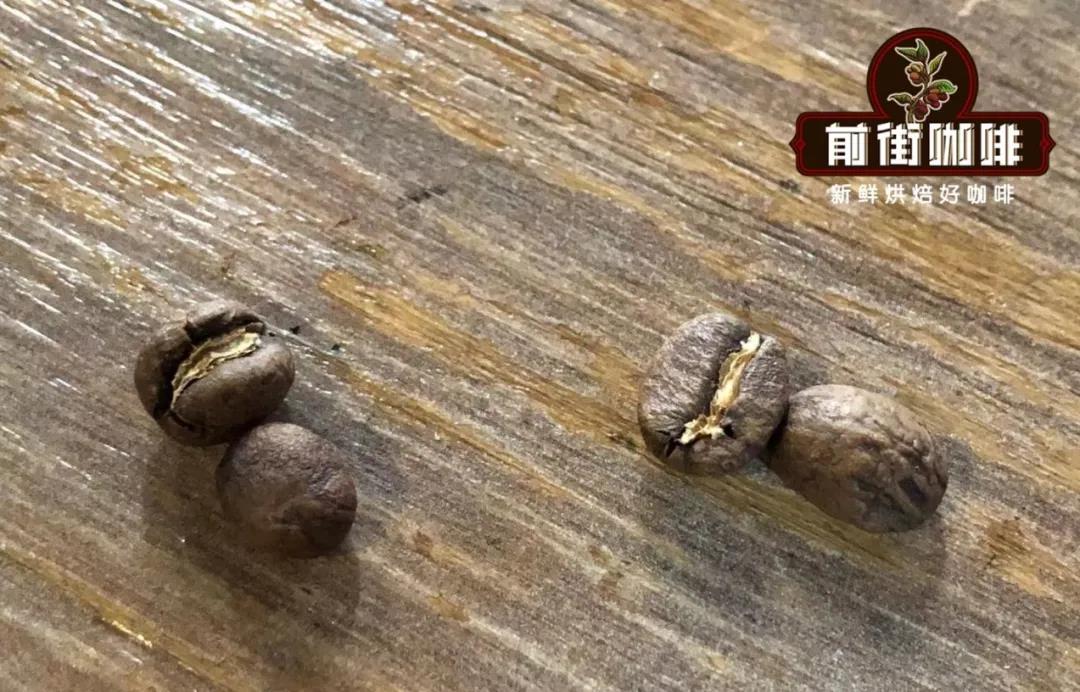
In some beans, for unknown reasons during growth, only one matures normally while the other fails to develop and does not take shape. The one that matures, having ample growing space, naturally follows the shape of the coffee fruit and grows into a plump oval—this is a peaberry. Peaberries are rare in yield, mostly found on the branches of young coffee trees, accounting for about 5% to 10% of the whole tree's production.
Peaberries are graded separately~
PB
Peaberries are usually classified as a separate grade, which is what we commonly call PB. Peaberries are generally smaller than flat beans, so they are also called small round beans. For grading peaberries, there is a dedicated set of screen standards, typically using screens No. 8 to No. 12 for sorting.
Since peaberries are inherently limited in yield, and the screening process requires more manpower for hand sorting, labor costs rise accordingly, so peaberries command a relatively higher market price. As for whether they truly taste better than flat beans, Front Street will provide the answer later through cupping and brewing.
Front Street Coffee (FrontStreet Coffee)—— Kenya Sasseni Estate PB Peaberry
Region: Kenya Kiambu
Estate: Sasseni Estate
Altitude: 1500-2000m
Processing Method: Washed
So what coffee variety is this peaberry?
SL28
According to historical records, A.D. Trench, a senior coffee official at Scott Laboratories, once noticed a variety growing in Tanzania's Modì region that seemed tolerant to drought, disease, and pests. The seeds were collected and brought back to Scott Laboratories, where their drought resistance was verified.
In recent years, genetic testing has also confirmed that SL28 belongs to the Bourbon genetic group, so SL28 coffee beans are also close in appearance to the Bourbon variety, showing a round, thick-bodied character. In actual cupping, Front Street found that the SL28 variety exhibits complex and varied acidity as well as impressive sweetness.
Front Street Coffee (FrontStreet Coffee)——Kenya Sasseni Estate Washed AA
Region: Kiambu producing region, Sasseni Estate
Variety: SL28, SL34
Processing Method: Washed
Altitude: 1650m
Grade: AA
Washed Processing Method
Washed
The two Sasseni Estate coffees that Front Street acquired both use the most traditional washed processing method. First, the skin and pulp are removed, and the beans are fermented for 12 to 18 hours. Then the fermented beans are placed in a washing channel and pushed back and forth; through the friction between the beans and the scouring force of the water, the coffee beans are washed until smooth and clean. After washing, the coffee beans are still wrapped in the parchment layer with a moisture content of about 50%, so they need further drying to bring the moisture content down to 12% to 14%.
Front Street Coffee (FrontStreet Coffee) Roasting Notes
When Front Street received the peaberries, we observed that the green beans were emerald green in color, relatively high in moisture content, and also quite dense. Peaberries tumble fairly smoothly in the drum and heat more evenly than flat beans. However, the bean quality and density of this coffee resulted in poor heat penetration, so the roasting plan designed by Front Street's roaster needed to ensure heat could reach the core of the bean, extending the dehydration time so the coffee could homogenize better in the early roasting stage, then entering first crack with a higher flame to reveal its rich berry-like flavors and full body.
When the drum temperature rose to 140°C, the beans were charged, the damper was set to 3, and the gas was set to 130. Turning point: 1'20". Roasted to 6'10'', at 150.6°C, the bean surface turned yellow, the grassy smell completely dissipated, and dehydration was complete. When the temperature rose to 159°C, the damper was set to 4. When wrinkles and dark streaks appeared on the bean surface and the toast aroma clearly turned into coffee aroma, this could be defined as the prelude to first crack; at this point, listen carefully for the sound of first crack. At 9'40'' first crack began, the damper remained unchanged, at 177°C the gas was raised to 160, at 186°C the gas was raised to 170, and the damper was set to 5. First crack development time was 2'17'', and the beans were dropped at 197°C.
Front Street observed that the AA-grade beans were plump and round. In order to let this coffee show the bright, full-bodied flavor characteristics of the Kenyan producing region, Front Street Coffee (FrontStreet Coffee) used a medium-light roast for this coffee.
When the drum temperature rose to 160°C, the beans were charged, the damper was set to 3, and the gas was set to 120. Turning point: 1'28". When the temperature rose to 130°C, the damper was set to 4. Roasted to 6'00'', at 154.6°C, the bean surface turned yellow, the grassy smell completely disappeared, and dehydration was complete. When wrinkles and dark streaks appeared on the bean surface and the toast aroma clearly turned into coffee aroma, this could be defined as the prelude to first crack; at this point, listen carefully for the sound of first crack. At 9'28'' first crack began, the damper remained unchanged, first crack development time was 2'20'', and the beans were dropped at 193.8°C.
Front Street Coffee (FrontStreet Coffee) Cupping Report
Kenya PB Coffee Bean Cupping Report
Dry aroma: berries
Wet aroma: caramel
Flavor: cherry tomato, honey, almond, plum, smoked plum
Kenya AA-Grade Coffee Bean Cupping Report
Dry aroma: berries
Wet aroma: caramel
Flavor: cherry tomato, smoked plum, nuts, honey
Front Street Coffee (FrontStreet Coffee) Brewing Notes
Front Street noticed that Kenyan coffee beans extract flavors relatively easily. To avoid the coffee becoming too strong and developing an astringent, sour sensation after extraction is complete, Front Street recommends a grind size slightly finer than coarse granulated sugar, pouring gently to avoid excessive agitation of the coffee bed, and controlling total extraction time to around 2'00''.
For this brewing of the two coffees, Front Street used 15g of coffee grounds and brewed at a ratio of 1:15. The grind size was 75% passing through a No. 20 screen, and the water temperature was 90°C to prevent high temperatures from extracting bitter substances and also to avoid lower temperatures overly accentuating the coffee's acidity.
This time a staged pouring method was used: first pour 30g of water for a 30-second bloom, at which point the coffee expands quite fully. In the second stage, pour 125g of water in small circles from the center, with a pouring height of 5cm and gentle force, minimizing agitation of the coffee bed. When the water level drops to 1/2 of the coffee bed, begin the third stage, pouring gently in circles from the center outward at a flow rate of about 4g/s until reaching 225g. Extraction ends when all the coffee liquid has dripped through the filter, about 2'00''.
Peaberry brewed flavor: at high temperature, the entry is berry juice-like, with the acidity of smoked plum and the sweet fragrance of honey; after cooling, a full-bodied tomato juice mouthfeel, the acidity of plum, and an almond finish.
AA bean brewed flavor: at high temperature, a distinctly full-bodied tomato juice mouthfeel, the acidity of smoked plum, and the sweet fragrance of honey; after cooling, slight nuts, a juicy mouthfeel, and bright acidity.
Are peaberries really better tasting than flat beans?
Based on Front Street's cupping and brewing comparison, the claim that peaberries taste better than flat beans does not absolutely hold. As for the difference, it mainly lies in peaberries being relatively easier to roast, so there is some difference in clarity of mouthfeel, but this is merely a result brought about by roasting differences. As the saying goes, "things are precious for being rare"; the idea that peaberries taste better is more a psychological suggestion brought about by price. At least based on the results of Front Street's comparison this time: peaberries and flat beans do not differ much in flavor.
The above content is compiled by CoffeeHunters, a coffee news website.


