







How Should Huakui Coffee Be Roasted and Brewed?
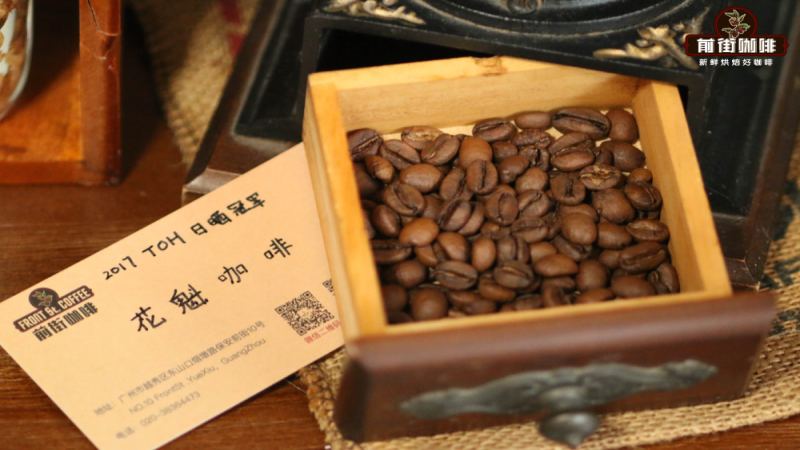
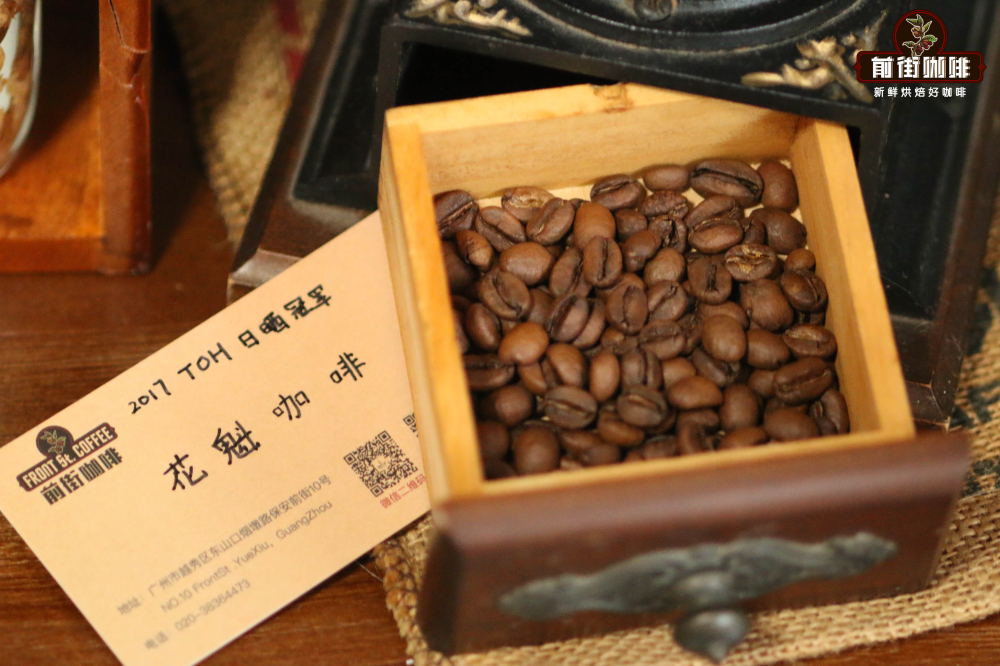
Huakui is an Ethiopian natural coffee from the Buku Abel processing plant in Hambella that won the 2017 Taste of Harvest competition with strong berry aroma and a creamy body. A Beijing green bean trader brought the winning lot to China, where it took the name Huakui, and it later earned second place at the World Brewers Cup China region while competing against Geisha beans.
The name has since grown into a series, with versions running from 2.0 through 6.0 and 8.0, all tied to the Hambella region and imported by the same trader. Brewing guides cover five extraction methods: V60, Clever Cup, French Press, AeroPress, and cold brew, each with its own parameters for pulling sweetness and fruit from this fine coffee.
Since winning the TOH championship in 2017, Huakui coffee has become an indispensable staple for lovers of fruity coffee. From the perspective of Front Street, this article sorts out the naming origins and version evolution logic of Huakui, explains in detail its roasting orientation and flavor characteristics, and systematically presents the specific parameters and flavor performance of five extraction methods: V60, Clever Cup, French Press, AeroPress, and cold brew, helping coffee enthusiasts fully master the brewing essentials of this Ethiopian natural bean.
For more specialty coffee knowledge, please follow the WeChat public account: FrontStreet Coffee
Front Street Huakui coffee, as one of the must-have staples for countless fruity coffee lovers, has unknowingly already reached its eighth year. So what kind of coffee bean can be defined as "Huakui"? If you want to brew out its essence, what details should you pay attention to? To know the details, please join Front Street as we pull the progress bar back to February 2017.
What is Huakui coffee?
About eight years ago, when the Ethiopian DW Coffee Company participated in the green bean competition TOH (Ethiopia National Taste of Harvest competition) held by the African Fine Coffees Association, it submitted a natural coffee bean from the Hambella Buku Abel processing plant, and with its rich berry aroma and creamy texture won the championship in that year's natural group.
In the same year, this champion lot was spotted by a green bean trader in Beijing. Precisely because of its champion status, it was named "Huakui" and launched in the domestic market, implying "the chief of a hundred flowers, outshining all others." Soon after, this "Huakui" was used by a World Coffee Brewing Competition contestant (China region) as competition beans, defeating a host of opponents using Geisha coffee beans and winning that year's runner-up. In this way, this natural bean from the Buku Abel processing plant also successfully debuted along with the heat of the competition stage, and coupled with its affordable price, it quickly became a high-quality coffee generally recognized within the industry.
In our impression, the naming methods of coffee beans usually have traces to follow, and once established they do not change, such as Geisha being a variety, Blue Mountain being a origin, Yirgacheffe being a processing plant, and so on. But Huakui is particularly special. It is like Apple's iPhone, needing a new "version name" every year before it can be launched. Why is this?
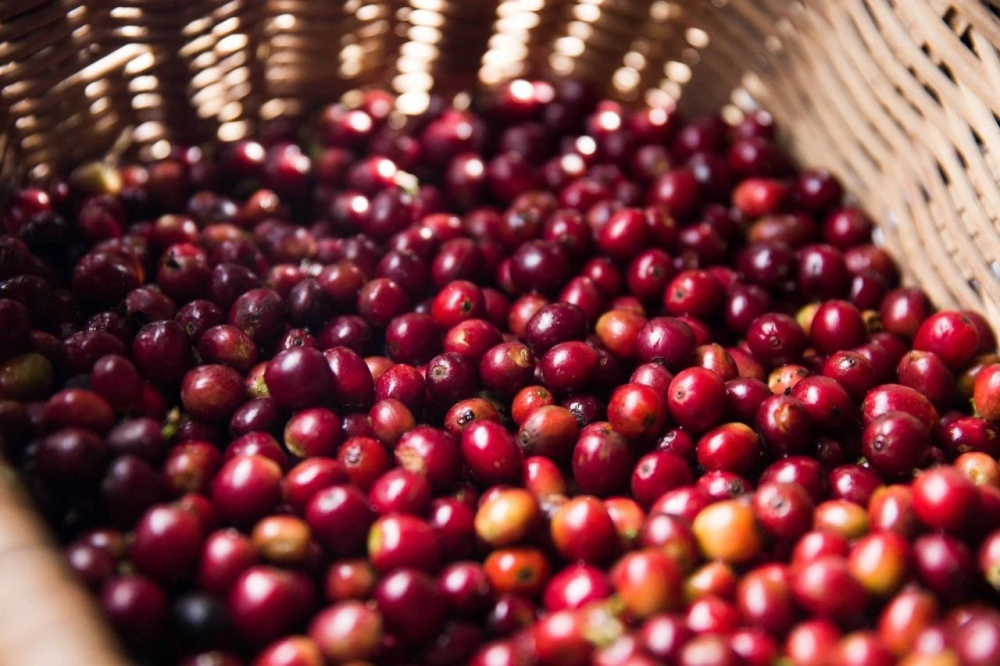
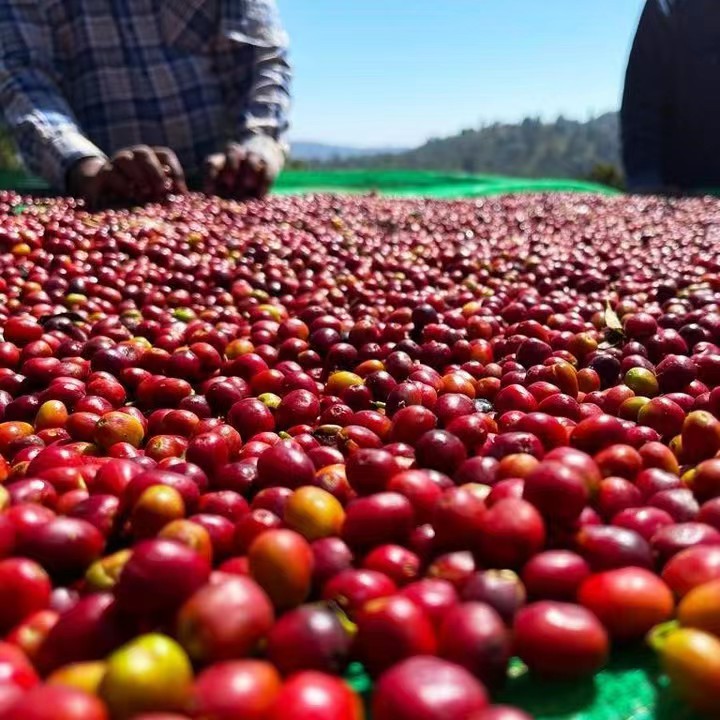
In fact, before this bean was called "Huakui," it had only one English name, "Hambella." To put it plainly, it was actually natural G1 coffee beans from the Hambella production area, and "Buku Abel" was its more detailed traceability information. In 2017, after "Huakui" became famous overnight, in order to meet the surge in market demand, DW Company added up to 5 independent specialty coffee drying processing stations in Hambella Wamena Wereda, all located within the core production area of Dimtu town. In addition to the original Buku Abel, four other small villages, including Buku Saysay, Haro Soresa, Tirtiro Goye, and Seke Bokosa, also joined the production of natural coffee beans. It is reported that at this time, the "Huakui" produced annually under DW Company had already reached tens of millions of tons.
To further increase the yield of "Huakui," in addition to adding processing stations, DW Company also greatly expanded the harvesting range of coffee cherries. Some coffee cherries grown in neighboring villages may also be sent to these processing stations for processing and then exported as "Hambella G1." In other words, although as long as they are Hambella natural G1 coffee beans processed from these five villages, we can call them "Huakui." But strictly speaking, only the area processed within "Buku Abel" village contains the small production area of the natural lot that won the championship that year, and is also the most likely to produce coffee beans close to the "Huakui flavor" of that year.
Why does "Huakui x.0" appear?
Everyone knows that coffee is essentially an economic crop. Its yield and quality in a given year are first affected by factors such as climate and rainfall, altitude and soil, fertilization and weeding, and then, depending on differences in processing details (sunlight time, temperature, humidity), it will present different flavor profiles. Huakui is naturally no exception.
Since the 2018 harvest season, the natural G1 coffee from the same growing origin and processing station has no longer tasted like the Huakui from 2017. Therefore, in order to continue selling this natural coffee from Hambella while making a certain distinction from the original version, domestic green bean companies, counting from after 2017, created an X.0 suffix for each subsequent year's lot. For example, the 2018 lot was called "Huakui 2.0," the 2019 lot was called "Huakui 3.0 and 3.1," and so on.
Flavor characteristics of Front Street Huakui coffee
As a star product of African coffee, Ethiopian beans have become many people's introductory single-origin choice due to their rich floral aroma, fresh citrus notes, and clear, transparent mouthfeel. As a fan of floral and fruity coffee, Front Street has multiple Front Street Ethiopian coffee beans on its bean list. Among them, Front Street Huakui, with its consistently high reputation, has become the preferred natural single-origin lot for many enthusiasts. Front Street believes that Front Street Ethiopian coffee is mainly represented by fruity acidity and is more suitable for medium-light roasting, highlighting sweetness while retaining more floral aroma and fruity acidity.
The dry aroma of Front Street natural Sidamo Huakui coffee has notes of nuts, honey, berries, and a faint fermented aroma. On the palate, it has a full sweet-and-sour taste of passion fruit, cream, and strawberry, with a thick body and a cocoa finish.
V60 drip extraction
Flavor performance: mixed berry-like aroma, creamy strawberry and passion fruit-like sweetness and acidity, obvious sweetness, full mouthfeel.
The name of the V60 dripper comes from its 60-degree conical design. This angle can guide the water flow to the center, extending the contact time between water and coffee. The large aperture at the bottom allows everyone to control the flavor extraction time of the coffee by changing the size of the pour. In order not to let the water pass through the coffee bed too quickly, Front Street recommends a medium-fine grind size (80% passing rate on China No. 20 sieve). In order to better show the full juice-like body and rich fruit aroma of Front Street small-bean Huakui coffee, a water temperature of 91°C is recommended, and for the brewing technique, a three-stage slow circular pour with a fine stream can be used.
The coffee dose is 15g, and the coffee-to-water ratio is 1:15, meaning we need to pour 225g of hot water over 15g of coffee grounds for extraction. First, use 30g for a 30-second bloom, then pour at a flow rate of 4g per second in a 4-second-per-circle pattern from the center outward in circles and then back to the center until reaching 125g, then stop. Wait for the coffee bed to drop to half its height, then begin pouring in the same way until 225g, then stop. After all the coffee liquid in the dripper has flowed into the server, remove the dripper and end the extraction. The brewing time is 2 minutes 10 seconds.
Clever Cup immersion extraction
Flavor performance: mixed berry-like aroma, full strawberry juice body, creamy smoothness, black tea-like aftertaste.
The bottom of the Clever Cup is divided into two layers. The outer layer has a supporting function, and the inner layer has a press-type switch valve design. As long as it is not placed on a container, the valve remains closed, allowing the coffee grounds to steep inside. After steeping is complete, as long as the dripper is placed on a container, the center of the base will be pressed, causing the piston valve to open and allowing the coffee liquid to flow into the container. Because it uses immersion extraction, Front Street recommends a medium grind size (75% passing rate on China No. 20 sieve), a water temperature of 90°C, and a center fine-stream pour for the brewing technique.
The coffee dose is 15g, and the coffee-to-water ratio is 1:15, meaning we need to pour 225g of hot water over 15g of coffee grounds for extraction. First move the Clever Cup onto the electronic scale (at this time the valve will close automatically), and pour the ground coffee into the center of the dripper. Press the timer, and in the first stage pour 30g of hot water in a "Z" pattern for a 30-second bloom. After the bloom, there is no need to pour in circles. Pour hot water in a fine stream into the center of the dripper until 225g, then steep for 1'50". After steeping is complete, move the Clever Cup onto a container to open the valve and filter out the coffee liquid in the dripper. The whole process takes about 15 seconds, and the total coffee extraction time is 2'05".
French Press immersion extraction
Flavor performance: mixed berry-like aroma, complex juice-like body, obvious creamy mouthfeel, full and mellow overall.
The French Press consists of a heat-resistant glass container and a metal filter with a plunger. It mainly extracts coffee by immersion. During extraction, the longer the steeping time, the more substances are extracted from the coffee until saturation. In other words, the longer it steeps, the stronger the coffee. At the same time, filtration through the metal filter retains a large amount of oils in the coffee, making the mouthfeel smoother, but because it cannot completely filter out fine particles, it produces a slight sediment feel. In order to avoid over-extraction, Front Street recommends a medium-coarse grind size (71% passing rate on China No. 20 sieve), a water temperature of 92°C, and a steeping time of 4 minutes.
The coffee dose is 15g, and the coffee-to-water ratio is 1:15. Pour the ground coffee into the pot, then pour in 225ml of hot water, pull up the plunger, cover the pot with the lid, and wait 4 minutes. Then slowly press down the plunger so that the metal filter presses to 1/4 of the pot body, avoiding fine particles at the bottom surging upward.
AeroPress pressure extraction
Flavor performance: saturated berry acidity and aroma, obvious sweetness, creamy smoothness, high cleanliness, obvious black tea character.
The structure of the AeroPress can be simply broken down into three main parts: the chamber, the filter cap, and the plunger. It combines the immersion extraction method of the French Press, the paper filtration of pour-over coffee, and the pressure extraction of an espresso machine. Its working principle is to mix coffee grounds and hot water, then use the plunger to compress air and force extraction through the filter cap to obtain clean-flavored coffee. Because it is a short-time pressure extraction, Front Street recommends a fine grind size (90% passing rate on China No. 20 sieve) and a water temperature of 90°C.
The coffee dose is 15g. First, place the circular filter paper on the filter cap and wet it with water so it adheres; then attach the filter cap to the chamber and place it upright on the server. Put on the funnel and pour in 15 grams of ground coffee; then start timing, pour in hot water until the water level reaches the "④" mark on the chamber, and use a stirrer to gently stir the coffee grounds in the chamber so that all the coffee is wet by the water. Attach the plunger, and because positive pressure will cause coffee to drip into the server, the actions of pouring water, stirring, and attaching the plunger should be done quickly. After attaching the plunger, because the inside is sealed, dripping will stop. After 1 minute, begin pressing the plunger. Under pressure, the coffee liquid is pushed into the server. When pressing is complete, the time is 1 minute 20 seconds.
Cold water immersion extraction
Flavor performance: complex fruity acidity and aroma, full berry juice body, passion fruit fermented aroma, balanced sweetness and acidity, full and mellow overall.
Cold brew coffee, also known as cold extraction coffee, is made by pouring cold water over coffee grounds and then performing immersion extraction. The cold brew method can amplify the various flavors and aromas of coffee, reduce acidity, and enhance the overall body of the coffee. Because it uses low-temperature extraction, Front Street recommends a medium-fine grind size (85% passing rate on China No. 20 sieve). For steeping, either room-temperature water or ice water can be used.
Front Street recommends a coffee-to-water ratio of 1:15 for making cold brew coffee. For example: add 30g of coffee to 300g of room-temperature water and 150g of ice cubes (or directly add 450g of room-temperature water), stir thoroughly, then place in the refrigerator to steep for 12-24 hours. After extraction is complete, filter out the coffee grounds using filter paper or a fine mesh strainer, and it is ready to drink. The best time to taste cold brew coffee is 2-3 days after filtering out the coffee grounds, and it is recommended to store it for no more than 7 days.
The above content is compiled by CoffeeHunters, a coffee news website.


