







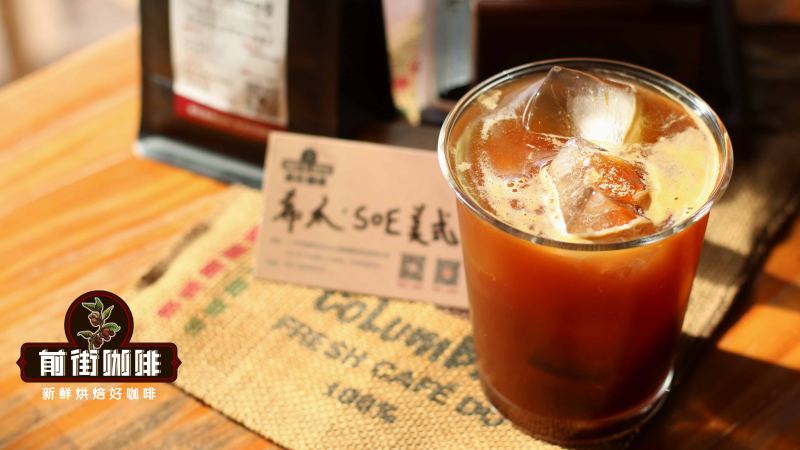
What are SOE beans and how do they differ from blends?
SOE beans are single origin espresso: roasted coffee from one origin, pulled as espresso. The term was coined in contrast to blended espresso, and it says nothing about green bean variety, roast level, extraction plan or quality. Because espresso magnifies every flavor, the strengths and faults of a single origin show up quickly, so roasting and grinding need more care than with blends.
Blended coffee beans usually deliver more stability cup to cup, since components balance each other. Single origin lots are less predictable, which is why shops often roast them lighter to bring out sweetness and acidity instead of bitterness. Grind size and extraction yield are the main levers for fixing sharp acidity, short aftertaste or a thin body.
In recent years, the term SOE has become increasingly common in coffee shops. It refers to Single Origin Espresso, in contrast to espresso blends. Because espresso magnifies all the flavors in coffee, the strengths and weaknesses of single-origin beans are easily highlighted, so the technical requirements for roasting and grinding are higher. Starting from the definition of SOE, this article sorts out its differences from blended beans in terms of stability and flavor expression, and around whether light-roast SOE is necessarily sharply acidic, how to formulate an extraction plan according to drinking purpose, and how to correct common problems such as sharp acidity, short aftertaste, unpleasant taste, or too-light body by adjusting grind size and extraction yield, it provides actionable ideas and reference parameters.
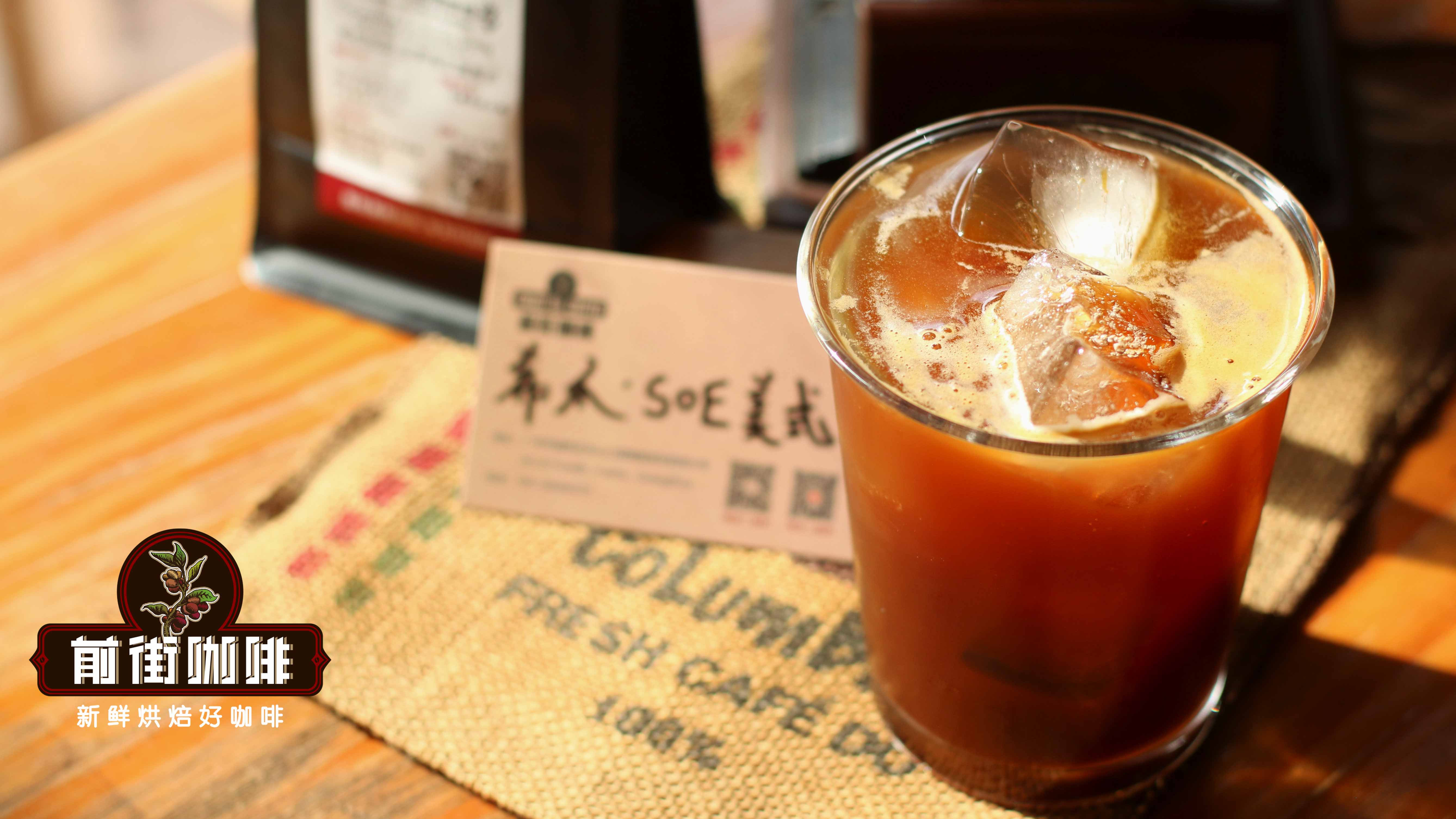
The term SOE has appeared more and more frequently on coffee shop menus in recent years. What exactly is it? And if you suddenly want a cup, what should you do to get a satisfying result?
What is SOE?
SOE is the abbreviation of "Single Origin Espresso." In Chinese, it is called single-origin espresso. This term was proposed in contrast to blended espresso. Simply put, espresso made from roasted beans from a single origin can all be included in the category of SOE. It does not specify green bean variety, roasting information, or extraction plan, nor does it mean the beans are necessarily better in quality. Espresso extraction is only a method, and it does not guarantee that the final product will taste good.
Espresso magnifies the flavors in coffee exponentially, and neither the good nor the bad can escape. Single-origin coffee comes from a single origin, so its shortcomings are likewise easily magnified, and variables such as roast level and particle size will influence the final taste. Therefore, making a delicious SOE has certain requirements for technique at every stage. In terms of stability, blended coffee beans usually perform more reliably.
Today, the overall quality of coffee beans is improving, and more and more coffee shops use SOE beans as a selling point. In order to let customers taste the difference between SOE and ordinary blends, bean selection must be careful, and the roast level also tends to be lighter, so that the first sip is no longer bitter and burnt, but brings out some sweetness and acidity.
Is light-roast SOE necessarily sharply acidic?
There used to be a saying that light-roast beans are not suitable for espresso, as they will be sharply acidic and hard to swallow. Indeed, espresso made from light-roast beans is more acidic than that made from dark-roast beans; this is an attribute brought by the roast level. Another reason is that espresso extraction plans are often fixed and unchanging. When brewing pour-over, everyone distinguishes brewing parameters according to light roast and dark roast, but when it comes to espresso, they still apply conventional plans, so sharp acidity is only to be expected. To extract espresso with good flavor, the approach must be clear. Clarify the purpose Many friends have not thought one thing through clearly: what are you extracting this espresso for—to drink directly, to dilute with water, or to add milk. This will influence the entire extraction plan. If drinking directly, the espresso needs to be softer; if diluting with water, the flavor should be more complete; if adding milk, it needs to be more intense.
(So do dark-roast beans not require attention to these things? Actually, they do as well, but in many cases one set of parameters can cover all three types of drinks, without needing to prepare two or three extraction plans. This is also why medium-dark roast beans are commonly used for espresso—it saves trouble.) First apply the extraction formula Just like when normally dialing in the grind size, first use the standard formula: 1:2 brew ratio, 25 to 30 seconds. Using it first is to establish a grind size. Later it may still need fine-tuning, but at least it will not be too far off. (If you normally use medium-dark roast espresso beans, grinding light-roast SOE will basically require setting the grind finer. For example, the grind setting Front Street Coffee normally uses for the Warm Sun blend is 2.1. With the same dose and time, the grind size used for light-roast Kenya is 1.6. Moreover, the density change brought by roasting will make the same weight of light-roast coffee grounds smaller in volume than dark roast, so the final dose must also be determined according to the portafilter basket capacity.)
Adjust according to flavor and purpose If the coffee extracted with the general formula has no major problems with grind and flow rate, but the flavor is not right, then you need to address the specific issue. The most common problem is being too sharply acidic with too short an aftertaste. This problem is generally the easiest to solve. First check whether the flow rate at this grind size is reasonable, for example at what second the first drop of coffee liquid comes out: if it is 4 to 5 seconds, you can appropriately grind finer; if it is 7 to 8 seconds, then there is no need to change it.
Next is to extend the extraction yield, usually extracting 10 to 15 grams more. When the coffee liquid is sharply acidic and the aftertaste is short, it is mainly because the extraction yield is too low. Increasing the extraction yield can weaken the espresso's pungency, gradually making it more balanced, with sweetness also becoming more prominent. Of course, doing so will lower the concentration, and it is generally suitable for drinking directly or diluting with water to make an Americano. For example, the extraction parameters Front Street Coffee uses for Kenya coffee beans are 20.6 grams of grounds extracting 55 grams of coffee liquid, in 34 seconds. Drunk directly, it is soft and has berry sweetness; made into an Americano, it is full and solid, with plum- and tomato-like acidity. When making milk coffee, it is more about grinding finer to compensate for insufficient extraction yield. After that, do not be trapped by formula data; even if extraction exceeds 30 seconds, as long as the milk coffee tastes good, it is fine. This is the way to solve the problem of insufficient coffee flavor in SOE milk coffee; if an acidic and astringent feeling appears in the milk coffee, then it still needs to be solved by extending the extraction yield.
The second common problem is that the coffee liquid extracted with the formula has unpleasant flavors, such as grassy, almond, or bitter-burnt notes. At this time, it is best to use the method of dividing into three parts to troubleshoot. Suppose the target coffee liquid is 40 grams; then use three cups to respectively catch about 13 grams each of the beginning, middle, and end segments. Taste them separately to see which cup has the unpleasant flavor. If only the end segment has it, simply reduce the extraction yield; if the first cup or all three cups have it, then the grind size needs to be adjusted.
The third problem is that the coffee liquid is too light and has no flavor. This is a situation many friends have reported to Front Street Coffee. Front Street Coffee has also concluded that most friends think the espresso grind size is a fixed value, and that once a setting is dialed in for one bean, it can be used for other beans as well. In fact, this is not the case. So when the coffee liquid is too light and thin, it is generally because the grind size has not been found accurately. Of course, if you compare light-roast SOE beans with traditional dark-roast espresso beans for intensity, then it indeed cannot compare.
The above content is compiled by CoffeeHunters, a coffee news website.


