








Where does mocha originate from, and how does flat white differ?
Flat white is espresso with a small amount of hot milk and a very thin layer of foam, about 200 ml at some shops using a 36 g double shot. The difference from a latte, cappuccino, or Dirty comes down to the ratio of espresso to milk and foam thickness, not a separate brewing method.
Where does mocha originate from and who invented mocha coffee remain debated, much like the flat white, which both New Zealand and Australia claim. One account traces flat white to a barista named Fraser McInnes, who struggled to foam low-fat milk for a cappuccino. Milk texture, not size alone, defines these drinks.
Flat white is what is commonly known in China as "澳白咖啡", also called "馥芮白", "澳瑞白", or "小白咖啡". It is made with espresso paired with a small amount of milk and a very thin layer of milk foam. The biggest difference between it and a latte, cappuccino, or Dirty lies in the ratio of espresso to milk and the thickness of the milk foam. This article systematically sorts out the characteristics and differences of these coffee drinks, analyzes the origin controversy of flat white, the key points of making it, as well as Front Street Coffee's secret menu and serving methods, to help coffee lovers more clearly choose the coffee that suits their taste.

Front Street Coffee often gives people a first impression that is somewhat plain, even a bit old-fashioned, from the store decoration to the style of its drinks. Espresso drinks in particular are often a focal point of discussion. On Front Street's seemingly simple espresso menu, only five coffees are listed: Americano, latte, toffee nut latte, cappuccino, and mocha. Trendy-sounding drinks like flat white and Dirty do not appear on Front Street Coffee's official menu, but regulars know very well that Front Street actually has a secret menu. As long as the barista has the relevant skills, flat white and Dirty are no problem at all. Ultimately, the core difference among various coffee drinks is nothing more than the different ratio of espresso to milk.
What exactly is a flat white? It is actually the "澳白咖啡" commonly seen in domestic coffee shops, and some people also call it "馥芮白", "澳瑞白", "小白咖啡", or "平白咖啡". This drink is composed of espresso, a small amount of milk, and a very small amount of milk foam. Different coffee shops have different recipes. At Front Street, a flat white is about 200 ml, using a double shot of espresso (36 g) plus an appropriate amount of hot milk, with the milk foam as thin as possible. When making a flat white, the surface of the milk needs to show a velvety smooth texture, and the liquid level should not rise too much after heating.
The origin of flat white is quite controversial, with both New Zealand and Australia claiming that their own country invented it. New Zealanders believe that flat white originated from a not particularly successful cappuccino. A barista named Fraser McInnes was trying to make a cappuccino with low-fat milk that was difficult to foam, but due to reasons such as insufficient steam from the coffee machine, he ended up with a drink that had very little milk foam but a quite good taste. The flavor of the espresso became the dominant note of the whole cup, so he named it Flat white, which literally translates in Chinese as "flat white", hinting that the milk foam of this kind of coffee is very thin.
Australians, however, insist that flat white was born in Australia. Their reasoning is that the local market lacked a milk coffee with foam thickness between that of a latte and a macchiato, and flat white filled exactly that gap.
Front Street thinks that no matter where it originated, being delicious and widely accepted is what really matters. A few years ago, it was not easy to find a flat white outside New Zealand and Australia, but now it has swept the world and become the coffee drink of choice for many people.
For friends who do not drink coffee often, the differences among flat white, latte, and cappuccino may not be easy to distinguish. Front Street provides a systematic breakdown here so that everyone can more easily choose the coffee they like in the future.
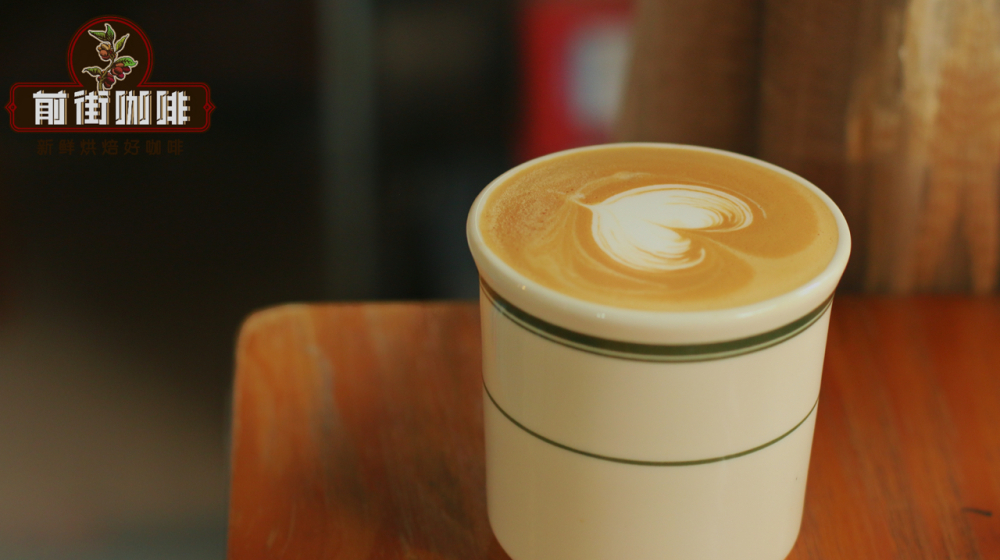
First, it is important to understand that many coffee drinks are based on espresso. So what is espresso? It is a highly concentrated, bittersweet coffee originating from Italy. Although the taste of espresso varies depending on the coffee bean variety, roast level, grind size, and extraction method, a well-made espresso usually has a heavy body, a rich texture, and an abundant layer of crema.
Front Street generally uses a double shot of espresso. Today's extraction parameters are 20 g of grounds, extracted for 26 seconds, yielding 35 g of liquid.
In a latte, the ratio of espresso to milk is about 1:3 to 1:5, with a small amount of milk foam added. A cappuccino is similar to a latte, with the main differences being a smaller cup size, using only a single shot of 18 g of espresso, a coffee-to-milk ratio of about 1:2 to 1:3, and a thicker layer of milk foam.
Usually, the milk for a cappuccino needs to be steamed at high temperature to make the whole cup rich and dense, so it is generally only made hot. Of course, not long ago Front Street also discovered a way to make milk dense without heating it. If you are interested, you can follow the official account Front Street Coffee and search for cappuccino to read more. Next, Dirty is the opposite of cappuccino. It is usually made iced, and what you drink is that sensation of ice and fire between hot espresso and cold milk.
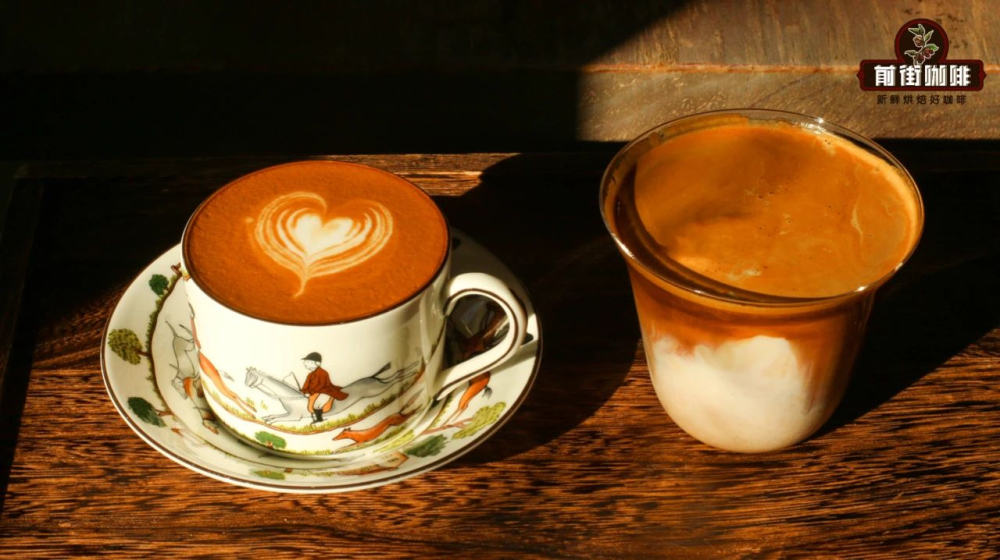
To make Dirty taste even better, Front Street uses a chilled glass, placing the glass in the freezer in advance so that the high-temperature espresso and low-temperature milk form a sharp contrast, enhancing the coffee's layers. Customers are generally advised to finish it in three big sips.
Although it was mentioned earlier that both flat white and cappuccino use tulip ceramic cups, the differences between the two are actually quite large. In order to make espresso the dominant flavor, Front Street uses two shots of espresso, greatly increasing the proportion of espresso in the entire drink. The milk foam of the hot milk is very thin, in order to bring a silky smooth texture while also softening the bitterness of the espresso to a certain extent.
Regarding flat white, Front Street has also noticed some interesting phenomena. After flat white spread from abroad to China, differences in preparation appeared across regions. First, regarding the choice of cupware, foreign countries generally serve flat white in ceramic cups, for the simple purpose of keeping it warm. In China, however, in order to highlight its difference from latte and cappuccino, the two mainstream milk coffees, it is usually served in a glass cup, with the additional purpose of showing how thin its milk foam is.

Through videos, Front Street found that abroad, especially in Australia, although the shops do not have pour-over coffee, they still equip two or even more grinders. Why is that?
Actually, this has to do with flat white. Ordinary lattes and cappuccinos mostly use blend coffee beans, with a flavor profile mainly of nuts and chocolate, which blends well with milk. The sweetness and milky flavor of the milk can mask or neutralize the bitterness of the espresso, making it easier to drink. But the purpose of making flat white is different. Flat white is espresso-dominant, so specific coffee beans are chosen to highlight the coffee flavor and avoid the milk flavor overpowering the coffee flavor. In China, however, it seems that only SOE coffee allows customers to choose their own coffee beans.
Of course, besides these milk coffees, Front Street also has pure espresso-style drinks, including iced Americano with full ice, long black, and others. They all belong to Front Street's secret menu, so if you have the chance, you can come to Front Street's offline store and give them a try.
Professional coffee knowledge exchange
More coffee bean information
Please follow Coffee Workshop (WeChat public account: cafe_style)
For more specialty coffee beans, please add the private WeChat of Front Street Coffee, WeChat ID: kaixinguoguo0925
The above content is compiled by CoffeeHunters, a coffee news website.


