







How Does the Washed Coffee Beans Process Shape Yirgacheffe?
Yirgacheffe is both a small town on the eastern edge of the East African Rift Valley and a trademark-protected coffee name. Grown at roughly 1,800 to 2,000 meters, its washed lots are known for a clean mouthfeel and bright acidity, which is why baristas often suggest Yirgacheffe to customers who are unsure what to order.
The washed coffee beans process used at local stations removes the fruit before drying, and the region's wetland surroundings west of town supply the water those stations need. Ethiopia's green bean grading system then sorts the lots, and washed Yirgacheffe from areas such as Worka and Kochere shows the fresh, clean character that draws many drinkers into specialty coffee.
Yirgacheffe is where many coffee lovers first encounter specialty coffee—it is both a small town and a trademark-protected coffee flavor name. This article begins with the geography and trademark background of the Yirgacheffe region, outlines the complete washed processing method along with its pros and cons, and explains Ethiopia's green bean grading system. It also includes information on the washed Yirgacheffe products listed by Front Street Coffee, including the Gotiti Cooperative and the daily drinking bean series, as well as the V60 brewing parameters recommended by Front Street's roaster and the flavor profiles of three washed Yirgacheffe coffees for readers' reference.
For more specialty coffee knowledge, please follow our WeChat public account: Front Street Coffee (FrontStreet Coffee)
Ethiopia has a large number of ancient native varieties with highly complex genetic makeup, and combined with the use of different processing methods such as natural and washed, local coffees present a rich and varied flavor profile, making them extremely popular among coffee lovers. When Ethiopian coffee is mentioned, many people will directly refer to it as Yirgacheffe. Indeed, Yirgacheffe's fresh and clean character is the first cup through which many enthusiasts enter the world of specialty coffee. Washed Yirgacheffe has a clean mouthfeel and bright acidity; natural Yirgacheffe is clean and smooth with a slight sweetness from fermentation. At Front Street Coffee, when customers don't know what to order, baristas often suggest starting with beans from the Yirgacheffe region. In this article, Front Street will talk about Yirgacheffe coffee beans processed with the washed method.
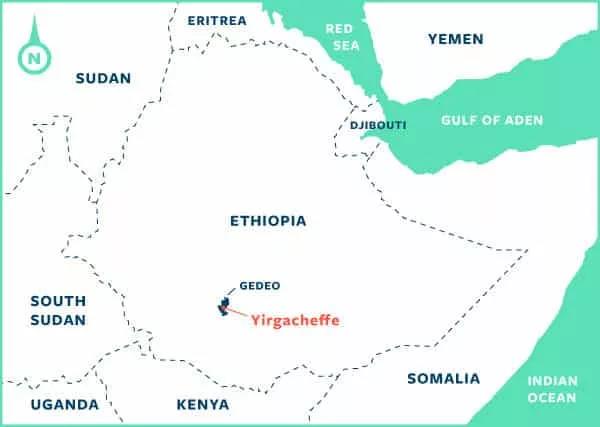
Yirgacheffe is a small town Yirgacheffe sits on the eastern edge of the East African Rift Valley, with terrain that is highly fragmented, at an altitude of about 1,800 to 2,000 meters. To its west lies Lake Abaya, an area that has been wetland since ancient times with abundant water resources, which also creates favorable conditions for local washing stations. Administratively, Yirgacheffe belongs to the Sidama region, but it has been separated out because of its distinctive flavor. In addition to the town of Yirgacheffe itself, the surrounding area also includes sub-regions such as Worka and Kochere.
With the rise of the third wave of coffee, consumers are increasingly willing to pay higher prices for coffees with specific regional flavors. For example, Sidama coffee has sweetness and floral notes, Yirgacheffe coffee has medium body with sweetness and sweet aromas, and Harar coffee has exotic aromas and intense berry notes. To protect the reputation of these origins, the Ethiopian government registered three well-known coffee regions as commercial trademarks in 2004, including Yirgacheffee®. Therefore, what we call Yirgacheffe today refers more to a coffee flavor trademark.
Front Street believes that the so-called "Yirgacheffe flavor" refers to abundant citrus and lemon fruit acidity, rich jasmine floral notes, a light and elegant mouthfeel with a tea-like quality, drinking like a refreshing, clean lemon tea. Traditional Yirgacheffe coffee beans were processed naturally, but early natural beans were mostly dried directly on the ground, easily absorbing off-flavors such as dirt and dust, and with insufficient sorting, quality was mediocre. In 1972, Ethiopia introduced washed processing technology from Central and South America to improve coffee quality, making Yirgacheffe's jasmine floral notes and citrus-lemon freshness clearer and more translucent, and it has since risen to become one of the representatives of the world's specialty coffee.
Washed Processing Method
The washed method removes impurities (such as stones or debris) and defective beans through various steps, so the green beans have a uniform appearance and are generally regarded as a symbol of high quality, often trading at higher prices than naturally processed beans. However, the more detailed the processing steps, the more operational and hygiene management links there are, and the higher the risk becomes, so washed processing does not necessarily equate to high quality.
The biggest hidden risk of washed coffee is that during fermentation the beans can easily pick up fermented odors. Some coffee experts point out that a single bean with a fermented taste is enough to ruin 50 grams of beans. In the vast majority of cases, beans picking up fermented flavors is due to a lack of management and maintenance of the fermentation tank. Soaking coffee beans that still have mucilage on the parchment in a fermentation tank overnight can remove the mucilage; but if the microorganisms in the fermentation tank change, the coffee beans will pick up fermented flavors.
Bean selection: Place the harvested fruit into a water-filled tank and soak for about 24 hours. At this point ripe fruits will sink, while unripe and overripe fruits will float, allowing them to be removed.
Removing pulp: Use a machine to remove the skin and pulp, leaving only coffee beans wrapped in parchment. At this stage the beans still have a layer of mucilage on the outside, and the washing process is precisely meant to wash away this mucilage layer. Fermentation: The mucilage adheres strongly and is not easy to remove, so it must be placed in a tank for about 18 to 36 hours to ferment and break down the mucilage. There are two fermentation methods, namely wet fermentation and dry fermentation—as the names suggest, the former adds water and the latter does not.
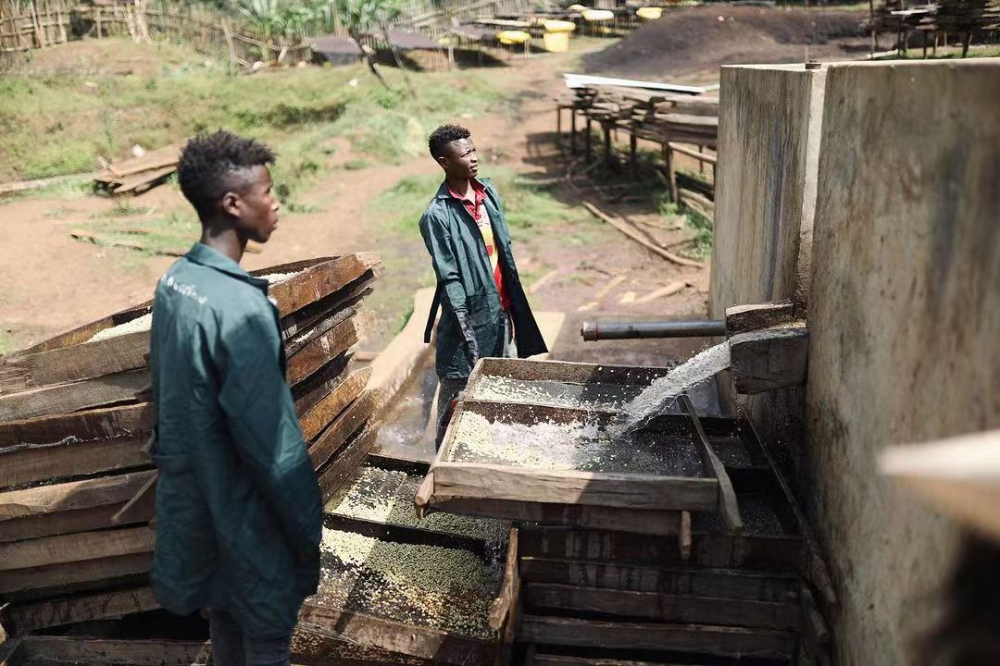
During fermentation, special changes occur in the seed and the internal pulp, and this is the step in the washed method that most affects coffee flavor. Some farms add hot water or enzymes to speed up fermentation, but this negatively affects coffee bean quality and is not welcomed by specialty coffee enthusiasts. Washing: Farms using the washed method must build washing channels and be able to introduce a continuous flow of fresh water. During processing, the fermented beans are placed in the channel and moved back and forth, using friction between the beans and the force of the flowing water to wash the coffee beans until smooth and clean.
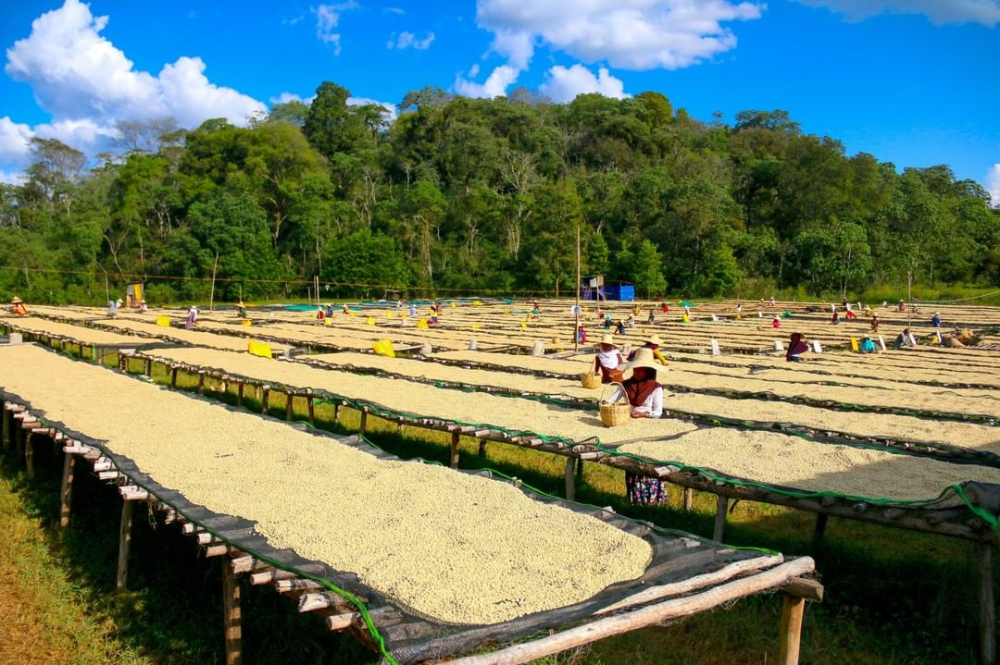
Drying: After washing, the coffee beans are still inside the parchment with a moisture content of about 50%, and must be dried to reduce the moisture content to 12%, otherwise fermentation will continue and lead to mold and spoilage. The better approach is sun drying, which, although it takes 1 to 3 weeks, produces an especially outstanding flavor and is quite popular. In addition, some places use machine drying, which greatly shortens processing time, but the flavor is inferior to sun-dried coffee. Hulling: Once dried, the beans can be stored in warehouses or sent to a factory for hulling to remove the parchment and silver skin.
Front Street takes into account that washed processing better reflects the cleanliness of coffee's mouthfeel and the purity of flavor presentation, so when analyzing the specific flavor of a coffee region, it uses the region's washed beans as a reference. If a beginner has never had Yirgacheffe, Front Street will also first recommend Front Street washed Yirgacheffe, which helps build an understanding of the region's flavor, and later when trying Yirgacheffe processed by natural, honey, and other methods, there will be a direction for comparison.
Yirgacheffe Washed Coffee Bean Grading
Before the emergence of the Ethiopia Commodity Exchange (ECX), Ethiopia's coffee export grades were set by the CLU department (Cupping and Liquoring Unit) under the Ministry of Agriculture, mainly grading green coffee beans by the number of defective beans contained in 300 grams, with the grading standards shown in the table below.
Generally speaking, washed beans are G1 to G2 grades. Due to technical problems with natural processing at the time, natural green beans had a higher number of defects, usually G3 to G5. With improvements in natural processing technology, today's natural beans can also reach G1 to G2 grades. The washed Yirgacheffe coffee beans listed by Front Street Coffee include Front Street Yirgacheffe Gotiti Cooperative, Front Street Yirgacheffe Kochere, and Front Street Washed Yirgacheffe Daily Drinking Bean.
Front Street Ethiopia Yirgacheffe Gotiti Cooperative Coffee Beans Region: Yirgacheffe Gedeo Zone Altitude: 1900-2300m Variety: Heirloom Processing Method: Washed
Front Street Ethiopia Washed Yirgacheffe Daily Drinking Bean Altitude: 1800-2000 meters Variety: Local Heirloom Processing Method: Washed
Many friends who are not very familiar with Front Street may misunderstand the Front Street daily drinking bean series, perhaps thinking that the word "daily drinking" is just to satisfy the curiosity of people unfamiliar with coffee; sometimes online promotions offer large discounts, which can also make people worry whether the quality of Front Street's beans is poor or whether the flavors are muddled. In fact, Front Street Coffee's daily drinking beans are the "face" among coffee beans from major regions—the regional basic flavors of the daily drinking beans have higher recognizability, and they are also low-priced, high-value coffee beans. The purpose of Front Street launching the Front Street daily drinking bean series is to let all enthusiasts taste the most representative coffee flavor of the region at the lowest price. How does Front Street Coffee brew Front Street washed Yirgacheffe coffee beans? To preserve the bright citrus acidity and floral characteristics of Front Street washed Yirgacheffe coffee, Front Street's roaster uses a medium-light roast level. For brewing medium-light roasted beans, it is recommended to use 90 to 91°C; a slightly higher water temperature can extract the aromatic substances and acidity of light-roasted beans; because medium-light roasted beans are harder, raising the water temperature can increase extraction efficiency from the coffee grounds and avoid sharp acidity. The V60 conical dripper has a larger opening, and combined with its unique spiral curve ribs, air can escape more easily, thereby improving extraction quality. The mouthfeel may not be full-bodied enough, but the sweetness, acidity, and distinct aroma brought out by its high concentration are a major characteristic.
Dripper: V60 Water temperature: 90-91°C Dose: 15g Coffee-to-water ratio: 1:15 Grind size: fine granulated sugar (80% passes a No. 20 sieve)
Front Street brewing method: First pour 30 grams of water for a 30-second bloom, then pour 95 grams (the scale shows about 125 grams), finishing the pour in about 1 minute. When the water level drops to 2/3 of the coffee bed, pour the remaining 100 grams (the scale shows about 225 grams), finishing the pour in about 1 minute 35 seconds. Dripping is completed at 2'04", remove the dripper, and extraction is complete.
Brewing flavor of Front Street Yirgacheffe Kochere coffee: On the palate there are lemon, plum, and Tieguanyin; as the temperature changes, caramel notes become pronounced, with bright acidity and a clear sweet aftertaste.
Brewing flavor of Front Street Yirgacheffe Gotiti Cooperative coffee: On the palate there are citrus and black tea; as the temperature changes, there are creamy, caramel, and almond notes, with a clear sweet aftertaste and a clean, sweet mouthfeel.
Brewing flavor of Front Street washed Yirgacheffe coffee: Jasmine aroma, berry juice-like quality, lemon and citrus acidity, overall bright, clean, and fresh.
The above content is compiled by CoffeeHunters, a coffee news website.


