








Why Does This Barista Origin Country Coffee Taste Like Blue Mountain?
Papua New Guinea coffee from the Bird of Paradise Estate in the Waghi Valley is washed and triple fermented, giving toasted bread sweetness, nutty notes, and slight fruity acidity. The Typica variety was introduced from Jamaica Blue Mountain, so the island-grown beans are often called Little Blue Mountain for their similar profile.
The estate's output is stable and its flavor reflects the typical character of this barista origin country, which is why it draws attention in the specialty scene. Altitude, variety, soil, and post-processing all shape the cup. A Kono dripper extraction, as suggested by baristas, works well for the medium-dark roast, and the beans are also described as a type of coffee bean blue in color terms.
Papua New Guinea has gradually gained attention in the specialty coffee scene in recent years. Its island-style growing environment and the Typica variety introduced from Jamaica Blue Mountain have led this coffee to often be called "Little Blue Mountain." The Front Street Papua New Guinea Bird of Paradise coffee beans listed by Front Street Coffee come from the Bird of Paradise Estate in the Waghi Valley, and through washed processing and a triple fermentation process, they present layers of toasted bread sweetness, nutty notes, and slight fruity acidity. This article will comprehensively sort through the flavor characteristics of Papua New Guinea coffee, from the terroir of the producing region, the origin of the variety, processing methods, and grading system to roasting and brewing parameters, and share the Kono dripper extraction method suggested by Front Street Coffee baristas, helping coffee lovers understand the unique charm of this producing region more fully.
For more specialty coffee knowledge, please follow the WeChat public account: FrontStreet Coffee
In recent years, Papua New Guinea's visibility in the coffee industry has continued to rise, and FrontStreet Coffee has also launched a Front Street Papua New Guinea coffee bean. Among the many options, what caught FrontStreet Coffee's attention most was the lot produced by the Bird of Paradise Estate. The reason FrontStreet Coffee values this bean is that the Bird of Paradise Estate's output is relatively stable, and its flavor performance is distinctive enough to better reflect the typical characteristics of coffee beans from the Papua New Guinea producing region.
The earliest Typica variety planted in Papua New Guinea was introduced from Jamaica Blue Mountain, and because the local environment is an island-style growing environment, it is often called "Little Blue Mountain." In daily conversations with customers, FrontStreet Coffee also often uses the name "Little Blue Mountain" to introduce Papua New Guinea coffee. On the one hand, this is due to historical origins; on the other hand, "Little Blue Mountain" is indeed easier to remember than "Papua New Guinea."
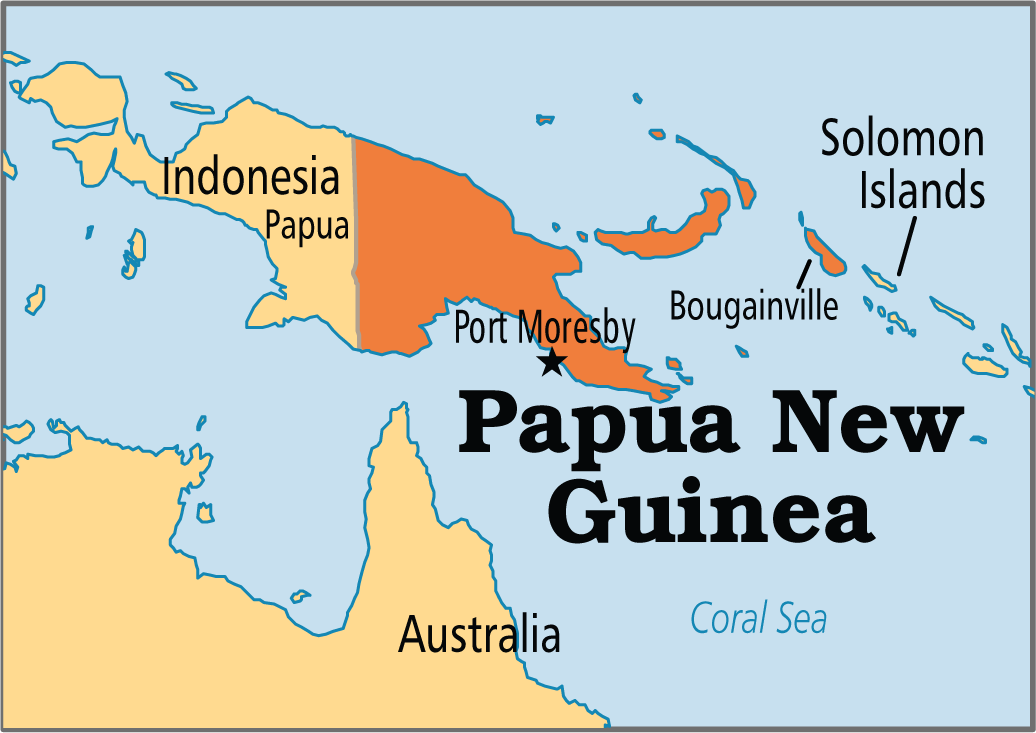
Whether a cup of coffee tastes good depends on many factors, including variety, soil, altitude, and post-processing methods. Among them, FrontStreet Coffee believes altitude is especially critical. Papua New Guinea has a typical island-type climate, located between the equator and 10 degrees south latitude, with tropical rainforests, volcanoes, and highland terrain, and altitudes reaching 2,500 meters, making it an ideal place for coffee cultivation. The southern part of the country consists of plains and lowlands, the southeastern coastal area has its own topography, the central part is the Central Range, and the north is made up of several independent mountain ridges. The flora and fauna here are rich and unique, with about 6,500 native plant species and 380 native bird species.
Most coffee in Papua New Guinea is grown in highland areas. The highland regions are mainly divided into the Eastern Highlands and Western Highlands provinces. In the eastern provinces, coffee is usually grown in Goroka and Kainantu, with the Arona and Purosa estates being the most well known.
In the western provinces, coffee is mostly produced around Mount Hagen. The Kimel Estate, located north of Mount Hagen, produces coffee beans of good quality; the Wahgi Valley of Mount Hagen is famous for its ideal climatic conditions and fertile volcanic soil, and the Bird of Paradise Estate is located in the Wahgi Valley. Papua New Guinea's total coffee production is not large, and 85% of it is cultivated by smallholders and processed using the washed method. Front Street believes that the flavor of Papua New Guinea coffee is different from the muted, deep aroma of Indonesian coffee, instead showing bright acidity and floral and fruity aromas, with an overall style closer to South American coffee.
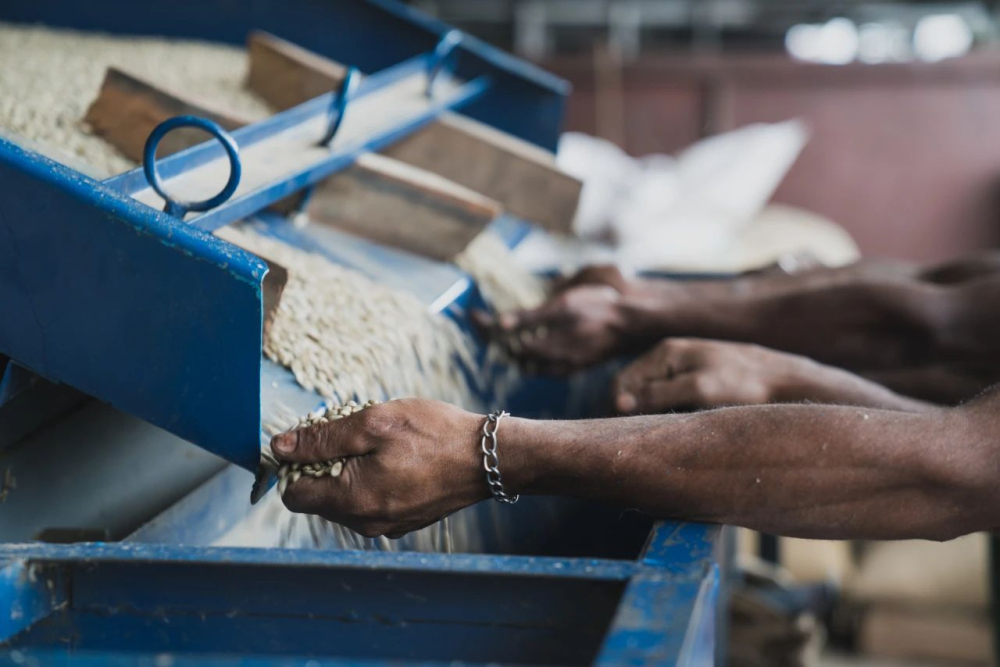
Front Street has learned that Papua New Guinea's washed processing method is not exactly the same as that of Central and South America. Locally, a triple washed fermentation process is used, with each soak lasting about 24 hours and the water being replaced with clean water to better control the coffee's flavor. After washing is completed, the coffee beans have their parchment removed and then undergo various grading steps. FrontStreet Coffee has found that in the grading system, the division of producing regions is relatively strict, and coffee beans produced locally share a common characteristic: uniform bean size and few defects.
There is another reason Front Street chose to list the Front Street Papua New Guinea Bird of Paradise coffee beans: FrontStreet Coffee hopes every coffee it purchases will have a unique character and will not choose beans with similar flavors. The reason Front Street spends a great deal of time selecting beans and adjusting roasting curves and parameters is precisely that a coffee bean may have similarities to other beans, but it must have its own recognizability.
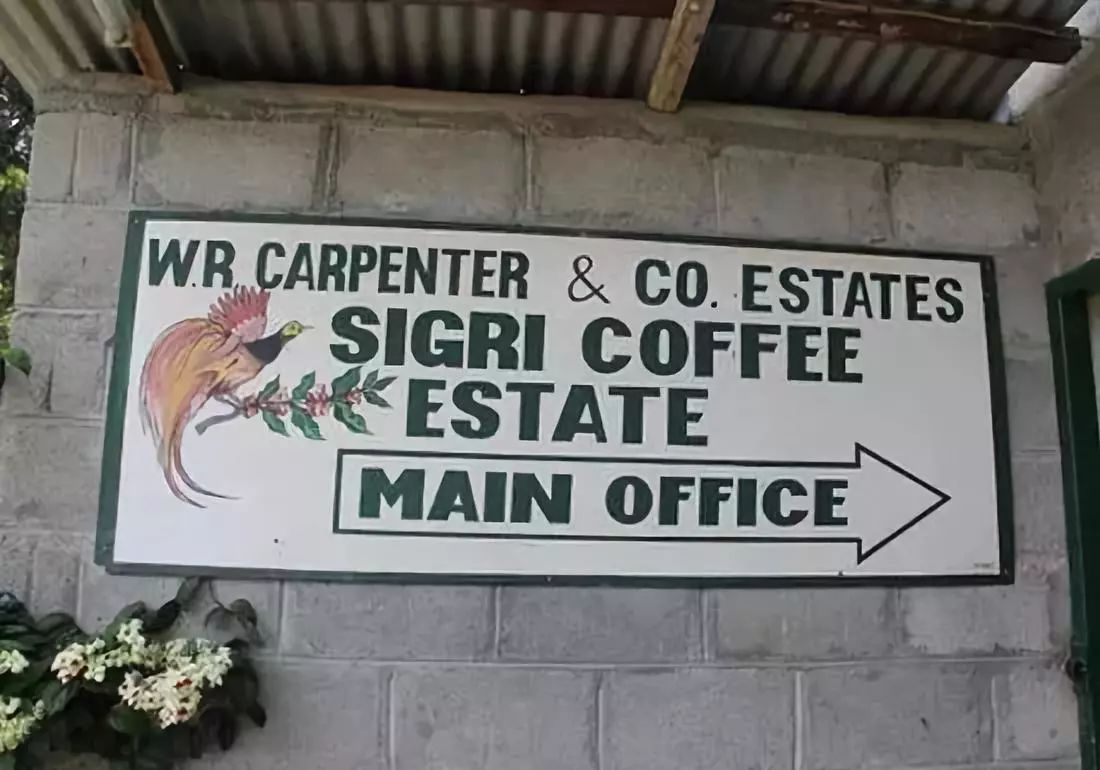
The Bird of Paradise Estate was established in 1950 and is a pioneer of the local coffee industry. The estate is located in the Waghi Valley in the Western Highlands and has mineral-rich volcanic soil. The Bird of Paradise Estate also places great emphasis on ecological protection, refusing to use pesticides and insecticides, and caring for the ecology and nearby birds. FrontStreet Coffee also agrees with this sustainable development philosophy, because it can both improve the ecological environment and enhance the quality of the coffee beans.
Below is the basic information on this Front Street Papua New Guinea coffee bean for reference. In order to present the coffee's rich nutty notes while retaining bright grapefruit acidity, Front Street uses a medium-dark roast to present this Front Street Papua Bird of Paradise coffee bean.
Front Street Papua New Guinea Bird of Paradise coffee beans Estate: Bird of Paradise Estate Variety: Typica Grade: AA Altitude: 1,600-1,800 meters Processing method: Washed Flavor: The sweetness of toasted bread, nutty sweetness, and slight fruity acidity form a pleasant layered complexity, with a fruit-like aroma, a spicy note in the finish, and a rich yet balanced mouthfeel.
FrontStreet Coffee barista's parameters and suggestions for brewing Front Street Papua Bird of Paradise
Dripper: Kono dripper Water temperature: 88°C Dose: 15 grams Coffee-to-water ratio: 1:15 Grind size: 70-75% passing through a No. 20 standard sieve
Front Street usually uses the KONO dripper to extract medium-dark roasted coffee beans. The upper part of the KONO dripper is a smooth curved surface, allowing the filter paper to fit better. Compared with the V60 dripper, KONO's extraction method is mainly immersion-based, which helps increase the coffee's overall concentration and enhance its body. In addition to KONO, common Kalita trapezoidal drippers and flannel, which have slower flow rates, are also suitable.
In addition, considering that medium-dark roasted coffee has undergone a certain degree of roasting, the internal structure of the beans is fluffier than that of light-roasted coffee, so the water absorption effect is better. To avoid over-extraction, Front Street chooses a grind size of 75% passing through a No. 20 standard sieve and a water temperature of 88°C, paired with Front Street's usual three-stage pouring.
In the first stage, gently pour 30 grams of water for blooming, with a blooming time of 30 seconds; in the second stage, pour until the water amount reaches about 125 grams, circling outward evenly and steadily. Then wait for the coffee liquid to drop, and when it has dropped halfway, pour the final stage of water up to 225 grams. After all the coffee has dripped through, the total extraction time is generally about 2 minutes.
The above content is compiled by CoffeeHunters, a coffee news website.


